Testing tiny resistors, capacitors, and inductors is easier with the right LCR meter. The best models combine stable measurements with SMD-friendly probes, tweezer tips, or component detection that reduces handling and setup time.
This roundup compares 10 options for electronics repair, prototyping, quality control, and laboratory work. Consider measurement frequency, accuracy, display quality, test-lead design, and portability before choosing.
Best 10 Lcr Meters for Surface Mount Components Picks for 2026
Best Precision Sorting Pick

- 100kHz testing with five selectable frequencies
- Sorting mode with tolerance and pass/fail tracking
- Kelvin connections and open/short calibration
Best For: Detailed testing and batch component screening
Best Established Handheld
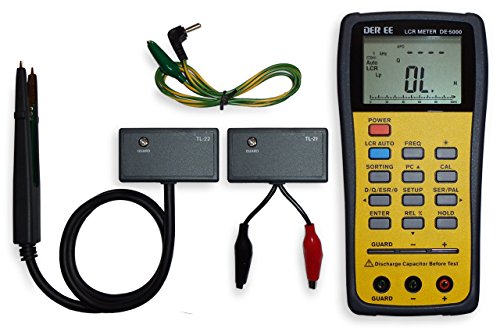
- Automatic LCR measurement and ranging
- Includes SMD tweezer and alligator-lead accessories
- Five test frequencies up to 100kHz
Best For: Versatile handheld bench testing
Best Compact Tweezer Tester
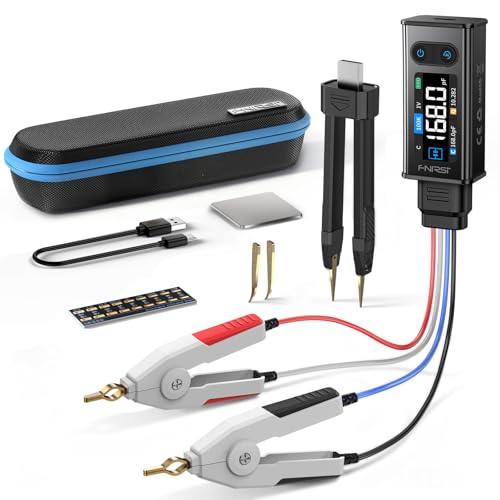
- Tweezer format for SMD and through-hole parts
- Adds diode, continuity, and voltage testing
- Includes interchangeable tips, Kelvin clips, and pouch
Best For: Portable SMD diagnostics and quick checks
Best Calibrated Professional Pick

- Specified 0.1% accuracy with calibration certificate
- Automatic and manual C, R, L, Z, and ESR modes
- Includes spare gold-plated leads and protective cases
Best For: Calibrated precision SMD measurements
Versatile Benchtop Choice
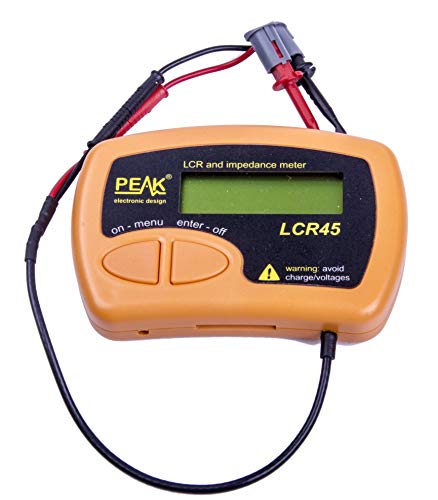
- LCR and impedance measurements with hold
- DC to 200 kHz selectable test frequencies
- 0.2 uH, 0.2 pF, and 0.2 ohm stated resolution
Best For: Flexible component testing with manual or automatic controls
Best for SMD Probing

- Integrated pointed and hook tweezer heads
- Automatic recognition with D/Z/Q/R and ESR readings
- Portable, rechargeable, and supports data export
Best For: SMD repairs and quick circuit-board fault finding
Feature-Rich Bench Tester

- Dual display for primary and secondary parameters
- Five frequencies from 100 Hz to 100 kHz
- Open/short calibration and series/parallel modes
Best For: Detailed passive-component testing at the workbench
Most Precise Portable Pick
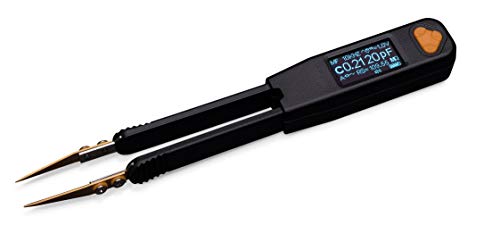
- 0.1% basic resistance accuracy
- Five frequencies and three test voltages
- Smart SMD tweezers with diode testing
Best For: Portable SMD testing with adjustable test conditions
Best Traditional Bench Value
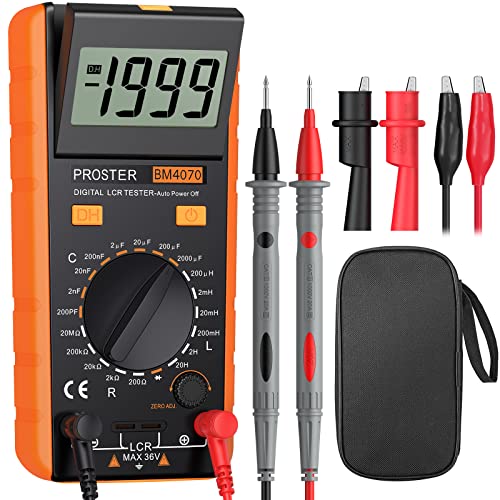
- Wide capacitance and inductance ranges
- Rotatable LCD with data hold
- Includes leads, clips, battery, and case
Best For: Bench testing and electronics repair
Best Smart Tweezer Design
MINIWARE DT71 Tweezer LCR Meter

- Automatic component recognition
- Tests L, C, R, diode, voltage, and frequency
- Up to 10 hours of battery use
Best For: Quick portable SMD identification and testing
Best Precision Sorting Pick – FNIRSI LC1020E
For shoppers comparing lcr meters for surface mount components, the FNIRSI LC1020E stands out with 100kHz testing, four-terminal measurement support, and simultaneous primary and secondary readings. Its sorting mode also makes repeated component screening more efficient.
Best For: Component verification, sorting batches, and users who want adjustable test voltage and calibration controls.
Pros:
- Measures capacitance, resistance, and inductance across five selectable frequencies up to 100kHz.
- Displays secondary values such as ESR, Q, D, phase angle, and reactance alongside the main reading.
- Offers sorting with preset nominal values, tolerances, and pass/fail tracking.
- Includes Kelvin-style sockets and open/short calibration.
Cons:
- Requires careful capacitor discharge and calibration before testing.
- Its advanced controls may be more than occasional users need.
The LC1020E is a strong choice when repeatable screening and detailed component analysis matter. Its rechargeable battery, color display, and 3-pin and 5-slot connections add practical flexibility for bench work.
Best Established Handheld – DE-5000 LCR Meter
The DE-5000 is a practical handheld option among lcr meters for surface mount components, especially because it includes an SMD tweezer accessory and supports automatic LCR measurement. It combines dual-display readings with selectable test frequencies through 100kHz.
Best For: Electronics users who want a versatile handheld meter with included tweezer and alligator-lead accessories.
Pros:
- Measures inductance, capacitance, and resistance with secondary readings for D, Q, phase, ESR, or Rp.
- Automatically selects component type, ranging, and series or parallel mode.
- Provides 100Hz, 120Hz, 1kHz, 10kHz, and 100kHz test frequencies.
- Includes an SMD tweezer case, alligator leads, and a guard line.
Cons:
- The optional IR-to-USB cable is not included.
- At 450g, it is heavier than the compact tweezer-style models listed here.
With automatic operation and dedicated SMD tweezers, the DE-5000 is well suited to general-purpose bench testing. Its sorting mode is useful when checking a group of similar components.
Best Compact Tweezer Tester – FNIRSI LCR-ST2
The FNIRSI LCR-ST2 is designed for quick work on SMD and through-hole parts. For anyone seeking lcr meters for surface mount components, its tweezer format, interchangeable probes, auto sorting, and broad component coverage make it especially convenient.
Best For: Portable SMD troubleshooting, quick component checks, and technicians who also need diode, continuity, and voltage testing.
Pros:
- Tests resistors, capacitors, inductors, diodes, continuity, and voltage.
- Supports five scan frequencies up to 100kHz and four RMS test levels.
- Displays primary values with secondary X, D, Q, and phase readings.
- Includes gold-plated tweezer tips, Kelvin clips, hooks, a pouch, and a rear magnet.
Cons:
- The 1.47-inch display is smaller than the LC1020E’s screen.
- Its built-in battery is rated at 300mAh.
The LCR-ST2 prioritizes portability and fast access to several diagnostic functions. Its probe-swapping design is helpful when moving between tiny SMD parts and conventional through-hole components.
Best Calibrated Professional Pick – Smart Tweezers ST5S
Smart Tweezers ST5S Professional LCR Meter/ESR Meter with Spare Test Leads and Pocket Case
Check Price On AmazonThe Smart Tweezers ST5S offers a focused, professional approach to testing small components. Its 0.1% accuracy specification, automated identification, and gold-plated test leads make it a compelling option among lcr meters for surface mount components.
Best For: Precision SMD measurements where calibrated performance, portability, and dedicated tweezer leads are priorities.
Pros:
- Specified at 0.1% accuracy and supplied with a calibration certificate.
- Automatically identifies components and supports manual or automatic C, R, L, Z, and ESR modes.
- Uses Swiss-made 24K gold-plated test leads.
- Includes spare leads, portable and clamshell cases, a two-year warranty, and lifetime support.
Cons:
- The supplied notes do not specify test frequencies or measurement ranges.
- It is positioned as a professional instrument, which may be unnecessary for basic checks.
The ST5S is the most specification-focused choice in this group for users who value calibration documentation and dedicated tweezer handling. Its included spare leads and cases also support regular field or bench use.
Versatile Benchtop Choice – Peak Atlas LCR45
The Peak Atlas LCR45 is a compact option for anyone comparing lcr meters for surface mount components. It supports automatic or manual component selection and offers selectable test frequencies from DC through 200 kHz, making it useful for both routine checks and more specialized measurements.
Best For: Engineers and technicians who want flexible frequency selection, automatic component identification, and a lightweight corded meter.
Pros:
- Measures LCR and impedance with a hold function.
- Offers automatic or manual component type and test-frequency selection.
- Provides enhanced resolution down to 0.2 uH, 0.2 pF, and 0.2 ohms.
- Compact 145 g design with an easy menu system.
Cons:
- Uses corded electric power rather than a battery.
- Its supplied frequency options may be more than casual users need.
The LCR45 stands out for measurement flexibility in a small package. Its broad frequency range and fine stated resolution make it a practical choice when component testing requires more control than a basic automatic tester provides.
Best for SMD Probing – FNIRSI LCR-ST1 Tweezers
The FNIRSI LCR-ST1 is designed specifically for convenient board-level testing, making it a strong fit among lcr meters for surface mount components. Its tweezer form factor, automatic recognition, and support for resistance, capacitance, inductance, and diode testing help speed up SMD repairs and fault finding.
Best For: SMD repair, circuit-board troubleshooting, and technicians who need a portable tester with integrated tweezer heads.
Pros:
- Supports pointed and hook tweezer heads for different components.
- Measures resistance, capacitance, inductance, and diodes across broad stated ranges.
- Provides D, Z, Q, R, and ESR readings with automatic component recognition.
- Stores test records and exports data to a PC through a data cable.
Cons:
- Limited to 100 Hz, 1 kHz, and 10 kHz test frequencies.
- The fixed screen does not flip or rotate.
- Its small tweezer design may be less suitable for larger components or bench-only work.
For hands-on SMD work, the LCR-ST1 prioritizes speed and portability over extensive frequency selection. The integrated probes, rechargeable battery-powered design, and data export make it especially convenient for diagnosing components directly on circuit boards.
Feature-Rich Bench Tester – Extech LCR200
The Extech LCR200 is a full-featured passive-component tester for users comparing lcr meters for surface mount components alongside broader bench work. It measures inductance, capacitance, and resistance while displaying secondary values such as Q, dissipation, phase, and ESR.
Best For: Bench technicians who need dual primary and secondary readouts, calibration functions, selectable frequencies, and limit testing.
Pros:
- Displays primary measurements alongside Q, D, phase, and ESR values.
- Offers five test frequencies from 100 Hz to 100 kHz.
- Includes open and short calibration to help account for stray impedance.
- Supports series or parallel modes, limit settings, and a built-in test fixture.
Cons:
- At 0.43 kg, it is less lightweight than a tweezer-style tester.
- Runs on a 9 V battery, which may be less convenient for extended bench sessions.
- The supplied information does not indicate automatic component recognition.
The LCR200 is a strong choice when secondary parameters and measurement setup options matter as much as the basic LCR values. Its dual display, calibration support, and limit functions give it a practical advantage for repeatable bench measurements.
Most Precise Portable Pick – Pro1 100KHz LCR Meter
LCR Research Pro1-100KHz LCR Meter with 0.1% Accuracy/ESR Meter/Smart SMD Tweezers
Check Price On AmazonFor shoppers comparing lcr meters for surface mount components, the Pro1 stands out for its compact tweezer-style design, selectable test frequencies, and stated accuracy of up to 0.1% for resistance. It supports five frequencies and three test voltages, making it adaptable for component checks beyond basic identification.
Best For: Portable SMD testing when measurement range, selectable test conditions, and accuracy are priorities.
Pros:
- Measures resistance, capacitance, and inductance across broad ranges.
- Offers five test frequencies from 100Hz to 100kHz and three test voltages.
- Includes smart SMD tweezers and an additional diode-testing function.
- USB charging, one-year warranty, and lifetime support are included.
Cons:
- Its compact form may be less convenient for larger components or general-purpose bench work.
- The stated accuracy varies by measurement type, reaching 0.2% for inductance and capacitance.
Choose this model if you want a specialized, highly portable tester for small components and value frequency and voltage flexibility. Its wide measurement coverage also makes it useful beyond typical SMD work.
Best Traditional Bench Value – Proster BM4070 LCR Meter
The Proster BM4070 is a conventional LCR meter for buyers who prefer a full-size instrument with dedicated ranges and test leads. It covers capacitance from 200pF to 2000μF, inductance from 200μH to 20H, and resistance across multiple ranges, making it suitable for component sorting and troubleshooting.
Best For: Bench testing, repair work, and hobby projects involving components of varied sizes and values.
Pros:
- Provides eight capacitance ranges and six inductance ranges.
- Includes resistance and diode testing, data hold, and auto power off.
- Rotatable LCD and included crocodile clips improve practical bench usability.
- Complete kit includes test leads, battery, screwdriver, manual, and storage bag.
Cons:
- It is substantially heavier than the compact tweezer-style alternatives.
- Testing SMD parts with conventional leads may be less convenient than using integrated tweezers.
- Its listed operating range requires a 9V battery.
The BM4070 is a practical choice when broad component coverage and a complete accessory kit matter more than pocket-sized SMD handling. Its adjustable display is particularly useful for stationary bench measurements.
Best Smart Tweezer Design – MINIWARE DT71 Tweezer LCR Meter
The MINIWARE DT71 is designed specifically for hands-on testing of tiny parts, making it one of the more convenient lcr meters for surface mount components. Its automatic component recognition, integrated OLED display, and detachable tweezer assembly streamline quick checks of resistors, capacitors, inductors, diodes, voltage, and frequency.
Best For: Fast SMD identification and portable testing where one-handed tweezer operation is more important than ESR measurement.
Pros:
- Automatically recognizes the component type and displays its measured value.
- Tests L, C, R, diode, voltage, and frequency functions.
- Rotary controller and OLED display support left- or right-handed operation.
- Detachable parts and integrated battery provide flexible storage and up to 10 hours of continuous use.
Cons:
- It does not include an ESR test function.
- Unstable or fluctuating readings may require calibration using a computer and calibration data.
- Its specialized tweezer format may be less suitable for larger components.
For frequent SMD work, the DT71’s automatic recognition and dedicated tweezer form can reduce setup time. Consider another model if ESR testing is essential or if you need a more traditional lead-based meter.
How We Picked the Best Lcr Meters for Surface Mount Components
We focused on meters that can measure resistance, capacitance, and inductance while accommodating small surface-mount parts. Selection factors included measurement accuracy, frequency options, ESR and impedance functions, automatic component identification, display readability, and the practicality of the included probes or tweezers.
We also considered whether each instrument suits quick bench checks, repeated repair work, field service, or more controlled measurements. A high component-count display or broad feature list is useful, but probe stability and ease of positioning often matter more when testing very small packages.
Quick Comparison
| Best For | What to Look For |
|---|---|
| Fast SMD identification | Tweezer-style probes and automatic component detection |
| Detailed bench measurements | Higher test frequency, strong accuracy, and selectable settings |
| Capacitor troubleshooting | ESR measurement, stable lead compensation, and low-frequency testing |
| Portable repair work | Compact design, clear display, and rechargeable or replaceable power |
| General electronics work | Interchangeable test leads and broad resistance, capacitance, and inductance ranges |
Key Buying Factors for LCR Meters for Surface-Mount Components
Probe Style and SMD Handling
Integrated tweezers are convenient for grabbing 0402, 0603, and other small parts without clips or extra fixtures. Standard meters with test leads can be more versatile, especially when components remain installed on a board, but they require steadier hand positioning. Check whether replacement tips, spare leads, or a protective case are included.
Frequency, Accuracy, and Compensation
Test frequency affects how components behave during measurement. A 100 kHz setting can provide useful information for many modern electronic applications, while lower frequencies may be appropriate for general component checks. Accuracy specifications are meaningful only when leads are properly nulled or compensated, so look for open, short, and fixture-correction functions.
Useful Measurement Functions
Auto-ranging and automatic component detection speed up routine work. ESR, quality factor, dissipation factor, phase angle, and impedance readings add diagnostic value, but they may increase menu complexity. A bright, well-organized display is particularly helpful when readings must be checked quickly.
Who Should Buy Which Lcr Meters for Surface Mount Components?
Choose a tweezer-style meter if your priority is identifying loose SMD components or checking parts rapidly on a populated board. These instruments are compact and intuitive, making them strong choices for repair technicians, makers, and students.
A handheld meter with conventional leads is a better fit for users who test mixed component sizes, use external fixtures, or need more flexible positioning. For engineering benches and repeatable measurements, prioritize higher accuracy, selectable frequencies, compensation controls, and stable test connections over the smallest form factor.
Before buying, confirm the meter’s supported ranges, frequency options, battery arrangement, and included accessories. The best choice is the one whose probe system and measurement controls match the component sizes and testing workflow you use most often.