The best benchtop power supplies under $100 make electronics testing more controlled, repeatable, and convenient without requiring a costly laboratory setup.
This roundup compares compact switching and linear models across voltage range, current output, controls, displays, USB charging, and practical home-lab features.
Best 10 Benchtop Power Supplies Under 100 Picks for 2026
Best Feature-Rich Pick
Jesverty SPS-3010V 32V/10A Bench Supply

- 0–32V, 0–10A adjustable output
- Coarse/fine encoder controls
- 20W USB-A and USB-C charging
Best For: Compact electronics benches and DIY projects
Best for 12V Equipment
Pyramid PS12KX 12A Linear Supply

- 12V/13.8V regulated DC output
- 12A constant current capacity
- Screw terminals and short-circuit protection
Best For: CB radios, HAM radios, and 12V devices
Best for Battery Charging
Kungber SPS3010B 30V/10A Supply

- 0–30V, 0–10A adjustable output
- Intelligent charging with full-battery stop
- OCP alarm and broad safety protections
Best For: Bench projects and controlled battery charging
Best Compact 12V Value
Pyramid PS8KX 6A Linear Supply
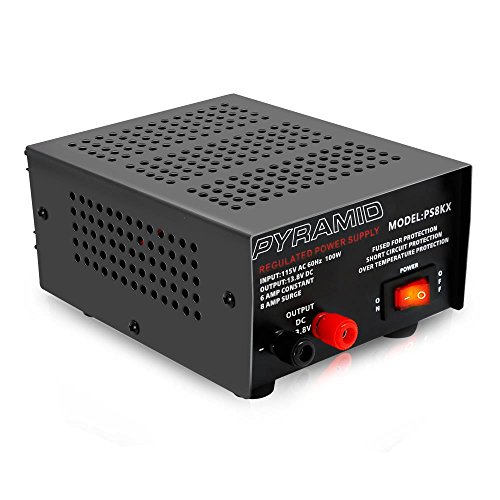
- Regulated 13.8V DC output
- 6A continuous, 8A surge capacity
- Compact housing with built-in protection
Best For: Compact 12V communications and workshop setups
Best Precision Pick
HYELEC 0-50V 6A Variable Bench Supply

- 0-50V, 0-6A, and 150W output range
- 4-digit display with fine adjustment control
- Memory presets, USB output, and multiple protections
Best For: Precision-focused electronics repair and DIY bench work
Best Feature-Rich Value
YITRANIC 0-32V 10.1A Bench Supply

- 0-32V, 0-10.1A, and 300W maximum output
- 100-240V input with precise 4-digit display
- Memory, key lock, USB charging, and five protections
Best For: Compact development, repair, and testing work
Best with Extra Features

- 0–30V and 0–10A adjustable output
- Coarse/fine encoder controls and four-digit display
- USB and 5V/3.6A Type-C charging ports
Best For: Repair benches, DIY electronics, and general-purpose testing
Simple Safety-Focused Pick
NICE-POWER 30V 10A Bench Supply

- Four-digit readout for voltage, current, and power
- Output switch allows adjustment before energizing
- Compact design with 5V/2A USB charging
Best For: Beginners and US-based electronics work
Long-Warranty Precision Pick

- 0–30V and 0–10A adjustable output
- Coarse/fine encoders and output switch
- 18W USB/Type-C charging and five-year warranty
Best For: Frequent hobbyist repair and precision bench adjustments
Best Feature-Rich Pick – Jesverty SPS-3010V 32V/10A Bench Supply
For shoppers comparing benchtop power supplies under 100, the Jesverty SPS-3010V stands out with adjustable 0–32V output, up to 10A, encoder-based coarse and fine controls, and a compact footprint. Its USB-A and USB-C ports also add convenient charging for project electronics.
Best For: Electronics hobbyists, repair work, Arduino or Raspberry Pi projects, and users who want precise adjustment in a small bench unit.
Pros:
- 0–32V and 0–10A adjustable output with 0.01V/0.001A setting resolution
- Separate coarse and fine encoder knobs simplify precise adjustments
- USB-A and USB-C ports support 20W quick charging
- Output switch, over-current protection, and temperature-regulated cooling fan
Cons:
- Included test leads are described as giveaway leads and may not suit sustained high-current use
- AC input is selectable between 115V and 230V, so the setting should be checked before operation
The SPS-3010V offers an unusually broad feature set for a compact supply, especially if USB charging and fine digital-style adjustment matter. It is a versatile choice for general-purpose bench projects.
Best for 12V Equipment – Pyramid PS12KX 12A Linear Supply
Among benchtop power supplies under 100, the Pyramid PS12KX is a straightforward option for users who need regulated DC power rather than variable laboratory output. It converts 115V AC to 12V or 13.8V DC and provides up to 12A of constant current.
Best For: CB radios, scanners, HAM radio equipment, cellular devices, and other 12V applications that benefit from a constant DC source.
Pros:
- Linear-regulated 12V/13.8V DC output with 12A constant current
- Screw-type terminals support a range of wired connections
- Built-in electronic overload and short-circuit protection
- Cooling fan and cabinet heatsink help manage operating heat
Cons:
- It is not a variable voltage laboratory supply
- Larger and heavier than the compact adjustable models in this roundup
- Output is designed around 12V and 13.8V equipment rather than general-purpose voltage experimentation
The PS12KX is best viewed as a dependable 12V power converter for communications and tabletop equipment. Its fixed-output design keeps operation simple, but limits flexibility for circuit testing.
Best for Battery Charging – Kungber SPS3010B 30V/10A Supply
The Kungber SPS3010B is a practical contender among benchtop power supplies under 100, combining adjustable 0–30V, 0–10A output with intelligent charging features. Its compact design and multiple protection systems make it suitable for electronics work, repairs, and controlled battery-charging tasks.
Best For: Users who want adjustable bench power with charging detection, over-current alerts, and a small footprint for home, school, or repair work.
Pros:
- Adjustable output up to 30V and 10A, with 300W maximum power listed
- Intelligent charging mode displays charging power and stops when the battery is full
- OCP detection can alarm and stop output during shorts or over-current conditions
- Includes grounding, leakage, thermal, overload, and short-circuit protections
Cons:
- USB charging is limited to an 18W USB interface
- Its plastic enclosure may feel less robust than a metal-bodied bench supply
The SPS3010B is a strong fit when charging safety features are more important than maximum voltage range. Its compact size and protection package add convenience for varied low-voltage work.
Best Compact 12V Value – Pyramid PS8KX 6A Linear Supply
For shoppers seeking benchtop power supplies under 100 for basic 12V equipment, the Pyramid PS8KX keeps the design simple and compact. It provides regulated 13.8V DC from a 115V AC source, with 6A constant output and screw-type terminals for direct connections.
Best For: CB radios, scanners, HAM radio equipment, and other 12V devices that need steady tabletop power without adjustable laboratory controls.
Pros:
- Linear-regulated 13.8V DC output with 6A continuous current
- Compact 7.5-by-4.9-by-3-inch housing for easier bench placement
- Screw-type terminals support secure connections to equipment and components
- Short-circuit, overload, and auto-reset fuse protection are built in
Cons:
- Fixed-output design does not provide a broad adjustable voltage range
- 6A capacity is lower than the 12A PS12KX option
- Its listed 5-pound weight is relatively high for its compact dimensions
The PS8KX is a sensible choice for dedicated 12V setups where compact dimensions and simple operation matter. Choose a variable supply instead if you expect to test circuits across multiple voltage levels.
Best Precision Pick – HYELEC 0-50V 6A Variable Bench Supply
For shoppers comparing benchtop power supplies under 100, the HYELEC HY50-06A offers adjustable 0-50V output, up to 6A, and 150W of power in a compact design. Its 4-digit display, encoder control, memory presets, and output switch make it practical for repair, testing, and DIY electronics work.
Best For: Precision-focused hobbyists, electronics repair, battery charging, and general bench testing.
Pros:
- 0.01V and 0.001A display resolution with coarse and fine adjustment
- Three memory settings for quickly recalling frequently used outputs
- Includes a 5V/2A USB interface and output enable/disable switch
- Short-circuit, overvoltage, overcurrent, and temperature protection
Cons:
- Designed for 110V input only and does not offer a 220V option
- Plastic enclosure may be less rugged than a metal-bodied supply
The HYELEC is a strong choice when display precision and repeatable settings matter. Its 150W ceiling is suitable for many electronics tasks, though higher-power applications require a more capable supply.
Best High-Current Option – Jesverty SPS-30II 30A Bench Supply
Among benchtop power supplies under 100, the Jesverty SPS-30II stands out for applications needing substantial current rather than a wide laboratory voltage range. It provides adjustable 9-15V output, a fixed 13.8V setting, and up to 30A for compatible DC equipment.
Best For: High-current 12V-class devices, communications equipment, automotive electronics, and extended-load use.
Pros:
- Up to 30A and 450W output capacity
- Continuously adjustable 9-15V output plus fixed 13.8V mode
- Large screw-type terminals, auxiliary terminals, and front-panel cigarette lighter socket
- Cooling fan, short-circuit protection, and automatic current limiting
Cons:
- Its 9-15V range is narrower than that of a general-purpose variable laboratory supply
- Analog V/A meters provide less display detail than a 4-digit digital readout
This Jesverty model is best evaluated by current capacity and convenient connections. Choose it for demanding 12V-oriented loads, but look elsewhere if you need low-voltage adjustment or precise laboratory-style readings.
Best Feature-Rich Value – YITRANIC 0-32V 10.1A Bench Supply
For buyers seeking benchtop power supplies under 100 with more capacity and controls, the YITRANIC 3010MS combines 0-32V adjustment, up to 10.1A, and 300W output. It adds a 4-digit display, memory recall, dual-switch output control, key lock, and broad input compatibility.
Best For: Development boards, sensors, repair benches, and users who want higher output power in a compact enclosure.
Pros:
- 0-32V, 0-10.1A, and 300W maximum output
- 100-240V auto-detect input supports 120V and 230V operation
- 4-digit readout with 0.01V and 0.001A resolution
- Memory, output on/off control, key lock, USB quick-charge port, and five protection features
Cons:
- Fan cooling may add operating noise under load
- Its maximum output voltage is lower than the HYELEC model’s 50V rating
The YITRANIC offers the broadest feature set here while remaining compact at about 1kg. It is a compelling option when you need 300W performance, detailed readings, and repeatable controls rather than the highest available voltage.
Best with Extra Features – WANPTEK POWER DPS3010U
For shoppers comparing benchtop power supplies under 100, the WANPTEK POWER DPS3010U stands out for combining a 0–30V, 0–10A adjustable output with coarse and fine encoder controls. Its four-digit display, USB and Type-C charging ports, and broad protection features make it a practical choice for electronics work and repair benches.
Best For: Electronics repair, DIY projects, teaching, and users who want convenient USB-C charging alongside a variable bench supply.
Pros:
- Coarse and fine controls improve voltage and current adjustment precision.
- Includes USB and 5V/3.6A Type-C charging outputs.
- Provides short-circuit, overheat, overload, and leakage protection features.
- Automatically detects 110V and 220V ±10% AC input.
Cons:
- Its 8.4-inch depth may require some bench space.
- The supplied information does not specify advanced remote-control or programmable functions.
The DPS3010U is a well-equipped option when ease of adjustment and built-in charging ports matter. It is especially appealing for general-purpose bench work where protective features and a clear readout are priorities.
Simple Safety-Focused Pick – NICE-POWER 30V 10A Bench Supply
Among benchtop power supplies under 100, this NICE-POWER model emphasizes straightforward operation and visible output control. Its four-digit display shows voltage, current, and power, while the dedicated output switch lets you set values without energizing the connected load.
Best For: Beginners, hobbyists, and US-based users who want a compact supply with an output-enable switch and readable measurements.
Pros:
- Displays voltage, current, and power with stated 0.01V and 0.001A resolution.
- Dedicated output switch helps prevent accidental energizing of a load.
- Includes multiple protection features, including overcurrent, overvoltage, overheating, and short-circuit protection.
- Compact 8.4 × 3.3 × 5.5-inch design weighs about 2.6 pounds.
Cons:
- Supports only 110V input; 220V input is not available.
- Its USB charging port is rated at 5V/2A, below the faster charging output of some alternatives.
This is a sensible choice for routine bench testing when simple controls, a clear display, and a compact footprint matter more than international input flexibility. The output switch is particularly useful for safer setup and adjustment.
Long-Warranty Precision Pick – HANGELL HPS3010
The HANGELL HPS3010 is a strong contender among benchtop power supplies under 100 for users who value precise adjustment and a long stated warranty. It combines a 0–30V, 0–10A range with coarse and fine encoder control, an output switch, and a four-digit display.
Best For: Electronics hobbyists and repair users who want fine adjustment, output control, USB-C charging, and extended warranty coverage.
Pros:
- Coarse and fine encoder adjustments support more precise setting changes.
- Output switch allows voltage and current adjustments with output disabled.
- Four-digit display offers stated 0.01V and 0.001A resolution and shows constant-voltage or constant-current status.
- Includes 18W USB and Type-C quick-charge capability plus a five-year warranty.
Cons:
- The supplied specifications do not list a built-in power readout.
- Its 1.2 kg weight is heavier than some compact bench supplies.
With its combination of precision controls, safety-oriented output switching, and five-year warranty, the HPS3010 offers a reassuring balance for regular bench use. Its 100–220V AC input range also adds flexibility for compatible electrical environments.
How We Picked the Best Benchtop Power Supplies Under 100
We selected these 10 models by comparing the specifications and features most important for bench work: adjustable voltage and current, maximum output, regulation type, display readability, adjustment controls, cooling, safety features, and connection options. We also included both laboratory-style supplies and 12V converter designs because they serve different needs.
At this price, specifications can vary by seller and model revision. Confirm the current listing for output limits, input voltage, included cables, protection functions, and warranty before buying.
Quick Comparison
| Type | Typical Strength | Best Use |
|---|---|---|
| 0–30V or 0–32V switching | Flexible voltage and high current | General electronics, repairs, and prototyping |
| 0–50V switching | Higher voltage range | Projects needing extra voltage headroom |
| Linear 12V converter | Simple fixed-voltage operation | Radios, automotive accessories, and 12V equipment |
| USB-equipped model | Convenient device charging | Benches using USB-powered tools or devices |
Key Buying Factors for Benchtop Power Supplies Under 100
Voltage and Current Range
Choose a variable supply when you work on different circuits. A 0–30V or 0–32V range covers many hobby and repair tasks, while a 0–50V model is better when your projects require higher voltage. Check whether the advertised current is continuous and whether maximum output is limited by the selected voltage.
Switching Versus Linear Design
Switching supplies are usually lighter, more efficient, and capable of higher current. Linear units generally produce cleaner output with less high-frequency switching noise, but they are heavier and may generate more heat. For sensitive analog or audio work, noise specifications matter more than headline wattage.
Controls, Display, and Protection
Coarse and fine adjustment knobs or encoder controls make precise setup easier. A four-digit display can provide more useful resolution than a basic readout. Look for independent voltage and current adjustment, output-enable controls, short-circuit protection, over-voltage or over-temperature protection, and a cooling fan where appropriate.
Connections and Extra Ports
USB-A and USB-C ports can be useful, but they should not replace a regulated bench output when testing sensitive circuits. Consider terminal style, included leads, grounding options, memory presets, and whether the supply supports constant-current operation.
Who Should Buy Which Benchtop Power Supplies Under 100?
For general electronics: Choose a variable 0–30V or 0–32V switching supply with adjustable current, clear metering, and coarse/fine controls.
For higher-voltage projects: A 0–50V model provides additional range, provided its current and power limits match your application.
For 12V equipment: A compact linear converter is more suitable for radios, automotive accessories, and other equipment designed for a fixed 12V or 13.8V source.
For makers and charging benches: A model with USB-A or USB-C output adds convenience for development boards and accessories, while still providing adjustable terminals for electronics testing.