Choosing among color astronomy cameras can be difficult when sensor size, cooling, resolution, and software support all affect real-world results. The right model depends on whether you prioritize sharp planetary detail, low-noise deep-sky images, or a simple all-in-one setup.
We selected 10 cameras spanning entry-level planetary imagers, cooled deep-sky models, large APS-C sensors, and feature-rich systems. Use the guide below to narrow the options by target, telescope, budget, and workflow.
Best 10 Color Astronomy Cameras Picks for 2026
Best APS-C Upgrade

- 26MP back-illuminated APS-C sensor
- 16-bit ADC with up to 14 stops of dynamic range
- Ultra-low readout noise and up to 80% peak QE
Best For: Deep-sky imagers prioritizing detail and dynamic range
Best for Planetary Imaging

- 20MP back-illuminated CMOS sensor
- ROI capture for faster planetary frame rates
- USB-C and included iCap capture software
Best For: Lunar, planetary, and filtered solar imaging
Best Value Cooled Camera

- Cooled 4/3-inch IMX294 sensor
- 14-bit output and 63ke- full-well capacity
- USB 3.0, 256MB buffer, and broad OS support
Best For: Deep-sky imaging and EAA across multiple platforms
Best Compact Deep-Sky Camera

- 20.1MP resolution with 2.4-micron pixels
- TEC cooling reaches 40–45°C below ambient
- USB 3.0, 256MB buffer, and accessory hub
Best For: Fine-detail deep-sky imaging with a compact setup
Best Value Cooled Color Camera
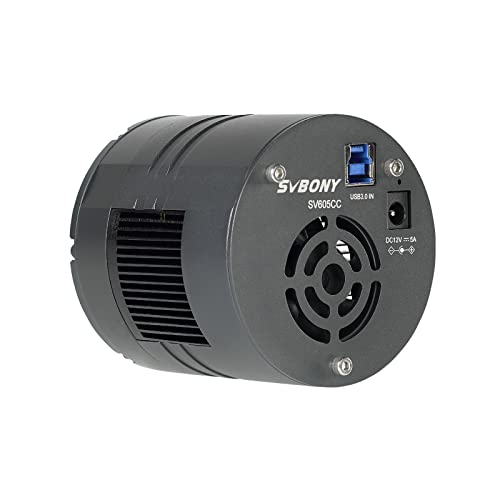
- 9MP square IMX533 color sensor
- Cooling reaches 30°C below ambient
- USB 3.0 for deep-sky imaging
Best For: Deep-sky enthusiasts wanting a cooled square-format camera
Best High-Speed Compact Camera

- 45.1 FPS capture with USB 3.0
- 1.45μm pixels and 3864×2192 resolution
- Includes 1.25-inch nosepiece and cables
Best For: Fast imaging with a compact, accessory-rich color camera
Best for Comfort

- 26MP APS-C IMX571 sensor
- Cooling reaches 35°C below ambient
- 16-bit ADC and zero amp glow
Best For: Demanding long-exposure deep-sky imaging
Best All-in-One Setup

- Integrated imaging, guiding, and control
- STARVIS 2 sensor with 4K capability
- 256GB storage and active cooling
Best For: Streamlined, phone-controlled astrophotography rigs
Best for Urban Nebula Imaging

- IMX533 square color sensor
- Includes SV240 dual narrow-band filter
- Cooling reaches up to 30°C below ambient
Best For: Nebula imaging from light-polluted cities
Best for Wide-Field Capture

- 12.6MP square sensor
- Enhanced near-infrared sensitivity
- USB 3.0 with 256MB DDR3 cache
Best For: Meteor recording, mosaics, and full-sky surveillance
Best APS-C Upgrade – ZWO ASI2600MC-Pro
ZWO ASI2600MC-Pro 26 Megapixel USB3.0 Cooled Color Astronomy Camera for Astrophotography
Check Price On AmazonThe ZWO ASI2600MC-Pro is a strong choice among color astronomy cameras for deep-sky imaging when you want an APS-C sensor, high resolution, and low-noise performance. Its back-illuminated IMX571 sensor combines 26 megapixels, 16-bit processing, and up to 14 stops of dynamic range.
Best For: Deep-sky astrophotographers seeking high dynamic range and detailed color images.
Pros:
- 26MP APS-C back-illuminated sensor captures detailed images.
- 16-bit ADC and up to 14 stops of dynamic range help preserve tonal detail.
- Ultra-low 0e- readout noise and up to 80% peak QE support clean imaging.
Cons:
- Requires an external 12V power supply for operation.
- Its 3.5-pound weight may require careful attention to telescope balance.
Choose this model if maximum image quality and dynamic range matter more than keeping your setup especially light or simple. It is a capable cooled color camera for demanding telescope-based astrophotography.
Best for Planetary Imaging – Celestron NexImage 20
The Celestron NexImage 20 is one of the more approachable color astronomy cameras for lunar, planetary, and solar imaging with a telescope. Its 20MP back-illuminated sensor, region-of-interest capture, USB-C connection, and included iCap software make it convenient for recording and processing Solar System targets.
Best For: Beginners and planetary imagers capturing the Moon, planets, and filtered solar views.
Pros:
- 20MP AR2020 BSI CMOS sensor records 5240 × 3840 images.
- ROI sub-framing can increase frame rates and reduce file sizes.
- USB-C connectivity and included iCap software simplify setup.
- Built-in autoguiding support adds versatility for deep-sky setups.
Cons:
- Designed primarily for Solar System targets rather than faint deep-sky imaging.
- Requires a telescope with a 1.25-inch eyepiece holder or a compatible C-thread adapter.
- Solar imaging requires an appropriate solar filter.
This is a practical pick when ease of use and fast planetary workflows are more important than cooled deep-sky performance. ROI capture is particularly useful for focusing on small, bright targets such as planets.
Best Value Cooled Camera – SVBONY SV405CC
The SVBONY SV405CC is a versatile option among color astronomy cameras for deep-sky imaging and electronic assisted astronomy. Its cooled 4/3-inch IMX294 sensor, 14-bit output, and high full-well capacity are designed to retain detail while reducing noise during longer exposures.
Best For: Deep-sky and EAA users who want cooling, broad software compatibility, and fast USB 3.0 transfers.
Pros:
- Back-illuminated IMX294 sensor uses 4.63-micron pixels for strong light capture.
- Two-stage TEC cooling can lower the sensor to 30°C below ambient.
- 63ke- full-well capacity and 14-bit ADC support dynamic, smooth image data.
- USB 3.0 and a 256MB buffer support up to 19fps in RAW8 at full resolution.
Cons:
- The 3.08-pound body adds noticeable weight to a telescope setup.
- Some software combinations require platform-specific drivers or AstroDMx Capture.
With cooling, HCG mode, and compatibility across Windows, Linux, Mac OS, Chrome OS, and Raspberry Pi, the SV405CC is a flexible camera for users building a multi-platform imaging system.
Best Compact Deep-Sky Camera – ZWO ASI183MC Pro
ZWO ASI183MC Pro 20.18 MP CMOS Color Astronomy Camera with USB 3.0 # ASI183MC-P
Check Price On AmazonThe ZWO ASI183MC Pro is a compact cooled choice among color astronomy cameras, offering 20.1MP resolution and small 2.4-micron pixels for fine detail. Its TEC cooling, USB 3.0 transfer, and included 1.25-inch and 2-inch adapters suit telescope-based imaging of nebulae, galaxies, and other targets.
Best For: Astrophotographers who want fine-resolution deep-sky imaging in a compact camera body.
Pros:
- 20.1MP sensor with 5496 × 3672 resolution and 2.4-micron pixels captures fine detail.
- TEC cooling reduces sensor temperature by approximately 40–45°C below ambient.
- USB 3.0 reaches up to 19fps at maximum resolution with a 256MB DDR3 buffer.
- Includes 1.25-inch and 2-inch telescope connection options plus a USB 2.0 accessory hub.
Cons:
- A separate 12V/3A power supply is required for the TEC cooler.
- The camera uses 12-bit output, below the 16-bit processing offered by some newer models.
- Solar imaging requires a solar filter, which is not included.
This model remains appealing for detail-oriented imagers who value a lightweight, adaptable body and active cooling. Its accessory hub and multiple telescope connection options can also simplify a more advanced imaging rig.
Best Value Cooled Color Camera – SV605CC 9MP IMX533
The SVBONY SV605CC is a practical choice among color astronomy cameras for deep-sky photography, panoramic astronomy, meteor monitoring, and lucky imaging. Its square 3008×3008 frame, 3.76μm pixels, and two-stage TEC cooling make it suited to detailed imaging with compatible telescope setups.
Best For: Deep-sky enthusiasts who want a cooled, square-format color camera for extended imaging sessions.
Pros:
- IMX533 color sensor with 9MP resolution and up to 80% quantum efficiency.
- Two-stage semiconductor cooling can reach 30°C below ambient temperature.
- Glow suppression helps improve the signal-to-noise ratio in affected areas.
- USB 3.0 connectivity supports fast data transfer.
Cons:
- Its 1-inch sensor provides less coverage than the APS-C option in this roundup.
- The supplied specifications identify manual focus, so setup requires telescope-side focusing.
The SV605CC balances cooling, resolution, and a useful square frame in a compact aluminum body. It is a strong fit when efficient deep-sky capture matters more than a larger sensor.
Best High-Speed Compact Camera – ZWO ASI715MC
The ZWO ASI715MC is one of the more compact color astronomy cameras for buyers prioritizing fast capture and fine pixel sampling. Its 1/2.8-inch IMX715 sensor delivers 3864×2192 resolution, while USB 3.0 enables a listed frame rate of 45.1 frames per second.
Best For: Astronomers who want a fast color camera with small 1.45μm pixels and a complete starter accessory kit.
Pros:
- 8.46MP-class IMX715 sensor with 3864×2192 video resolution.
- 45.1 FPS continuous shooting speed supports smooth image capture.
- 12-bit ADC, 0.72e read noise, and 80% quantum efficiency support low-light imaging.
- Includes a 1.25-inch nosepiece, ST4 cable, USB 3.0 cable, and protective cover.
Cons:
- The 1/2.8-inch sensor is smaller than the sensors in the other listed cameras.
- The supplied notes do not list TEC cooling.
The ASI715MC stands out for speed and included accessories rather than sensor size. It makes sense for users who value responsive USB 3.0 capture and small pixels in a straightforward package.
Best for Comfort – SVBONY SC571CC 26MP
The SVBONY SC571CC is a high-resolution option among color astronomy cameras, built around an APS-C IMX571 sensor. Its 26MP resolution, 16-bit ADC, dual-stage cooling, and zero amp-glow design target demanding deep-sky work involving faint nebulae, H-alpha regions, and molecular clouds.
Best For: Deep-sky imagers who need a larger APS-C field of view, extensive dynamic range, and long-exposure noise control.
Pros:
- 26MP APS-C BSI sensor with a 23.4×15.7mm imaging area.
- Dual-stage TEC cooling reaches 35°C below ambient temperature.
- 16-bit ADC provides up to 14 stops of dynamic range.
- Zero amp-glow design, front-window heater, and 512MB DDR3 buffer support extended sessions.
Cons:
- Its larger APS-C format may require a telescope with a sufficiently large image circle.
- The feature set is geared toward serious deep-sky imaging rather than simple entry-level use.
The SC571CC is the strongest choice here for maximizing resolution and sensor area. Its cooling, heater, buffering, and dynamic-range features make it particularly suitable for structured, all-night imaging workflows.
Best All-in-One Setup – ZWO ASI585MC AIR
ZWO ASI585MC AIR Cooled Color Astronomy Camera w/Built-in Guide Camera & ASIAir with Power Supply
Check Price On AmazonFor buyers seeking versatile color astronomy cameras, the ZWO ASI585MC Air combines imaging, guiding, and rig control in one cooled system. Its STARVIS 2 sensor, 4K video capability, 256GB eMMC storage, and built-in ASIAir features make it especially practical for streamlined astrophotography sessions.
Best For: Astrophotographers who want an integrated camera, guide camera, and control system with phone-based operation.
Pros:
- Combines imaging, guiding, and telescope control in one unit.
- STARVIS 2 sensor offers enhanced sensitivity, dynamic range, and signal-to-noise performance.
- 256GB built-in storage, expandable through USB 2.0 ports, supports extended capture sessions.
- Cooling can reduce the sensor temperature by approximately 30–35°C below ambient.
Cons:
- Its integrated features may be more than needed for users seeking a basic camera-only setup.
- Manual focus and manual exposure control require more hands-on setup.
The ASI585MC Air is a strong choice when convenience and system integration matter as much as image quality. Zero amp glow, HCG mode, and low readout noise further support clean, detailed captures during longer exposures.
Best for Urban Nebula Imaging – SVBONY SV605CC
The SVBONY SV605CC stands out among color astronomy cameras for city-based deep-sky work because it pairs a cooled IMX533 color sensor with an SV240 dual narrow-band filter. The combination is designed to suppress urban light pollution while retaining key Ha, OIII, and H-Beta wavelengths.
Best For: Deep-sky photographers imaging nebulae and galaxies from light-polluted locations.
Pros:
- Includes an SV240 2-inch multi-narrowband filter for blocking urban light pollution.
- IMX533 sensor provides a square 3008×3008 frame and stated quantum efficiency of up to 80%.
- Two-stage TEC cooling can lower the camera temperature by up to 30°C below ambient.
- Filter transmission exceeds 90% in core Ha, OIII, and H-Beta wavelengths.
Cons:
- The 1,458-gram weight is substantial compared with many compact astronomy cameras.
- The included filter is optimized for selected emission wavelengths rather than unrestricted broadband color imaging.
This package offers a particularly focused solution for urban astrophotography. Its cooling, glow suppression, and included filter reduce the need to assemble separate light-pollution-control components, though buyers should confirm their telescope adapters and mounting capacity.
Best for Wide-Field Capture – ZWO ASI676MC
For wide-field and surveying applications, the ZWO ASI676MC brings a square 12.6MP format to the color astronomy cameras category. Its geometry simplifies mosaic stitching and works well with compatible wide-angle or fisheye lenses, while low readout noise and enhanced near-infrared sensitivity support detailed captures.
Best For: Meteor recording, full-sky surveillance, and wide-field imaging where a square sensor is advantageous.
Pros:
- Square sensor simplifies mosaic construction and supports wide-angle lens applications.
- 12.6MP resolution and up to 31.2 frames per second support detailed or fast capture.
- Low readout noise, low dark current, and no amp glow help improve image clarity.
- USB 3.0 connectivity and 256MB DDR3 cache support stable data transfer.
Cons:
- No image stabilization is provided.
- The camera requires a compatible telescope, lens, or optical setup; it is not a standalone photographic camera.
The ASI676MC is a flexible option when a square field of view is more useful than a conventional rectangular frame. Its HCG mode, 0.56e stated readout noise, and UV/IR-cut window make it well suited to demanding low-light capture, particularly across broad sky areas.
How We Picked These Color Astronomy Cameras
We focused on cameras with useful combinations of sensor performance, cooling or planetary capture capability, connectivity, software compatibility, and practical value. The selection includes popular Sony-based sensors in several formats, from compact planetary models to larger APS-C cameras suited to wide deep-sky targets.
We also considered the type of imaging each camera supports. A high-frame-rate camera can be excellent for the Moon and planets, while a cooled model generally offers better control of thermal noise during long exposures. Features such as built-in guiding, ASIAir compatibility, USB 3.0, and included filters or accessories can further simplify a setup.
Quick Comparison
| Best For | What to Prioritize | Shortlist Direction |
|---|---|---|
| Moon and planets | Fast frame rates, sensitivity, and low read noise | Compact uncooled planetary cameras |
| Nebulae and galaxies | Cooling, sensor efficiency, and long-exposure stability | Cooled cameras with modern CMOS sensors |
| Wide-field imaging | Larger sensor and suitable telescope image circle | APS-C models such as the ASI2600MC-Pro or IMX571 options |
| Simple portable setups | Integrated guiding, control, and power features | All-in-one systems such as the ASI585MC AIR |
Key Buying Factors for Color Astronomy Cameras
Sensor Size and Resolution
A larger sensor captures a wider field of view, but it may require a telescope with a larger corrected image circle and more demanding guiding. Resolution determines how finely the camera samples your telescope’s image; more megapixels are not automatically better if the pixels are too small for your optics or seeing conditions.
Cooling and Thermal Control
For deep-sky imaging, a regulated cooled camera can reduce thermal noise and make calibration frames more consistent. Cooling is less important for short planetary exposures, where frame rate and atmospheric conditions usually matter more.
Color Workflow and Filters
One-shot color cameras are convenient because they capture red, green, and blue information in a single exposure sequence. They work especially well with light-pollution or multi-narrowband filters, but dedicated monochrome systems can still offer more flexibility for advanced filter-based imaging.
Compatibility and Connectivity
Check the camera’s drivers, capture software, telescope back focus, connection type, and power requirements before buying. USB 3.0 is useful for high-speed planetary capture, while reliable cooling power and software support matter more for long deep-sky sessions.
Who Should Buy Which Color Astronomy Cameras?
Beginners: Choose a straightforward color camera with broad software support and modest setup demands. A compact planetary model is a sensible starting point if you mainly want lunar and planetary images.
Deep-sky imagers: A cooled camera with a modern, low-noise sensor is the better fit for nebulae, galaxies, and multi-minute exposures. Match the sensor size to your telescope before prioritizing megapixel count.
Wide-field enthusiasts: Consider an APS-C model when your telescope supports the larger field and you want more framing flexibility. Confirm vignetting and reducer compatibility first.
Travel and automation users: Integrated guiding or control features can reduce the number of separate accessories you need. These cameras are especially attractive for compact, repeatable imaging rigs.