Choosing among astronomy cameras for beginners can feel complicated because the category includes everything from app-controlled smart telescopes to compact USB planetary cameras. The best starting point depends on whether you want quick, guided imaging or more hands-on control.
Below, we compare 10 accessible options by setup, sensor, connectivity, portability, and intended use so you can choose a camera that matches your telescope, experience level, and observing goals.
Best 10 Astronomy Cameras for Beginners Picks for 2026
Best Portable Smart Telescope

- 3-pound travel-friendly design
- 4K auto-tracking and Auto GOTO
- App-based cloud image processing
Best For: Beginners seeking an all-in-one astrophotography setup
Best Planetary USB Camera

- 1080p capture at up to 107 FPS
- IMX662 sensor with low readout noise
- ST4 guiding and computer connectivity
Best For: Computer-based lunar and planetary imaging
Best Lightweight Deep-Sky Starter

- 1.85-pound pocket-sized design
- Auto GOTO with interactive sky map
- EQ mode with exposures up to 90 seconds
Best For: Portable beginner imaging of nebulae and star clusters
Best Universal Eyepiece Camera

- 4K video with 8MP imaging sensor
- Fits 23mm–60mm eyepieces
- Built-in screen, WiFi, and app control
Best For: Upgrading an existing telescope or binocular setup
Best Smart Telescope
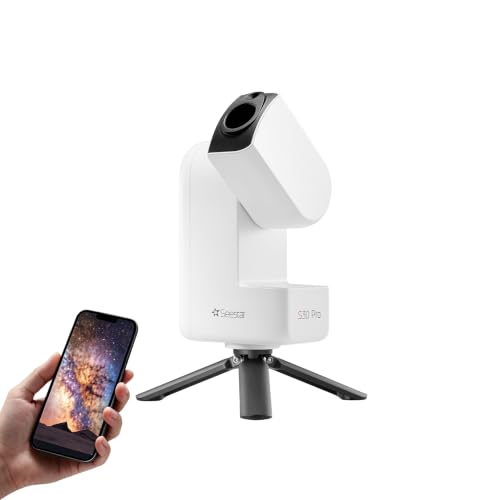
- Automatic GoTo targeting and tracking
- 4K dual-camera imaging with AI processing
- Portable, app-controlled deep-sky imaging
Best For: Beginners seeking automated deep-sky astrophotography
Best Planetary Camera

- IMX715 color sensor with 1.45μm pixels
- USB 3.0 transfer up to 45.5 fps
- Supports SharpCap, AstroDMx, and NINA
Best For: Computer-based planetary imaging with an existing telescope
Best Beginner Eyepiece Camera
Telonixium WiFi Telescope Camera

- Built-in 1.5-inch viewing screen
- 1080p video and 2MP photo capture
- WiFi, 64GB storage, and three-hour battery
Best For: Simple moon viewing, remote observing, and casual recording
Starter Pick
SV105 Beginner Telescope Camera
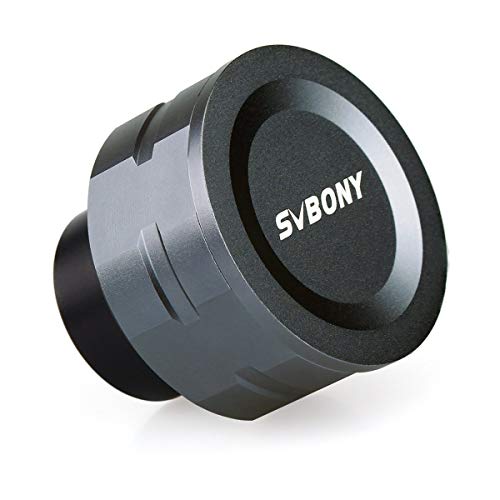
- 1080p video at up to 30fps
- Direct 1.25-inch telescope connection
- Suitable for lunar and planetary imaging
Best For: Beginners seeking simple telescope video capture
Learning-Friendly Pick
Nova200 1080p Electronic Eyepiece

- 1080p at up to 30fps
- Removable UV/IR cut filter included
- UVC plug-and-play across major desktop systems
Best For: Backyard astronomy, classrooms, and shared live viewing
Higher-Resolution Pick
SV205 7.05MP Astrophotography Camera

- 7.05MP IMX415 color sensor
- Up to 30fps at 1920×1080
- High-resolution 3264×2160 capture mode
Best For: Beginners wanting more lunar and planetary detail
Best Portable Smart Telescope – DWARF 3
For beginners looking at astronomy cameras for beginners, the DWARFLAB Dwarf 3 offers an approachable all-in-one setup. Its app control, automatic tracking, built-in processing, and lightweight design reduce the usual barriers to getting started.
Best For: Beginners who want portable, app-controlled astrophotography for stars, planets, landscapes, and wildlife.
Pros:
- Portable 3-pound design with a carrying bag for travel and outdoor use.
- 4K auto-tracking, Auto GOTO, and AZ/EQ modes simplify target capture.
- Cloud-powered processing works through the dedicated app without requiring a computer.
- Dual lenses support deep-space, Milky Way, star-trail, panorama, and daytime imaging.
Cons:
- The system depends on the DWARFLAB app for its streamlined processing workflow.
- Its 35mm objective lens is designed for portability rather than large-aperture observing.
The DWARF 3 is a strong beginner-friendly choice when convenience and portability matter more than building a traditional telescope-and-camera system. Automatic features help new users start capturing quickly, while EQ mode provides room to explore more advanced imaging.
Best Planetary USB Camera – SV305C Pro
The SVBONY SV305C Pro is a more hands-on option among astronomy cameras for beginners, pairing a 2MP IMX662 sensor with fast USB 3.0 video capture. It is aimed at users who want to connect a telescope camera to a computer and learn planetary imaging techniques.
Best For: Beginners and developing astrophotographers focused on high-frame-rate images of the Moon and planets.
Pros:
- Records 1920×1080 video at up to 107 frames per second for fast-moving planets.
- High-sensitivity IMX662 sensor and low readout noise support clearer low-light captures.
- ST4 guiding interface works with software such as PHD2 and ASCOM.
- 128MB DDR buffer and adjustable ROI support continuous, targeted capture.
Cons:
- Requires a computer and does not support connection to an iPad.
- Manual focus and exposure controls may require more setup than a smart telescope.
- The 2MP resolution is primarily suited to video-based planetary imaging rather than high-resolution still photography.
This camera makes sense for beginners who are comfortable using a computer and want to practice stacking planetary video. Its fast frame rate, guiding interface, and flexible ROI controls provide useful learning tools, but it is less plug-and-play than app-controlled alternatives.
Best Lightweight Deep-Sky Starter – DWARF Mini
For newcomers comparing astronomy cameras for beginners, the DWARFLAB Dwarf Mini combines a pocket-sized design with automated targeting and a built-in sky atlas. It also offers EQ mode, up to 90-second single-frame exposures, and cloud processing for a gentler path into deep-sky imaging.
Best For: Beginners who want a highly portable smart telescope for nebulae, star clusters, and casual family stargazing.
Pros:
- Weighs about 1.85 pounds and fits easily into a backpack or large pocket.
- App control, Auto GOTO, and an interactive sky map simplify target selection.
- EQ mode supports single-frame exposures up to 90 seconds.
- Built-in light-pollution filters and cloud processing help streamline urban imaging.
Cons:
- The 30mm objective lens prioritizes compactness over light-gathering capacity.
- It is primarily controlled through a smartphone rather than a traditional camera workflow.
- Manual-and-auto focus may still require adjustment for some targets.
The Dwarf Mini is particularly appealing if portability and ease of use are your priorities. Its automatic controls make first sessions approachable, while EQ mode and longer exposures give beginners a way to experiment with more advanced deep-sky techniques.
Best Universal Eyepiece Camera – 4K WiFi Telescope Camera
This 4K wireless telescope camera is a flexible accessory for beginners exploring astronomy cameras for beginners with equipment they already own. Its universal locking groove fits eyepieces from 23mm to 60mm, while the built-in screen, WiFi, and app controls make viewing and recording straightforward.
Best For: Beginners who want to add digital recording, remote viewing, and time-lapse features to a telescope, binocular, monocular, or microscope.
Pros:
- 8MP sensor supports 4K video and up to 64MP image capture.
- Universal mounting groove accommodates eyepieces from 23mm to 60mm.
- Built-in 2.8-inch IPS screen provides real-time viewing without a separate monitor.
- WiFi, XDVPRO app control, time-lapse, and support for microSD cards up to 512GB add flexibility.
Cons:
- Manual focus means achieving sharp results may require hands-on adjustment.
- Compatibility depends on having an eyepiece within the supported 23mm–60mm range.
- It is an eyepiece accessory rather than a standalone telescope.
This camera is a practical entry point for beginners who already own optical equipment and want to record what they see. The screen and wireless features are convenient, but results will depend on the telescope, eyepiece, alignment, and focus used with it.
Best Smart Telescope – Seestar S30 Pro
For beginners comparing astronomy cameras for beginners, the ZWO Seestar S30 Pro is an especially hands-off option. It combines automatic GoTo targeting, tracking, autofocus, app control, and one-tap imaging in a compact 3.6-pound smart telescope.
Best For: Beginners who want straightforward deep-sky and wide-field astrophotography from a smartphone or tablet, including from light-polluted urban locations.
Pros:
- Automatic GoTo targeting and tracking simplify setup and celestial-object capture.
- Dual-camera 4K imaging, AI processing, and automatic mosaic stitching support detailed photos.
- Built-in light-pollution filters and apochromatic optics are useful in bright surroundings.
- Portable design includes anti-dew protection and supports long imaging sessions.
Cons:
- Designed for deep-sky and wide-field imaging rather than planetary observation.
- Deep-sky imaging requires the device to remain stationary for stable tracking.
- Its app-driven automated approach offers less hands-on control than a separate astronomy camera.
The S30 Pro is the simplest all-in-one choice here for beginners who prioritize quick results over building a traditional telescope-and-camera setup. Its portability and automated processing make it practical for travel, camping, and casual observing.
Best Planetary Camera – SVBONY SC715C
The SVBONY SC715C is a dedicated planetary camera for beginners who are ready to connect an astronomy camera to an existing telescope. Its IMX715 color sensor, 1.45μm pixels, USB 3.0 connection, and 4K-capable imaging target detailed planetary video and image capture.
Best For: Beginners with a telescope and computer who want high-resolution planetary imaging, software-based control, and optional ST4 guiding support.
Pros:
- IMX715 sensor and small 1.45μm pixels are designed for detailed planetary imaging.
- USB 3.0 supports up to 45.5 frames per second at full resolution.
- Works with SharpCap, AstroDMx Capture, and NINA.
- Lightweight aluminum body weighs about 147g and provides heat dissipation.
Cons:
- It is not compatible with smartphones and requires a computer.
- Dedicated software must be downloaded for use.
- The camera has no built-in focus adjustment; focusing must be done with the telescope’s focuser.
This is a more technical choice than a smart telescope, but it offers a clearer path into computer-controlled planetary imaging. Beginners should have a compatible telescope, focuser, computer, and suitable capture software before choosing it.
Best Beginner Eyepiece Camera – Telonixium WiFi Telescope Camera
For beginners exploring astronomy cameras for beginners, this WiFi eyepiece camera offers a familiar, screen-based way to observe and record through compatible optical equipment. It combines a 1.5-inch display, 1080p video, 2MP photos, app connectivity, and built-in storage.
Best For: Beginners who want an easy electronic eyepiece for moon viewing, remote observing, casual astrophotography, birdwatching, or use with compatible telescopes, binoculars, monoculars, and microscopes.
Pros:
- Built-in 1.5-inch IPS screen allows direct viewing without relying only on a phone.
- 1080p video and 2MP photos provide accessible recording for moon and daytime subjects.
- WiFi supports remote observing and connection to up to two devices within 49 feet.
- Includes 64GB storage, supports cards up to 256GB, and offers up to three hours of recording.
Cons:
- Manual focus requires adjustment through the attached optical device.
- Compatibility depends on scopes or other equipment with a 28mm–50mm fit.
- Its 1080p/2MP specifications are less suited to advanced high-resolution astrophotography.
This camera is a practical entry point for shared viewing and simple recording rather than advanced deep-sky work. Its screen, WiFi connection, broad optical compatibility, and rechargeable battery make it particularly approachable for families and multi-purpose outdoor use.
Starter Pick – SV105 Beginner Telescope Camera
For shoppers comparing astronomy cameras for beginners, the SVBONY SV105 is a straightforward entry point for lunar and planetary imaging. Its 1.25-inch format connects directly to many telescopes, while USB output lets you view and record through a laptop or PC.
Best For: Beginners who want simple Moon, planet, and terrestrial-target video capture.
Pros:
- Plug-and-play USB design with up to 30fps at 1920×1080.
- 1/2.8-inch IMX307 color sensor with low-light compensation.
- Standard 1.25-inch barrel and M28.5×0.6 filter thread.
- Works with Windows, Linux, Android, and macOS laptops using supported capture software.
Cons:
- Designed primarily for lunar and planetary imaging rather than deep-sky astrophotography.
- Manual focusing requires adjustment through the telescope setup.
- Not compatible with Apple iPhones or iPads.
The SV105 keeps the learning curve manageable and offers useful compatibility for basic video astronomy. It is a sensible choice when ease of setup matters more than advanced imaging flexibility.
Learning-Friendly Pick – Nova200 1080p Electronic Eyepiece
The Nova200 is a practical option for anyone researching astronomy cameras for beginners and wanting an easy computer-based viewing setup. It combines UVC plug-and-play operation, 1080p video, and a removable UV/IR cut filter for flexible lunar and planetary use.
Best For: Backyard observers, classrooms, STEM demonstrations, and beginners sharing live Moon and planet views.
Pros:
- 2MP sensor records 1920×1080 video at up to 30fps.
- UVC plug-and-play compatibility with Windows, macOS, and Linux.
- Removable UV/IR cut filter provides more setup flexibility.
- Lightweight 110g CNC aluminum housing supports portable use and heat dissipation.
Cons:
- Manual focus requires adjustment at the telescope.
- Focused on lunar, planetary, basic EAA, and terrestrial viewing.
- ASCOM functionality requires the optional Windows driver and compatible software.
With its removable filter and broad UVC operating-system support, the Nova200 offers a friendly path from live viewing to basic imaging. It is especially appealing when several people need to see the telescope image on a computer screen.
Higher-Resolution Pick – SV205 7.05MP Astrophotography Camera
For beginners who want more resolution from astronomy cameras for beginners, the SVBONY SV205 steps up to a 7.05MP IMX415 color sensor. It supports high-resolution still-style video modes as well as faster 2K capture for lunar, planetary, and terrestrial targets.
Best For: New astrophotographers who want higher-resolution lunar and planetary imaging with a USB 3.0 connection.
Pros:
- 7.05MP IMX415 sensor with a 3264×2160 YUV mode at up to 15fps.
- Records 1920×1080 video at up to 30fps in MJPG format.
- Machined aluminum 1.25-inch adapter barrel connects directly to compatible telescopes.
- Includes a USB 3.0 cable, dust cover, cleaning cloth, and manual.
Cons:
- Requires a compatible 1.25-inch telescope interface or adapter.
- Manual focus adds setup work for first-time users.
- Apple compatibility is limited to macOS laptops; it does not support iPhones or iPads.
The SV205 is a stronger fit for beginners who are willing to manage more imaging settings in exchange for higher resolution. Its dual video options make it useful for choosing between detailed capture and faster 2K recording.
How We Picked the Best Astronomy Cameras for Beginners
We focused on equipment that lowers the barrier to entry without eliminating useful upgrade potential. The roundup includes smart telescopes with integrated imaging systems, standalone cameras for compatible telescopes, and electronic eyepieces designed for straightforward viewing or recording.
Our comparison emphasizes setup difficulty, software or wireless connectivity, sensor resolution, compatibility, portability, and the type of targets each camera is most likely to handle well. Because specifications alone do not determine image quality, we also considered how practical each design is for a first-time user.
Quick Comparison
| Camera type | Best for | Main advantage | Watch out for |
|---|---|---|---|
| Smart telescope | Guided astrophotography | Integrated optics, mount, and app | Less flexibility than a modular setup |
| USB planetary camera | Moon and planets | Direct computer control and fast capture | Requires a telescope and suitable software |
| Wireless eyepiece camera | Casual viewing and sharing | Simple phone or screen-based operation | May offer limited manual control |
| Higher-resolution telescope camera | Detailed lunar or planetary imaging | More pixels for cropping and detail | Needs adequate tracking and processing |
Key Buying Factors for Astronomy Cameras for Beginners
Compatibility and Connection
Check the camera’s eyepiece size, usually 1.25 or 2 inches, and confirm that your telescope can reach focus with it installed. USB models generally connect to a computer, while Wi-Fi models may use a phone or tablet. Smart telescopes are the simplest option because the optical system and camera are designed to work together.
Target Type and Sensor
For the Moon and bright planets, a fast color camera with a small or medium sensor can be effective. Deep-sky imaging is more demanding: tracking, exposure control, stacking, and light pollution often matter more than headline megapixels. A larger pixel count can help with cropping, but it does not automatically produce cleaner images.
Software and Learning Curve
Beginners should look for clear mobile apps, dependable drivers, and compatibility with commonly used capture software. A guided smart telescope can produce useful results quickly, whereas a USB camera offers more control but requires a laptop, focusing, exposure, and processing workflow.
Portability and Power
Choose a compact camera or smart telescope if you plan to observe away from home. For longer sessions, consider battery life, cable length, storage, and whether the device needs a continuous computer or phone connection.
Who Should Buy Which Astronomy Cameras for Beginners?
Choose a smart telescope if you want the fastest path from setup to saved images and prefer app-based guidance. Pick a USB planetary camera if you already own a compatible telescope and want to learn manual capture and processing. A wireless eyepiece camera suits casual observers who want to share live views with others, while a higher-resolution model is better for users prepared to spend more time on focusing, tracking, and post-processing.
Before buying, match the camera to your telescope’s mount and optical limits. For most first-time buyers, a simple workflow and reliable compatibility are more valuable than the highest advertised resolution.