The best stereo microscopes for homeschool make hands-on science more engaging, whether students are examining insects, rocks, plants, electronics, or everyday materials. The right model should offer a comfortable view, useful magnification, dependable lighting, and controls that match the learner’s age and experience.
This roundup includes beginner-friendly microscope kits, durable binocular models, and higher-end stereo zoom microscopes for families who want room to grow. Use the guide below to compare features and choose a practical fit for your homeschool lab.
Best 10 Stereo Microscopes for Homeschool Picks for 2026
Best Cordless Option
AmScope SE306R-P-LED Stereo Microscope

- 20x and 40x stereo magnification
- Top and bottom LED illumination
- Cordless, all-metal stand
Best For: Flexible homeschool specimen observation
Best High-Magnification Kit

- Magnification settings up to 2000x
- Dual illumination and adjustable diaphragm
- Includes slides and lab accessories
Best For: Home biology and slide-based lessons
Best Simple Stereo Scope

- 20x and 40x binocular viewing
- Sharp widefield optical glass lenses
- Durable all-metal framework
Best For: Solid-object observation at a homeschool desk
Best Starter Kit for Young Learners
Uarzt 58-Piece Kids Microscope

- 100x to 1200x stated magnification
- 58-piece slide and tool kit
- Compact LED microscope with carrying box
Best For: Supervised introductory STEM activities for ages 5–12
Professional 3D Observation
Trinocular Stereo Zoom Microscope

- 3.5X–90X range with realistic 3D stereo imaging
- Adjustable boom arm and heavy 18-pound base
- Trinocular port and included LED ring light
Best For: Advanced homeschool science and specimen documentation
Complete Beginner Science Kit
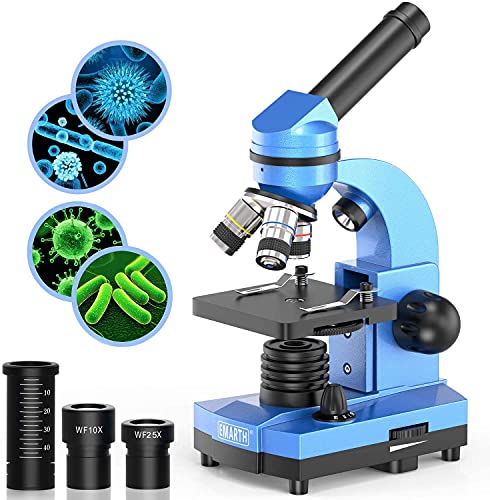
- 40X–1000X compound magnification
- 52-piece kit with slides and tools
- Top and bottom LED illumination
Best For: Children ages 8–12 and introductory homeschool biology
Flexible Trinocular Viewing
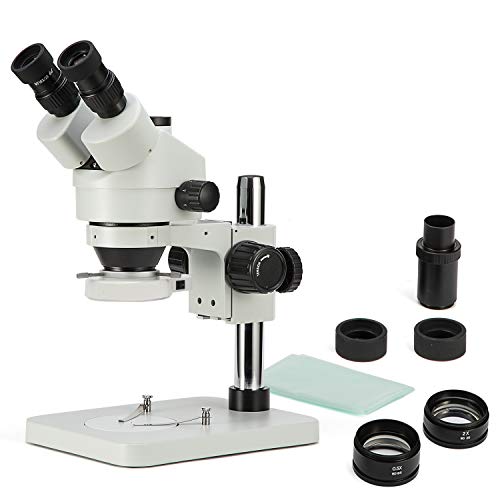
- 3.5X–90X range with two auxiliary objectives
- 100 mm working distance for hands-on samples
- 56-bulb LED ring light and camera-ready port
Best For: Advanced students and detailed specimen or electronics work
Best All-Around Learning Kit

- Six magnification settings up to 2000X
- Dual LED lighting for varied specimens
- Includes slides, tools, and smartphone adapter
Best For: Homeschool biology lessons and beginner experiments
Best Advanced Zoom Setup
ZTEEERS Trinocular Stereo Microscope

- 3.5X–90X stated range with auxiliary lenses
- Trinocular viewing supports camera connections
- Heavy steel base and dimmable LED ring light
Best For: Advanced homeschool labs and documented specimen projects
Best Simple Stereo Option
ESSLNB Binocular Stereo Microscope

- Straightforward fixed 30X magnification
- Dual LED lighting for objects and specimens
- Comfortable binocular head for younger users
Best For: Introductory hands-on homeschool observation
Best Cordless Option – AmScope SE306R-P-LED Stereo Microscope
For homeschoolers who want to examine insects, rocks, plants, or everyday objects, this stereo microscope for homeschool use offers straightforward 20x and 40x viewing. Its cordless LED lighting and durable metal stand make it practical for flexible study areas.
Best For: Homeschool labs needing cordless stereo viewing and dual illumination.
Pros:
- 20x and 40x stereo magnification settings
- Top and bottom LED lights for opaque and translucent objects
- Widefield optical glass lenses and binocular viewing
- All-metal pillar stand with a listed five-year warranty
Cons:
- Maximum magnification is 40x, so it is not intended for cellular viewing
- Battery-powered operation requires maintaining batteries
This is a focused choice for hands-on specimen work where depth and a natural three-dimensional view matter more than very high magnification.
Best High-Magnification Kit – Woehrsh Compound Microscope
This compound microscope is suited to homeschool lessons centered on cells, prepared slides, and other small specimens. It combines multiple objective and eyepiece options with dual illumination and a supplied lab kit for getting started.
Best For: Students and adult beginners exploring slide-based biology at home.
Pros:
- Multiple stated magnification settings from 40x through 2000x
- 4x, 10x, and 40x glass objectives
- Top and bottom lights with adjustable brightness and a six-hole diaphragm
- Includes prepared sections, blank slides, coverslips, tools, and a phone holder
Cons:
- Compound design is less suitable for larger three-dimensional objects
- Electric operation is less portable than a cordless model
With its broad magnification range and included accessories, this model is the most biology-oriented option here, though younger learners may benefit from adult guidance during setup.
Best Simple Stereo Scope – AmScope SE304R-P
For homeschool families seeking a sturdy, uncomplicated stereo microscope, this AmScope model provides 20x and 40x forward binocular viewing. Its broad field and depth are useful for inspecting objects such as insects, plants, rocks, coins, fabrics, and circuit boards.
Best For: Detailed observation of solid objects in a dedicated homeschool workspace.
Pros:
- 20x and 40x forward binocular magnification
- Widefield optical glass lenses for sharp images
- High resolution and depth across a broad viewing field
- Sturdy all-metal framework with top lighting
Cons:
- Corded electric power limits placement flexibility
- Halogen lighting may be less convenient than cordless LED operation
- Maximum magnification is 40x
This is a sensible pick when durability and a natural stereo view are priorities, especially for lessons involving larger specimens rather than prepared slides.
Best Starter Kit for Young Learners – Uarzt 58-Piece Kids Microscope
This beginner-friendly microscope kit is designed for younger homeschool students who need guided, hands-on activities. It includes prepared specimens, blank slides, basic tools, and a carrying box, making it easy to begin simple STEM exploration at home.
Best For: Children ages 5–12 starting supervised microscope activities.
Pros:
- 100x to 1200x stated magnification range
- 58-piece kit includes prepared and blank slides
- Includes tweezers, dropper, scalpel, and learning guide
- Compact metal-and-plastic body with LED light and carrying box
Cons:
- Requires two AA batteries, which are not included
- Designed for beginners rather than advanced microscopy
- Some included tools require close adult supervision
The complete accessory set gives young learners an inviting introduction to microscope work, while the compact design supports storage and occasional classroom or home use.
Professional 3D Observation – Trinocular Stereo Zoom Microscope
For homeschool families studying specimens, insects, minerals, or hands-on science projects, this stereo microscope for homeschool use offers realistic 3D viewing, a broad 3.5X–90X range, and space for larger samples. Its trinocular design also supports camera connection for recording observations.
Best For: Advanced homeschool science, specimen inspection, dissection, and projects that benefit from camera documentation.
Pros:
- True 3D stereo imaging with continuous zoom and a 3.5X–90X total magnification range.
- Long, adjustable boom arm provides flexible positioning and generous working space.
- Heavy 18-pound base, adjustable LED ring light, and included auxiliary lenses support stable, well-lit viewing.
- Trinocular port enables simultaneous observation and camera-based recording.
Cons:
- Its professional design and heavy base may be more equipment than younger beginners need.
- The supplied notes do not identify a camera as included.
This is a substantial choice for a homeschool setup that goes beyond basic biology slides. The stable stand, flexible arm, and documentation features make it especially useful for long-term projects and detailed three-dimensional samples.
Complete Beginner Science Kit – 40X–1000X Kids Microscope
This compound microscope is a practical entry point for families comparing stereo microscopes for homeschool and broader biology study. It combines 40X–1000X magnification with 52 educational pieces, so students can begin examining prepared slides and creating hands-on experiments at home.
Best For: Children ages 8–12, homeschool biology lessons, STEM activities, and adult beginners.
Pros:
- 40X–1000X magnification supports high-power compound microscopy.
- 52-piece kit includes prepared slides, blank slides, and experiment tools.
- Top and bottom LED illumination accommodates opaque and translucent specimens.
- Metal frame, rotatable head, smooth focusing, and six color filters are beginner-friendly features.
Cons:
- It is a compound microscope rather than a stereo microscope, so it is better suited to slide-based biology than larger three-dimensional objects.
- Batteries are not included.
For families starting a structured homeschool science curriculum, the included materials reduce the need to gather supplies separately. Its high magnification and dual illumination make it versatile for introductory biology, while the kit keeps the first experiments approachable.
Flexible Trinocular Viewing – SWIFT Stereo Zoom Microscope
Homeschool learners who want to examine minerals, collectibles, electronics, or biological samples can use this stereo microscope for homeschool projects requiring depth and working space. The SWIFT system offers 3.5X–90X magnification with auxiliary objectives, a 100 mm working distance, and a camera-ready trinocular port.
Best For: Older students, advanced homeschool labs, gem and mineral observation, electronics work, and detailed specimen documentation.
Pros:
- Wide 3.5X–90X range using the zoom objective and included 0.5X and 2.0X objectives.
- 100 mm working distance leaves room for handling larger specimens or tools.
- 45-degree rotating trinocular head supports comfortable viewing and camera attachment.
- 56-bulb LED ring light provides bright, shadow-free illumination with low heat.
Cons:
- The professional feature set may be excessive for young children or basic slide work.
- The supplied notes do not indicate that a camera is included.
- It uses corded electric power.
This model is well suited to a dedicated homeschool workspace where students need to move between low-power inspection and higher-magnification detail. Its working distance, lighting, and camera port make it a strong option for projects that combine observation with practical handling or documentation.
Best All-Around Learning Kit – PALOBIL Compound Microscope
For families seeking stereo microscopes for homeschool use but also wanting slide-based biology lessons, this PALOBIL kit offers broad magnification and a substantial accessory set. Its metal frame, dual LED lighting, prepared slides, and smartphone adapter support hands-on exploration from beginner activities to more detailed specimen work.
Best For: Homeschool students and beginners exploring prepared slides, plants, and translucent or opaque objects.
Pros:
- Six stated magnification settings from 100X to 2000X using the included eyepiece and objective combinations.
- Top incident and bottom transmitted LED lighting accommodate opaque and translucent specimens.
- Includes prepared and blank slides, covers, droppers, tweezers, a cell phone adapter, and other starter accessories.
- Sturdy metal frame with adjustable focus and a five-color disk aperture for contrast control.
Cons:
- It is a compound microscope rather than a conventional low-magnification stereo zoom model.
- Requires three AA batteries, which are not included, or the supplied AC adapter.
- The extensive feature set may be more than a young beginner needs initially.
This is a versatile homeschool lab choice when biology slides and higher magnification matter more than a wide, three-dimensional stereo view. The included materials make it easier to begin experiments without assembling a separate starter kit.
Best Advanced Zoom Setup – ZTEEERS Trinocular Stereo Microscope
For advanced stereo microscopes for homeschool programs, the ZTEEERS trinocular model is built around continuous zoom, extended working flexibility, and camera connectivity. Its heavy steel base, boom stand, ring light, and auxiliary lenses make it suited to detailed projects where students need to handle larger specimens or document observations.
Best For: Advanced homeschool labs, collaborative viewing, specimen inspection, and camera-assisted projects.
Pros:
- Continuous 0.7X–4.5X zoom expands to a stated 3.5X–90X range with the included auxiliary lenses.
- Trinocular head supports simultaneous binocular observation and camera or electronic-eyepiece connections.
- Heavy-duty 18-pound steel base and ball-bearing boom arm provide a stable, flexible working setup.
- Dimmable 56-LED ring light provides focused, shadow-free illumination.
Cons:
- Its large 19.5-inch dimensions and heavy base require a dedicated workspace.
- The advanced trinocular configuration may be excessive for simple introductory lessons.
- It is a premium-style setup with more components to adjust than a basic microscope.
This model is the strongest fit when a homeschool workspace needs professional-style stereo viewing and image capture. The broad zoom range and long, flexible stand make it particularly useful for larger objects and projects involving manipulation.
Best Simple Stereo Option – ESSLNB Binocular Stereo Microscope
Families comparing straightforward stereo microscopes for homeschool may prefer this ESSLNB model for its fixed 30X magnification and easy binocular viewing. Dual LED illumination lets students examine objects from above or specimens from below, while the 45-degree head is designed to make viewing more comfortable for younger users.
Best For: Introductory homeschool observation of rocks, stamps, jewelry, plants, and larger specimens.
Pros:
- Simple 30X setup combines WF10X eyepieces with a 3X objective.
- Upper and lower LED lights support objects and specimens that need different illumination.
- Binocular head has a 45-degree viewing angle and adjustable interpupillary distance.
- Suitable for home or laboratory use and for specimens that require handling or manipulation.
Cons:
- Fixed 30X magnification provides less range than zoom or compound alternatives.
- The supplied notes do not indicate a camera port or included experiment accessories.
- Its capabilities are aimed at practical inspection rather than very high-magnification slide work.
This is a sensible entry point for hands-on homeschool science when ease of use and a three-dimensional stereo view are priorities. Its limited, fixed magnification is also its main tradeoff, so families seeking progressive slide-based lessons may want a more adjustable model.
How We Picked the Best Stereo Microscopes for Homeschool
We focused on features that matter in a home learning environment: viewing comfort, working distance, magnification range, illumination, construction, included accessories, and ease of use. Stereo microscopes are especially useful for observing three-dimensional objects because they provide depth perception and more room beneath the objective than many compound microscopes.
We also considered the needs of different learners. A young beginner may benefit from a complete kit with prepared slides and simple controls, while older students may prefer binocular or trinocular optics, zoom capability, and accessory compatibility for photography or video.
Quick Comparison
| Best For | Look For | Recommended Type |
|---|---|---|
| Young beginners | Simple controls, durable body, included accessories | Basic educational kit |
| General homeschool labs | Comfortable binocular viewing and adjustable LED lighting | 20x–40x stereo microscope |
| Detailed specimens and projects | Zoom optics, long working distance, auxiliary lenses | Trinocular stereo zoom model |
| Documentation and demonstrations | Camera port and stable stand | Trinocular microscope |
Key Buying Factors for Stereo Microscopes for Homeschool
Magnification and Working Distance
For many homeschool activities, 20x to 40x is enough to inspect leaves, insects, rocks, coins, and small mechanical parts. Higher ranges can reveal finer details, but maximum magnification is not always the most useful setting. A longer working distance gives students more room to handle specimens and tools beneath the lens.
Binocular, Trinocular, or Monocular Viewing
Binocular models are generally more comfortable for longer sessions because both eyes share the work. Trinocular microscopes add a camera port, making them useful for recording observations or displaying a specimen to a group. Monocular kits can be affordable and suitable for younger students, though they may be less comfortable for extended use.
Lighting and Power
Adjustable LED lighting helps reveal surface texture without producing excessive heat. A cordless or battery-capable model can be convenient for flexible lessons, while a ring light provides even illumination around larger specimens. Check whether batteries, adapters, and replacement parts are readily available.
Accessories and Stability
Slides and prepared specimens are useful for getting started, but a stereo microscope should also have a stable base, smooth focus controls, and a stage that accommodates larger objects. Treat extensive accessory counts as a bonus rather than a substitute for good optics and solid construction.
Who Should Buy Which Stereo Microscopes for Homeschool?
Choose a beginner kit for younger children who need an approachable introduction and may benefit from included experiments. A 20x–40x binocular stereo microscope is a strong all-purpose choice for most homeschool families studying natural specimens and household objects. Students working on advanced biology, engineering, or documentation projects should consider a stereo zoom model with a trinocular port and auxiliary lenses.
Before buying, confirm the microscope’s actual magnification range, illumination method, included eyepieces, stand dimensions, and camera compatibility. For shared family use, prioritize ergonomic binocular viewing and a sturdy base; for occasional lessons, a compact kit may provide better value.