The best portable compound microscopes make hands-on biology, STEM projects, and specimen study easier without requiring a permanent laboratory setup. This roundup compares compact student models, cordless options, digital microscopes, and advanced trinocular systems.
Use the buying guide below to match magnification, lighting, portability, camera features, and included accessories to the way you plan to learn or work.
Best 10 Portable Compound Microscopes Picks for 2026
Prepared-Slide Starter
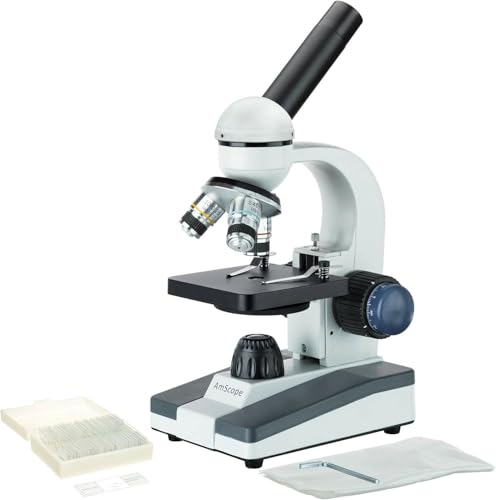
- 40X–1000X compound magnification
- Includes 25 prepared slides
- LED ring light and metal enclosure
Best For: Students and home science users starting with prepared samples
Cordless Classroom Pick

- 40X–1000X across five settings
- Outlet or three-AA battery power
- All-metal body with glass optics
Best For: Home-school and student science work needing cordless use
Handheld Digital Explorer

- Wi-Fi and USB device connectivity
- Eight adjustable LED lights
- 1080p smartphone image capture
Best For: Casual outdoor observation and easy digital sharing
On-the-Go STEM Lab
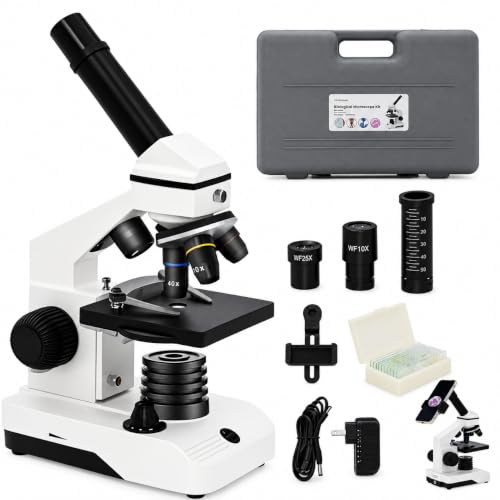
- 40X–2000X magnification range
- Dual power and all-metal construction
- Case, slides, tools, and phone adapter included
Best For: Complete home, classroom, and field STEM kits
Best Advanced Portable Lab Option
SWIFT SW380T Trinocular Microscope

- 40X-2500X magnification range
- Trinocular camera-compatible head
- Mechanical stage with precise focusing
Best For: Advanced students, clinicians, and serious hobbyists
Best Portable Microscope Kit for Students
PalliPartners Student Compound Microscope

- 100X-2000X magnification range
- 28 slides and phone photography accessories
- Top-and-bottom LED illumination
Best For: Student science projects, homeschooling, and beginner observation
Laboratory Powerhouse

- Trinocular head with electronic eyepiece and USB camera
- Dual mechanical stage with coaxial coarse and fine focus
- Large accessory pack for lab-style observation
Best For: Advanced users, teaching, and camera-assisted microscopy
Family Learning Pick
PALOBIL Kids and Adult Microscope Kit

- Runs on three AA batteries or included AC adapter
- Dual LED lighting for opaque and translucent specimens
- Includes slides, tools, phone adapter, and beginner supplies
Best For: Homeschooling, children, beginners, and portable demonstrations
Comfortable Observation
Herwicm Binocular Compound Microscope

- Wide-angle binocular eyepieces support extended viewing
- Dual LED illumination covers top and bottom lighting
- Mechanical stage and coaxial focus improve specimen control
Best For: Beginners and hobbyists wanting comfortable tabletop observation
Prepared-Slide Starter – AmScope M150C-PS25
The AmScope M150C-PS25 is a practical choice for shoppers comparing portable compound microscopes for classroom work, home science, or basic lab use. It provides 40X–1000X magnification, LED illumination, and 25 prepared slides to help beginners start observing immediately.
Best For: Students, home laboratories, and users who want a prepared-slide kit with a five-year manufacturer’s warranty.
Pros:
- 40X–1000X magnification with achromatic objectives
- Includes 25 prepared sample slides
- Bright LED ring-light illumination
- Sturdy metal enclosure and five-year warranty
Cons:
- Corded electric power limits use away from an outlet
- Monocular viewing may be less comfortable for extended sessions
This model is a strong entry-level option when included samples and straightforward compound viewing matter more than cordless operation or advanced digital features.
Cordless Classroom Pick – AmScope M150C 1000X
The AmScope M150C is a useful portable compound microscope for home-school and student science activities. Its all-metal construction, optical-glass elements, and dual power options make it easier to move between a desk, classroom, and other nearby work areas.
Best For: Elementary through high-school students and home-school users who need cordless flexibility.
Pros:
- Five magnification settings from 40X to 1000X
- Runs from an outlet or three AA batteries
- All-metal framework with optical-glass elements
- 360-degree rotatable monocular head
Cons:
- Requires batteries for cordless use
- Monocular design provides viewing through one eyepiece
Choose this model when battery operation is a priority. It offers a more traditional compound-microscope setup than handheld digital magnifiers while remaining suitable for student use.
Handheld Digital Explorer – Skybasic Wireless Microscope
The Skybasic wireless microscope is a highly portable alternative for shoppers considering portable compound microscopes but preferring quick digital viewing. It connects wirelessly to Android and iOS devices or by USB to Windows and Mac computers, making it convenient for casual observations, photos, and videos.
Best For: Outdoor learners, children, hobbyists, and anyone who wants a lightweight handheld microscope for plants, insects, minerals, and similar subjects.
Pros:
- Wireless smartphone and tablet connectivity
- USB support for Windows and Mac computers
- Eight adjustable LED lights and 1080p smartphone capture
- Compact handheld design with photo and video capture
Cons:
- It is a fixed-focus magnifying device, not a traditional compound microscope
- Requires a 3–60 mm working distance for sharp images
- App setup and device camera permissions may require troubleshooting
This is best treated as a portable digital magnifier rather than a laboratory compound microscope. Its strengths are convenience, sharing, and field observation—not professional biological analysis.
On-the-Go STEM Lab – Wevision M2 2000X
The Wevision M2 is a full-featured option among portable compound microscopes, combining 40X–2000X magnification with dual power, a hard-shell carrying case, and an all-metal frame. Its included slides, tools, and smartphone adapter make it ready for classroom, home-lab, and field-oriented STEM activities.
Best For: Students, families, hobbyists, and users who want a complete microscope kit with storage and smartphone-sharing accessories.
Pros:
- 40X–2000X magnification with multiple eyepieces and objectives
- Dual LED illumination and corded or battery power
- Includes prepared slides, blank slides, tweezers, dropper, and cleaning tissues
- Hard-shell case and smartphone adapter support portability and sharing
Cons:
- Its included components make it heavier than a basic handheld microscope
- Two-year warranty is shorter than some competing models listed here
The M2 is a compelling all-in-one choice when portability means transporting a complete lab setup. It offers more accessories and higher stated magnification than the AmScope models, while retaining a beginner-friendly format.
Best Portable STEM Kit – AmScope M30 Beginner Microscope
The AmScope M30 is a practical choice among portable compound microscopes for young learners who want a hands-on introduction to slide-based science. Its battery-powered design, LED illumination, six magnification settings, and included carrying case make it well suited to learning at home or on the go.
Best For: Children and beginners exploring biology through a complete, portable STEM kit.
Pros:
- Offers six magnification settings from 120X to 1200X.
- Includes 52 pieces, sample slides, accessories, and a hard ABS carrying case.
- Uses LED lighting and a rotating color filter wheel for accessible viewing.
- Battery-powered operation supports portable use.
Cons:
- Its monocular design may be less comfortable for extended viewing than binocular models.
- Plastic slides are less substantial than glass slides.
- Designed for beginners rather than advanced laboratory work.
With its broad magnification range and generous accessory package, the M30 is a convenient starter microscope. The metal-and-ABS construction and included case add practicality for young users who need a manageable kit for experiments and storage.
Best Advanced Portable Lab Option – SWIFT SW380T Trinocular Microscope
The SWIFT SW380T is a capable compound microscope for users who need high magnification, precise focusing, and camera compatibility. Although its AC power and 4.3 kg weight make it less travel-oriented than compact kits, it can serve as a portable compound microscope for moving between classrooms, labs, or work areas.
Best For: University students, clinicians, advanced hobbyists, and lab users who need trinocular viewing and high magnification.
Pros:
- Provides six magnification levels from 40X to 2500X.
- Includes a rotatable Siedentopf head for shared viewing.
- Wide-field 10X and 25X glass eyepieces support flexible observation.
- Trinocular design accepts a microscope camera or additional eyepiece.
Cons:
- Camera attachments are not included.
- AC power limits use away from an outlet.
- Its 4.3 kg weight and larger dimensions are less convenient for frequent transport.
The SW380T emphasizes optical range and laboratory-style control rather than lightweight portability. Its achromatic objectives, mechanical stage, and coarse and fine focusing system make it the strongest choice here for users who prioritize precision and documentation.
Best Portable Microscope Kit for Students – PalliPartners Student Compound Microscope
The PalliPartners microscope combines a broad magnification range with slides, phone photography accessories, and dual LED illumination. Its relatively compact size and battery-powered specification make it a useful option among portable compound microscopes for home education, classroom activities, and beginner experiments.
Best For: Students, homeschoolers, and adults who want an all-in-one microscope kit with phone documentation.
Pros:
- Supports magnification from 100X to 2000X using its objective, eyepiece, and 2X lens setup.
- Includes 28 slides, a phone adapter, Bluetooth camera shutter, and power adapter.
- Top and bottom LED illumination accommodates opaque and translucent specimens.
- Coaxial coarse and fine focus controls support sharper adjustments.
Cons:
- The phone adapter and remote add convenience but do not replace a dedicated microscope camera.
- Its high advertised magnification may be more useful for educational exploration than advanced research.
- Children should use it with adult supervision.
For students who want to observe prepared slides and photograph discoveries, the PalliPartners offers a well-rounded package. Its dual lighting and included accessories make it more versatile than a basic starter scope, while the compact body supports easier storage and transport.
Laboratory Powerhouse – Woehrsh Trinocular Microscope
For shoppers seeking portable compound microscopes with laboratory-oriented features, this Woehrsh model combines a trinocular head, dual mechanical stage, LED illumination, and a supplied HD USB camera. Its broad stated magnification range and extensive accessory pack make it suited to serious home, teaching, or professional-style observation, though the corded design is better for portable workstation use than true field work.
Best For: Adults, educators, and advanced hobbyists who want a feature-rich microscope with camera connectivity and a large starter kit.
Pros:
- Trinocular design includes an electronic eyepiece and supports laptop compatibility.
- Dual coaxial coarse and fine focusing and a two-layer mechanical stage support controlled positioning.
- Includes multiple eyepieces, achromatic objectives, slides, specimens, tools, and a phone holder.
- 306-degree swivel head and adjustable viewing features can accommodate different users.
Cons:
- Corded electric power limits portability away from an outlet.
- The extensive setup and high stated magnification range may be more than beginners need.
- Its larger laboratory-style configuration is less convenient for quick travel than a compact kit.
This is the most equipment-focused option in the group. Choose it when camera use, mechanical controls, and included lab accessories matter more than lightweight, battery-powered portability.
Family Learning Pick – PALOBIL Kids and Adult Microscope Kit
This PALOBIL kit is one of the more travel-friendly portable compound microscopes because it can run on three AA batteries or the included AC adapter. It pairs a metal frame with six stated magnification settings, dual LED lighting, a phone adapter, and beginner supplies, making it a practical choice for homeschool lessons and introductory experiments.
Best For: Children, beginners, homeschool families, and adults who want a self-contained microscope kit with battery operation.
Pros:
- Battery power supports use away from an outlet, while an AC adapter is included.
- Top incident and bottom transmitted LED lighting handle opaque and translucent specimens.
- Includes prepared slides, blank slides, covers, droppers, tweezers, and a smartphone adapter.
- Metal construction, adjustable focus, and six listed magnification settings suit guided learning.
Cons:
- Three AA batteries are required and are not included.
- The kit is designed for beginners and may not meet advanced laboratory users’ expectations.
- The supplied accessories and compact format can make setup feel more educational than professional.
For families prioritizing convenience, portability, and ready-to-use learning materials, this is a balanced option. Its dual lighting and battery capability are especially useful for demonstrations in different rooms or locations.
Comfortable Observation – Herwicm Binocular Compound Microscope
For buyers comparing portable compound microscopes for home study or classroom use, this Herwicm model focuses on comfortable binocular viewing and straightforward specimen handling. It offers dual LED lighting, a two-layer mechanical stage, wide-angle eyepieces, and coaxial focusing in a corded design intended for a stable tabletop setup.
Best For: Students, adult beginners, and hobbyists who prefer binocular viewing with adjustable illumination and mechanical stage control.
Pros:
- Ultra-wide-angle binocular eyepieces are designed for a broader, more comfortable field of view.
- Top and bottom LED lights support observation of different specimen types.
- Coaxial coarse and fine focus controls allow quicker image adjustment.
- Two-layer mechanical stage includes a spiral moving scale for positioning samples.
Cons:
- Corded electric power is less convenient for outdoor or off-grid use.
- The supplied details list a 40x maximum in the specifications despite the product description stating a 40x-2500x range, so buyers should verify the actual configuration.
- It lacks the trinocular camera-oriented design of the Woehrsh model.
This microscope is a sensible middle ground for users who value binocular comfort and hands-on stage control. It is best treated as a portable tabletop instrument rather than a battery-powered field microscope.
How We Picked These Portable Compound Microscopes
We focused on models that combine compound optics with features useful outside a fixed laboratory, including manageable size, cordless or dual-power operation, durable construction, adjustable illumination, and practical accessories. We also considered the needs of different users, from children and first-time students to advanced hobbyists, educators, and research-oriented buyers.
Magnification claims were treated as one factor rather than the deciding factor. Optical quality, focusing control, stage design, lighting, and the usefulness of the included eyepieces or camera generally matter more than the highest number printed on the box.
Quick Comparison
| Best For | Features to Prioritize | Models to Consider |
|---|---|---|
| Young learners | Simple controls, durable body, prepared slides, comfortable lighting | AmScope M30-ABS-KT2-W, kids microscope kit |
| Students and beginners | Glass optics, dual LED lighting, mechanical stage, included accessories | AmScope M150C series, M2, PalliPartners |
| Portable digital viewing | Wi-Fi or USB connectivity, adjustable stand, rechargeable operation | Skybasic wireless digital microscope |
| Advanced imaging | Trinocular head, camera compatibility, fine focusing, stable stage | Swift SW380T, laboratory-grade trinocular models |
Key Buying Factors for Portable Compound Microscopes
Optical System and Useful Magnification
Look for glass objectives and eyepieces, smooth focusing, and sensible magnification ranges such as 40X to 1000X or 2000X. Very high advertised magnification is not useful if the optics cannot resolve additional detail. A monocular head is usually simpler and more affordable, while a trinocular design is better for photography, teaching, and extended viewing.
Power, Size, and Portability
Battery operation is valuable for fieldwork, demonstrations, and locations without convenient outlets. Dual-power microscopes offer more flexibility, while corded models may provide longer uninterrupted sessions. Check the microscope’s footprint, weight, carrying handle, and whether the stage and arm feel stable enough for transport.
Stage and Focusing Controls
A mechanical stage allows precise specimen movement and is especially helpful at higher magnifications. Coarse and fine focus controls make it easier to locate a sample and sharpen detail. For children, large controls and a forgiving focusing system may be more important than advanced laboratory adjustments.
Lighting and Digital Features
Dual LED illumination can support transparent specimens and improve viewing consistency. Adjustable brightness helps prevent glare and protects image contrast. USB or Wi-Fi cameras are convenient for sharing observations, but confirm compatibility, software requirements, image resolution, and whether the camera replaces an eyepiece or uses a dedicated trinocular port.
Who Should Buy Which Portable Compound Microscopes?
Choose a basic AmScope, M2, or PalliPartners model for general student work, home experiments, and introductory biology. A kit with prepared slides is a practical choice for children because it reduces setup and provides immediate subjects to examine. Select the Skybasic wireless microscope when viewing, recording, or sharing images on a phone or computer matters more than traditional eyepiece-based observation.
For serious hobbyists, educators, and advanced users, prioritize the Swift SW380T or another trinocular model with a mechanical stage and broad eyepiece compatibility. These microscopes are less convenient to carry but offer better control for prolonged sessions and imaging. Before buying, verify the included objectives, power adapter, camera accessories, warranty, and return policy so the package matches your intended use.