The best microscopes make small details easier to explore, whether you are preparing biology slides, examining coins, building STEM skills, or inspecting electronics. This roundup includes beginner kits, compound models, digital screens, and laboratory-style options.
Use the buying guide below to match magnification, optics, lighting, camera features, and mechanical controls to the way you plan to use your microscope.
Best 10 Microscopes Picks for 2026
Best All-Purpose Digital Pick
Andonstar AD246S-M 3-Lens Microscope

- Three lenses for soldering, objects, and biological slides
- 2160P video with HDMI output and Windows measurement software
- Adjustable boom arm, LED lighting, and extensive included accessories
Best For: Adults needing one versatile digital microscope for repair, inspection, and demonstrations
Best Kids’ Starter Kit

- 100X–1200X magnification with LED illumination
- Includes prepared specimens, blank slides, and lab tools
- Compact beginner design for home, classroom, or homeschooling use
Best For: Children ages 5–12 starting hands-on STEM exploration
Best for Coins and Portable Inspection
Elikliv EDM4 Digital Microscope

- 4.3-inch 720P display with eight adjustable LED lights
- Rechargeable battery offers up to three hours of use
- Adjustable stand and Windows/MacBook connectivity
Best For: Coin collectors, hobbyists, and portable object inspection
Best Laboratory-Style Compound Pick

- Trinocular design with electronic eyepiece and camera compatibility
- Dual mechanical stage, coaxial focusing, and LED illumination
- Includes eyepieces, achromatic objectives, slides, specimens, and tools
Best For: Adult learners, teaching, and laboratory-style biological observation
Best Portable Pick
1000X Kids Handheld Microscope

- Portable 2.0-inch-screen design with manual focus
- Adjustable LEDs and anti-shake viewing
- Stores photos and videos for school projects
Best For: Young children exploring specimens at home or outdoors
Best Complete Student Kit
PalliPartners Compound Microscope

- 100X–2000X stated magnification range
- Includes 28 slides, phone adapter, and remote
- Dual LED lighting for varied specimens
Best For: Students and homeschool science activities
Best Digital Lab Option
AmScope B120 Binocular Microscope
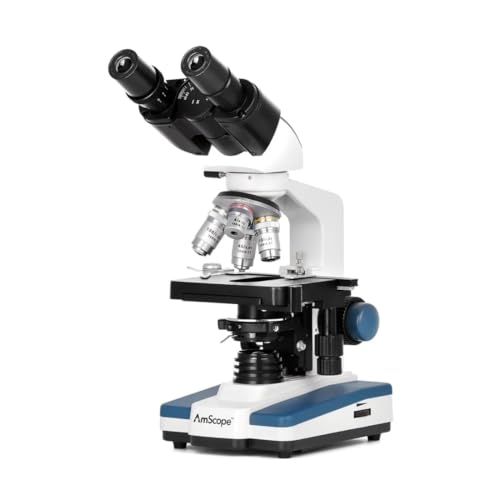
- Binocular compound microscope with 40X–2500X range
- Includes 5MP USB camera and software
- LED illumination and 3D stage for lab use
Best For: Students, educators, labs, and serious hobbyists
Best Educational Compound Microscope
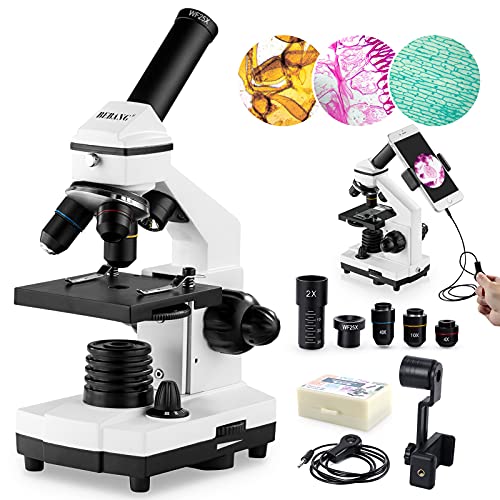
- Six stated magnification settings up to 2000X
- Dual LED illumination with coarse and fine focus
- Includes slides, phone adapter, accessories, and carrying bag
Best For: Students, beginners, and home biology instruction
Best Digital Microscope for Coins and Soldering
TOMLOV DM9 Max Digital Microscope

- 10.1-inch IPS display with 5X-1500X zoom
- 20MP photos, 1080p video, and 16GB microSD card
- Large stand, adjustable lighting, remote, and PC/TV connection
Best For: Coin collectors, electronics repairs, and hobby inspection
Best Binocular Compound Microscope
40X-2500X Dual-LED Compound Microscope

- Binocular wide-angle eyepieces for comfortable viewing
- Dual LED illumination with integrated fill light
- Mechanical stage plus coaxial coarse and fine focus
Best For: Students and hobbyists who prefer binocular biological viewing
Best All-Purpose Digital Pick – Andonstar AD246S-M 3-Lens Microscope
If you want one of the most versatile digital microscopes for electronics, coins, plants, and prepared slides, the Andonstar AD246S-M is a strong choice. Its three interchangeable lenses, 7-inch display, HDMI output, adjustable boom arm, and 2160P recording make it suitable for both hands-on work and shared viewing.
Best For: Adults who need a flexible microscope for soldering, inspection, demonstrations, and general specimen viewing.
Pros:
- Three lenses cover soldering, coin and object inspection, and biological slides.
- 2160P video, HDMI output, image capture, and Windows measurement software support detailed documentation.
- Adjustable metal boom arm and eight LED brightness levels improve positioning and visibility.
- Includes a 32GB Micro SD card, prepared slides, tools, remote control, and HDMI cable.
Cons:
- The broad feature set and interchangeable lenses may be more than casual users need.
- Its largest listed magnification depends on the lens, digital zoom, and external display setup.
Choose this model when versatility and a larger-screen digital workflow matter more than a compact footprint. It is especially well matched to electronics repair and users who want to save or measure observations.
Best Kids’ Starter Kit – Uarzt 58-Piece Microscope Set
For children beginning to explore science, this optical microscope kit combines a beginner-friendly design with the supplies needed for immediate experiments. The 100X–1200X range, LED illumination, prepared specimens, blank slides, and colorful guide make it a practical introduction to microscopes.
Best For: Kids ages 5–12, homeschooling, elementary classrooms, and guided parent-child STEM activities.
Pros:
- 58-piece kit includes 13 prepared specimens, 31 blank slides, tweezers, a dropper, and a scalpel.
- Metal-and-plastic construction and compact dimensions suit beginner use.
- Colorful instructions introduce microscope parts and basic observation skills.
- Battery-powered LED lighting supports screen-free exploration at home or school.
Cons:
- Requires two AA batteries, which are not included.
- It is designed for beginners rather than advanced laboratory work.
This is a sensible pick when the goal is hands-on discovery rather than professional imaging. The included specimens and consumables help reduce the extra purchases often needed with basic kids’ microscopes.
Best for Coins and Portable Inspection – Elikliv EDM4 Digital Microscope
The Elikliv EDM4 is a convenient digital microscope for examining coins, circuit boards, jewelry, stamps, and other small objects. Its 4.3-inch screen, adjustable stand, eight LEDs, and rechargeable battery create a straightforward setup for viewing details without using eyepieces.
Best For: Coin collectors, hobbyists, repair work, and users who want a portable digital microscope with a built-in display.
Pros:
- 720P live imaging appears on a 4.3-inch screen for comfortable viewing.
- Eight adjustable LED lights help illuminate objects in low-light conditions.
- Height-adjustable stand supports different camera-to-object distances and viewing angles.
- Rechargeable battery provides up to three hours of continuous use and supports Windows or MacBook connections.
Cons:
- A memory card is required for photos and videos but is not included.
- Actual magnification varies with screen size and the distance between the camera and object.
For coin inspection and general hobby use, the EDM4 balances portability with useful digital features. It is a better fit for surface details and documentation than for traditional biological slide work.
Best Laboratory-Style Compound Pick – Woehrsh Trinocular Microscope
Among microscopes intended for serious biological observation, this Woehrsh trinocular model emphasizes compound viewing, mechanical positioning, and camera connectivity. It includes wide-angle eyepieces, achromatic objectives, dual mechanical-stage controls, LED lighting, and a high-pixel electronic eyepiece for shared or recorded viewing.
Best For: Adult learners, school science teaching, biological experiments, pet hospital inspection, and animal husbandry testing.
Pros:
- Trinocular design supports eyepiece observation alongside electronic viewing.
- Wide-angle WF10x and WF25x eyepieces, 195 achromatic objectives, and stated 40X–5000X range offer flexible magnification.
- Dual coaxial coarse and fine focusing, a dual-layer mechanical stage, and a 306-degree swivel head support controlled viewing.
- Includes slides, coverslips, specimens, tools, a phone holder, and protective packaging.
Cons:
- Its corded, laboratory-oriented design is less convenient for casual or portable use.
- The extensive controls and accessories may require more setup than a basic digital microscope.
This model makes the most sense when precise compound-microscope features and expansion options are priorities. The included laboratory supplies also make it easier to begin biological observation without assembling a separate starter kit.
Best Portable Pick – 1000X Kids Handheld Microscope
If you want microscopes that make everyday outdoor discoveries approachable, this handheld model is designed for young children. It combines 1000X stated magnification, a 2MP camera, manual focus, adjustable LED lighting, and a built-in screen in a lightweight portable format.
Best For: Children ages 3 and up exploring plants, insects, and household specimens at home or outdoors.
Pros:
- Portable 2.0-inch screen, 200g body, lanyard, and USB-C charging support.
- Manual focus and anti-shake design encourage hands-on science learning.
- Eight adjustable LEDs, three brightness modes, and photo/video storage support documentation.
- Kid-focused ABS construction with stated CE, FCC, and CPC safety certifications.
Cons:
- The 600mAh battery is rated for about two hours of use.
- Its compact handheld design may be less suitable for detailed laboratory work than a compound microscope.
This is a practical choice when portability and independent use matter more than traditional slide-based viewing. The included storage and computer compatibility also make it useful for simple school projects and science portfolios.
Best Complete Student Kit – PalliPartners Compound Microscope
Among microscopes for home education, the PalliPartners model stands out as a ready-to-use compound setup. It offers 100X–2000X stated magnification, glass optics, dual LED illumination, focus controls, slides, and a phone adapter for viewing and recording experiments.
Best For: Students, homeschoolers, and adults who want a traditional slide-based microscope with accessories included.
Pros:
- Includes 4X, 10X, and 40X objectives plus a WF25X eyepiece and 2X lens.
- Comes with 10 prepared slides and 18 blank slides for DIY samples.
- Top and bottom LED illumination accommodates opaque and translucent specimens.
- Phone adapter and Bluetooth remote support convenient image capture.
Cons:
- At 1.65 kg, it is substantially less portable than a handheld microscope.
- Its stated 240-volt specification should be checked against the intended power setup.
- Young users may need adult supervision during operation.
The included slide collection makes this a strong value for beginners who want to start experimenting immediately. It is more substantial than a toy microscope while remaining aimed at educational and hobby use rather than advanced professional work.
Best Digital Lab Option – AmScope B120 Binocular Microscope
For buyers seeking microscopes suited to repeated study, the AmScope B120 combines binocular viewing with a 40X–2500X magnification range and a 5MP USB camera. Its LED illumination, 3D stage, and included software support both direct observation and computer-based image capture.
Best For: Students, educators, labs, and hobbyists who need a more capable corded microscope with digital documentation.
Pros:
- Binocular compound design and stated 40X–2500X magnification range.
- 5MP USB camera and professional software enable image capture and analysis.
- Daylight-balanced LED illumination uses a specialized fly-eye lens.
- Five-year manufacturer warranty provides longer-term support.
Cons:
- Corded electric operation limits portability.
- Its larger 12.5-by-9.5-by-18-inch footprint needs dedicated workspace.
- The 110-volt specification should be confirmed for the user’s electrical setup.
This is the most lab-oriented option in the group, especially for users who want binocular viewing and computer-connected imaging. Its size and corded design trade convenience for a more substantial educational and professional-style workstation.
Best Educational Compound Microscope – 2000X Biology Microscope Kit
This compound microscope is a practical choice for students, beginners, and home educators who want a traditional setup for viewing biological specimens. Its six magnification settings, dual LED illumination, and included slides and phone adapter make it a versatile entry point into microscopes.
Best For: Students, kids, beginners, and home biology instruction.
Pros:
- Offers six stated magnification settings from 100X to 2000X using WF25X and 4X, 10X, and 40X objectives.
- Coarse and fine focus controls support more precise image adjustment.
- Includes a phone adapter, carrying bag, accessories, and a 15-piece slide set.
- Top and bottom LED illumination supports brightfield viewing.
Cons:
- The monocular design may be less comfortable for extended viewing than a binocular microscope.
- Its 2.4-pound build and compact dimensions may provide less stability than larger laboratory models.
Choose this model when bundled accessories and accessible biology exploration matter more than advanced laboratory features. The metal frame, adjustable focus, and one-year warranty add practical value for learning environments.
Best Digital Microscope for Coins and Soldering – TOMLOV DM9 Max Digital Microscope
The TOMLOV DM9 Max is a screen-based digital microscope designed for comfortable inspection of coins, solder joints, watches, jewelry, and other small details. Its 10.1-inch IPS display, adjustable stand, lighting options, and recording features make it especially practical for hobby work and repairs.
Best For: Coin collectors, electronics hobbyists, repair work, and shared viewing.
Pros:
- Large 10.1-inch IPS screen provides a 178-degree viewing angle for direct observation.
- 5X-1500X zoom, 20MP photo capability, and 1080p video support detailed documentation.
- Eight lens LEDs and two dimmable gooseneck lights help illuminate subjects.
- Includes a 12.6-inch stand, 7×8-inch base, wireless remote, and pre-installed 16GB microSD card.
Cons:
- Its digital screen-based design is better suited to surface inspection than traditional biological slide viewing.
- The feature-rich stand and display setup may take more workspace than a compact handheld magnifier.
This is a strong fit when easy viewing, image capture, and hands-free inspection are priorities. PC/TV compatibility and the remote control are useful additions for longer repair sessions or group demonstrations.
Best Binocular Compound Microscope – 40X-2500X Dual-LED Compound Microscope
This binocular compound microscope is aimed at adults, students, and hobbyists who want a wider, more comfortable viewing setup for biological observation. Its ultra-wide-angle eyepieces, two-layer mechanical stage, dual LED lighting, and coaxial focus controls provide useful features for routine microscope work.
Best For: Adult learners, students, and hobbyists seeking binocular viewing.
Pros:
- Binocular ultra-wide-angle eyepieces are designed for a broad field of view and extended viewing comfort.
- Dual LED lighting supports both top and bottom illumination with integrated fill light.
- Coaxial coarse and fine focus controls allow quick, more precise adjustments.
- Large mechanical stage with a spiral moving scale supports controlled specimen positioning.
Cons:
- The product details identify corded electric power, so it is less flexible for locations without an outlet.
- Its listed dimensions suggest a larger footprint than compact beginner microscopes.
- The supplied details do not specify included slides or other accessory quantities.
Consider this model if binocular comfort and mechanical-stage control are more important than portability. It offers a more conventional observation platform for repeated biology sessions and hobby experimentation.
How We Picked These Microscopes
We selected models across the main microscope categories: educational kits for children, handheld and digital inspection Microscopes, compound Microscopes for slides, and advanced trinocular systems for laboratory or imaging work. We considered stated magnification ranges, optical configuration, illumination, stage design, camera or screen features, ease of use, and the likely experience level of the buyer.
Magnification claims can vary in practical value, so we gave attention to usable focus control, working distance, image stability, and specimen compatibility rather than treating the highest number as the deciding factor.
Quick Comparison
| Best For | Recommended Type | Features to Prioritize |
|---|---|---|
| Young beginners | Kids’ microscope kit | Simple controls, durable body, prepared slides, carrying case |
| School biology | Compound microscope | Multiple objective lenses, mechanical stage, adjustable LED lighting |
| Coins and surface details | Digital microscope | Built-in screen, bright illumination, adjustable stand, image capture |
| Electronics and repair | Digital or trinocular microscope | Long working distance, HDMI or USB output, stable stand |
| Advanced imaging | Binocular or trinocular compound model | Quality optics, fine focus, camera compatibility, rigid stage |
Key Buying Factors for Microscopes
Magnification and Optical Quality
Choose magnification based on the specimen. Prepared slides generally call for a compound microscope with multiple objectives, while coins, circuit boards, rocks, and other solid objects are often easier to view with a digital inspection microscope. Extremely high advertised magnification is not automatically useful if the image becomes dim, unstable, or difficult to focus.
Lighting and Stage Control
LED illumination is efficient and stays relatively cool. Compound Microscopes benefit from transmitted light beneath the specimen, while surface-inspection models commonly use reflected light around the lens. A mechanical stage makes it easier to move slides precisely, especially at higher powers.
Viewing, Recording, and Connectivity
Binocular eyepieces are comfortable for longer sessions, while a built-in LCD is convenient for group viewing and hands-free inspection. USB, HDMI, or camera-equipped models are useful when you want to save images, display work on a larger monitor, or document observations.
Build and Ease of Use
Look for a stable base, smooth coarse and fine focus controls, secure lens changes, and a stand suited to the intended workspace. For children, straightforward controls and included accessories may matter more than advanced specifications.
Who Should Buy Which Microscopes?
Parents and teachers introducing microscopy should start with a dedicated kids’ kit or an uncomplicated student compound microscope. These options make setup approachable and encourage hands-on experimentation.
Students studying cells, plant material, or microorganisms should choose a compound model with multiple objectives, adjustable lighting, and a mechanical stage. Hobbyists examining coins, solder joints, minerals, or household materials will usually prefer a digital microscope with a screen and integrated lighting.
For frequent documentation or serious inspection, consider a binocular or trinocular microscope with camera support, a rigid stage, and dependable fine focusing. Before ordering, confirm the included objectives, camera accessories, software compatibility, power requirements, and the actual working distance at the magnification you expect to use most.