Choosing the right anatomy aid can make a big difference when you’re learning bones, landmarks, and movement in nursing school. The best skeleton models for nursing students help turn textbook diagrams into something you can study, label, and remember.
Below, we focus on models that balance accuracy, durability, and value—whether you need a full-size skeleton for hands-on review or a smaller model for a desk, dorm, or skills lab.
Best 10 Skeleton Models for Nursing Students Picks for 2026
Full-Size Classroom Pick
67-Inch Disarticulated Skeleton

- Life-size 67-inch PVC model
- Includes labeled bones and poster
- Great for bone identification study
Best For: Nursing students needing a large classroom-friendly anatomy reference
Study-Guide Rich Pick
Life-Size Skeleton with Rolling Stand

- Includes 3 guides and 189 stickers
- Fully articulated 206-bone skeleton
- Rolling stand adds mobility
Best For: Students who want guided labeling and full-size anatomy practice
Compact Desktop Pick

- Small 17.7-inch desktop size
- Movable arms and legs
- Basic anatomy for entry-level study
Best For: Nursing students with limited desk space who want a portable model
Advanced Detail Pick
Life-Size Skeleton with Muscles and Nerves

- Adds nerves, ligaments, and muscle points
- 71-inch life-size articulated model
- Rolling stand for easy movement
Best For: Students studying detailed musculoskeletal anatomy and joint movement
Compact Study Skeleton
breesky 33.4" Scientific Human Skeleton Model

- 33.4-inch half-size design
- Articulated joints for movement study
- Removable skull cap and limbs
Best For: Students needing a desk-friendly anatomy model
Life-Size Teaching Skeleton
NLShan 70.8 in Skeleton with Posters

- Life-size 70.8-inch skeleton
- 206 articulated bones with detachable skull
- Rolling stand with five wheels
Best For: Full-size anatomy study with easy room-to-room movement
Mini Desk Skeleton
NLShan 17.7" Human Skeleton Model

- 17.7-inch compact tabletop size
- Articulated joints and removable skull
- Includes poster and stable base
Best For: Portable desk study and display
Premium Life-Size Teaching Model

- 206 articulated bones in life-size form
- Detachable joints and skull for study
- Rolling stand plus 3 posters included
Best For: Students who need a detailed classroom-ready skeleton
Advanced Anatomy Display
Posable Skeleton with Nervous System
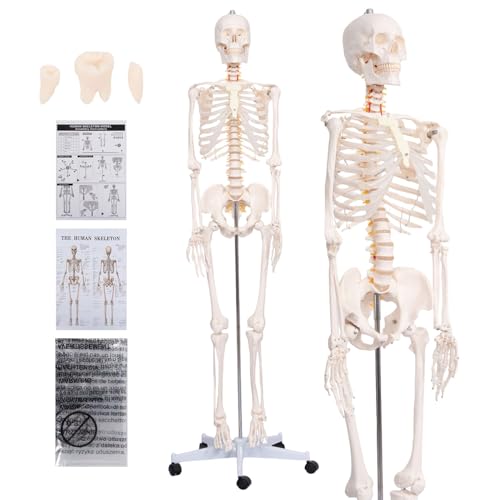
- Detailed nervous system and carotid artery display
- Removable skull cap, jaw, and teeth
- Five wheels plus charts and instructions
Best For: Learners who want extra anatomical detail beyond bones
Value Study Replica
Life-Size Skeleton with Posters
- 206 articulated bones in a 70.8-inch frame
- Detachable head and movable joints
- Rolling stand with 3 posters included
Best For: Practical study and reference in classrooms or labs
Full-Size Classroom Pick – 67-Inch Disarticulated Skeleton
If you need skeleton models for nursing students that work well in a classroom or lab, this full-size PVC model gives you a life-sized reference with a broad set of bones and an included labeling poster. The disarticulated design is useful for study and display, especially when you want a clear look at individual bones rather than a fully assembled teaching skeleton.
Best For: Nursing students who want a large, detailed study model for anatomy review, classroom display, or basic bone identification.
Pros:
- Life-size 67-inch build closely matches human proportions
- Includes skull, spine, pelvis, articulated hand and foot, and more
- Comes with a laminated poster that identifies skeletal bones
- Easy-to-clean PVC construction for repeated use
Cons:
- Disarticulated design cannot be assembled to show joint motion
- Ribs and thoracic cartilage are not meant to form a full rib cage without special tools
- Bulkier size may be less convenient for small spaces
This is a strong choice if your priority is visual bone identification over movement. For nursing study, it offers plenty of detail without adding complexity you may not need.
Study-Guide Rich Pick – Life-Size Skeleton with Rolling Stand
For skeleton models for nursing students who want more than a display piece, this life-size anatomy model adds structured study support with guides, numbered stickers, and articulated joints. The rolling stand also makes it easier to move between classroom demonstrations or study stations.
Best For: Nursing students who learn best with guided self-labeling, joint movement, and a stable full-size classroom model.
Pros:
- Life-size 206-bone skeleton with fully articulated joints
- Includes 3 study guides plus 189 numbered stickers for active recall
- Pelvic-mounted rolling stand improves stability and mobility
- Dust cover and corrosion-resistant hardware support long-term use
Cons:
- Larger and heavier than desktop models
- Better suited to dedicated study space or classroom use
- May be more than some students need for basic anatomy review
This model stands out for organized learning support rather than just size. If you want a nursing anatomy aid that helps with labeling and repetition, it is an especially practical option.
Compact Desktop Pick – 17-Inch Mini Skeleton
If you want skeleton models for nursing students but have limited space, this 17-inch desktop version is a simple, portable option for basic anatomy review. It focuses on the essentials—skull, spine, and ribs—while still offering movable arms and legs for quick observation.
Best For: Nursing students who need a small, portable study model for desks, dorm rooms, or compact workspaces.
Pros:
- Compact 17.7-inch size fits small study areas
- Movable arms and legs add some hands-on interaction
- Lightweight and easy to remove or install
- Simple design is approachable for entry-level study
Cons:
- Shows only basic anatomical detail
- Not ideal for advanced musculoskeletal study
- Smaller base and frame are less classroom-dominant than full-size models
This is the most space-friendly option in the group. It works best as a basic reference tool when portability matters more than fine detail.
Advanced Detail Pick – Life-Size Skeleton with Muscles and Nerves
Among skeleton models for nursing students, this life-size replica adds extra musculoskeletal detail that can make anatomy study more practical. With spinal nerves, muscle insertion and origin points, and joint ligaments, it gives you a more complete visual reference than a basic bone-only skeleton.
Best For: Nursing students who want a high-detail anatomy model for studying bones, joints, ligaments, and muscle attachment points.
Pros:
- Life-size 71-inch model with detailed musculoskeletal features
- Includes spinal nerves, muscle insertion and origin points, and joint ligaments
- Fully articulated movement at major joints for clearer demonstrations
- Rolling stand makes it easy to move around a classroom or clinic
Cons:
- Heavier and larger than tabletop models
- May be more detail than needed for very basic coursework
- Requires more room for storage and display
This is the most anatomy-rich option here and a strong fit for deeper study. If your coursework goes beyond bone names into structure and movement, this model offers more teaching value.
Compact Study Skeleton – breesky 33.4" Scientific Human Skeleton Model
If you are shopping for skeleton models for nursing students, this 33.4-inch breesky model is a practical choice for close-up anatomy study. It uses articulated joints, a removable skull cap, and removable limbs so learners can observe movement and structure without a full-size footprint.
Best For: Nursing students who want a compact, easy-to-handle anatomy model for classroom or at-home study.
Pros:
- 33.4-inch half-life-size format is easier to place on a desk or shelf.
- Articulated mandible, shoulder, elbow, wrist, hip, knee, and ankle joints support movement study.
- Removable calvarium, arms, and legs make internal structures easier to reference.
- Arrives ready to use with simple assembly onto the metal stand.
Cons:
- Smaller size is less immersive than a life-size model.
- No rolling stand for easy room-to-room transport.
Overall, this model fits students who need a detailed but space-saving skeleton for anatomy review and demonstration. It balances realism, portability, and simplicity better than many larger study models.
Life-Size Teaching Skeleton – NLShan 70.8 in Skeleton with Posters
For nursing students who want a life-size reference, this NLShan skeleton model offers a full 70.8-inch frame with 206 articulated bones and a detachable skull. The included posters and rolling stand make it especially useful when you need a model that can move between classrooms, offices, or study areas.
Best For: Nursing students and instructors who want a full-size anatomy reference with easy mobility.
Pros:
- Life-size 70.8-inch form provides a more realistic anatomy reference.
- 206 articulated bones and detachable skull support detailed study.
- Rolling stand with five wheels makes it easy to move.
- Includes three posters for added learning support.
Cons:
- Larger size takes up much more space than mini models.
- Heavier at 21.6 pounds, so storage may be less convenient.
This is a strong pick if you want a full-scale teaching model that still feels practical in a classroom setting. The combination of size, articulation, and mobility makes it a versatile study aid for anatomy review.
Mini Desk Skeleton – NLShan 17.7" Human Skeleton Model
This 17.7-inch NLShan skeleton model is a compact option for nursing students who need a small anatomy reference for desk study or display. It still includes articulated joints, a removable skull, and a spring-connected jaw, giving learners a hands-on way to review the basics without a large footprint.
Best For: Nursing students who need a portable, space-saving skeleton for quick anatomy review.
Pros:
- Compact 17.7-inch size works well on desks and bookshelves.
- Articulated shoulders, elbows, wrists, knees, and ankles support joint study.
- Removable skull and spring jaw improve visibility of internal structure.
- Includes a professional poster and stable base for study or display.
Cons:
- Mini size is less suitable for classroom-wide demonstration.
- Primarily a tabletop model, not a full-scale anatomical reference.
For learners who value portability over size, this model is an easy fit. It delivers enough anatomical detail for study while staying lightweight and simple to place anywhere.
Premium Life-Size Teaching Model – 70.8 in Skeleton with Stand
If you are comparing skeleton models for nursing students, this life-size PVC replica gives you a full 206-bone anatomy reference plus included posters for faster study. The articulated joints, detachable parts, and rolling stand make it practical for repeated classroom use, lab demos, and individual review.
Best For: Nursing students who want a life-size, movable anatomy model with extra visual study aids.
Pros:
- Life-size 70.8-inch model with 206 articulated bones
- Detachable parts and movable joints for hands-on study
- Rolling stand makes it easy to move between rooms
- Includes 3 anatomy posters for quick reference
Cons:
- May be more model than needed for basic study only
- Requires setup and space for full-size display
Overall, this is a strong pick if you want a detailed, movable teaching skeleton that supports both visual learning and in-person demonstrations. The included charts add extra value for students who like to study from multiple angles.
Advanced Anatomy Display – Posable Skeleton with Nervous System
For skeleton models for nursing students, this 70.8-inch option stands out with its detailed nervous system and carotid artery display, giving you more than just basic bones. The posable PVC construction, removable skull cap, movable jaw, and detachable teeth make it useful for close anatomical inspection and classroom demonstrations.
Best For: Nursing students and healthcare learners who want a detailed anatomy model with added nervous system features.
Pros:
- Includes nervous system and carotid artery detail
- Posable design with hinged joints, removable skull cap, and movable jaw
- Five rolling wheels for easy mobility
- Comes with educational charts, illustrations, and assembly instructions
Cons:
- At 8 kg, it is not the lightest option listed
- Detailed feature set may be more than needed for simple display use
This model is a smart choice if your focus is anatomy learning that goes beyond the skeleton itself. The added charts and dust-proof cover make it especially practical for repeated use in classrooms, labs, and study spaces.
Value Study Replica – Life-Size Skeleton with Posters
If you need skeleton models for nursing students that keep the focus on core anatomy, this 70.8-inch PVC model offers a straightforward life-size setup with 206 articulated bones. The detachable head and joints, rolling stand, and included posters give you the essentials for study, reference, and classroom use.
Best For: Nursing students who want a practical, life-size anatomy model with easy mobility and reference posters.
Pros:
- Life-size 70.8-inch model with 206 articulated bones
- Detachable and movable head and joints for closer inspection
- Five-wheel rolling stand for easy movement
- Includes 3 posters for study support
Cons:
- Does not list extra nervous system detail like some alternatives
- Setup space is still needed for a full-size model
This is a solid all-around option if you want a familiar anatomy teaching tool without extra complexity. The combination of mobility, detachable parts, and poster support makes it a practical pick for routine study.
How We Picked the Best Skeleton Models for Nursing Students
We focused on anatomy accuracy, build quality, ease of assembly, and how useful each model is for day-to-day studying. For Skeleton Models for Nursing Students, the most important features are clear bone detail, stable stands, movable joints, and accessories that support learning without making the model harder to use.
We also considered size and portability. Some students need a life-size skeleton for practical anatomy review, while others need a compact model that fits in a small room or on a study desk.
Quick Comparison: What Matters Most
Life-size models are best for realistic spatial learning and bedside-style demonstrations. Mid-size models offer a strong balance of detail and convenience. Mini skeletons are more portable and affordable, but they usually sacrifice some anatomical fidelity and presence.
Look closely at whether the model includes a stand, rolling base, movable arms and legs, removable parts, or labeled structures such as nerves and muscle attachment points. These extras can make a major difference in study efficiency.
Key Buying Factors for Skeleton Models for Nursing Students
Anatomical Detail
If you’re preparing for exams, choose a model with clearly defined skull features, vertebrae, rib cage, pelvis, and major limb bones. Extra detail like spinal nerves or muscle origin points can be especially helpful for nursing coursework.
Size and Portability
Full-size models are best for realism and group study, but they take more space. Smaller models are easier to store and carry, making them a smart pick for dorms, apartments, and shared study areas.
Mobility and Articulation
Posable arms, legs, jaw, and removable components can help you understand joint movement and bone relationships. Just make sure the joints feel sturdy enough for repeated use.
Stand and Stability
A secure stand matters more than many buyers expect. Rolling bases are convenient for labs and classrooms, while fixed stands can be a better fit if the model will stay in one place.
Durability and Materials
PVC and similar hard plastics are common because they’re lightweight and easy to clean. For frequent use, look for reinforced joints and hardware that won’t loosen quickly.
Who Should Buy Which Skeleton Models for Nursing Students?
Choose a life-size model if you want the most realistic anatomy reference for lab practice, demonstrations, or collaborative studying. Pick a mid-size model if you want a good mix of detail, portability, and value. Choose a mini model if you need a budget-friendly option for memorization, quick review, or tight spaces.
If you’re comparing Skeleton Models for Nursing Students, the best choice is usually the one that matches your study environment, your course level, and how often you’ll actually use it. A simpler model used daily is often better than a complex one that stays in the box.