Choosing among skeleton models with muscles comes down to realism, labeling, durability, and how you plan to use the model. Some are built for classroom teaching, while others are better suited for clinical demonstration or display.
Below, we focus on the models that offer the best mix of anatomical detail, movable parts, and study-friendly features so you can choose with confidence.
Best 10 Skeleton Models with Muscles Picks for 2026
Premium Mid-Size Anatomy Model
33.4" Human Skeleton with Muscle Markings

- 33.4-inch model with painted, numbered muscle points
- Fully articulated with removable limbs and jaw
- Sturdy metal stand; ready to use out of the box
Best For: Students and instructors needing a detailed mid-size anatomy model
Full-Size Teaching Model
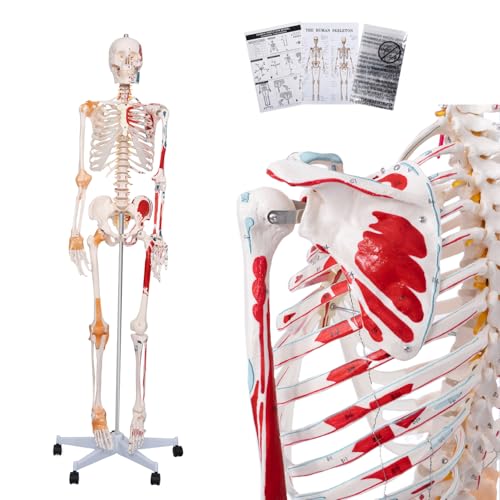
- Life-size 70.8-inch model with muscle markings
- Flexible ligaments plus removable skull cap and jaw
- Rolling stand, dust cover, and reference posters included
Best For: Medical training spaces and classrooms needing a life-size model
Compact Entry Model

- Small 17.7-inch model for desks and tight spaces
- Movable arms and legs with removable skull cap
- Basic anatomy detail for entry-level study
Best For: Beginners and students needing a compact starter model
Life-Size Flexible Display
Skeleton with Spine and Muscle Points

- Life-size model with muscle origin and insertion points
- Bendable spine and movable skull/neck for demos
- Rolling stand and detachable arms/legs included
Best For: Teachers and medical learners who need motion-focused demonstrations
Compact Teaching Skeleton

- 33.4-inch half-size proportions
- Numbered muscle insertion points
- Pre-assembled with metal stand
Best For: Classrooms and study spaces needing a compact anatomy display
Life-Size Clinical Skeleton

- Life-size 70.8-inch anatomy model
- Painted muscle origins and insertions
- Rolling stand with dust cover
Best For: Professional anatomy teaching and clinical study
Study-Ready Mini Skeleton

- 31-inch compact anatomy model
- Painted and numbered muscle points
- Includes full-color study manual
Best For: Students and educators needing a smaller study model
Life-Size Teaching Model
VEVOR Human Skeleton with Ligaments

- 71.65-inch life-size anatomy model
- Muscle origin, insertion points, and ligaments
- Movable arms, legs, jaw; durable PVC
Best For: Teaching and demonstrations that need full-size anatomy detail
Mini Numbered Study Model

- 33.5-inch painted, numbered anatomy model
- Muscle insertion/origin points and spinal nerves
- Movable joints with removable stand
Best For: Portable study and reference in classrooms or offices
Professional Rolling Display

- 71-inch life-size anatomical replica
- Muscle points, spinal nerves, and ligaments
- Rolling stand with four casters
Best For: Professional teaching and patient communication
Premium Mid-Size Anatomy Model – 33.4" Human Skeleton with Muscle Markings
If you want skeleton models with muscles for anatomy study, this 33.4-inch breesky model offers a strong balance of detail and manageable size. It includes painted and numbered muscle insertion and origin points, removable limbs, and fully articulated joints, making it useful for classroom demos and hands-on review.
Best For: Students, medical learners, and instructors who want a detailed but not full-size skeleton for study and display.
Pros:
- Painted and numbered muscle insertion and origin points support anatomy identification.
- Fully articulated design demonstrates natural movement and different postures.
- Removable calvarium, arms, legs, and stretchable lower jaw add study flexibility.
- Comes with a sturdy metal stand and arrives ready to use.
Cons:
- At 33.4 inches, it is smaller than life-size teaching models.
- Best suited for study and display rather than advanced structural exploration.
This is a practical middle-ground option if you need a detailed anatomy aid without the footprint of a full-size model. The printed muscle points and visible sutures make it especially useful for focused learning sessions.
Full-Size Teaching Model – 70.8" Skeleton with Ligaments
For buyers comparing skeleton models with muscles, this full-size 70.8-inch anatomy model is built for serious teaching and reference use. It combines muscle origin and insertion points, numbered bones, flexible joint ligaments, and a detailed nervous system and carotid artery layout for a more complete learning tool.
Best For: Hospitals, clinics, anatomy classrooms, and professionals who need a life-size, highly detailed display model.
Pros:
- Life-size 70.8-inch frame with painted muscle origins and insertions.
- Flexible joint ligaments, removable skull cap, movable jaw, and detachable teeth.
- Includes a rolling stand with five wheels for easier movement.
- Color poster and illustrated instructions help with identification and assembly.
Cons:
- Heavier and larger than smaller desktop models.
- Designed more for teaching and reference than compact storage.
This model stands out if you want a life-size learning aid with extra visual detail. The combination of ligaments, muscle markings, and included reference materials makes it especially useful in medical training environments.
Compact Entry Model – 17" Desktop Human Skeleton
If you need skeleton models with muscles in a small, budget-friendly format, this 17.7-inch breesky model keeps things simple and portable. It is a basic scientific model with movable arms and legs, a removable skull cap, and enough visible anatomy for entry-level study or desktop display.
Best For: Beginners, students, and tight spaces where a small, easy-to-move anatomy model is enough.
Pros:
- Compact 17.7-inch size works well for desks and small study areas.
- Movable arms and legs make it easy to demonstrate basic positioning.
- Removable skull cap adds a simple exploration feature.
- Lightweight design is easy to move and install.
Cons:
- Offers only basic anatomical detail compared with larger models.
- Jaw moves but does not remove from the model.
- Not intended for advanced anatomy study.
This is a straightforward starter option for learners who want a portable skeleton without extra complexity. It focuses on the essentials, which makes it a practical fit for introductory anatomy review.
Life-Size Flexible Display – Skeleton with Spine and Muscle Points
Among skeleton models with muscles, this life-size NEW HORIZON model adds flexibility that helps show natural movement more clearly. It features muscle origin and insertion points, numbered bones, flexible joint ligaments, a bendable spine, and detachable limbs, making it a strong teaching aid for demonstrations.
Best For: Teachers, medical students, and professionals who want a movable full-size skeleton for classroom or clinic use.
Pros:
- Life-size proportions with muscle origin and insertion markings.
- Flexible spine and movable skull/neck help demonstrate motion.
- Detachable arms and legs make closer inspection easier.
- Rolling stand allows convenient movement between rooms.
Cons:
- Plastic construction may not feel as premium as some medical-grade displays.
- Included details focus on teaching use rather than highly specialized research.
- Bulky enough that it needs dedicated floor space.
This model is a solid choice when movement and teaching visibility matter as much as bone detail. The bendable spine and removable parts make it especially helpful for live demonstrations and classroom explanation.
Compact Teaching Skeleton – 33.4” Mini Anatomy Model
This skeleton model with muscles is a practical mini-size option for classrooms, offices, or home study spaces. At 33.4 inches tall, it keeps the proportions of a human skeleton while adding numbered muscle insertion and origin points plus painted anatomy details for clearer study.
Best For: Teachers, students, and clinics that want a compact, easy-to-store anatomy model for everyday reference.
Pros:
- 33.4-inch half-size proportions make it easier to display in smaller spaces.
- Numbered muscle markings and painted details support anatomy learning.
- Detachable skull, chin, arms, and legs allow flexible demonstrations.
- Comes pre-assembled on a metal stand for quick setup and storage.
Cons:
- Mini size is less suitable if you need a true life-size teaching aid.
- Designed for tabletop use, so it is not a full-scale standing display.
Overall, this model is a solid pick if you want a durable, easy-to-handle learning tool with muscle markings and articulated parts. It offers a good balance of portability, detail, and simplicity for routine anatomy instruction.
Life-Size Clinical Skeleton – 70.8” Muscle Anatomy Model
If you want skeleton models with muscles for serious anatomy study, this life-size PVC model is built for detailed observation. It includes painted muscle origins and insertions, numbered bones, flexible joint ligaments, and added nervous system and carotid artery structures for a more complete reference.
Best For: Medical students, instructors, clinics, and researchers who need a full-size, highly detailed anatomy model.
Pros:
- Life-size 70.8-inch frame gives a realistic teaching and study experience.
- Painted muscle origins and insertion points add useful anatomical detail.
- Movable jaw, removable skull cap, and detachable teeth improve close study.
- Rolling stand and dust-proof cover make it easier to move and store.
Cons:
- Its full-size build takes much more floor space than mini models.
- Weighs more than compact versions, so it is less portable overall.
This is the most feature-rich option here for buyers who prioritize realism and instructional depth. The included posters and assembly instructions also make it easier to use in formal teaching or professional settings.
Study-Ready Mini Skeleton – 31” Painted Muscle Model
This compact skeleton model with muscles is aimed at hands-on study and curriculum use. At 31 inches tall, it shows painted and numbered muscle insertion and origin points, along with articulated joints for the shoulder, elbow, wrist, hip, knee, and ankle.
Best For: Students and educators who want a smaller anatomy model with clear labeling and a study manual.
Pros:
- Painted and numbered muscle points help with identification and review.
- Articulation at major joints adds useful motion demonstration.
- Full-color product manual supports study and curriculum development.
- Removable white base makes the model easier to handle and display.
Cons:
- Smaller size may limit visibility in larger classroom settings.
- Less feature-heavy than the life-size model with added structures.
For buyers who value straightforward study support over extra accessories, this model is a practical choice. It keeps the focus on visible muscle points, correct articulation, and usable learning material.
Life-Size Teaching Model – VEVOR Human Skeleton with Ligaments
If you want skeleton models with muscles and ligament detail for classroom or clinic use, this VEVOR life-size PVC skeleton is built for hands-on anatomy study. The model includes muscle origin and insertion points, movable arms, legs, and jaw, plus detachable parts for more intuitive demonstrations.
Best For: Students, educators, and professionals who need a full-size anatomy teaching aid with clear muscle landmark detail.
Pros:
- 71.65-inch life-size build for realistic teaching and display
- Includes ligaments plus muscle origin and insertion points
- Movable arms, legs, and jaw support interactive demonstrations
- Durable PVC construction is easy to clean
Cons:
- Large size may be less convenient for small workspaces
- At 20.9 pounds, it is not the lightest option to move
Overall, this is a practical choice when you need a full-scale skeleton model that goes beyond basic bones and helps show key anatomy relationships more clearly.
Mini Numbered Study Model – EVOTECH 33.5-Inch Skeleton
This compact option is a good fit if you’re comparing skeleton models with muscles for study or reference use without needing a life-size display. The 33.5-inch PVC model is painted and numbered, and it includes muscle insertion and origin points, spinal nerves, movable joints, and a removable stand.
Best For: Medical learners, offices, and classrooms that want a smaller, portable anatomy model with labeled detail.
Pros:
- Painted and numbered for easier learning and reference
- Shows muscle insertion and origin points plus spinal nerves
- Movable shoulder, elbow, wrist, hip, knee, and ankle joints
- Lightweight build with a sturdy stand for placement anywhere
Cons:
- Half-life-size format gives less scale realism than full-size models
- Manual included, but setup and study are more tailored to individual learning
For buyers who want a smaller anatomy aid that still highlights musculoskeletal landmarks, this model offers strong detail in a more portable package.
Professional Rolling Display – Ultrassist Life-Size Skeleton
For buyers who need skeleton models with muscles for professional teaching, this Ultrassist life-size replica includes spinal nerves, muscle insertion and origin points, and joint ligaments. The model is designed for clear observation of musculoskeletal structure and comes with a detachable rolling stand for easy repositioning.
Best For: Clinics, instructors, and medical professionals who need a detailed, mobile teaching model.
Pros:
- Life-size 71-inch format for full-scale anatomical study
- Includes muscle insertion/origin points, spinal nerves, and joint ligaments
- Rolling stand with four casters makes movement easier
- Designed for professional teaching and patient communication
Cons:
- Large footprint may take up significant room
- Premium detail makes it better suited to serious study than casual display
This is a strong pick if you want a realistic, easy-to-move anatomy model that supports both instruction and one-on-one explanation of musculoskeletal relationships.
How We Picked These Skeleton Models with Muscles
We focused on practical features that matter for real use: anatomical accuracy, muscle insertion and origin markings, joint mobility, included stand quality, overall build materials, and whether the size fits the intended setting. We also looked for models that balance detail with usability, since the best Skeleton Models with Muscles should be informative without being awkward to handle.
Quick Comparison: What Matters Most
Life-size models are best when you need realistic classroom or clinical presentation, while mini models work well for desks, shelves, and hands-on study. Painted and numbered markings can speed up learning, but cleaner finishes may look better for display. Removable limbs and movable joints improve demonstration value, and heavier-duty stands are worth prioritizing for frequent use.
Key Buying Factors for Skeleton Models with Muscles
Size and Scale
Choose life-size if you want accurate proportions for teaching anatomy or patient education. Smaller models are easier to store and transport, but they may sacrifice visibility of fine details.
Muscle Markings and Labels
Look for clear muscle insertion, origin points, and ligaments if the model will be used for anatomy instruction. Numbered or painted markings are especially useful for study sessions and exams.
Movement and Assembly
Movable arms, legs, jaw, and spine features make demonstrations more realistic. If the model will be handled often, check that the joints feel secure and the stand is stable.
Material and Durability
PVC is common because it is lightweight and easy to clean, while metal components can improve stability. For classroom use, durability matters as much as detail.
Who Should Buy Which Skeleton Models with Muscles?
If you need a teaching aid for students, choose a life-size, labeled model with clear muscle points and movable joints. For home learners or limited space, a mini skeleton model with numbered markings offers strong study value in a smaller footprint. For display-focused buyers, prioritize realistic proportions, cleaner finishes, and a sturdy stand. If you want the most versatile option, a full-size model with removable parts and visible musculature is usually the safest all-around choice.
In short, the best Skeleton Models with Muscles are the ones that match your space, learning goals, and how often you plan to move or demonstrate them. Focus on those priorities, and the right model becomes much easier to choose.