Choosing the right stereo microscope for a classroom means balancing image clarity, durability, and ease of use. Students need a scope that is simple to focus, comfortable to share, and versatile enough for labs, demonstrations, and hands-on projects.
This roundup highlights ten options that fit different teaching needs, from basic classroom viewing to more advanced zoom models with better illumination and working distance.
Best 10 Stereo Microscopes for Classroom Use Picks for 2026
Classic Teaching Scope
AmScope Forward Binocular Stereo Microscope

- 20X/40X/80X fixed stereo settings
- Top and bottom halogen illumination
- Sturdy all-metal pillar stand
Best For: Classroom labs needing a simple, durable stereo microscope
Zoom Lab Workhorse
Trinocular Stereo Zoom Microscope with LED Ring Light
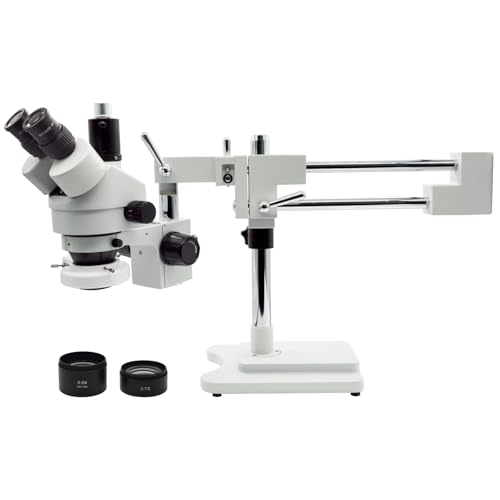
- Continuous 3.5X-90X magnification
- Trinocular head for camera support
- 56S LED ring light with dimmer
Best For: Labs that want zoom flexibility and digital imaging options
Simple Fixed-Power Scope
AmScope Forward-Mounted Binocular Stereo Microscope

- 40X and 80X fixed magnification
- Top and bottom built-in lighting
- Sturdy metal framework and pillar stand
Best For: Basic classroom viewing with minimal setup
Ergonomic Zoom Choice
SWIFT Trinocular Stereo Zoom Microscope
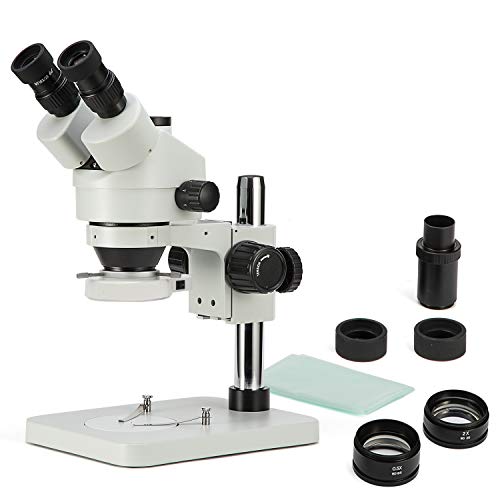
- 3.5X-90X zoom range
- Trinocular head for camera use
- 56-bulb LED ring light
Best For: Teaching labs needing comfort, zoom range, and bright lighting
Classroom-Friendly Stereo Viewing
AmScope SE306R-P 20X/40X Binocular Stereo

- Forward-mounted binocular head
- 20x and 40x magnification options
- Upper and lower halogen illumination
Best For: Classroom labs and home learners inspecting larger specimens
Zoom Range for Lab Teaching
Celestron Labs S10-60 10x-60x Stereo

- Up to 60x zoom magnification
- Top and bottom LED illumination
- Includes multiple eyepieces and stage plates
Best For: School labs needing higher magnification and flexible zoom
Portable Student Starter
AmScope SE100-LED Binocular Stereo

- Battery-powered LED lighting
- Simple 20x maximum magnification
- Good for larger classroom specimens
Best For: Elementary classes and beginners needing a portable starter microscope
Professional Trinocular Boom-Stand Pick
AmScope SM-3T 7X-45X Trinocular Stereo Microscope

- 7X-45X continuous zoom
- 8-inch working distance
- 360° rotating trinocular head
Best For: Classroom demonstrations and larger specimens
Budget Classroom Dual-Light Choice
ZTEEERS Binocular Stereo Microscope 10X-80X

- Upper and lower LED lighting
- 2X and 4X objectives included
- Black-and-white reversible stage plate
Best For: Students and schools observing mixed specimen types
High-Visibility Lab View Pick
AmScope SM-1BSX-64S 3.5X-45X Stereo Zoom Microscope

- 3.5X-45X zoom range
- 64-LED ring light with dimmer
- 8-inch working distance
Best For: Bright classroom labs and repeated demonstrations
Classic Teaching Scope – AmScope Forward Binocular Stereo Microscope
If you need stereo microscopes for classroom use, this AmScope model is a straightforward option for hands-on demonstrations and basic specimen viewing. The fixed binocular setup, dual illumination, and simple 20X/40X/80X steps make it easy to introduce students to low-power stereo observation without a complicated learning curve.
Best For: classrooms that want an easy-to-teach, fixed-power stereo microscope with both top and bottom lighting.
Pros:
- 20X, 40X, and 80X stereo magnification settings keep operation simple for students.
- Built-in incident and transmitted lights support opaque and transparent samples.
- Forward binocular head and 45-degree view help reduce awkward viewing angles.
- All-metal pillar stand adds stability for classroom handling.
Cons:
- Uses halogen lighting rather than LED.
- Fixed magnification steps are less flexible than zoom models.
- No camera port for digital capture.
This is a practical teaching microscope when the goal is reliable, easy-to-explain stereo viewing rather than advanced imaging. The sturdy build and dual-light setup make it well suited to routine classroom labs.
Zoom Lab Workhorse – Trinocular Stereo Zoom Microscope with LED Ring Light
For classrooms that want more range in stereo microscopes for classroom use, this trinocular zoom model offers continuous magnification and a camera-ready head. The 0.7X-4.5X zoom objective, included auxiliary lenses, and bright LED ring light make it a strong fit for demonstrations where students need to compare details at different sizes.
Best For: classroom labs that need continuous zooming, shared viewing, and optional camera use.
Pros:
- Continuous 3.5X-90X range gives more flexibility than fixed-step scopes.
- Trinocular head supports adding a digital camera or HD touch screen.
- 56S LED ring light provides shadow-free illumination with dimming.
- Heavy steel base and boom stand add stability and working reach.
Cons:
- Larger footprint than simpler classroom microscopes.
- More features may be more than needed for basic introductory labs.
- Heavier setup is less portable for frequent moves between rooms.
This is the most feature-rich option in the group and makes sense when instruction benefits from zoom control and digital output. It is best suited to a lab table or demonstration station rather than a minimal setup.
Simple Fixed-Power Scope – AmScope Forward-Mounted Binocular Stereo Microscope
This AmScope model is a compact choice if you want stereo microscopes for classroom use without extra complexity. Its fixed 40X and 80X settings, forward binocular head, and top/bottom lighting make it easy to set up for basic inspection work and student viewing.
Best For: classroom demonstrations and basic lab work that benefit from a simple fixed-power stereo microscope.
Pros:
- 40X and 80X magnification settings are easy to teach and use.
- Built-in incident and transmitted lights support different specimen types.
- Forward-mounted binocular head gives a practical viewing angle.
- Sturdy metal framework adds durability for classroom use.
Cons:
- Only two magnification settings limit flexibility.
- Halogen lighting may be less convenient than LED for some classrooms.
- No zoom function or camera port.
If your class needs a dependable microscope for straightforward observation, this is an easy model to understand and operate. It favors simplicity over advanced features, which can be an advantage in introductory settings.
Ergonomic Zoom Choice – SWIFT Trinocular Stereo Zoom Microscope
If you are comparing stereo microscopes for classroom use and want a balance of comfort, range, and bright lighting, this SWIFT trinocular model is worth a look. It combines a 3.5X-90X magnification range with a 45-degree viewing angle, 360-degree rotation, and a shadow-free LED ring light for easier group demonstrations.
Best For: classrooms and teaching labs that need ergonomic viewing and strong illumination.
Pros:
- 3.5X-90X magnification range supports a wide variety of specimens.
- Trinocular head allows camera attachment for sharing or recording.
- 56-bulb LED ring light gives cool, shadow-free illumination.
- 45-degree tilt and 360-degree rotation improve viewing comfort.
Cons:
- Uses a 230V power spec, which may not suit every classroom setup.
- Large stereo microscope may take up more bench space.
- More advanced than needed for very basic introductory lessons.
This model stands out for comfortable observation and versatile classroom presentation. It is a strong option when you want clearer imaging and the ability to share the view with a camera.
Classroom-Friendly Stereo Viewing – AmScope SE306R-P 20X/40X Binocular Stereo
For stereo microscopes for classroom use, the AmScope SE306R-P focuses on easy viewing and versatile specimen handling. Its forward-mounted binocular head, 45-degree inclination, and widefield 10x eyepieces make it simpler for students to look in comfortably while examining rocks, stamps, jewelry, and biological specimens.
Best For: Classroom labs and home learners who need a simple stereo microscope for larger specimens and hands-on inspection.
Pros:
- Forward-mounted binocular head with adjustable interpupillary distance for easier student viewing
- Interchangeable 2x and 4x objectives provide 20x and 40x magnification options
- Upper and lower 10W halogen illumination supports transparent and opaque specimens
- Frosted, black, and white stage plates help with contrast and lighting setup
Cons:
- Halogen lighting is less modern than LED alternatives
- Maximum magnification tops out at 40x, so it is not intended for high-power detail work
- Corded power limits portability compared with battery-powered models
This model is a practical classroom pick when the priority is straightforward stereo viewing and flexible illumination rather than advanced features. It fits well in teaching environments where students need to inspect and manipulate larger specimens.
Zoom Range for Lab Teaching – Celestron Labs S10-60 10x-60x Stereo
The Celestron Labs S10-60 is a strong option for stereo microscopes for classroom use when you want a wider zoom range and more viewing flexibility. With 10x, 20x, 30x, and 60x magnification options, top and bottom LED illumination, and a full-metal build, it is suited to structured lab demonstrations and student observation.
Best For: School labs and teaching spaces that need a more feature-rich stereo microscope with higher magnification and zoom control.
Pros:
- Zoom magnification reaches up to 60x for closer inspection
- Includes two eyepiece sets and interchangeable 1x and 3x objectives
- Upper and lower LED illumination supports a range of specimen types
- Transparent and black/white stage plates are included for contrast and bottom lighting
Cons:
- Heavier full-metal construction may be less convenient to move around
- Corded electric power reduces portability
- More advanced setup may be more than needed for basic classroom observation
This microscope stands out for classrooms that benefit from zoom flexibility and stronger magnification than entry-level stereo models. The included stage plates and LEDs make it versatile for guided lessons and specimen comparison.
Portable Student Starter – AmScope SE100-LED Binocular Stereo
For stereo microscopes for classroom use, the AmScope SE100-LED is a straightforward starter model built for simple specimen viewing. Its binocular head, 10x widefield eyepieces, and battery-powered reflected LED light make it useful for students examining rocks, stamps, jewelry, and other larger samples.
Best For: Elementary classrooms and beginners who want a simple, portable stereo microscope for basic observation.
Pros:
- Binocular viewing with adjustable interpupillary distance for easier student use
- 2x objective gives 20x maximum magnification for low-power inspection
- Battery-powered LED illumination supports portability
- Black and white stage plate and stage clips help with contrast and specimen stability
Cons:
- Maximum magnification is limited to 20x
- Uses reflected upper illumination only, so it is less versatile for transparent samples
- Fixed vertical inclination is less flexible than an angled head
This is the simplest pick in the group and makes sense when portability and ease of use matter more than advanced magnification. It is best suited to introductory classroom work with larger, easy-to-view specimens.
Professional Trinocular Boom-Stand Pick – AmScope SM-3T 7X-45X Trinocular Stereo Microscope
If you need stereo microscopes for classroom use where students may inspect larger objects and demonstrate from a shared viewing angle, this AmScope model offers a practical teaching setup. The trinocular head, boom stand, and long working distance make it easier to examine samples, circuit boards, and dental appliances without crowding the work area.
Best For: Classroom demonstrations, shared viewing, and hands-on inspection of larger specimens.
Pros:
- 7X-45X continuous zoom gives flexible magnification for different lesson types.
- 8-inch vertical working distance and adjustable boom arm support larger items.
- Trinocular head rotates 360 degrees for easier sharing during instruction.
- Ambient lighting helps illuminate specimens without needing batteries or external power.
Cons:
- Large boom-stand design takes more bench space than compact classroom microscopes.
- Heavier build may be less convenient for frequent moving between rooms.
This is a strong pick when the class needs room to manipulate specimens while still getting a clear stereo view. It is less about portability and more about flexibility, which makes it well suited to a dedicated lab or demo station.
Budget Classroom Dual-Light Choice – ZTEEERS Binocular Stereo Microscope 10X-80X
For buyers comparing stereo microscopes for classroom use, this binocular model stands out for its straightforward setup and dual illumination. The upper and lower LED lights, interchangeable 2X and 4X objectives, and included stage plates make it useful for both transparent and opaque samples in a school setting.
Best For: Students and schools that need a simple stereo microscope for mixed specimen types.
Pros:
- Upper and lower LED lighting supports both light and dark specimens.
- Interchangeable 2X and 4X objectives provide low magnification options with longer focal length.
- Reversible black-and-white stage plate adds contrast for different samples.
- Compact pillar-stand design is easier to place in a classroom workspace.
Cons:
- Higher maximum magnification does not match the continuous zoom flexibility of premium models.
- Power options are more basic than advanced classroom microscope setups.
This is a practical choice for general student observation when you want versatility without a more complex boom system. Its lighting and stage setup make it easy to adapt to common classroom materials like rocks, metals, and jewelry.
High-Visibility Lab View Pick – AmScope SM-1BSX-64S 3.5X-45X Stereo Zoom Microscope
If you want stereo microscopes for classroom use with strong visibility and a sturdy teaching platform, this AmScope model is built for practical lab work. The zoom range, 8-inch working distance, and 64-LED ring light help students inspect samples clearly while keeping enough space for hands-on demonstrations.
Best For: Classroom labs that need bright illumination and a stable, easy-to-view stereo microscope.
Pros:
- 3.5X-45X zoom range offers flexible viewing for a range of classroom samples.
- 64-LED ring light with dimmer helps control brightness during lessons.
- 8-inch working distance supports easier handling of larger specimens.
- All-metal pillar stand adds a sturdy base for lab use.
Cons:
- Uses a pillar stand rather than a boom arm, so positioning is less expansive.
- Maximum magnification is the same 45X ceiling as some competing models.
This model makes sense when bright, consistent lighting matters as much as magnification. It is a solid classroom option for teachers who want a stable microscope that can handle repeated demonstrations and student viewing sessions.
How We Picked Stereo Microscopes for Classroom Use
We prioritized models that make sense for shared learning environments: stable construction, practical magnification ranges, easy focusing, and lighting that helps students see specimens clearly. We also favored Stereo Microscopes for Classroom Use that offer enough working distance for dissection, sorting, electronics, coins, rocks, plants, and general lab observation.
Quick Comparison
For simpler teaching setups, fixed-power and lower-range binocular models are often the easiest to use and the most affordable. For science labs, maker spaces, and upper-grade classrooms, zoom stereo microscopes provide more flexibility and better adaptability across different specimens. Trinocular designs are useful when you want to attach a camera for live projection or documentation.
Key Buying Factors for Stereo Microscopes for Classroom Use
Magnification Range
Most classroom tasks work well with low-to-moderate magnification. Higher zoom is helpful, but only if the image stays sharp and the working distance remains usable. Look for ranges that support both broad inspection and closer detail.
Illumination
Top, bottom, or ring lighting can make a major difference in visibility. Reflected light is important for opaque objects, while transmitted light helps with thin or translucent samples. Adjustable LED lighting is especially useful in classrooms with different specimen types.
Working Distance and Ergonomics
A generous working distance gives students room to manipulate specimens, tools, and slides beneath the lens. Comfortable viewing angles and easy focus controls also matter when multiple students will use the same microscope throughout the day.
Durability and Ease of Use
Classroom equipment should be straightforward to set up and resistant to frequent handling. Simple controls, sturdy mounts, and standard accessories can reduce downtime and make it easier for teachers to manage shared use.
Who Should Buy Which Stereo Microscopes for Classroom Use?
Choose a basic binocular model if you need a dependable, budget-conscious microscope for general classroom observation. Pick a zoom stereo microscope if your curriculum includes dissection, specimen sorting, or detailed inspection work. Go with a trinocular setup if you plan to use a camera for lessons, demonstrations, or recordkeeping. For elementary and middle school settings, prioritize ease of use and lighting; for high school and college labs, flexibility and image quality usually matter more.
In short, the best Stereo Microscopes for Classroom Use are the ones that match your specimen types, lesson goals, and shared-use environment without adding unnecessary complexity.