Choosing a telescope for homeschool astronomy is less about chasing huge magnification and more about finding a scope that is easy to set up, sturdy enough for kids, and clear enough to keep learning fun.
The best picks balance aperture, portability, and simple controls so families can observe the Moon, planets, and bright deep-sky objects without frustration.
Best 10 Telescopes for Homeschool Astronomy Picks for 2026
Celestron Travel Scope 70mm

- 70mm refractor with fully coated glass lenses
- No-tool setup with backpack included
- Comes with 20mm and 10mm eyepieces
Best For: Homeschool families needing a lightweight starter telescope
Gskyer 70mm Travel Telescope

- 70mm refractor with fully coated optics
- Includes smartphone adapter and wireless remote
- Comes with carry bag and adjustable tripod
Best For: Families wanting beginner astronomy plus phone photography
50mm STEM Beginner Telescope

- 20x-100x magnification for beginner viewing
- Includes tripod, eyepieces, Barlow lens, and finder scope
- Multi-coated optics support brighter images
Best For: Ages 6-12 kids starting astronomy and STEM learning
80mm Travel Refractor Telescope

- 80mm aperture with 900mm focal length
- Includes phone adapter and two eyepieces
- Carry bag and no-tool setup improve portability
Best For: Beginners who want more light gathering without complexity
70mm 400mm Refractor for Kids & Beginners

- 70mm aperture with fully coated glass optics
- Includes two eyepieces for 20x to 32x magnification
- Adjustable tripod and phone adapter for easy use
Best For: Homeschool beginners focused on Moon viewing and simple family observing
80mm 600mm Astronomy Telescope with Backpack

- 80mm aperture with fully coated optics for brighter views
- 30x to 66x magnification with two eyepieces
- Includes backpack, tripod, and phone adapter
Best For: Families wanting a portable beginner scope with more light gathering and accessories
70mm 400mm Beginner Telescope in Black

- 70mm aperture with coated optics for clear viewing
- 20x to 32x magnification with two eyepieces
- Includes tripod, finder, and phone adapter
Best For: Beginners and homeschoolers who want a simple Moon-and-landscape telescope
80mm Refractor Telescope Kit for Beginners
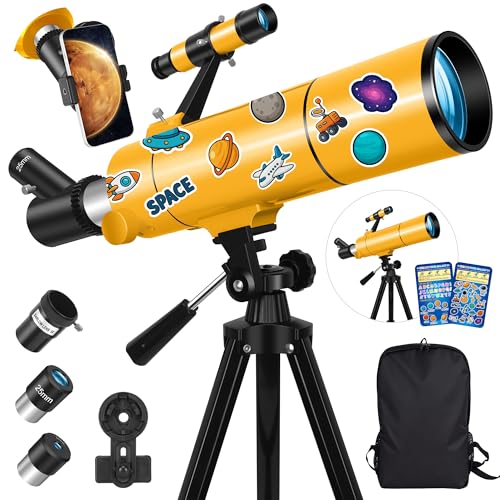
- 80mm aperture with fully multi-coated optics
- Includes tripod, phone adapter, and backpack
- Good for Moon, planets, and daytime nature
Best For: Homeschool families wanting a portable all-in-one starter kit
70mm Kids Telescope with Phone Adapter
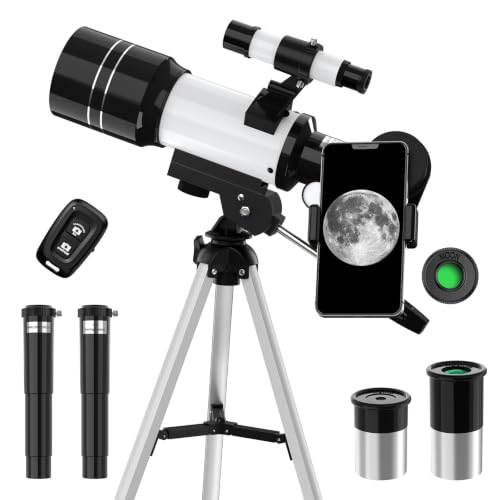
- 70mm aperture with fully multi-coated optics
- Tool-free setup for beginners and kids
- Phone adapter and wireless remote included
Best For: Beginners who want a compact, easy-to-share telescope
80mm 600mm Telescope with Moon Filter

- 80mm aperture with 600mm focal length
- Includes moon filter, phone adapter, and backpack
- No-tool setup with two beginner eyepieces
Best For: Homeschoolers wanting a practical lunar-and-planet starter kit
Portable Beginner Pick – Celestron Travel Scope 70mm
For families shopping for telescopes for homeschool astronomy, the Celestron Travel Scope 70mm is a practical starter option that keeps setup simple and viewing flexible. Its 70mm fully coated refractor optics are designed to deliver crisp views of the Moon and planets, while the lightweight package and included backpack make it easy to use for lessons at home or on the go.
Best For: Homeschool families who want a lightweight, easy-to-pack first telescope for Moon, planet, and daytime viewing.
Pros:
- 70mm aperture with fully coated glass lenses for clear lunar and planetary views
- No-tool setup and a preassembled mount/tripod help beginners get started quickly
- Includes 20mm and 10mm eyepieces plus a finderscope and star diagonal
- Backpack included for storage, transport, and organized homeschool use
Cons:
- Focal length and aperture are better suited to beginner observing than advanced deep-sky work
- Manual focus and altazimuth mount require hands-on aiming
This is a well-rounded choice if you want a straightforward telescope that can support regular homeschool stargazing sessions without a lot of setup friction. The included software and travel-ready design add value for families learning astronomy together.
Smartphone-Friendly Starter – Gskyer 70mm Travel Telescope
If you want telescopes for homeschool astronomy that make observation and documentation easy, this Gskyer 70mm model has a useful mix of beginner optics and smartphone support. The 70mm aperture and fully coated glass lens are built for moon and star viewing, while the included phone adapter and wireless remote make it easier to capture images during family lessons.
Best For: Homeschool students who want a beginner telescope with smartphone photography features.
Pros:
- 70mm aperture and 400mm focal length with fully coated optics
- Includes two eyepieces and a 3x Barlow lens for more viewing options
- Smartphone adapter and wireless remote support easy astrophotography
- Carry bag and adjustable tripod make it convenient for travel and storage
Cons:
- Altazimuth mount and manual focus mean hands-on aiming is still required
- At 5.7 pounds, it is less compact than the smallest kid-focused models
This telescope stands out for families who want to combine observing with simple phone-based imaging. It keeps the setup beginner-friendly while adding a few extras that can make homeschool astronomy feel more interactive.
Kid Learning Choice – 50mm STEM Beginner Telescope
Among telescopes for homeschool astronomy, this 50mm beginner telescope is aimed squarely at younger learners who need a simple, educational first step. It offers 20x to 100x magnification, a tripod, two eyepieces, and a finder scope, giving kids a hands-on way to explore the Moon and other distant objects while supporting STEM-focused activities.
Best For: Ages 6-12 kids who need an easy, educational first telescope for moon viewing and STEM learning.
Pros:
- Kid-friendly design with 20x-100x magnification for beginner observing
- Includes tripod, 2 eyepieces, Barlow lens, and finder scope
- Multi-coated optics help improve light transmission and reduce blur
- Lightweight and portable for backyard, camping, and family use
Cons:
- 50mm aperture is smaller than the 70mm and 80mm options here
- Fixed mount limits flexibility compared with adjustable tripod systems
This is a sensible pick for homeschoolers who want astronomy to feel approachable and age-appropriate. It is less about advanced optics and more about building confidence, curiosity, and basic observing habits.
Higher-Visibility Upgrade – 80mm Travel Refractor Telescope
For homeschool families looking for telescopes for homeschool astronomy with a bigger light-gathering step up, this 80mm refractor adds more capability without abandoning beginner-friendly operation. The 80mm aperture and 900mm focal length are paired with fully coated optics, two eyepieces, a phone adapter, and a finder scope, making it a solid all-around choice for Moon and planet viewing.
Best For: Homeschoolers and beginners who want a larger-aperture telescope with easy setup and phone support.
Pros:
- 80mm aperture and 900mm focal length capture more light than smaller beginner scopes
- Two upgraded wide-angle eyepieces plus a 5×24 finder scope help with locating objects
- Phone adapter makes it easier to capture and share observation images
- Carry bag, adjustable tripod, and no-tool assembly support portability and simple setup
Cons:
- At nearly 30 inches long, it is less compact than travel-first 70mm models
- Altazimuth manual design still requires hands-on tracking
This model makes sense if your homeschool lessons are ready for a little more aperture and a slightly more serious observing experience. It keeps the learning curve reasonable while offering a meaningful upgrade in light gathering and image clarity.
Compact Starter Scope – 70mm 400mm Refractor for Kids & Beginners
If you want telescopes for homeschool astronomy that are simple to set up and easy for kids to use, this 70mm refractor is a practical starting point. The 400mm focal length, fully coated optics, and included 5×24 finder make it suitable for learning how to locate the Moon and other bright targets without a steep learning curve.
Best For: Homeschool families and beginners who want a lightweight travel telescope for Moon viewing and basic terrestrial observations.
Pros:
- 70mm aperture with fully coated glass for clear, sharp views.
- Two eyepieces provide 20x to 32x magnification options.
- 5×24 finder with crosshairs helps with target location.
- Adjustable aluminum tripod supports different observing heights.
Cons:
- Lower magnification range is better for beginners than for deep-sky detail.
- Manual focus and alt-az mount require hands-on aiming.
This is a straightforward pick for families building early astronomy habits at home. It leans more toward easy Moon and landscape observing than advanced night-sky work, which fits many homeschool lessons well.
Portable Travel Refractor – 80mm 600mm Astronomy Telescope with Backpack
For telescopes for homeschool astronomy, this 80mm refractor stands out when you want a little more light gathering and a more complete accessory set. The 600mm focal length, fully coated optics, and included phone adapter make it a flexible choice for lessons that mix Moon viewing, basic planet observing, birding, and landscape use.
Best For: Homeschool families who want a portable all-around beginner telescope with a backpack for easy storage and transport.
Pros:
- 80mm aperture captures more light for brighter, clearer images.
- Two eyepieces offer 30x to 66x magnification.
- 5×24 finder and phone adapter help with target acquisition and imaging.
- Backpack and adjustable tripod make it easier to carry and pack away.
Cons:
- Manual focus and alt-az control still require practice.
- Setup is beginner-friendly, but there are more accessories to manage than on simpler scopes.
This model is a good step up if your homeschool astronomy plans call for more versatility than a basic starter scope. It balances portability, aperture, and accessory support in a way that suits frequent family use.
Black Travel Starter Scope – 70mm 400mm Beginner Telescope in Black
This black version is another solid option for telescopes for homeschool astronomy when you want the same beginner-friendly setup in a different finish. It keeps the 70mm aperture, 400mm focal length, and included phone adapter, making it suitable for learning sessions centered on the Moon, simple celestial targets, and daytime landscape viewing.
Best For: Homeschool families who want a lightweight starter telescope in a black finish for easy Moon and landscape observing.
Pros:
- 70mm objective lens with high-transmittance coated optics.
- Two eyepieces deliver 20x to 32x magnification.
- 5×24 finder with crosshairs makes targets easier to locate.
- Adjustable tripod and smartphone adapter add convenience.
Cons:
- Performance is geared toward beginner-level observing rather than advanced detail.
- Manual setup and aiming are required.
If you already like the 70mm beginner format, this version offers the same core features with a different look and a slightly lighter listed weight. It is a simple, practical pick for families building introductory observing routines.
Family Travel Pick – 80mm Refractor Telescope Kit for Beginners
For telescopes for homeschool astronomy, this 80mm refractor is a strong all-in-one starter kit for families who want bright, easy-to-use views of the Moon, planets, and daytime nature. The 500mm focal length, multi-coated optics, and included 3X Barlow lens give beginners a practical range of magnification without making setup overly complicated.
Best For: Homeschool families who want a portable beginner telescope with extra accessories for both skywatching and simple nature study.
Pros:
- 80mm aperture and fully multi-coated optics help deliver brighter, sharper images.
- Includes two eyepieces, a 3X Barlow lens, finderscope, phone adapter, and backpack.
- Adjustable tripod and lightweight design make it easier to move between backyard and travel use.
- Phone adapter and stickers add a fun homeschool-friendly way to document and personalize observing.
Cons:
- Manual focus and altazimuth mount mean it is still a hands-on beginner setup.
- Higher magnification range may be more than some first-time users need right away.
Overall, this is a well-rounded choice if you want a homeschool astronomy telescope that feels complete out of the box and works for both sky viewing and daytime exploration.
Compact Starter Choice – 70mm Kids Telescope with Phone Adapter
If you need telescopes for homeschool astronomy that are simple to set up and easy to share, this 70mm refractor is built with beginners in mind. Its 300mm focal length, multi-coated optics, and wide 15X-150X range make it a practical option for introducing kids to the Moon, stars, and even daytime nature observations.
Best For: Beginner homeschoolers who want a compact telescope with straightforward setup and phone-capture features.
Pros:
- 70mm aperture with fully multi-coated glass for clearer, brighter views.
- Tool-free setup makes it approachable for kids and first-time users.
- Includes two eyepieces, a 1.5X erecting eyepiece, and a 3X Barlow lens for flexible viewing.
- Phone adapter and wireless remote make it easier to capture and share observations.
Cons:
- The smaller 70mm aperture is less light-gathering than 80mm models.
- Finder scope image is noted as inverted, which may confuse some beginners at first.
This is a solid homeschool-friendly starter telescope when portability, easy assembly, and simple sharing matter more than maximum optical size.
Best Value Observing Kit – 80mm 600mm Telescope with Moon Filter
For telescopes for homeschool astronomy, this 80mm refractor stands out as a practical observing kit with a useful mix of optics and accessories. The 600mm focal length, fully multi-coated lens, moon filter, and included phone adapter give students a bit more room to explore lunar detail and bright planets while keeping setup beginner-friendly.
Best For: Homeschoolers who want a portable telescope with a moon filter and a stronger zoom range for casual lunar and planetary viewing.
Pros:
- 80mm aperture and 600mm focal length provide solid light gathering for brighter images.
- Includes a moon filter, phone adapter, backpack, and adjustable tripod.
- Simple assembly with no tools required, plus manual instructions and video support.
- 20mm and 9mm eyepieces offer 30X and 66X magnification for beginner observing.
Cons:
- Magnification tops out at 66X from the included eyepieces, so it is not an extreme-power setup.
- Still a manual altazimuth refractor, so tracking objects takes practice.
This model is a good fit if you want a homeschool astronomy telescope that balances portability, included accessories, and practical lunar viewing support.
How We Picked These Telescopes for Homeschool Astronomy
We focused on beginner-friendly models that are practical for family use, with an emphasis on simple assembly, manageable size, and optics that can support real observing sessions. For Telescopes for Homeschool Astronomy, the goal is dependable learning value rather than advanced features that raise cost and complexity.
We also looked for kits that include the basics most families need to get started, such as a tripod, finder scope, and a carrying solution when possible. Portability matters because homeschool learning often happens in a backyard, driveway, park, or during travel.
Quick Comparison: What Matters Most
In this category, smaller 50mm and 70mm telescopes are usually the easiest for younger students and first-time users, while 80mm refractors can offer a stronger all-around view if the mount is stable. Longer focal lengths can help with lunar and planetary detail, but a shaky mount can erase that advantage.
For most families, the best value comes from a telescope that is easy to aim, quick to assemble, and clear enough to show obvious targets like the Moon, Jupiter’s moons, Saturn’s rings, and bright star clusters.
Key Buying Factors for Telescopes for Homeschool Astronomy
Aperture
Aperture controls how much light the telescope collects. For beginners, 70mm to 80mm is often the sweet spot. A 50mm model can work for very young learners, but views will be more limited.
Mount Stability
A stable alt-azimuth mount is usually the best choice for homeschool use. It is intuitive to move up, down, left, and right, which makes it easier for kids to track objects without a steep learning curve.
Ease of Setup
The ideal scope should assemble quickly and not require constant tweaking. If a telescope is too fiddly, families are less likely to use it regularly.
Portability
Because homeschool astronomy often includes casual backyard sessions and field trips, lightweight designs and included cases or backpacks are a big plus.
Accessory Quality
Eyepieces, a finder scope, and a usable tripod matter more than flashy magnification claims. Accessories should support steady, repeatable observing rather than exaggerated numbers on the box.
Who Should Buy Which Telescopes for Homeschool Astronomy?
Choose a 50mm starter telescope if you are buying for a younger child or want a simple first science instrument. Choose a 70mm refractor if you want the best balance of portability, ease, and learning value for most families. Choose an 80mm telescope if you want brighter views and plan to use the scope regularly with older kids, teens, or adults.
If your homeschool plans include frequent travel or outdoor lessons, prioritize compact telescope kits that pack easily and set up fast. If your main goal is regular backyard astronomy, a slightly larger aperture and a more stable mount are worth the extra size.