Choosing the right starter telescope can make all the difference for a student just getting into astronomy. The best models are easy to set up, simple to aim, and clear enough to keep observing fun.
This roundup focuses on practical, student-friendly options that are portable, budget-aware, and well suited to the Moon, bright planets, and casual backyard stargazing.
Best 10 Refractor Telescopes for Students Picks for 2026
Travel-Friendly Starter Scope

- 70mm aperture with 400mm focal length
- Includes 2 eyepieces, 3x Barlow, and finder scope
- Phone adapter, remote, tripod, and carry bag included
Best For: students and beginners who want a portable, easy-to-use refractor
Classic Classroom-Style Pick

- 70mm fully coated achromatic refractor optics
- Includes 20mm and 10mm eyepieces plus red dot finder
- Suitable for both night sky and daytime viewing
Best For: students and families who want a simple home telescope for learning
Simple Budget Refractor
Celticbird 70mm Travel Telescope

- 70mm aperture with 400mm focal length
- Two eyepieces offer 20X and 32X magnification
- Includes tripod, phone adapter, and finderscope
Best For: young beginners and casual users who want an easy travel telescope
Pack-and-Go Student Scope

- 70mm fully coated refractor with 400mm focal length
- No-tool setup and full-height tripod
- Includes backpack, eyepieces, and software
Best For: students who need a lightweight telescope for travel and quick setup
Portable Starter Pick
80mm Aperture 600mm Refractor Telescope for Beginners

- 80mm aperture with fully coated optics
- Includes phone adapter, moon filter, and backpack
- 30x/66x eyepieces with simple no-tools setup
Best For: students and beginners who want a portable, easy-to-use refractor
Fast-Setup Learning Scope
70mm Aperture 360mm Portable Telescope
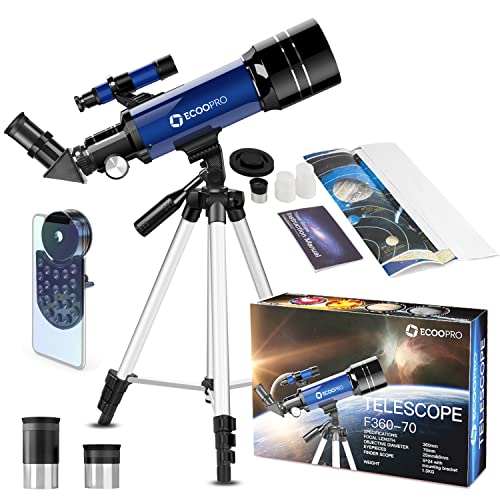
- 70mm aperture with fully multi-coated optics
- Quick-release, no-tools assembly for beginners
- Includes phone adapter, finder scope, and tripod
Best For: students and young beginners who want a lightweight all-around starter scope
Travel-Ready Choice
80mm Aperture 600mm Portable Telescope

- 80mm aperture with multi-coated optics
- Includes backpack, tripod, and phone adapter
- K20/K9 eyepieces offer 30x to 66x views
Best For: students who want a portable refractor for travel and easy target-finding
Compact Starter Refractor

- 70mm fully multi-coated refractor optics
- 15X–150X viewing range with Barlow lens
- Tool-free setup with phone adapter
Best For: Students and beginners starting with Moon and nature viewing
High-Detail Student Refractor

- 90mm aperture with 600mm focal length
- ED glass and fully coated lenses
- Carry bag, phone adapter, and tripod included
Best For: Older students who want a more capable beginner telescope
Portable Family Learning Refractor
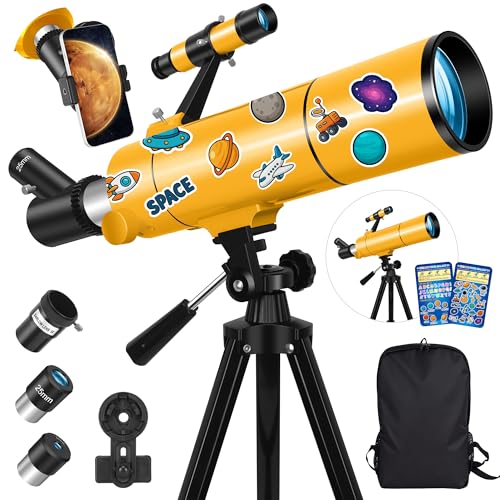
- 80mm aperture with 500mm focal length
- Phone adapter and waterproof backpack included
- 45° zenith mirror with 20X–150X range
Best For: Students and families who want a portable beginner scope
Travel-Friendly Starter Scope – Gskyer 70mm 400mm Refractor
If you’re comparing refractor telescopes for students, this Gskyer model is a practical starter option with a 70mm aperture, 400mm focal length, and simple alt-azimuth mount. It’s built to make first-time observing easier, with included eyepieces, a 3x Barlow lens, a 5×24 finder scope, and smartphone support for basic skywatching and photos.
Best For: Students and beginners who want an easy, travel-ready refractor with phone-friendly features.
Pros:
- 70mm aperture and 400mm focal length for beginner-friendly lunar and sky viewing
- Includes two eyepieces plus a 3x Barlow lens for more viewing options
- Smartphone adapter and wireless remote help with basic digiscoping
- Adjustable tripod and carry bag make storage and travel simpler
Cons:
- Manual focus and alt-azimuth mount may feel basic to more advanced users
- Best suited to entry-level observing rather than high-detail astronomy
This is a solid pick for students who need a lightweight, all-in-one refractor that’s easy to pack up and start using. Its accessory set adds value, especially if you want a telescope that can move from backyard sessions to trips without much setup hassle.
Classic Classroom-Style Pick – Celestron AstroMaster 70AZ
For shoppers focused on refractor telescopes for students, the Celestron AstroMaster 70AZ stands out as a straightforward entry-level option with 70mm fully coated optics and a 900mm focal length. It’s designed for both sky and daytime use, and the manual alt-azimuth mount plus included red dot finderscope keep operation simple for newer users.
Best For: Students and families who want a beginner refractor for Moon, planets, and daytime viewing.
Pros:
- 70mm fully coated achromatic optics for crisp Moon and planetary views
- Works for both astronomical and terrestrial viewing
- Alt-azimuth mount with panhandle makes manual pointing easier
- Includes two eyepieces, star diagonal, red dot finderscope, and astronomy software
Cons:
- Manual setup and controls may take practice for first-time users
- Heavier than some travel-oriented beginner scopes
This model is a dependable pick if you want a well-known beginner telescope with a complete accessory bundle. It favors straightforward observing and learning over portability, which can be a good match for students who plan to use it mostly at home or in the backyard.
Simple Budget Refractor – Celticbird 70mm Travel Telescope
This Celticbird model fits the needs of buyers looking for refractor telescopes for students without overcomplicating the first purchase. It combines a 70mm aperture, 400mm focal length, two Kellner eyepieces, a smartphone holder, and a 5×24 finderscope in a lightweight travel design that’s easy to assemble and aim.
Best For: Young beginners and casual observers who want a simple, portable starter telescope.
Pros:
- 70mm aperture and 400mm focal length with fully coated glass lenses
- Two eyepieces provide 20X and 32X viewing options
- Includes tripod, smartphone adapter, and 5×24 finderscope
- Designed to be easy to assemble and simple to focus
Cons:
- Limited magnification range compared with more feature-rich models
- Manual operation keeps it firmly in beginner territory
Overall, this is a straightforward, low-friction choice for students who need an affordable-feeling beginner scope for casual lunar and sky viewing. The included accessories are useful, but the real appeal is the simple setup and portable form factor.
Pack-and-Go Student Scope – Celestron Travel Scope 70
If portability matters most in refractor telescopes for students, the Celestron Travel Scope 70 is a strong fit. It uses a 70mm aperture with fully coated glass lenses and comes with a backpack, making it easy to set up quickly and take to camps, trips, or the backyard for Moon, planet, and daytime viewing.
Best For: Students and families who want a lightweight, grab-and-go refractor for travel and quick setup.
Pros:
- 70mm aperture with fully coated glass lenses for bright beginner views
- Quick no-tool setup with a full-height tripod
- Includes 20mm and 10mm eyepieces plus a finderscope and star diagonal
- Backpack and included software make transport and learning easier
Cons:
- Designed for portability, so it is not the most advanced observing platform
- Manual mount and focus require some hands-on learning
This is the best choice here for students who need a telescope they can carry easily and deploy fast. Its travel-focused design is the main selling point, and the included backpack makes it especially convenient for families on the move.
Portable Starter Pick – 80mm Aperture 600mm Refractor Telescope for Beginners
If you’re comparing refractor telescopes for students, this 80mm/600mm model is a practical pick for learning the basics of lunar and planetary viewing. It combines a larger aperture with a simple altazimuth mount, a phone adapter, and a backpack, so it’s built for easy setup at home or on the go.
Best For: Students, beginners, and families who want a portable refractor with straightforward setup and decent light gathering.
Pros:
- 80mm aperture and fully coated optics for brighter, clearer views.
- Includes 20mm and 9mm eyepieces for 30x and 66x magnification.
- Phone adapter, moon filter, finderscope, tripod, and backpack are included.
- Easy assembly with no tools required, according to the supplied notes.
Cons:
- Manual focus and altazimuth mount may require some practice for precise tracking.
- Best suited to moon and planet viewing rather than advanced deep-sky use.
- At 5.8 pounds, it is portable but not ultra-light.
This is a strong starter scope if you want a student-friendly refractor that balances portability, included accessories, and simple operation. The 80mm aperture gives it a useful edge for introductory astronomy without making the setup feel complicated.
Fast-Setup Learning Scope – 70mm Aperture 360mm Portable Telescope
For shoppers focused on refractor telescopes for students, this 70mm model stands out for quick setup and easy first-time use. Its compact tube, included phone adapter, and no-tools assembly make it a convenient choice for moon viewing, nature observation, and casual stargazing.
Best For: Young learners, students, and families who want a lightweight refractor that’s easy to set up and use for mixed observing.
Pros:
- 70mm aperture and fully multi-coated optics for bright, high-contrast views.
- No-tools, quick-release design gets you observing fast.
- Comes with two eyepieces, a 5×24 finderscope, phone adapter, and tripod.
- Useful for both astronomy and daytime bird watching or landscape viewing.
Cons:
- Short 360mm focal length may limit high-detail planetary performance.
- Smaller aperture than 80mm models means less light gathering.
- Best for casual use rather than more demanding observing sessions.
This is a sensible entry-level refractor if convenience matters more than power. It gives students an easy way to learn basic telescope handling while still offering enough versatility for daytime and nighttime use.
Travel-Ready Choice – 80mm Aperture 600mm Portable Telescope
If you’re narrowing down refractor telescopes for students, this 80mm travel model is a solid middle ground between portability and viewing power. It uses a fully coated 80mm lens, includes two eyepieces, and adds a phone adapter and backpack, making it easy to bring along for family trips or outdoor learning.
Best For: Students and beginners who want a portable 80mm refractor with included travel storage and easy aiming aids.
Pros:
- True 80mm aperture with multi-coated optics for brighter images.
- Includes K20mm and K9mm eyepieces for 30x to 66x magnification.
- 5×24 finder scope and custom phone adapter help with locating targets.
- Backpack and adjustable tripod make it easy to carry and store.
Cons:
- Manual focus and altazimuth mount are beginner-friendly, but not fully automated.
- Optimized more for moon, planets, bird watching, and landscapes than advanced astronomy.
- At 840 g, it’s portable, but the included kit still has multiple pieces to manage.
This model is a practical student telescope if you want a bit more aperture without giving up portability. Its accessory set and travel-ready design make it especially useful for learning sessions away from home.
Compact Starter Refractor – 70mm Beginner Telescope
If you’re comparing refractor telescopes for students, this 70mm model is a simple, approachable place to start. It combines a beginner-friendly 300mm focal length, tool-free setup, and a phone adapter, making it practical for first-time observers who want to look at the Moon, nature, and bright celestial objects without a complicated learning curve.
Best For: Students, kids, and beginner astronomers who want an easy first telescope for Moon viewing and casual backyard use.
Pros:
- 70mm fully multi-coated refractor optics aim to improve brightness, contrast, and glare control.
- 15X–150X range with 20mm and 6mm eyepieces, plus a 1.5X erecting eyepiece and 3X Barlow lens.
- No-tools assembly and a sturdy tripod make setup easier for beginners.
- Includes a phone adapter and wireless remote for simple image capture and sharing.
Cons:
- The 300mm focal length is better suited to casual viewing than advanced detail work.
- Finder scope image is inverted, which may confuse first-time users at first.
- Designed mainly for beginners, so it is not the most feature-rich option in this group.
This is a solid starter pick if the goal is to make student astronomy feel easy and rewarding. It focuses on convenience and basic clarity rather than maximum power, which can be a good match for younger learners.
High-Detail Student Refractor – 90mm 600mm Travel Scope
Among refractor telescopes for students, this 90mm model stands out for users who want a more capable step up from entry-level scopes. Its 600mm focal length, ED glass optics, and fully coated lenses are built for clearer lunar and planetary views, while the included phone adapter and carry bag make it easier to take to classes, camps, or dark-sky outings.
Best For: Older students and beginner astronomers who want stronger optics, better stability, and more serious observing.
Pros:
- 90mm aperture and 600mm focal length offer a stronger view than smaller starter scopes.
- ED glass optics and fully coated lenses are designed to improve clarity and color fidelity.
- Includes two eyepieces, a 3X Barlow lens, and a 5×24 finder scope for flexible viewing.
- Aluminum tripod, carry bag, phone adapter, and manuals make it a well-rounded beginner kit.
Cons:
- It is more elaborate than a basic student telescope, so setup may feel less simple for very young users.
- Manual focus means observing takes more hands-on adjustment.
- Its feature set is better suited to learners ready for a more advanced starter scope.
This is the strongest choice here for students who are ready to move beyond the most basic beginner model. It balances portability with better optics and a more complete accessory package.
Portable Family Learning Refractor – 80mm Travel Telescope
If you want refractor telescopes for students that can also handle family use, this 80mm travel model is a practical middle ground. It offers a solid aperture, a 500mm focal length, and beginner-friendly accessories like a phone adapter and backpack, so it works well for classroom-inspired skywatching, weekend trips, and backyard observing.
Best For: Students and families who want a portable all-in-one telescope for both astronomy and daytime viewing.
Pros:
- 80mm aperture and fully multi-coated optics help deliver brighter, sharper views.
- 20X–150X magnification covers Moon, planet, and nature observing.
- Includes a 45° zenith mirror for upright images and a 5×24 finder scope for easier aiming.
- Comes with a phone adapter, waterproof backpack, tripod, and fun stickers for an easy all-in-one setup.
Cons:
- The 500mm focal length is versatile, but not as specialized as a higher-end student scope.
- Best suited to beginners and family use rather than advanced astronomy.
- Manual setup still requires some patience when learning to align targets.
This model is a smart choice if portability matters as much as optics. It gives students a useful balance of image quality, travel convenience, and beginner accessories without pushing into overly complex territory.
How We Picked the Best Refractor Telescopes for Students
For this list of Refractor Telescopes for Students, we focused on models that are beginner-friendly first. That means straightforward mounts, manageable size, and optics that are useful for real-world viewing rather than exaggerated power claims. We also prioritized portability, included accessories, and overall value for families, hobbyists, and first-time users.
Quick Comparison
In this group, smaller 70mm telescopes are the easiest to carry and set up, making them a smart choice for younger students and casual use. Mid-size 80mm and 90mm models gather more light, which can improve lunar detail and make brighter deep-sky targets a bit more rewarding. Compact travel kits are best when storage and transport matter most, while longer 500mm to 600mm focal lengths can offer a more stable, versatile viewing experience.
Key Buying Factors for Refractor Telescopes for Students
Aperture
Aperture is one of the most important specs. A 70mm scope is a solid entry point, but 80mm or 90mm generally provides brighter, more detailed views. For students who may want to keep using the telescope longer, a slightly larger aperture can be worth it.
Mount and Stability
An easy-to-use alt-azimuth mount is usually best for beginners. Stability matters more than extreme magnification, because shaky views make learning frustrating. A stable tripod and smooth controls help students track the Moon and planets with less effort.
Ease of Setup
Look for simple assembly, clear instructions, and accessories that help a beginner start observing quickly. A phone adapter, carry bag, or backpack can add convenience, but they should not replace basic optical quality.
Magnification Claims
Be cautious with very high power numbers. Useful magnification depends on aperture, optics, and atmospheric conditions. For most Refractor Telescopes for Students, clear low-to-moderate magnification is more valuable than inflated maximum power.
Who Should Buy Which Refractor Telescopes for Students?
Choose a 70mm travel refractor if you want the lightest, simplest option for younger students or occasional use. Step up to an 80mm model if you want a better balance of portability and viewing quality. A 90mm refractor is the strongest pick here for buyers who want more detail and plan to observe often. If the telescope will be shared by a family, a larger 80mm or 90mm model usually offers the most room to grow without becoming too difficult for beginners.