Great electronics kits for teenagers should do more than fill a box with parts—they should build confidence, teach real skills, and keep projects engaging from the first build to the last.
This roundup focuses on kits with clear instructions, age-appropriate challenge levels, and practical learning value, whether the goal is coding, circuits, robotics, or soldering.
Best 10 Electronics Kits for Teenagers Picks for 2026
Ultimate Arduino Learning Lab
ELEGOO Mega 2560 R3 Starter Kit

- 200+ components for hands-on builds
- 35+ lesson PDF tutorial included
- Compatible with Arduino IDE
Best For: Teens wanting a broad Arduino starter kit with guided lessons
Physics Circuit Explorer
Electricity and Magnetism Lab Kit

- 55 electricity items and 22 magnetism items
- Clear manual with step-by-step experiments
- Sturdy storage box with fixed slots
Best For: High school students exploring circuits and electromagnetism
Robot Car Coding Build
ELEGOO UNO R3 Smart Robot Car Kit V4

- 24 module parts for robotics learning
- App, IR remote, and phone/tablet control
- Includes line tracking and obstacle avoidance
Best For: Teens who want a beginner-friendly robotics project
Interactive Arduino Classroom Kit

- Step-by-step interactive curriculum included
- Projects cover circuits, sensors, and programming
- Video tutorials and online resources available
Best For: Students and beginners needing guided Arduino instruction
Beginner Bluetooth Speaker Build
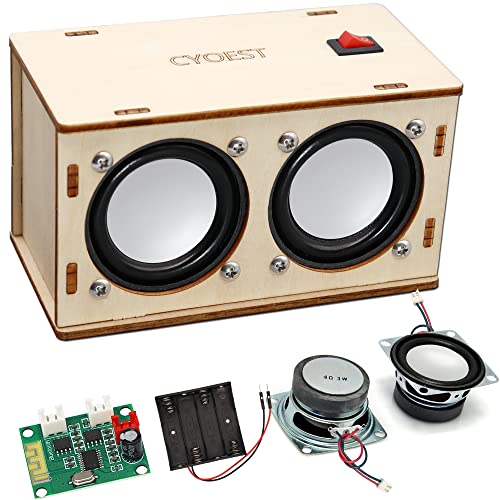
- No soldering required
- Teaches speaker and circuit basics
- Good for family STEM projects
Best For: Teens and beginners starting with a simple hands-on electronics build
Car Control Soldering Challenge

- Driving controls with lights and horn
- Teaches circuits through soldering
- Best for students with some basics
Best For: Teens ready for a more advanced soldering project
Most Complete Arduino Starter

- 200+ components and 30+ lessons
- Pre-soldered modules for easier wiring
- Great for coding and circuit exploration
Best For: Teens who want a broad Arduino learning kit with room to grow
STEM Robotics Starter
Butterfly EduFields 10in1 STEM Robotics Kit

- 10-in-1 robot building projects
- 100+ components with illustrated instructions
- Good intro to robotics and electronics
Best For: Beginners who want guided robotics builds
Bluetooth Audio Build
MiOYOOW DIY Bluetooth Speaker Kit

- Makes a working Bluetooth speaker
- Includes LED lights and multiple playback modes
- Better for teens with some soldering experience
Best For: Teens ready for a functional soldering project
Arduino Beginner Lab
ELEGOO UNO R3 Super Starter Kit
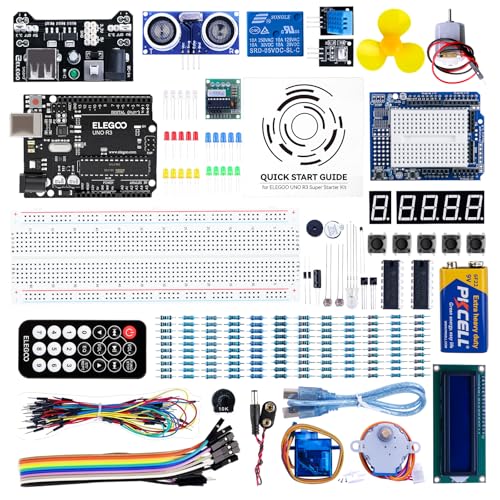
- 22+ lessons with PDF tutorial support
- Large parts set for sensors, motors, and circuits
- Compatible with Arduino UNO boards
Best For: Teens learning Arduino and circuit basics
Ultimate Arduino Learning Lab – ELEGOO Mega 2560 R3 Starter Kit
If you want electronics kits for teenagers that feel genuinely hands-on, this ELEGOO starter kit is built around guided learning and plenty of parts to experiment with. It includes over 200 components and a PDF tutorial with more than 35 lessons, so it works well for teens who learn best by building rather than just reading.
Best For: Teens who want a broad Arduino starter kit with lots of components and guided projects.
Pros:
- Over 200 premium components for lots of build variety
- Compatible with Arduino IDE and includes a tutorial with 35+ lessons
- Includes helpful extras like an LCD1602 module and GY-521 sensor module with pin header
- Clear packaging with a small storage box for organizing small parts
Cons:
- Best suited to teens ready to learn coding and electronics basics
- Contains many components, so it may feel overwhelming for absolute beginners
This is a strong pick for teens who want a complete intro to coding, electronics, and problem-solving in one box. The mix of guided lessons and a large component count makes it especially useful for sustained learning.
Physics Circuit Explorer – Electricity and Magnetism Lab Kit
For electronics kits for teenagers that lean more toward science lab exploration, this electricity-and-magnetism set is designed to connect classroom learning with real experiments. It includes 55 electricity items, 22 magnetism items, and a well-written manual that explains both the steps and the equipment needed for each activity.
Best For: High school students who want to explore circuits, electromagnetism, and physics experiments.
Pros:
- Includes 55 electricity items and 22 magnetism items
- Manual explains experiment steps and required equipment clearly
- Supports projects like series and parallel circuits, fruit battery, and electromagnet builds
- Comes in a sturdy double-layer storage box with fixed positions for each item
Cons:
- Requires three AA batteries to work
- More focused on physics experiments than open-ended electronics building
This kit is a smart choice if the goal is to learn core electricity and magnetism concepts through structured experiments. It feels more like a school lab set than a general hobby kit, which can be a plus for students who want clear direction.
Robot Car Coding Build – ELEGOO UNO R3 Smart Robot Car Kit V4
If you’re shopping for electronics kits for teenagers who like robotics, this smart robot car kit delivers a full build-and-code experience. It includes 24 module parts, supports app and IR remote control, and adds features like line tracking and ultrasonic obstacle avoidance for a more interactive project.
Best For: Teens who want a beginner-friendly robotics kit with app control and movement features.
Pros:
- Includes 24 module parts for a complete robotics build
- Supports line tracking, obstacle avoidance, and IR remote control
- Can be controlled by phone or tablet on Android and iOS
- Comes with HD-rendered assembly instructions and code
Cons:
- Requires some basic electronic knowledge
- Best for users who are comfortable following build instructions closely
This kit stands out for teens who want a project that feels more like a real robot than a simple circuit experiment. The combination of assembly, coding, and control options makes it a practical pick for robotics beginners with some support.
Interactive Arduino Classroom Kit – Arduino Student Kit AKX00025
For teens who want a structured path into electronics kits for teenagers, the Arduino Student Kit focuses on hands-on projects and clear instruction. It includes an interactive curriculum with step-by-step tutorials, plus video and online resources, making it a strong option for classroom use or self-paced learning.
Best For: Students and beginners who want a guided Arduino learning kit for electronics and programming.
Pros:
- Includes hands-on projects like a traffic light system and motion-activated alarm
- Interactive curriculum with step-by-step tutorials
- Video tutorials and online resources support self-paced learning
- Wide range of components for circuit building and experimentation
Cons:
- More focused on learning than on flashy robotics-style builds
- Very lightweight kit, so it’s not as component-heavy as some larger starter sets
This kit is best if you want a classroom-friendly introduction to Arduino that builds real understanding over time. It’s a practical choice for teens who value instruction, structure, and repeatable learning projects.
Beginner Bluetooth Speaker Build – DIY Bluetooth Speaker Kit
If you want electronics kits for teenagers that feel hands-on but still approachable, this Bluetooth speaker build is a strong pick. It teaches how a speaker works through assembly, circuit basics, and simple problem solving, all without requiring soldering.
Best For: Teens, beginners, and parent-child STEM projects that want an easy first electronics build.
Pros:
- No soldering required, so it is beginner-friendly.
- Teaches speaker operation, circuitry, and audio technology through a real build.
- Includes clear instructions and is suitable for family or classroom use.
- Uses high-quality circuit boards and checks components for quality.
Cons:
- It is a single-project kit, so it is less expansive than multi-component starter sets.
- Designed as an introductory build rather than an advanced electronics challenge.
Overall, this kit works well for teens who want a practical first win in electronics while making something useful. It is a good balance of learning value, simplicity, and gift appeal.
Car Control Soldering Challenge – DIY Car Simulation Kit
Among electronics kits for teenagers, this car driving simulation project stands out for students who want a more active soldering experience. It simulates driving controls with turn signals, headlights, brake lights, reverse lights, speed adjustment, and a horn, making the learning feel very interactive.
Best For: Teens who already have some soldering foundation and want a circuit project with realistic car controls.
Pros:
- Simulates car operations with buttons for turning, accelerating, decelerating, and honking.
- Includes realistic lighting effects with turn signals, headlights, brake lights, and reverse lights.
- Clear circuit labeling helps make soldering easier to follow.
- Step-by-step paper manual supports guided assembly.
Cons:
- Requires basic electronics knowledge and soldering ability.
- Less beginner-friendly than no-solder project kits.
This is a solid choice for teens who want a more technical project with a real-world theme. It offers a good mix of soldering practice and STEM learning, but it is best suited to learners ready for a bit more complexity.
Most Complete Arduino Starter – ELEGOO UNO R3 Kit
If you are shopping for electronics kits for teenagers that can grow with their skills, this ELEGOO UNO R3 starter kit is the most versatile option here. It includes a large component set, a free PDF tutorial with more than 30 lessons, and beginner-friendly modules that are already soldered.
Best For: Teens who want a large Arduino-compatible starter kit for coding, circuits, and long-term experimentation.
Pros:
- Includes more than 200 components across 63 kinds of products.
- Free PDF tutorial with 30+ guided lessons and included code.
- Pre-soldered modules make wiring easier for beginners.
- Organized case helps keep parts sorted after use.
Cons:
- Large kit may feel overwhelming if you only want one simple project.
- Some projects will require more time and patience to work through the lessons.
For teens who want the broadest learning platform, this kit offers the deepest bench of parts and guided projects. It is especially strong if the goal is to build coding confidence while exploring many different circuits.
STEM Robotics Starter – Butterfly EduFields 10in1 STEM Robotics Kit
If you’re shopping for electronics kits for teenagers who like building things, this 10-in-1 robotics kit is a hands-on way to explore basic engineering, mechanics, and electronics. It focuses on quick DIY builds with clear steps, so beginners can move from parts to working models without a steep learning curve.
Best For: Teenagers and younger learners who want an easy entry into robotics, STEM, and simple electronic build projects.
Pros:
- Includes 100+ components for multiple STEM robotic science models
- Step-by-step illustrated manual helps make assembly straightforward
- Teaches robotics, engineering, mechanics, and basic electronics through hands-on builds
- Can support simple sensor-style functions like line-following and obstacle avoidance
Cons:
- Built around beginner projects rather than advanced circuitry
- Best suited to users who want guided builds, not open-ended electronic design
Overall, this is a practical starter kit if you want a teen-friendly project set that prioritizes learning by doing. Its strength is accessibility: quick builds, lots of parts, and a clear path into STEM basics.
Bluetooth Audio Build – MiOYOOW DIY Bluetooth Speaker Kit
This DIY speaker stands out among electronics kits for teenagers because it produces a real Bluetooth speaker after assembly. It’s designed as a soldering and circuit practice project, making it a better fit for teens who already have some hands-on electronics confidence.
Best For: Teens, students, and hobbyists who want a functional soldering project with audio output and Bluetooth features.
Pros:
- Builds a usable Bluetooth speaker with LED flashing lights
- Supports Bluetooth, TF card, and USB flash drive playback
- Pre-soldered amplifier board reduces some assembly difficulty
- Includes a detailed manual to guide the build step by step
Cons:
- Designed for learners with foundational electronics knowledge
- Requires soldering, so it’s not ideal as a first-ever kit
As a project gift, this kit is more rewarding than a simple practice board because the finished result is something you can actually use. It makes sense for older teens who want a practical electronics project with a clear payoff.
Arduino Beginner Lab – ELEGOO UNO R3 Super Starter Kit
For electronics kits for teenagers who want a broader foundation, this Arduino-compatible starter kit offers a much deeper project experience. With more than 22 lessons and a large parts selection, it’s built for learning circuits, sensors, and coding basics through structured practice.
Best For: Teens who want a beginner-friendly Arduino kit with lots of parts and a tutorial-led learning path.
Pros:
- Includes PDF tutorials with more than 22 lessons
- Large component set covers sensors, motors, displays, and basic circuit building
- Compatible with Arduino UNO R3 and other Arduino-family boards
- Includes power supply module and other useful starter parts
Cons:
- More of a general electronics starter kit than a single finished project
- Can feel busy for users who want a very simple, one-build experience
This is the strongest option here for teens who want to learn a wider range of electronics skills instead of building just one item. It’s especially useful if you want a kit that can grow with the user over time.
How We Picked These Electronics Kits for Teenagers
We focused on kits that balance educational value, project variety, and accessibility for teens. The strongest options include structured tutorials, quality components, and room to grow beyond a single beginner build. We also looked for kits that encourage problem-solving instead of simple snap-together play.
Quick Comparison: Which Type of Kit Fits Best?
Some Electronics Kits for Teenagers are best for learning fundamentals like LEDs, switches, resistors, and basic circuitry. Others lean into coding, robotics, or audio projects. If the teen likes programming and experimentation, an Arduino-based kit is a smart pick. If they prefer hands-on building with visible results, a robotics or speaker kit may be more motivating. For school use, kits with guided lessons and organized parts are easier to manage.
Key Buying Factors for Electronics Kits for Teenagers
Skill Level
Choose a kit that matches the teen’s experience. Absolute beginners usually do best with guided starter kits and clear project instructions. More confident users can handle larger component sets, sensors, and open-ended builds.
Learning Outcome
Decide what you want the kit to teach. Some emphasize electronics theory, others focus on robotics, coding, soldering, or mechanical assembly. The best choice depends on whether the teen wants school support, hobby exploration, or a future engineering pathway.
Project Variety
More projects usually mean better long-term value, but only if the instructions are clear and the parts are well organized. A good kit should offer enough variety to stay interesting without becoming overwhelming.
Safety and Supervision
For younger teens or first-time builders, look for kits with low-voltage components, easy-to-follow guides, and minimal soldering unless adult supervision is available. This is especially important for more advanced Electronics Kits for Teenagers that include tools or heat-based assembly.
Expansion Potential
Kits compatible with Arduino or other common platforms are often the best investment because they can be expanded with additional sensors, motors, and coding projects later.
Who Should Buy Which Electronics Kits for Teenagers?
Choose a beginner starter kit if the teen is new to electronics and wants a guided introduction. Pick a robotics kit for hands-on builders who like movement, sensors, and challenge-based learning. Select a circuit or physics-focused kit for students who want stronger STEM fundamentals. If they already enjoy coding or have used entry-level kits before, an Arduino-based option usually offers the most room to grow.
In short, the best Electronics Kits for Teenagers are the ones that match interest, skill level, and learning goals. A well-chosen kit can turn curiosity into a practical hobby—and sometimes even a future career path.