Choosing the right kit can make electronics feel intuitive instead of intimidating. The best options give students hands-on practice, clear instructions, and a strong balance of fun and fundamentals.
Below, we focus on electronics project kits for high school that support real learning outcomes, whether the goal is classroom STEM, beginner circuits, or Arduino-style projects.
Best 10 Electronics Project Kits for High School Picks for 2026
Arduino-Friendly Starter Lab
ELEGOO UNO R3 Super Starter Kit
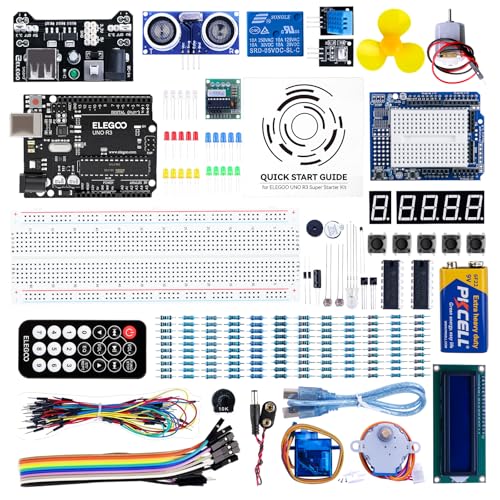
- PDF tutorial with 22+ lessons
- Wide mix of sensors, motors, and displays
- Compatible with multiple Arduino boards
Best For: High school beginners who need a guided, all-in-one starter kit
Hands-On STEM Circuit Builder

- Over 750 project possibilities
- Student training program with study guide
- Safe snap-together parts for beginners
Best For: Students who learn circuit basics through guided, hands-on experiments
Budget Arduino Basics
ELEGOO UNO R3 Basic Starter Kit
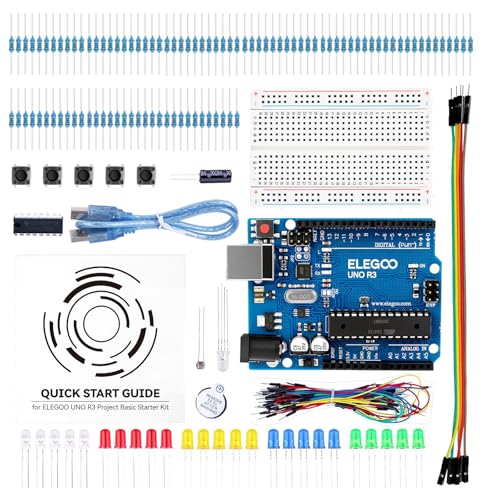
- Minimal kit with core Arduino parts
- PDF tutorial includes code and project intro
- Compatible with common Arduino boards
Best For: Students who need a low-cost, no-frills Arduino starter
Physics Lab Experiment Set
EUDAX Electricity & Magnetism Kit
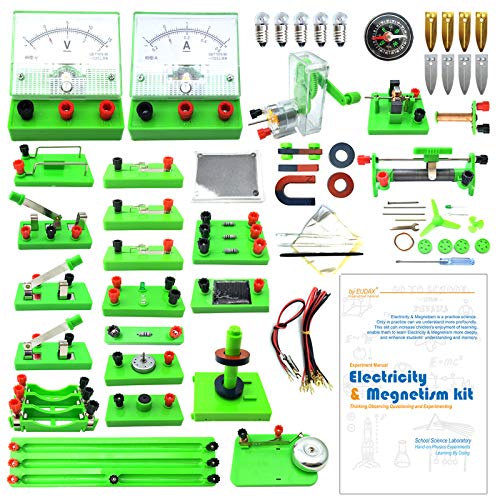
- 79-piece electricity and magnetism set
- Full-color manual guides experiments
- Built for grades 9-11 physics learning
Best For: High school physics students focused on electricity and magnetism experiments
Beginner STEM Coding Kit
LAFVIN Super Starter Kit for Arduino
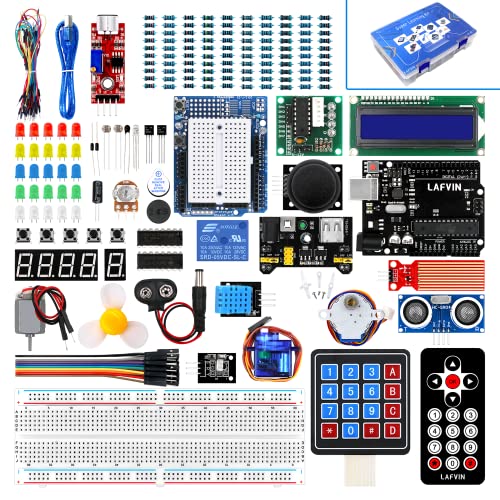
- 20+ lessons with code, libraries, and datasheets
- Arduino IDE compatible on Windows, macOS, and Linux
- Includes motors, LCDs, LEDs, buttons, and sensors
Best For: High school beginners who want a broad intro to Arduino-style projects
Soldering Practice Radio Kit
ICSTATION FM Radio with LED Lights

- Functional FM radio with soldering practice
- LCD1602 display for frequency and volume control
- 10 LED lights flash and pulse with music
Best For: High school students who want a soldering project with a useful payoff
Structured Classroom STEM Kit

- Interactive curriculum with step-by-step tutorials
- Projects include a traffic light, lamp, and motion alarm
- Includes sensors, actuators, breadboard, and core components
Best For: Classrooms and self-paced learners who want guided Arduino instruction
Classic Radio STEM Build
Elenco AM/FM Superheterodyne Kit

- 56-page course with 9 lessons
- AM/FM superheterodyne radio design
- Soldering required with detailed manual
Best For: High school and university students learning radio fundamentals
Precision Measurement Build

- Builds a working scale with tare
- Measures 0 to 1kg with 1g accuracy
- Explains strain-gauge weighing principles
Best For: Students who want a practical measurement-focused STEM project
Digital Logic Practice Board

- Teaches seven basic logic gates
- LED simulation shows live output states
- Full-color manual includes truth tables
Best For: Students learning digital logic and soldering basics
Arduino-Friendly Starter Lab – ELEGOO UNO R3 Super Starter Kit
If you’re comparing electronics project kits for high school, this ELEGOO starter set is a practical way to move from basic wiring into guided Arduino-style builds. It includes a PDF tutorial with more than 22 lessons plus a wide mix of parts, so students can follow structured projects without hunting down separate components.
Best For: High school beginners who want a broad, guided Arduino-compatible kit with lots of hands-on parts.
Pros:
- PDF tutorial includes more than 22 lessons for step-by-step learning.
- Large component selection covers displays, sensors, motors, relays, and more.
- Includes a breadboard power supply module and 9V battery with DC connection.
- Compatible with Arduino UNO R3, UNO R4, MEGA 2560 R3, and NANO.
Cons:
- Designed as a beginner kit, so advanced users may outgrow it quickly.
- Some parts are best used with the included instructions rather than open-ended exploration.
This is a strong pick for classrooms or home learners who want a full starter experience in one box. The mix of lessons and parts makes it easier to keep projects moving without extra purchases.
Hands-On STEM Circuit Builder – Snap Circuits Extreme SC-750R
For electronics project kits for high school that emphasize safe, hands-on discovery, this Snap Circuits Extreme set stands out for its easy snap-together parts and large project library. It supports more than 750 unique projects and includes a student training program with study guide, making it a useful fit for structured STEM learning.
Best For: Students who want a low-friction circuit kit with lots of guided experiments and classroom-friendly use.
Pros:
- Builds over 750 unique electronic projects with 80+ pieces.
- Includes a student training program and study guide for learning support.
- Safe, snap-together design is easy to use for beginners.
- Adds extras like an electromagnet, analog meter, solar cell, and computer interface.
Cons:
- Focuses more on circuit exploration than coding or microcontroller work.
- Plastic snap components may feel less like real breadboard-style electronics.
This kit is a solid choice when the goal is to teach circuit concepts through fast build-and-test experiments. It’s especially appealing for students who learn best by doing rather than by reading dense instructions first.
Budget Arduino Basics – ELEGOO UNO R3 Basic Starter Kit
Among electronics project kits for high school, this ELEGOO basic set is a straightforward entry point for students who want the essentials without a big parts pile. It includes a PDF tutorial with project introductions and code, plus the core components needed to start simple Arduino IDE lessons right away.
Best For: High school beginners who want an inexpensive, minimal Arduino-compatible starter kit.
Pros:
- Very basic kit keeps the first projects simple and focused.
- PDF tutorial includes project introductions and code to save setup time.
- Includes UNO R3 board, breadboard, buzzer, switch, LEDs, resistors, and jumper wires.
- Compatible with Arduino UNO R3, MEGA 2560 R3, and NANO.
Cons:
- Smaller component selection limits how far you can branch out.
- Less suitable if you want motors, sensors, or advanced add-ons in one box.
This is the most stripped-down option in the group, which can be an advantage for classrooms or families that want to control costs. It works best as a first exposure kit rather than a long-term expanding lab.
Physics Lab Experiment Set – EUDAX Electricity & Magnetism Kit
If you want electronics project kits for high school that lean more toward physics lab work, this EUDAX set is built around electricity and magnetism experiments. The color manual and hands-on models make it a good fit for grades 9-11 students learning circuit fundamentals, basic magnetism, and simple measurements through direct experimentation.
Best For: High school physics students who need a hands-on electricity and magnetism lab kit.
Pros:
- Covers both electricity and magnetism with 79 total items.
- Includes a full-color manual for guided experiments.
- Supports projects like series circuits, parallel circuits, fruit battery, and electromagnet builds.
- Comes with repair tools and a storage bag for organization.
Cons:
- Batteries are not included and it needs 3 AA batteries to operate.
- More of a science experiment kit than a coding or Arduino kit.
This kit makes the most sense when the course goal is to teach core physics concepts through physical demonstrations. It’s less about programming and more about understanding how electricity and magnetism behave in real experiments.
Beginner STEM Coding Kit – LAFVIN Super Starter Kit for Arduino
If you’re comparing electronics project kits for high school, this LAFVIN starter kit is a strong pick for students who want a broad, hands-on introduction to Arduino-compatible circuits and coding. It includes a tutorial manual with more than 20 lessons, plus code, libraries, and datasheets to help beginners move step by step.
Best For: High school beginners who want one kit that covers coding, sensors, motors, and display projects.
Pros:
- Includes a tutorial manual with 20+ lessons, code, libraries, and datasheets.
- Works with Arduino IDE and is compatible with Windows, macOS, and Linux.
- Covers a wide range of parts, including servos, stepper and DC motors, LCDs, LEDs, buttons, and sensors.
- LCD 1602 module comes with a pin header, so it does not need soldering.
Cons:
- Broad component count may be more than needed for a very narrow project focus.
- Designed for beginners, so advanced users may outgrow it quickly.
Overall, this kit stands out as a flexible learning platform for students who want to explore multiple electronics concepts instead of just one build. The included instruction support makes it easier to use in a classroom or at home.
Soldering Practice Radio Kit – ICSTATION FM Radio with LED Lights
For electronics project kits for high school students who want soldering practice with a finished result, this ICSTATION radio kit offers a practical build. It combines an FM radio, an LCD1602 display, and flashing LED lights, making it a more engaging option than a basic practice board.
Best For: Teens who want a soldering-focused project that ends with a functional FM radio.
Pros:
- Combines soldering practice with a working FM radio project.
- LCD1602 display makes frequency and volume adjustments easy after assembly.
- Includes 10 LED lights that flash and pulse with the music.
- Comes with an acrylic transparent case for protection and display.
Cons:
- Assembly is required, so it is less beginner-friendly than prewired kits.
- Focused on radio building rather than broader electronics experimentation.
This kit is a good choice when you want a hands-on build that teaches soldering and ends with something students can actually use. The mix of display, lighting, and radio functions adds appeal for back-to-school or gift use.
Structured Classroom STEM Kit – Arduino Student Kit AKX00025
The Arduino Student Kit is one of the most classroom-ready electronics project kits for high school because it pairs hands-on builds with an interactive curriculum. Students work through beginner-friendly projects like a traffic light system, light-sensitive lamp, and motion-activated alarm while learning circuit basics and Arduino programming.
Best For: Classrooms, teachers, and students who want a guided STEM curriculum with real projects.
Pros:
- Includes an interactive curriculum with step-by-step tutorials.
- Covers multiple beginner projects such as a traffic light, lamp, and motion alarm.
- Comes with sensors, actuators, LEDs, resistors, capacitors, motors, and a breadboard.
- Supports both written and video learning resources.
Cons:
- More structured than a free-form maker kit, so it may feel less open-ended.
- Best suited to beginners, so it may not challenge advanced students enough.
This kit is a strong option when you want organized learning instead of trial-and-error shopping between parts. Its curriculum-driven format makes it especially practical for school use and self-paced study.
Classic Radio STEM Build – Elenco AM/FM Superheterodyne Kit
If you want electronics project kits for high school that combine real soldering practice with classic radio theory, this Elenco AM/FM kit is a strong fit. It uses a superheterodyne design to receive standard AM and FM broadcasts, and the included 56-page course walks learners through nine lessons covering audio amp, detector, IF, mixer, oscillator, and RF stages.
Best For: High school and university-level students who want a structured radio-building project with a detailed manual.
Pros:
- Includes a 56-page training course with 9 lessons
- Teaches AM and FM broadcast reception using a superheterodyne design
- Detailed manual explains the theory of each circuit stage
- Unique PCB layout helps with parts placement during assembly
Cons:
- Soldering is required, so it is not a beginner-free build
- Focused on radio learning rather than a broad multi-project kit
- Requires a 9V battery to operate
This kit is best for learners who want a hands-on electronics lesson with clear educational structure, not just a simple weekend build. The combination of broadcast tuning, lesson-based instruction, and stage-by-stage theory makes it especially useful for classroom or home STEM study.
Precision Measurement Build – DIY Electronic Scale Kit
Among electronics project kits for high school, this DIY electronic scale kit stands out because it teaches measurement concepts through a finished, useful project. The kit is designed to build a scale that can measure up to 1kg with 1g accuracy, and its notes explain the strain-gauge principle behind how the display reads weight.
Best For: Students and beginners who want a practical build that connects electronics with physics and measurement.
Pros:
- Finished project is a working electronic scale
- Measures from 0 to 1kg with 1g accuracy
- Explains the working principle and main scale components
- Can be painted for a more personalized finished look
Cons:
- Product details are more focused on concept than step-by-step build depth
- Listed age minimum is 18 months, so supervision and suitability should be considered carefully
- Not centered on soldering practice or digital circuits
This is a good choice if you want a science-forward build that results in a usable device. It is especially appealing for learners who enjoy seeing how force, sensors, and display systems work together in a hands-on project.
Digital Logic Practice Board – DIY Logic Gate Soldering Kit
If your goal is to find electronics project kits for high school that teach digital fundamentals, this logic gate soldering kit is a strong option. It covers AND, OR, NOT, NAND, NOR, XOR, and XNOR, and uses self-locking switches plus LED indicators so students can see input states and outputs in real time.
Best For: Middle school, high school, and college students who want hands-on practice with digital logic and soldering.
Pros:
- Covers seven basic logic gates with clear educational focus
- Interactive LED simulation shows gate outputs immediately
- Includes a full-color English manual with diagrams, symbols, and truth tables
- Good fit for classroom labs, home study, or STEM courses
Cons:
- Requires soldering, so assembly is not plug-and-play
- Single-channel design keeps the build narrow in scope
- Best for logic learning, not general-purpose electronics experimentation
This kit is especially useful when you want theory and practice in the same build. The LED-based feedback and structured manual make it easier for learners to connect logic diagrams with actual circuit behavior.
How We Picked the Best Electronics Project Kits for High School
We focused on Electronics Project Kits for High School that offer age-appropriate challenge, clear learning structure, and useful skill-building. Priority went to kits with step-by-step guidance, a mix of theory and practice, and components that help students move from simple circuits to more advanced experimentation.
We also considered whether each kit supports classroom use, independent learning, or supervised soldering practice. Durability, educational value, and part variety mattered more than flashy extras.
Quick Comparison
Some kits are best for absolute beginners who need guided starter projects, while others are better for students ready to explore sensors, logic, or microcontrollers. Breadboard-based kits generally work well for low-risk learning, while soldering kits are better for older students who want hands-on assembly skills.
If you want broad STEM coverage, look for a kit with multiple experiments and a strong curriculum. If you want deeper electronics understanding, choose a kit that teaches circuit behavior, component function, and troubleshooting.
Key Buying Factors for Electronics Project Kits for High School
Learning Level
Match the kit to the student’s experience. Beginner-friendly kits should explain basic parts like LEDs, resistors, switches, and power sources. More advanced students may benefit from Arduino, logic, or radio-based projects.
Curriculum Support
Strong tutorials and lesson structure matter a lot. In Electronics Project Kits for High School, a good guide can make the difference between a one-time build and a real learning tool. Look for PDFs, lab-style instructions, or classroom-ready materials.
Build Style
Breadboard and plug-in kits are ideal for quick experimentation and safer setup. Soldering kits add a valuable fabrication skill, but they work best with supervision and enough patience for assembly.
Project Variety
A wider range of experiments usually means better long-term value. Kits with multiple builds help students reinforce concepts and stay engaged after the first project is complete.
Components and Expansion
Choose kits with quality components and enough extras to allow mistakes, repetition, and testing. For students who may continue into more advanced electronics, expandability is a major plus.
Who Should Buy Which Electronics Project Kits for High School?
Choose a beginner starter kit if the goal is first-time confidence and easy wins. Pick a classroom-focused exploration kit if you need something structured for group learning or STEM instruction. Arduino-based kits are a better fit for students who want coding plus circuitry and plan to keep building after the basics.
If the student likes practical tools and troubleshooting, radio, logic, or measurement kits can be especially rewarding. For schools and parents alike, the best choice is the one that matches skill level, supervision, and the type of electronics experience you want to build next.