Choosing the right model can make anatomy click faster. The best muscle anatomy models for students turn dense diagrams into something you can see, touch, and study from every angle.
Whether you need a compact desktop figure, a larger torso, or a limb-specific model, the goal is the same: clear muscle identification, durable construction, and realistic detail.
Best 10 Muscle Anatomy Models for Students Picks for 2026
Compact Teaching Model
20" Miniature Muscular System Model

- 20-inch portable desktop size
- Numbered muscles and tendons
- Includes educational brochure
Best For: Students studying basic muscle structure and movement
Desktop Classroom Model
20-Inch Color-Marked Muscle Figure

- Brightly color-marked muscle groups
- Durable easy-to-clean PVC
- Portable 20-inch desktop size
Best For: Classroom, lab, and clinical demonstrations
Head Anatomy Reference

- Shows facial muscles and nerves
- 360-degree rotatable design
- Detailed labeled manual included
Best For: Focused study of head, face, and neck anatomy
Advanced Dissection Model
27-Part Muscle and Organ Figure

- 27 removable anatomy parts
- 347 numeral markings
- Includes organs and color manual
Best For: Advanced teaching and comprehensive anatomy study
Deluxe Full Torso Model
16-Piece Human Body Musculature Model
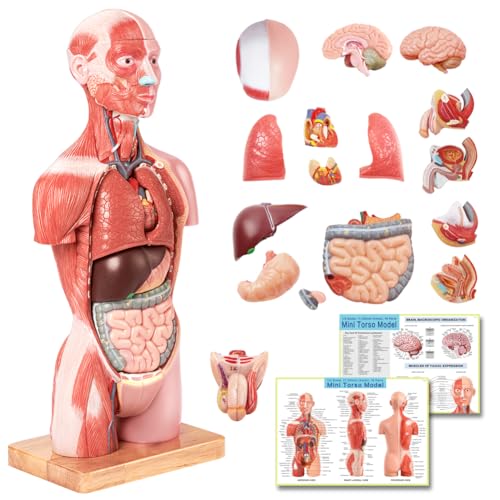
- 16 detachable parts for anatomy study
- Non-toxic PVC with hand-painted detail
- Portable with oak-wooden base and brochure
Best For: Medical and nursing students needing a versatile torso model
Life-Size Arm Model
7-Part Upper Limb Muscle Anatomy
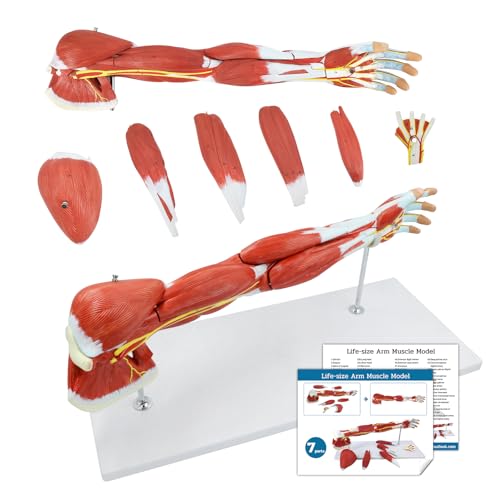
- Life-size arm with 7 removable parts
- 200+ digital markers for detailed study
- Includes manual card and sturdy base
Best For: Arm-focused anatomy study and teaching
Numbered Leg Model
14-Piece Human Leg Musculature Anatomy
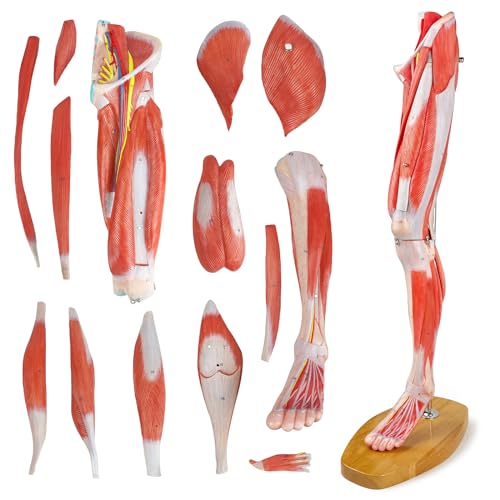
- 14 detachable parts for lower-limb study
- Shows knee, blood vessels, and foot nerves
- Non-toxic PVC on an oak-wooden base
Best For: Detailed lower-limb anatomy learning
Editor’s Pick
27-Part 1/2 Life Size Muscle Anatomy Model

- 27 removable parts for layered anatomy study
- 200+ numbered markers and brochure included
- Weighted wooden base improves classroom stability
Best For: Students and instructors needing a detailed, large-format teaching model
Most Detailed Guide
27-Part Human Muscle System Model

- 200+ numbered indicators for structure identification
- Non-toxic PVC with hand-painted detailing
- Stable base helps keep parts secure during use
Best For: Students and trainers who want a numbered anatomy model for systematic study
Most Portable
27-Part Half Size Muscle Anatomy Figure

- Portable half-size model fits easily into class routines
- Detachable organs and muscles aid hands-on learning
- Includes poster and brochure for teaching support
Best For: Students and teachers who need a portable, classroom-ready anatomy model
Compact Teaching Model – 20" Miniature Muscular System Model
If you want a practical pick among muscle anatomy models for students, this 20-inch EVOTECH SCIENTIFIC figure keeps the focus on the major muscles and tendons without taking up much space. The numbered details and included educational brochure make it easier to explain muscle overlap, insertion points, and relative positions during study sessions or classroom demos.
Best For: Students who need a portable desktop model for anatomy, physiology, or fitness study.
Pros:
- Shows muscles and tendons with numbered anatomy details for clearer teaching.
- Made from non-toxic PVC and mounted on an oak-wood base for display.
- Portable 20-inch size makes it easy to carry to class or store on a shelf.
- Includes a colorful educational brochure for added study support.
Cons:
- Focused on muscular anatomy rather than full body or organ detail.
- Designed as a teaching model, so it is not a toy.
Overall, this is a straightforward classroom-friendly model for learning the layout of the muscular system. It balances detail, portability, and display value well for student use.
Desktop Classroom Model – 20-Inch Color-Marked Muscle Figure
This Ultrassist model is a strong choice if you need one of the more practical muscle anatomy models for students in a classroom, lab, or home study setup. Its color-marked muscle groups and detailed labeling help make the main muscle regions easier to identify, while the 20-inch size keeps it manageable on a desk.
Best For: Classroom demonstrations, clinical explanations, and hands-on anatomy study.
Pros:
- Uses bright color markings and detailed labels to distinguish major muscle groups.
- High-precision 3D modeling presents chest, abdominal, back, and limb muscles clearly.
- Durable PVC construction is designed to be easy to clean and resistant to wear.
- Desktop-friendly 20-inch size is easy to carry and store.
Cons:
- Not intended for children; listed for adult professional use.
- Color, texture, and molded detail may vary slightly from unit to unit.
For students who want a clear visual reference without a bulky display piece, this model offers a good mix of labeling and portability. It works especially well where quick identification of muscle groups matters.
Head Anatomy Reference – Half Head Neurovascular Model
While this is not a full-body muscle model, it can still be useful for students who need to study facial musculature alongside nerves, vessels, and head anatomy. The 360-degree rotatable design and labeled structures make it a hands-on reference for understanding the superficial muscles of the face and the related head and neck anatomy.
Best For: Learning facial muscle anatomy, neurovascular structures, and head-and-neck study.
Pros:
- Shows superficial face muscles along with blood vessels, nerves, and brain structures.
- 360-degree rotatable for easier viewing during teaching or self-study.
- Includes a detailed manual with marked and described structures.
- Made from non-toxic, easy-to-clean PVC for classroom or clinic use.
Cons:
- Limited to head and neck anatomy rather than full muscular system coverage.
- Less suitable for students specifically looking for body-wide muscle layout.
This model is a good supplementary tool when facial muscles and nearby anatomy matter as much as the larger muscular system. It works best as a focused reference rather than a general-purpose body model.
Advanced Dissection Model – 27-Part Muscle and Organ Figure
If you want muscle anatomy models for students that go beyond the basics, this 33-inch half-life-size figure adds removable organs and many detachable muscle sections. The numbered parts and color manual make it better suited for more detailed teaching, especially when students need to connect muscular structure with major internal organs.
Best For: Students and teachers who want a more comprehensive anatomy teaching model.
Pros:
- Includes 27 detachable parts for a more complete anatomy overview.
- Features 347 numeral markings for precise identification of structures.
- Comes with a colorful educational brochure to support learning.
- Made of non-toxic PVC and built on a sturdy base for display and use.
Cons:
- Larger and heavier than simpler student models at 33 inches and over 10 pounds.
- Assembly and reassembly involve multiple parts, screws, posts, and hooks.
This is the most detailed option in the group for students who need more than a basic muscle figure. Its removable sections and extensive labeling make it a strong choice for advanced study and classroom explanation.
Deluxe Full Torso Model – 16-Piece Human Body Musculature Model
If you want muscle anatomy models for students that also show major organs, this 16-part torso is a strong study tool. It combines removable musculature-related anatomy with the brain, heart, lungs, stomach, liver, intestines, and reproductive parts, making it useful for broad human body lessons and classroom demonstrations.
Best For: Medical students, nursing learners, and classroom anatomy study that needs a portable torso with multiple detachable organs.
Pros:
- Includes 16 detachable parts for hands-on anatomy study.
- Made from non-toxic PVC and hand-painted for detailed presentation.
- Portable size with an oak-wooden base, suitable for classes or display.
- Comes with a colorful educational brochure for added learning support.
Cons:
- Some organ pieces are small, so it is not ideal for young children.
- Half-size format may be less suitable if you need a full-size torso.
This model is best when the goal is broader human anatomy coverage rather than isolated muscle study. It offers a practical mix of detail, portability, and removable parts for teaching and review.
Life-Size Arm Model – 7-Part Upper Limb Muscle Anatomy
For students focused on upper-limb study, this life-size option is one of the more specialized muscle anatomy models for students. It breaks the arm into seven removable parts and includes more than 200 digital markers, giving learners a closer look at muscles, arteries, and nerves in a format built for teaching and review.
Best For: Anatomy learners, fitness or physiology students, and instructors who want a detailed arm-specific teaching model.
Pros:
- Life-size arm model with 7 removable parts.
- More than 200 digital markers for in-depth study.
- Shows muscles plus arteries and nerves for broader anatomical context.
- Includes a manual card and sturdy removable base.
Cons:
- Focused only on the arm, so it is not a full-body teaching aid.
- Assembly uses metal screws, struts, and hooks, which may take extra time.
This is a good choice if your study needs center on arm anatomy rather than general human body systems. The detailed labeling and removable sections make it especially useful for close inspection and classroom explanation.
Numbered Leg Model – 14-Piece Human Leg Musculature Anatomy
If you need muscle anatomy models for students that concentrate on the lower limb, this 2/3 life-size leg model is built for detailed study. It includes 14 detachable parts and shows the knee joint surface, blood vessels, and nerves deep in the foot, making it a practical option for classroom demonstration and lab review.
Best For: Medical students, teachers, and healthcare learners who want a detailed lower-limb anatomy model.
Pros:
- 14 detachable parts provide hands-on lower-limb study.
- Shows knee joint surface, blood vessels, and nerves in the foot.
- Made from non-toxic PVC and hand-painted for clear detail.
- Mounted on an oak-wooden base for stable display.
Cons:
- Leg-only design limits use for broader body anatomy lessons.
- 2/3 life-size may not suit buyers looking for a full-size display.
This model is a strong pick when the lesson plan is centered on the leg, knee, and foot. It balances detail and durability well for students who need a focused anatomical reference.
Editor’s Pick – 27-Part 1/2 Life Size Muscle Anatomy Model
If you’re comparing muscle anatomy models for students, this 33-inch, 27-part figure stands out for its depth and classroom-friendly scale. It shows superficial and deep muscles, tendons, vasculature, ligaments, and body structure with removable layers, making it useful for anatomy study, physiology teaching, and patient education.
Best For: Students and instructors who want a highly detailed, large-format model for hands-on anatomy demonstrations.
Pros:
- 27 detachable muscles, organs, and biomechanical structures for layered study
- 200+ numbered markers plus a colorful educational brochure for guided learning
- Reinforced PVC build with weighted wooden base for better classroom stability
- Hand-painted vasculature and accurate origin/insertion points add realism
Cons:
- Larger 33-inch size may take more storage space
- Designed for detailed study, so it may be more model than casual learners need
This is the most classroom-oriented option here, especially if you want a model that supports deeper study of muscular anatomy and related structures. Its combination of removable parts, numbering, and stable base makes it a strong choice for active teaching.
Most Detailed Guide – 27-Part Human Muscle System Model
For students looking at muscle anatomy models for students, this 27-part half-size body model offers a clear, structured way to study superficial and deep muscles, tendons, vasculature, ligaments, and internal organs. It includes more than 200 numerical indicators and a colorful educational brochure, which helps when you need a model that supports step-by-step identification.
Best For: Learners who want a numbered, hands-on anatomy model for medical training or classroom reference.
Pros:
- Over 200 numerical indicators make structures easier to identify
- Non-toxic PVC construction is easy to clean and built for regular use
- Stable base and secure-fitting parts help the model stay upright
- Detailed hand-painted finish and brochure support guided study
Cons:
- Some listing details are inconsistent about mounting and form factor
- Half-size format may be less imposing than a full display model
This model is a practical pick when labeling and structure identification matter most. Its numbered design and included brochure make it especially helpful for students working through anatomy systematically.
Most Portable – 27-Part Half Size Muscle Anatomy Figure
This option is a solid fit if you want muscle anatomy models for students that are easier to move between classes. The 27-part half-size figure includes detachable muscles and organs, shows overlap and insertion points, and comes with a poster and brochure to support physiology and anatomy lessons.
Best For: Students, fitness learners, and teachers who need a portable anatomy model for class or shelf display.
Pros:
- Portable half-size design is easy to carry to classes
- Includes detachable organs and removable muscles for hands-on learning
- Shows muscle overlap and insertion points to support explanation
- Non-toxic PVC with hand-painted craftsmanship and base included
Cons:
- Smaller format may be less immersive than a larger display model
- Fewer explicit numbering details are provided than some alternatives
If portability matters, this model is the easiest to justify for students who need something classroom-ready and simple to transport. It balances removable anatomy, teaching aids, and compact size well.
How We Picked These Muscle Anatomy Models for Students
We focused on models that are useful for real coursework, not just display. That means clear muscle mapping, practical size for study spaces, removable or layered parts where they help learning, and materials that should hold up to repeated handling in a classroom, lab, or home study setup.
We also considered whether a model is better suited to broad system overview or focused anatomy study. Some students need a full-body or torso view, while others learn best with a targeted arm, leg, or head model.
Quick Comparison: Which Type Fits Your Needs?
For first-pass anatomy review, full-body and torso models are usually the most versatile. They help students connect muscle groups to nearby organs and major landmarks. For more detailed memorization, limb models can be easier to study because they isolate muscle origins, insertions, and surface structure.
If you have limited desk space, a smaller desktop model may be the right call. If the model will be used in demonstrations or small-group teaching, larger figures with removable parts tend to be easier for everyone to see.
Key Buying Factors for Muscle Anatomy Models for Students
Level of Detail
Look for labeled muscle groups, color contrast, and clearly separated structures. Too much complexity can be overwhelming for beginners, but too little detail limits advanced study.
Size and Portability
A 17- to 20-inch model works well for desks and dorm rooms. Larger 33-inch models offer better visibility in labs and study sessions, but they take more storage space.
Removable Parts
Detachable organs, muscle layers, or limb sections can improve hands-on learning. These are especially helpful for students preparing for lab practicals or teacher-led demonstrations.
Durability and Materials
PVC and similar study-grade materials are common for a reason: they are lightweight, affordable, and easier to clean. If the model will be handled often, sturdy fitment and consistent part alignment matter as much as realism.
Subject Focus
Some Muscle Anatomy Models for Students are best for general human anatomy, while others focus on an arm, leg, or head. Choose the body area that matches your course syllabus and exam format.
Who Should Buy Which Muscle Anatomy Models for Students?
Choose a full-body or torso model if you want a broad overview for anatomy, kinesiology, or medical assisting coursework. Pick an arm or leg model if your class emphasizes movement, muscle groups, or regional anatomy. Head-focused models are useful when studying facial structure, neurovascular pathways, or applied clinical anatomy.
If you are buying for a classroom, prioritize durability, visibility, and easy handling. If it is for solo study, a smaller model with strong labeling may be the most efficient option. The best choice is the one that matches your study goals, available space, and how often you will actually use it.