Hands-on anatomy models can make homeschool science far easier to teach—and much easier to remember. The best options turn organs, bones, and body systems into something kids can explore, not just read about.
Below, we focus on the most useful human body models for homeschool: sets that balance realism, durability, age-appropriate detail, and learning value for different grade levels.
Best 10 Human Body Models for Homeschool Picks for 2026
Hands-On Anatomy Kit

- 21 removable body parts for hands-on anatomy study
- Includes forceps, tweezers, organizer mat, and anatomy book
- Clear model with squishy organs for active rebuilding
Best For: Homeschoolers who want a tactile anatomy lesson with a study guide
Visual Anatomy Model
National Geographic Glow Bones Human Body

- 32-piece anatomy kit with removable organs, bones, and muscles
- Glow-in-the-dark bones add a fun visual learning element
- Includes forceps, chart, stand, and learning guide
Best For: Kids who like visual learning and an engaging anatomy feature
Torso Display Model
EVOTECH Scientific Human Body Torso

- 15 detachable pieces include major organs and skull cap
- PVC model sits on an oak-wood base for display
- Comes with a colorful educational brochure
Best For: Older learners who need a compact torso model for teaching or display
Build-and-Learn Model
Smartivity Interactive Human Body Model

- Three working systems: lungs, arm, and digestive pipe
- Learning booklet and removable labels support anatomy study
- Wooden build teaches science concepts and problem-solving
Best For: Kids who learn best by building a working anatomy project
Compact Anatomy Starter
31-Piece Human Body Model for Kids
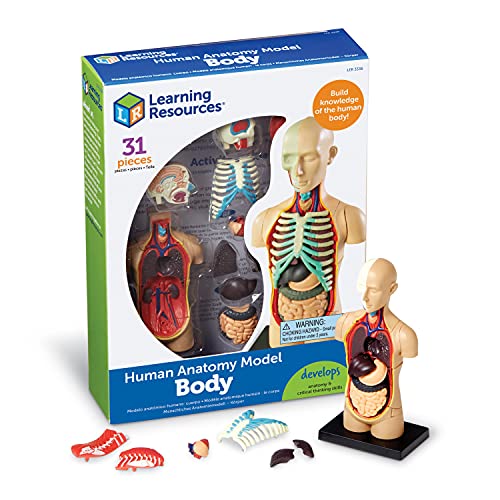
- 31-piece torso covers major organs and structures
- Small 4.5-inch model is easy to store and use
- Includes fact guide and illustrated assembly instructions
Best For: Homeschool families teaching basic anatomy to grades 3+
Portable Study Pick
11-Inch Removable Human Torso Model

- 15 removable parts for hands-on anatomy study
- 11-inch PVC model is lightweight and easy to clean
- Portable size works well for home or classroom use
Best For: Homeschoolers who want a compact, realistic study model
Interactive Learning Choice
Talking Human Body Model with Quiz Mode

- Talking model offers explanation and quiz modes
- Includes 15+ removable parts plus a booklet and cards
- Designed for ages 6+ with STEM-focused learning
Best For: Kids who need interactive homeschool anatomy lessons
Mini Organ Set
8 PCS Mini Human Body Model for Kids

- 8 individual organs for anatomy basics
- Compact PVC design is easy to store
- Good for organ identification practice
Best For: Quick homeschool anatomy lessons and organ ID practice
Interactive STEM Figure
Be Amazing! Toys Human Body Anatomy Figure
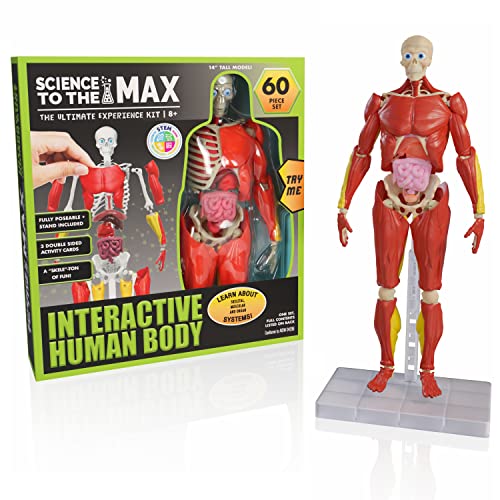
- 60-piece body puzzle with bones, muscles, organs
- 14-inch articulated figure is fully poseable
- Includes illustrated cards for guided learning
Best For: Hands-on homeschool anatomy lessons with assembly and play
Magnetic Layer Builder
MyBODY Large Human Body Anatomy Model

- 7 magnetic layers cover major body systems
- Large color-coded pieces are easy to use
- Includes info sheets, labels, and QR codes
Best For: Structured homeschool anatomy lessons that grow with the child
Hands-On Anatomy Kit – SMARTLAB Squishy Human Body
SMARTLAB Toys Squishy Human Body with 21 Removable Body Parts with Anatomy Book
Check Price On AmazonIf you want human body models for homeschool that feel hands-on and memorable, this SMARTLAB set is built for active learning. Kids can remove 21 body parts, use the included forceps and tweezers, and rebuild the model while following the illustrated anatomy book.
Best For: Homeschool families who want a tactile anatomy lesson with a book to guide the science.
Pros:
- Includes 21 removable organs, bones, and muscles for interactive study.
- Comes with forceps, tweezers, a body part organizer mat, and a 24-page anatomy book.
- Clear plastic body model and squishy organs make the parts easy to handle.
- Designed for ages 8+ and specifically suited to homeschool curriculum use.
Cons:
- Plastic model is more educational than display-focused.
- Small parts may be fiddly for younger children.
This is a strong pick if your homeschool plan favors guided, hands-on anatomy over passive studying. The included book and removable parts make it easy to turn a lesson into an activity.
Visual Anatomy Model – National Geographic Glow Bones Human Body
For families shopping human body models for homeschool, this National Geographic kit adds a visual twist that helps kids stay engaged. The 32-piece set includes removable organs, glow-in-the-dark bones, and a detailed learning guide for studying anatomy at home.
Best For: Kids who learn well with visual details and a little extra wow factor.
Pros:
- 32-piece kit includes 9 squishy organs, 18 glow-in-the-dark bones, and arm muscles.
- Comes with forceps, a display stand, an ID chart, and a detailed Learning Guide.
- Glow-in-the-dark bones add an engaging feature for at-home science study.
- Built for ages 8+ and positioned for school or home use.
Cons:
- The body shell is only 9 inches tall, so it is best for tabletop use.
- Focused on anatomy parts rather than a full interactive body mechanism.
This kit is a practical homeschool option if you want a standard anatomy model with a standout feature. The glow bones and guide make it easier to turn observation into a real lesson.
Torso Display Model – EVOTECH Scientific Human Body Torso
If you prefer a more display-ready option among human body models for homeschool, this EVOTECH torso uses painted PVC parts on an oak-wood base. It shows 15 detachable pieces, including the brain, heart, lungs, and digestive organs, with a brochure for teaching support.
Best For: Older students, anatomy interest, and families who want a compact torso model for instruction or display.
Pros:
- 15 detachable pieces cover major organs and structures, including brain, heart, lungs, and intestines.
- Non-toxic PVC construction is hand-painted and mounted on an oak-wood base.
- Compact, portable size makes it easy to take to classes or store on a shelf.
- Includes a colorful educational brochure for teaching support.
Cons:
- Listed age range is adult, so it is less clearly aimed at younger homeschoolers.
- Some organ pieces are small and require careful handling.
This model works best when you want a more traditional torso teaching aid rather than a toy-like kit. Its sturdy base and compact form make it practical for repeated use in lessons.
Build-and-Learn Model – Smartivity Interactive Human Body Model
Among human body models for homeschool, this Smartivity kit stands out because kids build moving systems instead of just looking at anatomy. It includes an inflatable lung, a mechanical arm, and a hydraulic food pipe, so the lesson covers both body function and basic engineering ideas.
Best For: Hands-on learners who want a buildable anatomy project with moving parts.
Pros:
- Three working mechanisms demonstrate breathing, muscle movement, and digestion.
- Includes removable organ labels and an informative learning booklet.
- Build process teaches hydraulics, pneumatics, and lever-and-tendon mechanics.
- Made from sustainable wood with no batteries required.
Cons:
- More of a build-and-learn project than a traditional anatomy figure.
- Best suited to kids comfortable with step-by-step assembly.
This is the most interactive pick in the group if your homeschool science time benefits from building as well as studying. The moving mechanisms help make abstract body systems easier to understand.
Compact Anatomy Starter – 31-Piece Human Body Model for Kids
If you want human body models for homeschool that are simple, affordable, and easy for younger learners to handle, this 31-piece torso set is a strong starting point. It covers the major organs and structures in a small 4.5-inch model, making it useful for basic anatomy lessons, hands-on review, and quick labeling activities.
Best For: Homeschool families with grades 3+ who want a compact, easy-to-assemble anatomy model for introductory biology.
Pros:
- Includes 31 pieces covering major organs like the brain, heart, lungs, liver, stomach, kidneys, and intestines
- Small size is easy to store and works well for tabletop lessons
- Comes with a fact guide and photo-illustrated assembly instructions
- Designed for ages 8+ and grades 3+
Cons:
- Miniature 4.5-inch size may be too small for detailed group viewing
- Plastic construction is basic rather than highly advanced
- No batteries or interactive features for quiz-based learning
This model fits best as an entry-level homeschool tool for organ identification and simple anatomy discussions. It is practical rather than flashy, which makes it a good match for straightforward science lessons.
Portable Study Pick – 11-Inch Removable Human Torso Model
For homeschoolers who want human body models for homeschool lessons with a more detailed feel, this 11-inch torso offers a practical middle ground. It includes 15 removable parts and a realistic PVC build, so students can study organ placement, rebuild the model, and review anatomy across multiple lessons.
Best For: Students, teachers, and homeschool users who want a portable torso model for anatomy study and simple demonstrations.
Pros:
- 15 removable parts provide hands-on anatomy practice
- 11-inch size is easy to carry, store, and display
- Made from lightweight PVC plastic that is simple to clean
- Suitable for a wide range of uses, including schools, clinics, and home learning
Cons:
- No booklet or quiz features included in the notes provided
- Less interactive than talking or battery-powered models
- May be more useful for study than for younger kids who want play-style learning
This is a solid choice if you prefer a straightforward anatomy model without extra electronics. It offers enough detail for repeated study while still staying compact enough for home use.
Interactive Learning Choice – Talking Human Body Model with Quiz Mode
If you want human body models for homeschool that keep kids engaged, this interactive 11-inch anatomy toy adds talking explanations and quiz mode to the lesson. It also includes removable parts plus a full-color booklet and knowledge cards, giving you a more guided way to teach body systems at home.
Best For: Homeschool families with kids who learn best through interaction, quizzes, and visual study aids.
Pros:
- Two modes: explanation mode and quiz mode for active learning
- Includes 15+ removable parts for hands-on exploration
- Comes with a 26-page illustrated booklet and 4 double-sided knowledge cards
- Designed as an all-in-one STEM learning kit for ages 6+
Cons:
- Requires 3 AA batteries, which are not included
- More complex than a simple model if you only want basic labeling practice
- Better suited to guided learning than independent open-ended use
This model stands out when you want to turn anatomy into an active lesson instead of a static display. The quiz mode and included study materials make it especially useful for homeschool instruction and review.
Mini Organ Set – 8 PCS Mini Human Body Model for Kids
If you want human body models for homeschool that focus on organ recognition, this 8-piece mini set is a simple, low-cost option. It includes the brain, heart, lungs, liver, stomach, kidney, small intestine, and large intestine in a compact PVC format that is easy to store and carry.
Best For: Quick homeschool anatomy lessons, organ identification practice, and families who want a small hands-on supplement.
Pros:
- Includes 8 separate organs for focused study
- Made from durable PVC with realistic detail
- Compact size is easy to store, carry, and display
- Useful for classrooms, labs, and home learning
Cons:
- Does not show the full body or layered systems
- Very small parts may be better for guided use
This is a practical pick if your homeschool goal is to introduce major organs without a large model or complex assembly. It works best as a visual aid for basic biology and anatomy vocabulary.
Interactive STEM Figure – Be Amazing! Toys Human Body Anatomy Figure
For families looking for human body models for homeschool with a stronger build-and-explore format, this 14-inch interactive figure offers a full 60-piece body puzzle. Kids can assemble the articulated body, remove bones, muscles, and organs, and use the included illustrated cards to learn how the body works.
Best For: Hands-on homeschool anatomy lessons for kids who learn best through assembly and guided play.
Pros:
- 60-piece set includes bones, muscles, and removable organs
- Fully poseable 14-inch articulated figure
- Includes illustrated instruction cards for learning support
- Designed for educational STEM use and homeschooling
Cons:
- More complex than a simple organ-only model
- Small parts may require adult supervision
This model stands out if you want a more complete anatomy toy that keeps kids engaged while teaching body structure. It is a strong choice for a homeschool science shelf when you want both play value and a fuller anatomy view.
Magnetic Layer Builder – MyBODY Large Human Body Anatomy Model
If you want human body models for homeschool that teach structure step by step, this large magnetic kit is built for layered learning. Kids start with the skeleton base and add the muscular, digestive, nervous, circulatory, respiratory, and body-part layers using large color-coded pieces.
Best For: Homeschool families who want a bigger, more structured anatomy model that grows with the child.
Pros:
- 7-layer magnetic build shows major body systems
- Large pieces are easy to handle and display
- Includes info sheets, sticky labels, and QR codes
- Designed for a wide age range from 5+ through teens
Cons:
- Not as detailed for individual organ study as a dedicated organ set
- Requires layering and setup rather than quick use
This is the best fit if your homeschool lessons need a visual, progressive way to explain how the body is built. The magnetic format makes it especially useful for repeated review and multi-age learning.
How We Picked the Best Human Body Models for Homeschool
For this roundup of Human Body Models for Homeschool, we favored models that are practical for home learning, simple to assemble or reset, and detailed enough to support real anatomy lessons. We also looked at piece count, clarity of labeling, learning extras like guides or quiz features, and whether the model feels sturdy enough for repeated use.
Quick Comparison
In general, larger torso-style models offer more anatomy detail, while smaller models tend to be easier for younger students to handle and store. Interactive sets with removable organs or magnetic parts are better for tactile learners, while highly detailed display models work well for older students who need stronger visual reference during lessons.
Key Buying Factors for Human Body Models for Homeschool
Age and Grade Level
Match the model to your student’s maturity and science level. Younger homeschoolers usually do best with simpler, color-coded models and fewer parts. Older kids and teens often benefit from more anatomical detail, such as internal organs, skeleton structure, and movable or removable components.
Size and Storage
Think about where the model will live between lessons. Compact models are easier to store and bring to co-ops or group classes, while larger models are better for visibility during teaching. If you have limited shelf space, look for a model that assembles quickly and fits back into its packaging cleanly.
Educational Value
The strongest models support active learning. Features like labeled pieces, an anatomy booklet, assembly steps, quizzes, or magnetic positioning can help students retain what they learn. For homeschool use, that teaching support often matters more than sheer piece count.
Durability and Ease of Use
Repeated assembly is part of the appeal, so choose materials that can handle frequent hands-on use. Parts should fit securely without being frustrating to remove. If you plan to use the model across multiple children or multiple years, sturdier construction is worth prioritizing.
Who Should Buy Which Human Body Models for Homeschool?
Choose a simpler interactive model for elementary learners who need a friendly introduction to anatomy. Pick a larger, more detailed torso or magnetic set for middle school and high school students who need clearer system-level study. If you want a general teaching tool for mixed-age homeschool science, a balanced mid-size model with removable organs is often the safest choice.
For families building a long-term science shelf, the best Human Body Models for Homeschool are the ones that stay useful beyond one lesson. Look for a model that fits your child’s current level but still leaves room for deeper study later.