Choosing the right document camera can make science lessons clearer, more interactive, and easier to follow. From live lab demos to labeling diagrams and sharing student work, a good visualizer helps every student see the details.
Below, we’ve rounded up 10 strong options for classrooms, with a focus on image quality, autofocus, lighting, compatibility, and everyday teaching convenience.
Best 10 Document Cameras for Science Classrooms Picks for 2026
Ultra-Portable HD Pick
IPEVO V4K Ultra High Definition 8MP USB Document Camera
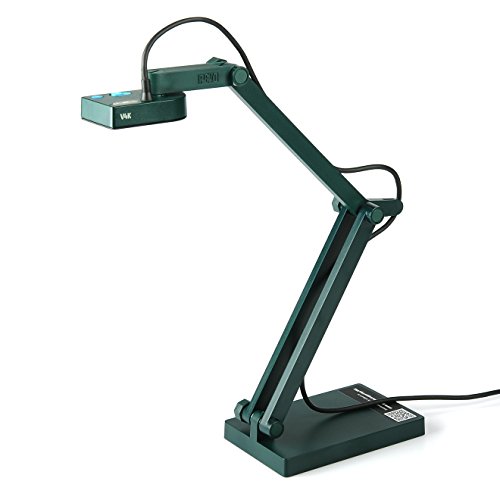
- 8MP sensor with up to 3264 x 2448 capture
- Up to 30 fps at full HD for smooth live demos
- Fast autofocus and wide Mac/Windows/Chromebook support
Best For: Everyday classroom demos that need fast, clear, plug-and-play capture
Classroom-Friendly Visualizer
HUE HD Pro USB Document Camera

- Full HD 1080p with built-in LED lights and microphone
- Plug-and-play across Windows, Chrome OS, macOS, and Linux
- Flexible neck design can run directly from a USB port
Best For: Interactive boards, hybrid lessons, and simple classroom demos
Large-Format Science Choice
INS-2 UHD 4K 13MP Document Camera

- 4K Ultra HD with a 13MP SONY sensor
- A3-size capture with a flexible multi-joint arm
- Documate software adds annotation, OCR, and recording
Best For: Large documents, artwork, and high-detail classroom presentations
Budget Brightness Pick
THUSTAR 8MP Document Camera & Webcam 4K
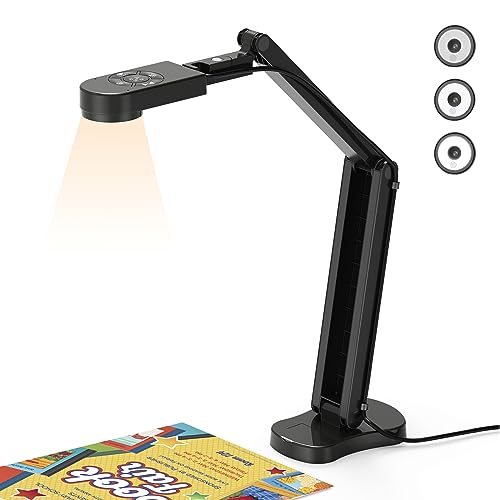
- 8MP capture with up to 30 fps live transmission
- 3-level LED lighting plus manual brightness controls
- Foldable design with built-in dual microphones
Best For: Compact classrooms and teachers who need adjustable lighting on a budget
Compact Classroom Doc Cam

- 1944P sensor with up to 30 fps
- 3-level LED light and 5-level exposure
- Manual focus and image inversion
Best For: Teachers needing a compact, easy-to-position camera for demos and remote lessons
Large-Format Teaching Camera

- A3-size coverage for larger materials
- 2448P HD with autofocus
- 3 brightness levels and 10 exposure levels
Best For: Classrooms that need broad document coverage and flexible image reversal
Premium 4K Classroom Visualiser

- 8MP 4K clarity with 2448P resolution
- A4/A3 support with auto focus and LED light
- Built-in mic and webcam for online teaching
Best For: Educators wanting a durable, high-resolution all-in-one teaching camera
Flexible demo pick
3-in-1 USB Doc Camera with LED Light

- 3-in-1 document camera, webcam, and visualiser
- 5-level fill light plus autofocus for clearer demos
- USB-C plug-and-play with Mac, Windows, and Chromebooks
Best For: Flexible classroom demos and distance teaching
Detail-focused upgrade
4K 8MP Visualiser with Dual Mics

- 8MP sensor with up to 2448P output
- Manual image reversal and 3-level LED lighting
- Built-in dual microphones for teaching and demos
Best For: Detailed science demos and higher-resolution presentations
Dependable all-rounder

- 8MP Sony sensor with up to 3264 x 2448 resolution
- LED light, anti-glare sheet, autofocus, and macro mode
- Documate software adds zoom, annotation, and recording
Best For: Everyday science teaching with presentation software
Ultra-Portable HD Pick – IPEVO V4K Ultra High Definition 8MP USB Document Camera
For document cameras for science classrooms, the IPEVO V4K is a strong choice when you want crisp live images, quick refocusing, and broad device compatibility. Its 8MP sensor and high frame rate make it useful for showing lab notes, worksheets, specimen details, and live demonstrations without a lot of lag.
Best For: Teachers who want a lightweight, plug-and-play camera for everyday classroom demos across Mac, Windows, and Chromebook.
Pros:
- 8MP capture with up to 3264 x 2448 resolution for detailed visuals.
- Up to 30 fps at full HD helps keep live demos smooth.
- Fast autofocus reduces interruptions when switching between science materials.
- Compatible with Mac, PC, and Chromebook for flexible classroom use.
Cons:
- No built-in lighting, so dim classrooms may need extra light.
- Uses a fixed USB setup, so portability is better than wireless convenience.
- Designed for standard document capture rather than advanced large-format work.
This is a practical everyday classroom camera if you value speed, image clarity, and easy compatibility more than extra features. The multi-jointed stand and strong live-stream performance make it well suited to frequent science demonstrations.
Classroom-Friendly Visualizer – HUE HD Pro USB Document Camera
The HUE HD Pro is a practical fit for document cameras for science classrooms when you want a simple visualizer that is easy to set up and ready for interactive displays. Full HD streaming, built-in LED lights, and a noise-reducing microphone make it useful for live explanations, remote teaching, and small-scale science demos.
Best For: Teachers who want a lightweight, easy-to-use camera for interactive whiteboards, smartboards, and hybrid lessons.
Pros:
- Full HD 1080p streaming with built-in LED lights for clear viewing.
- Plug-and-play operation with Windows, Chrome OS, macOS, and Linux camera apps.
- Flexible neck can be used directly from a USB port without the base.
- Manual focus and wide-angle lens suit documents and demos without constant adjustment.
Cons:
- Manual focus may be less convenient than autofocus for rapid material changes.
- Maximum capture area is A3, which may be limiting for very large layouts.
- Best results come from a setup where the built-in lights are sufficient.
Overall, this model is a straightforward classroom visualizer with useful teaching-focused extras. Its simplicity, portability, and software support make it a dependable option for science teachers who want minimal setup.
Large-Format Science Choice – INS-2 UHD 4K 13MP Document Camera
Among document cameras for science classrooms, the INS-2 stands out when you need a large capture area and sharper detail for artwork, lab sheets, two-page spreads, or big-screen demonstrations. Its 4K output, 13MP sensor, and A3 support make it a strong pick for more demanding classroom presentations.
Best For: Educators who present large documents, detailed visuals, or lab materials to bigger groups.
Pros:
- 4K Ultra HD capture with a 13MP SONY sensor for high detail.
- A3-size coverage and a flexible multi-joint arm for larger materials.
- Built-in LED, anti-glare sheet, and dual autofocus help improve image quality.
- Documate software adds annotation, recording, scanning, whiteboard tools, and OCR.
Cons:
- Heavier than some simpler USB document cameras.
- Mac support requires OS 13.5+ and iPad use needs USB-C and iPad OS 17+.
- Feature set may be more than needed for basic, low-key classroom use.
If your classroom often handles larger pages, artworks, or detailed lab displays, this model brings more capture room and more presentation tools. It is especially appealing for teachers who want stronger visual output and software support in one unit.
Budget Brightness Pick – THUSTAR 8MP Document Camera & Webcam 4K
This THUSTAR model is a flexible option for document cameras for science classrooms if you want brightness control, built-in audio, and a foldable design. With 8MP capture, 30 fps live transmission, and 3-level LED lighting, it is built to handle both classroom demos and mixed lighting conditions.
Best For: Teachers who want a foldable, budget-conscious camera with extra lighting control for live demos.
Pros:
- 8MP output with up to 30 fps for clear live viewing.
- 3-level LED lighting and manual brightness buttons help in tricky light.
- Foldable, multi-joint design makes it easier to store and carry.
- Built-in dual microphones improve audio for calls and demonstrations.
Cons:
- Image reversal and brightness features require manual adjustment.
- Uses optical zoom terminology in the listing, but it is still mainly a USB classroom visualizer.
- Specifications are less polished than some higher-end classroom models.
For teachers who need a compact, adaptable camera rather than a premium all-in-one unit, this THUSTAR option covers the basics well. The adjustable lighting and foldable build make it especially practical for frequent classroom use and easy storage.
Compact Classroom Doc Cam – USB Visualizer with LED Light
For document cameras for science classrooms, this compact USB visualizer is a practical pick when you need clear overhead views of lab sheets, specimens, and student work without taking over the desk. Its 1944P sensor, manual focus, and adjustable LED lighting make it easier to show details in different lighting conditions, while the foldable multi-joint design keeps it easy to position and store.
Best For: Teachers who want a small, flexible document camera for demos, remote teaching, and everyday classroom use.
Pros:
- 1944P resolution with up to 30 fps for detailed classroom viewing
- 3-level LED light plus 5-level exposure adjustment for dim rooms
- Manual focus helps fine-tune sharpness on 2D and 3D objects
- Supports image inversion for teaching, webcam use, and video chat
Cons:
- Manual focus is less convenient than fully automatic focus for quick changes
- Uses USB connectivity only, so it is built around computer-based setups
- Small footprint is useful, but not ideal if you need A3-sized coverage
This model makes sense if you value portability, straightforward controls, and flexible image orientation over maximum document size. It is a strong fit for science lessons that rely on close-up demonstrations, worksheet review, and simple online sharing.
Large-Format Teaching Camera – A3 USB Doc Camera
If you want document cameras for science classrooms that can handle bigger materials, this A3-capable USB camera is built for worksheets, diagrams, and lab pages that need more coverage. It offers 2448P HD imaging, autofocus, and adjustable lighting, plus image inversion controls that can be used directly from the camera without software tweaks.
Best For: Teachers who need a foldable, large-area document camera for classroom displays and distance learning.
Pros:
- A3 coverage up to 16.5 x 11.6 inches for larger papers and visuals
- 2448P HD with autofocus for clearer presentations as objects move
- 3 brightness levels and 10 exposure levels for lighting control
- Foldable, multi-joint design with left/right and up/down image reversal
Cons:
- Not plug and play; you need to select the USB camera manually
- Does not support zoom or HDMI features
- iPad compatibility is not supported
For science teachers who regularly display larger handouts or experiment instructions, this model offers useful coverage and image adjustment. It is a solid choice if you can live with the extra setup step and do not need HDMI or zoom.
Premium 4K Classroom Visualiser – Alloy Stand Doc Cam
For document cameras for science classrooms where image clarity and versatility matter, this 8MP 4K visualiser is built to handle textbooks, lab notes, posters, and 3D objects with sharp detail. The foldable alloy stand, auto focus, LED fill light, and built-in mic make it a strong all-in-one option for teaching, recording, and live presentation.
Best For: Educators who want a durable, high-resolution camera for lessons, webinars, and online teaching.
Pros:
- 8MP imaging with 2448P ultra HD resolution for crisp detail
- Supports A4 and A3 materials for larger classroom visuals
- Built-in microphone plus webcam function for online meetings and teaching
- Auto focus, 3-level LED light, and mirror/flip control for easier setup
Cons:
- Larger feature set may be more than needed for simple document capture
- Alloy stand is sturdy, but this is less minimalist than compact alternatives
- Best value depends on whether you will use the webcam and mic features regularly
This is the most flexible option in the group if you need a classroom camera that can also cover meetings and livestream-style use. It is especially appealing for science teachers who want a polished, high-resolution presentation tool with broad platform support.
Flexible demo pick – 3-in-1 USB Doc Camera with LED Light
If you want document cameras for science classrooms that can do more than just show worksheets, this 3-in-1 model is built for demos, distance teaching, and live presentations. Its adjustable hose-style body, autofocus, and 5-level fill light make it useful when you need to show specimens, lab steps, or small objects clearly.
Best For: Teachers who need a flexible, plug-and-play camera for live science demos, online lessons, and webcam use.
Pros:
- 3-in-1 design works as a document camera, webcam, and visualiser
- LED fill light with multiple brightness levels helps in dim classrooms
- Autofocus and image invert make it easier to present and teach live
- USB-C plug-and-play support with Mac, Windows, and Chromebooks
Cons:
- Listed video capture resolution is 1080p, not true 4K
- Best suited to close-up tabletop use rather than large-area capture
Overall, this is a practical choice for classrooms that need a simple, adaptable camera for science demonstrations and remote instruction. The light, focus, and compatibility features cover the main day-to-day teaching needs without adding much setup.
Detail-focused upgrade – 4K 8MP Visualiser with Dual Mics
For document cameras for science classrooms where detail matters, this 8MP visualiser is designed to show small objects, lab notes, and 2D or 3D materials clearly. The adjustable image reversal, 3-level LED light, and foldable build make it a strong fit for teachers who switch between live demos and storage-friendly classroom setups.
Best For: Science teachers who want a higher-resolution camera for detailed live demonstrations and tabletop presentations.
Pros:
- 8MP sensor with up to 2448P output for sharper live images and video
- Manual image reversal is useful when adjusting presentation orientation
- 3-level LED brightness helps in both dark and bright rooms
- Built-in dual microphones support online teaching and live demos
Cons:
- Uses manual zoom rather than a more automated zoom system
- Bulkier when open, even though it folds for storage
This model stands out when you need more visual detail for science lessons, especially for close-up demonstrations and object inspection. It balances image quality, lighting control, and classroom compatibility well.
Dependable all-rounder – INS-1 8MP USB Document Camera
If you need document cameras for science classrooms with a proven feature set, this 8MP model covers the basics well. It offers autofocus, built-in LED lighting, anti-glare support, and macro capability, which can help when showing small lab items or close-up classroom materials.
Best For: Teachers who want a dependable, feature-rich camera for everyday science instruction and software-assisted lessons.
Pros:
- 8MP Sony camera with up to 3264 x 2448 resolution and 30 fps streaming
- Built-in LED light plus anti-glare sheet help manage tricky lighting
- Autofocus and macro mode can capture objects as close as 3.9 inches
- Includes Documate software for zoom, annotation, rotation, and recording
Cons:
- USB-A connection may be less convenient for newer USB-C-only setups
- Some advanced features depend on the bundled software
This is a strong all-around option for teachers who want useful classroom software alongside solid imaging hardware. It is especially appealing if you value presentation tools like annotation and image rotation during science instruction.
How We Picked the Best Document Cameras for Science Classrooms
We focused on features that matter most in Document Cameras for Science Classrooms: clear resolution for showing small details, reliable autofocus for moving specimens and hands-on demos, built-in lighting for inconsistent classroom conditions, and compatibility with common school devices like Chromebooks, Windows laptops, and Macs. We also looked for practical design touches such as flexible arms, image inversion, microphone support, and simple plug-and-play setup.
Quick Comparison
The main differences across these models come down to image quality, sensor size, lighting, and how easily they adapt to classroom workflows. 4K and higher-megapixel models are better for close-up detail, while 1080p options can still be excellent for everyday use if they offer strong autofocus and decent lighting. Teachers who move between classrooms or share a device across multiple rooms may also want a lighter, more foldable model.
Key Buying Factors for Document Cameras for Science Classrooms
Resolution and Detail
Science instruction often depends on small visual details: handwritten notes, microscope slides, plant structures, chemical setups, or measurement markings. Look for at least Full HD, and consider 4K or higher-resolution sensors if you regularly show fine detail to the whole class.
Autofocus and Stability
Autofocus helps when you move between objects at different heights or switch from a worksheet to a lab specimen. A stable stand matters too, because shaky framing can make it harder for students to follow along during demonstrations.
Lighting and Image Clarity
Built-in LED lights are useful in science rooms where overhead lighting may create glare or uneven exposure. Adjustable brightness can help preserve contrast when you’re displaying reflective surfaces, transparent materials, or dark objects.
Compatibility and Ease of Use
Most buyers should choose a model that works smoothly with their school’s devices and video platforms. For Document Cameras for Science Classrooms, plug-and-play USB compatibility is often the safest choice because it reduces setup time and IT issues.
Capture Area and Flexibility
A larger capture area is helpful if you present A3 or larger materials, while a foldable or adjustable design is better for storage and portability. If you teach both in-person and remote classes, webcam functionality can add value.
Who Should Buy Which Document Cameras for Science Classrooms?
If you want the simplest classroom setup, choose a plug-and-play USB model with autofocus and LED lighting. If your lessons depend on fine visual detail, step up to a higher-resolution 4K option. Teachers who value portability should look for compact, foldable designs, while departments that share equipment across multiple classrooms should prioritize broad operating-system compatibility and a sturdy build.
In short, the best choice depends on your teaching style: clear close-ups for lab demos, dependable compatibility for everyday lessons, and enough flexibility to handle both worksheets and science experiments with ease.