Choosing a 3D scanner for small objects comes down to more than raw accuracy. The best models balance close-range detail, stable tracking, color capture, and simple software so you can scan parts, miniatures, jewelry, and prototypes with less cleanup.
This roundup focuses on scanners that make small-item work easier, whether you want fine surface detail, wireless convenience, or a strong entry-level option for 3D printing workflows.
Best 10 3d Scanner for Small Objects Picks for 2026
Steady Start
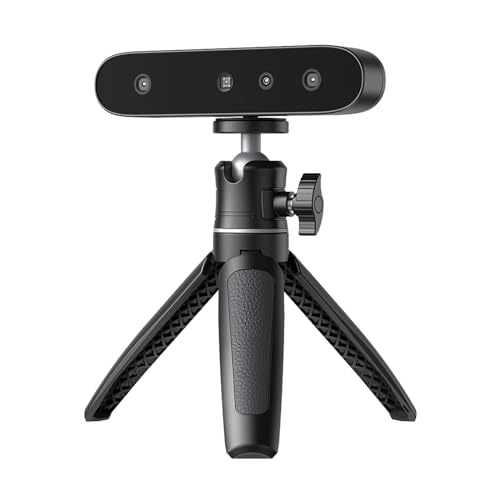
- Anti-shake tracking for steadier handheld scans
- 24-bit color camera for full-color models
- Scans black and metal objects without spray
Best For: Beginners needing a portable PC-only scanner for straightforward small-object projects
Detail Focus

- 0.07mm accuracy for fine-detail scans
- Markerless AI tracking helps resume scans fast
- JMStudio handles scanning, editing, and optimization
Best For: Entry-level users who want dependable detail for small parts and 3D printing
Precision Portable

- 0.05mm accuracy with up to 30fps scanning
- Quad-camera design for fine detail and broader coverage
- No-spray scanning for black and metallic surfaces
Best For: Portable users needing high-accuracy scans of small objects and occasional larger items
Industrial Edge

- Up to 0.01mm single-frame precision
- Five scanning modes for small parts and holes
- Wi-Fi 6 and battery grip improve mobility
Best For: Professionals needing measurement-grade precision for small parts and inspection
Beginner-Friendly Detail Capture
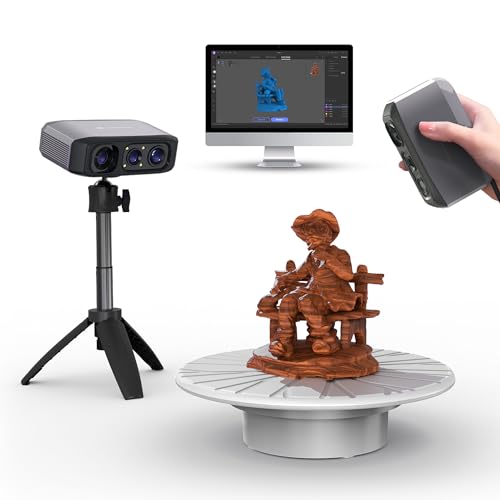
- AI visual tracking for automated model repair
- Anti-shake module and re-scanning support
- Marker-free scanning with free OTA upgrades
Best For: Beginners who want a forgiving handheld scanner for small-object workflows
Ultra-Fine Small Object Scanner
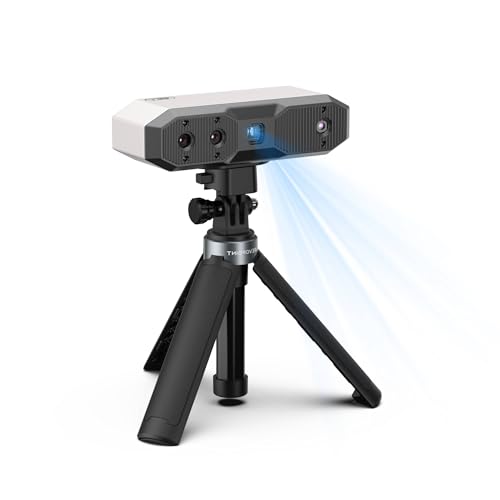
- Up to 0.02 mm precision on small details
- Blue light system with 16 fps capture speed
- USB or Wi‑Fi 6 plus Revo Scan software
Best For: Users who want high precision for tiny parts and miniatures
Portable Mixed-Size Scanner

- 17-line blue laser for small-object detail
- Wireless battery-powered scanning up to 3 hours
- Works on black or reflective surfaces without spray
Best For: Makers who want portable detail capture with flexibility for bigger scans
Wireless Handheld Scanner

- Up to 0.1mm accuracy and 0.16mm resolution
- WiFi 6 wireless transmission for stable transfer
- 30FPS scanning with anti-shake tracking
Best For: Portable scanning for small objects and 3D printing workflows
Ultra-Detail Small-Format Scanner
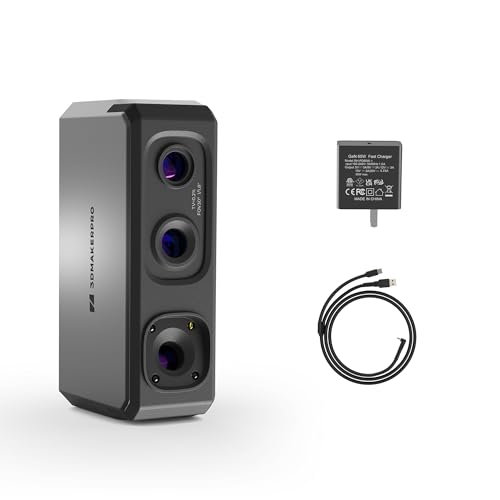
- 0.02mm accuracy with blue LED structured light
- Designed for objects from 10 to 300mm
- JMStudio supports tracking, correction, and export
Best For: Indoor small-object scanning with maximum surface detail
All-Size Wireless Scanner
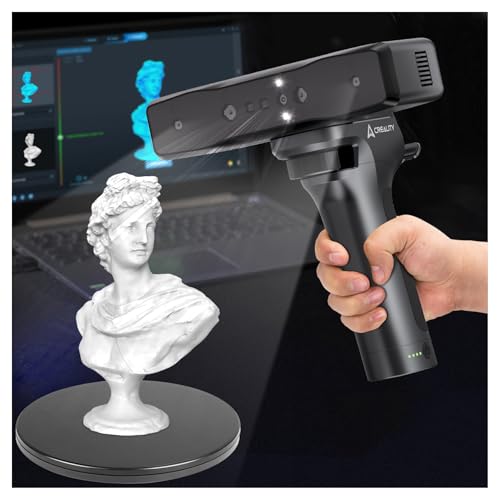
- 0.05mm accuracy with infrared structured light
- Scans objects from 20mm³ to 2000mm³
- Wi-Fi and mobile control with 30fps scanning
Best For: Versatile scanning of tiny parts and larger objects
Steady Start – Creality CR-Ferret SE
If you want a 3d scanner for small objects that’s easy to learn and forgiving of shaky hands, the Creality CR-Ferret SE is built around simplicity and steady capture. Its anti-shake tracking and one-shot 3D imaging help reduce missed scans, while the 24-bit color camera adds useful surface detail for basic modeling.
Best For: Beginners who want a lightweight scanner for small objects, basic color capture, and reliable handheld scanning on a Windows PC.
Pros:
- Anti-shake technology helps improve scan stability when hands are unsteady.
- Can scan black and metal objects without spraying.
- 24-bit full-color capture supports more lifelike models.
- Lightweight 105g design makes it easy to carry and use.
Cons:
- Supports PC scanning only.
- Does not include a battery handle.
- Not the most advanced option in this lineup for precision-focused workflows.
For small-object scanning, this model makes the process approachable and portable, but it is best suited to straightforward jobs rather than demanding inspection work. If ease of use matters most, it’s a practical entry point.
Detail Focus – 3DMakerpro Fox
The 3DMakerpro Fox is a strong 3d scanner for small objects if you want beginner-friendly hardware without giving up useful detail. With 0.07mm accuracy, markerless AI visual tracking, and JMStudio software handling scanning and cleanup, it’s aimed at people who want dependable results for printing, modeling, and inspection.
Best For: Hobbyists and entry-level users who want solid detail for small parts, 3D printing, and model cleanup in one software ecosystem.
Pros:
- 0.07mm accuracy and 0.10mm resolution support fine-detail capture.
- Markerless AI tracking helps recover quickly if you move too fast.
- JMStudio combines scanning, editing, and optimization.
- Positioned as an accessible entry-level medium-format scanner.
Cons:
- Less specialized for industrial inspection than higher-end scanners here.
- Package is heavier than compact handheld alternatives.
- Best results depend on software workflow and careful scanning technique.
For small-object work, the Fox stands out because it balances detail and usability rather than chasing extreme specs. It’s a sensible pick if you want a practical scanner that can grow with your projects.
Precision Portable – Creality Otter Lite Basic
If you need a 3d scanner for small objects that can also stretch to larger items, the Creality Otter Lite Basic offers a versatile mix of accuracy, speed, and color capture. Its quad-camera design and 0.05mm accuracy are aimed at users who want sharper detail for reverse engineering, prototyping, and quality checks.
Best For: Users who want a portable scanner for small objects with high accuracy, color texture capture, and flexible scanning across different object sizes.
Pros:
- 0.05mm accuracy and up to 30fps scanning help capture fine detail efficiently.
- Quad-camera setup supports both close detail and wider coverage.
- Scans black and metallic surfaces without spray.
- 24-bit full-color texture capture adds realism to models.
Cons:
- Optional scan bridge handle is sold separately.
- Handheld workflow may still benefit from added stability during longer sessions.
- Its wide size range may be more than some small-object-only buyers need.
For small-object scanning, this model is appealing because it combines high accuracy with a broad capture range and flexible software support. It’s a good fit if you want one scanner that can handle both detail work and occasional larger jobs.
Industrial Edge – Revopoint MetroY Ultra
The Revopoint MetroY Ultra is the most advanced 3d scanner for small objects in this group, especially if your work demands industrial-level precision. With up to 0.01mm single-frame precision, multiple scanning modes, and fast 90 fps performance, it is built for tight-tolerance measurement, reverse engineering, and inspection.
Best For: Professionals who need very high precision for small parts, inspection work, and demanding reverse-engineering tasks.
Pros:
- Up to 0.01mm single-frame precision for highly detailed scans.
- Five scanning modes cover fine details, holes, and turntable workflows.
- Scans dark, shiny, and metallic surfaces without spray.
- Includes Wi-Fi 6 and a battery grip for more flexible use.
Cons:
- Requires powerful computer hardware for the stated performance levels.
- More specialized than most buyers need for casual scanning.
- Likely overkill if you only want simple hobby scans.
This is the most capable option here for precision-focused small-object scanning. If your priority is measurement-grade detail and a professional workflow, it has the specs to justify the premium positioning.
Beginner-Friendly Detail Capture – 3DMakerpro Moose Lite Premium
If you want a 3d scanner for small objects that’s easier to learn on, the 3DMakerpro Moose Lite Premium focuses on stability and guided scanning. Its AI visual tracking, anti-shake module, and marker-free workflow are designed to make handheld capture less stressful while still aiming for fine detail.
Best For: Beginners who want a more forgiving handheld scanner for small-object 3D printing workflows.
Pros:
- AI visual tracking helps detect gaps and support automated model repair.
- Anti-shake module and re-scanning can help reduce problems from hand movement or interruptions.
- Marker-free scanning keeps setup simple and saves time.
- JMStudio includes free lifetime OTA software upgrades.
Cons:
- The notes do not list a minimum or maximum scan size for tiny objects.
- It weighs 3.65 pounds, so it is less pocketable than compact tabletop scanners.
Overall, this is a practical choice if you value ease of use over chasing the smallest possible spec sheet number. It looks best suited to users who want an approachable handheld scanner for small parts, figurines, or prototype pieces.
Ultra-Fine Small Object Scanner – Revopoint MINI 2
The Revopoint MINI 2 is built for anyone shopping for a 3d scanner for small objects with very fine detail needs. Its blue light system, 0.02 mm single-frame precision, and 16 fps capture speed make it a strong fit for small parts, while the larger capture range and RGB camera help with tracking texture and shape.
Best For: Users who want high precision on tiny parts, detailed miniatures, and small-item 3D printing scans.
Pros:
- Up to 0.02 mm precision for capturing intricate details.
- Blue light technology helps filter ambient interference for better accuracy.
- IMU, tactile buttons, and stable USB or Wi-Fi 6 connections improve usability.
- Revo Scan supports scanning, post-processing, and multiple export formats.
Cons:
- Results can vary by material and color, and the notes recommend scanning spray for some objects.
- It is intended for small items and is not suitable for very large or extremely tiny objects.
For detail-first scanning, this model stands out with its precision-focused hardware and lightweight design. It is especially compelling if your priority is clean captures of small objects rather than broad all-purpose coverage.
Portable Mixed-Size Scanner – EINSTAR 2 Wireless
The EINSTAR 2 is a versatile 3d scanner for small objects if you also expect to scan larger items later. Its 17-line blue laser mode is aimed at high-resolution detail capture on small objects, while VCSEL infrared scanning helps with larger surfaces and outdoor use.
Best For: Makers who want a portable scanner that balances small-object detail with broader scanning flexibility.
Pros:
- 17 parallel blue laser lines are designed for high-resolution detail on small objects.
- Wireless operation with a swappable battery supports up to 3 hours of scanning.
- Works on black or reflective surfaces without spray, according to the notes.
- Handles bright environments and provides both laser and infrared modes.
Cons:
- It is larger and heavier than a compact handheld-only scanner, at 5.72 pounds.
- Marker support is listed, so some workflows may still require setup.
This is a good pick if you want one scanner that can handle small parts without giving up flexibility for medium and large objects. The wireless design and multi-mode scanning make it especially practical for mobile work.
Wireless Handheld Scanner – Creality CR-Scan Ferret Pro
If you want a 3d scanner for small objects with a balance of speed, portability, and easy workflow, the Creality CR-Scan Ferret Pro is a practical option. It offers up to 0.1mm accuracy, 30FPS scanning, and wireless operation through WiFi 6, which makes it a strong fit for users who need flexible scanning without being tied to a cable.
Best For: Users who want a wireless handheld scanner for small objects, general 3D printing workflows, and portable scanning across supported devices.
Pros:
- Up to 0.1mm accuracy and 0.16mm resolution for detailed capture.
- WiFi 6 wireless transmission for faster, more stable data transfer.
- 30FPS scanning with anti-shake tracking to help maintain smooth results.
- Supports OBJ, STL, and PLY export for 3D printing and design workflows.
Cons:
- Not ideal for highly reflective, transparent, or extremely dark surfaces.
- Requires compatible software and device requirements for each platform.
Overall, the Ferret Pro is a versatile choice if you value mobility and straightforward scanning performance. It is especially appealing for buyers who want a handheld scanner that can move between PC, Android, and iPhone-supported workflows.
Ultra-Detail Small-Format Scanner – 3DMakerpro Seal Lite
The 3DMakerpro Seal Lite is a strong 3d scanner for small objects when fine surface detail matters most. Its blue LED light source and small-format scan range are designed for objects from 10 to 300mm, and the claimed 0.02mm accuracy makes it a compelling pick for tiny dents, edges, and texture capture.
Best For: Indoor scanning of small objects where very high detail and close-range capture are priorities.
Pros:
- Blue LED structured light with 0.02mm accuracy for fine detail.
- Designed for small-format objects from 10 to 300mm.
- Scan-back and anti-shake features help improve stability.
- JMStudio supports visual tracking, error correction, and OBJ/STL/PLY/ASC export.
Cons:
- Indoor use is suggested.
- Captures mono texture only.
- Has a learning curve and needs a relatively powerful PC.
Seal Lite is best viewed as a detail-first scanner for users willing to learn the workflow. If your priority is capturing small parts with precision rather than color or outdoor flexibility, it is a focused and capable option.
All-Size Wireless Scanner – Creality Otter Lite
If you need a 3d scanner for small objects but also want the flexibility to scan much larger items later, the Creality Otter Lite is built for range. It claims 0.05mm accuracy, real-time 30fps scanning, and size compatibility from 20mm³ up to 2000mm³, making it a versatile handheld choice for mixed-use scanning.
Best For: Buyers who want one wireless scanner for tiny parts, medium items, and larger objects in the same workflow.
Pros:
- 0.05mm accuracy with infrared structured light technology.
- Scans objects from 20mm³ to 2000mm³.
- Built-in Wi-Fi and mobile control for cable-free use.
- 30fps real-time scanning with anti-shake support and full-color textures.
Cons:
- Requires compatible Windows or macOS systems.
- Like many scanners, performance depends on object surface and setup.
The Otter Lite stands out as the most flexible pick in this group for buyers who do not want to limit themselves to only small objects. It is a solid option if you want a wireless scanner that can handle detailed close-range work while still covering bigger projects later.
How We Picked the Best 3d Scanner for Small Objects
We focused on models that are realistically useful as a 3d Scanner for Small Objects, with attention to stated accuracy, close-range performance, scanning speed, tracking stability, and color capture. We also favored scanners that can handle desktop-sized items without becoming difficult to use for beginners.
Software compatibility, wireless options, and the need for sprays or special prep also mattered. For small objects, the best scanner is usually the one that preserves detail while staying easy to align and export.
Quick Comparison
For maximum fine detail, look first at the highest-accuracy small-format scanners. For faster workflow and fewer cables, wireless handheld models are appealing. If you want an easier entry point, prioritize a scanner with forgiving tracking and broad device support. If you need color scans, confirm that the model supports full-color capture rather than geometry only.
Key Buying Factors for a 3d Scanner for Small Objects
Accuracy and Minimum Detail
Small objects expose every limitation in a scanner. Higher stated accuracy helps, but you should also consider how the scanner performs on edges, shallow texture, and thin features. If you scan miniatures, collectibles, or precision parts, detail retention matters as much as headline specs.
Working Distance and Scan Volume
Make sure the scanner’s ideal range matches your subject size. Some models are optimized for very small items on a turntable, while others can flex from tiny parts to medium objects. A scanner that is too close-range may struggle with larger items, while a broader-range scanner may miss subtle micro-detail.
Tracking, Speed, and Stability
Fast scanners can save time, but speed only helps if tracking remains stable. Anti-shake features, multiple cameras, and structured light or laser systems can improve consistency when scanning reflective or awkward shapes. For handheld use, smooth tracking often reduces rescans and alignment issues.
Color Capture and Surface Prep
If appearance matters, full-color scanning is worth considering. For purely functional parts, geometry may be enough. Also check whether the scanner needs matte spray or other prep for shiny, dark, or transparent surfaces. A better 3d Scanner for Small Objects should minimize setup without sacrificing data quality.
Who Should Buy Which 3d Scanner for Small Objects?
Beginners should look for a scanner with simple software, dependable tracking, and broad compatibility. Makers focused on 3D printing should prioritize accuracy and clean mesh output. If you scan miniatures, figurines, or detailed collectibles, choose a small-format specialist with strong close-range performance. If flexibility matters most, a wireless handheld model is the best fit for mixed-size projects.
In short, match the scanner to your smallest subject, not your largest one. That’s the easiest way to avoid buying a device that looks great on paper but underperforms on desktop-sized detail work.