The right capture card for Switch can make gameplay recording and live streaming far easier, whether you play on a TV, laptop, or desktop. The best options balance clear 1080p video, low-latency passthrough, dependable USB connectivity, and simple setup.
We’ve gathered 10 capture cards covering budget-friendly USB devices, higher-resolution input models, and feature-rich options for creators who also use consoles or cameras. Use the guide below to match the hardware to your setup and streaming goals.
Best 10 Capture Card for Switch Picks for 2026
Best Budget Pick
Versatile 1080p 60FPS Capture Card

- 4K input with 1080p60 output
- USB-A and USB-C connectivity
- Plug-and-play compatibility
Best For: Casual Switch capture and portable streaming
Best Premium Option

- 4K60 capture support
- 1440p120 and 1080p240 passthrough
- HDR10 and analog audio input
Best For: Advanced console streaming and high-refresh setups
Best Connectivity
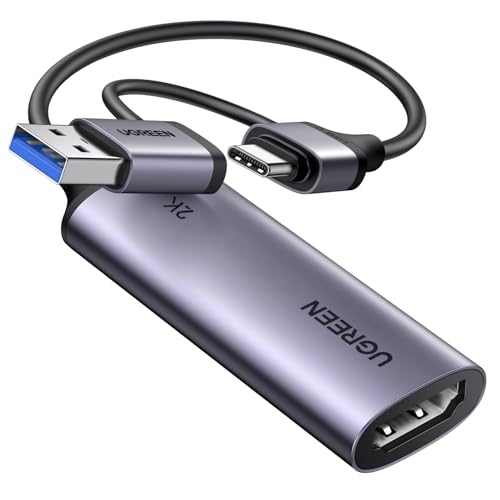
- 2K30 and 1080p60 output
- USB-A and USB-C ports
- Broad console and software compatibility
Best For: Flexible laptop, desktop, and iPad streaming
Best for Commentary

- 4K input with 1080p60 output
- Built-in 3.5mm mic-in
- USB-A and USB-C support
Best For: Switch streaming with direct voice commentary
Best Beginner-Friendly Pick
Mirabox HSV320 1080p Capture Card
- 1080p/60Hz capture and loop-out
- Plug-and-play setup
- Compatible with OBS, Twitch, and YouTube
Best For: Beginners wanting simple Switch streaming
Best Feature-Rich Option
XIIXMASK 4K Pass-Through Capture Card

- 4K/60Hz HDMI pass-through
- 1080p/60fps and 2K/30fps capture
- Built-in 3.5mm mic input
Best For: Streamers needing flexible video and audio features
Best Simple Audio-Ready Pick
VIXLW 1080p USB 3.0 Capture Card

- 1080p capture over USB 3.0
- Plug-and-play with no external power
- HDMI loop-out and mic input
Best For: Easy Switch streaming with voice commentary
Best Overall
Newhope 1080p 60FPS Capture Card

- 1080p capture at 60fps
- Real-time HDMI loop-out
- Plug-and-play with mic input
Best For: Switch players seeking smooth Full HD capture and low-delay monitoring
Best Heavy-Duty Pick
VIXLW 1080p 60FPS HDMI Capture Card

- 1080p capture with USB 3.0
- HDMI loop-out for gameplay
- Driver-free setup and mic input
Best For: Budget streamers building a simple Switch capture setup
Best Audio Features
Guermok 4K Pass-Through Capture Card

- 1080p60 and 2K30 capture
- 4K60 HDMI pass-through support
- Multiple audio monitoring ports
Best For: Creators who need flexible audio connections for Switch streaming
Best Budget Pick – Versatile 1080p 60FPS Capture Card
If you need a practical capture card for Switch, this USB 3.0 model covers core streaming and recording needs at an accessible feature level. It accepts up to 4K@30Hz input and outputs up to 1080p@60Hz or 2K@30Hz, with USB-A and USB-C connectivity.
Best For: Casual Switch gameplay capture, online meetings, recording, and portable streaming setups using OBS or similar software.
Pros:
- Supports 1080p at 60Hz output and up to 4K@30Hz input.
- Includes USB-A and USB-C connection options.
- Plug-and-play design requires no external power or additional drivers.
- Compatible with Switch, Switch 2, Windows, macOS, Linux, Android, and common streaming software.
Cons:
- Designed for HDMI-to-USB capture only; it does not directly cast to a monitor or TV.
- USB 3.0 is recommended for the stated bandwidth and resolution.
- Audio setup in OBS may require restarting the software.
This is a flexible, portable option for buyers who want straightforward Switch capture without investing in higher-end passthrough or HDR features. Its resolution support is strongest for 1080p60 output.
Best Premium Option – Elgato 4K S Capture Card
For shoppers seeking a premium capture card for Switch, the Elgato 4K S adds 4K60 capture, high-frame-rate passthrough, HDR10 support, and near-zero-latency performance. It connects over USB-C and is built for modern console and computer setups.
Best For: Serious console streamers and creators using Switch 2, PS5, or Xbox Series X/S who want advanced video support and smooth passthrough.
Pros:
- Captures video at up to 4K60.
- Supports 1440p120 and 1080p240 passthrough for high-refresh gaming.
- Includes HDR10 support with tone mapping on Windows.
- Offers a 3.5mm analog audio input for game chat or commentary.
Cons:
- Requires a USB 3.0 Type-C connection and relatively modern host hardware.
- Windows HDR tone mapping is specifically noted for Windows systems.
- Its advanced specifications may be more than needed for basic 1080p Switch streaming.
The 4K S is the strongest fit here for users building a higher-end capture workflow. Its high-refresh passthrough and HDR features make it particularly appealing when the connected gaming display and console setup can take advantage of them.
Best Connectivity – UGREEN 2K30 Capture Card
This UGREEN capture card for Switch balances clear video with broad device support. It accepts 4K@30Hz input, outputs up to 2K@30Hz or 1080p@60FPS, and includes both USB-A and USB-C interfaces for connecting to computers, tablets, and other compatible devices.
Best For: Users who stream Switch gameplay to a laptop, desktop, iPad, or phone and want flexible USB connectivity.
Pros:
- Supports 4K input, 2K@30Hz output, and backward-compatible 1080p60 capture.
- Provides USB-A and USB-C interfaces.
- Works with Switch, Switch 2, PS4, PS5, Xbox Series X, Meta Quest, and major streaming software.
- Aluminum construction and 5 Gbps USB 3.0 transfer support help with heat management and signal stability.
Cons:
- Only supports one-way HDMI input to USB output.
- USB-C iPad use requires iPadOS 17 or later.
- Console sources may require HDCP to be disabled.
UGREEN’s main advantage is connection flexibility rather than advanced passthrough. It is a sensible choice for creators moving between USB-A and USB-C devices, provided the host device and source meet the stated requirements.
Best for Commentary – Acer 1080p60 Capture Card
If commentary is central to your setup, this Acer capture card for Switch adds a dedicated mic input alongside 4K HDMI input and 1080p@60Hz output. Its USB 3.0 design is intended for low-latency video and audio capture without extra drivers or external power.
Best For: Gamers, teachers, and creators who want to connect a headset or microphone directly for live commentary.
Pros:
- Accepts 4K HDMI input and provides 1080p@60Hz output.
- Includes a 3.5mm mic-in for direct voice commentary.
- Offers USB Type-A and Type-C connection options.
- Supports Switch, Switch 2, PlayStation, Xbox, cameras, OBS, XSplit, and VLC.
Cons:
- Its listed video capture output is focused on 1080p and 720p rather than 4K output.
- USB 3.0 is required to run at USB 3.0 performance.
- The supplied notes list a one-year warranty.
The Acer stands out when simple voice integration matters as much as video capture. It is a practical match for Switch streamers who want a direct mic connection and uncomplicated setup, rather than advanced HDR or high-refresh passthrough.
Best Beginner-Friendly Pick – Mirabox HSV320 1080p Capture Card
If you need a straightforward capture card for Switch, the Mirabox HSV320 focuses on plug-and-play setup, 1080p recording, and lag-free HDMI pass-through. It supports common consoles, cameras, and streaming software, making it a practical choice for first-time streamers and general video capture.
Best For: Beginners who want 1080p/60fps capture with simple setup and zero-latency pass-through.
Pros:
- Captures and loops out video at up to 1080p/60Hz.
- Plug-and-play design does not require driver installation.
- Works with Windows, Mac OS, Linux, OBS, Twitch, and YouTube.
- Compact 3.98-ounce design is easy to carry.
Cons:
- Does not offer the 4K loop-out listed for some competing models.
- Requires a compatible computer with at least a fourth-generation quad-core Intel Core i5 or comparable hardware.
The HSV320 is a sensible all-purpose option when reliable 1080p performance and easy setup matter more than advanced audio or higher-resolution pass-through features.
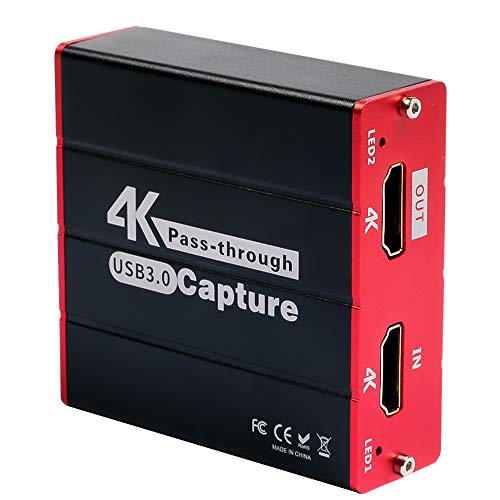
Best Feature-Rich Option – XIIXMASK 4K Pass-Through Capture Card
This capture card for Switch stands out for its 4K/60Hz HDMI pass-through, 1080p/60fps or 2K/30fps capture, and built-in microphone input. Its USB-A/USB-C connectivity and broad software support make it flexible for gaming, recording, online meetings, and live streaming.
Best For: Streamers who want high-resolution pass-through, multiple capture formats, and microphone commentary.
Pros:
- Supports 4K/60Hz HDMI input and loop-out.
- Captures up to 1080p/60fps or 2K/30fps.
- Includes a 3.5mm mic-in for external commentary.
- Supports USB-A and USB-C connections and works with Windows, Mac OS, Linux, and compatible Android devices.
Cons:
- OBS may need to be restarted after audio setup to restore sound output.
- The microphone input does not record party chat.
- Its listed minimum requirements specify a Windows operating system, despite broader compatibility details.
Choose the XIIXMASK if you want more flexibility than a basic 1080p capture device provides, especially when 4K pass-through and live voice commentary are priorities.
Best Simple Audio-Ready Pick – VIXLW 1080p USB 3.0 Capture Card
The VIXLW is a practical capture card for Switch and other HDMI devices, combining 1080p capture, USB 3.0 transfer, HDMI loop-out, and microphone input. Its plug-and-play design identifies the unit as a webcam, which can simplify setup for streaming through OBS, Twitch, YouTube, or VLC.
Best For: Console players who want easy 1080p streaming with HDMI loop-out and external microphone support.
Pros:
- Captures video at up to 1080p.
- Plug-and-play operation requires no driver or external power supply.
- HDMI loop-out is designed for gaming without added delay.
- Supports a 3.5mm TRS microphone for commentary.
Cons:
- Only accepts 3.5mm TRS standard microphone headsets.
- Its supplied details do not list 4K pass-through.
- Requires a computer with a USB 3.0 port and a compatible operating system.
The VIXLW is a good fit for users who value uncomplicated setup and commentary support, while its 1080p limit keeps it focused on mainstream streaming rather than high-resolution capture.
Best Overall – Newhope 1080p 60FPS Capture Card
If you need a dependable capture card for Switch gameplay, the Newhope combines 1080p at 60fps capture with HDMI loop-out for low-delay play on an external display. Its plug-and-play setup and broad operating-system support make it practical for streaming, recording, and online presentations.
Best For: Switch players who want smooth Full HD capture, low-latency pass-through, and microphone commentary support.
Pros:
- Captures video at 1080p and 60fps.
- Provides real-time HDMI loop-out for playing on an external screen.
- Supports 3.5mm TRS microphone input for commentary.
- Works with Windows, macOS, Linux, iPadOS 17+, and software such as OBS.
Cons:
- The microphone input accepts standard 3.5mm TRS microphones only.
- Its capture output is limited to 1080p at 60fps, despite supporting 4K pass-through.
The Newhope is a well-rounded capture card for Switch setups that prioritize smooth Full HD streaming and easy installation. HDMI loop-out is especially useful when you want to play on a monitor or TV while recording separately.
Best Heavy-Duty Pick – VIXLW 1080p 60FPS HDMI Capture Card
For shoppers looking for an affordable capture card for Switch, this VIXLW model offers 1080p capture, USB 3.0 connectivity, and HDMI loop-out. It is recognized as a webcam without extra drivers, making it a straightforward choice for OBS and other compatible streaming software.
Best For: Budget-conscious streamers who need plug-and-play 1080p capture with pass-through and optional microphone input.
Pros:
- Captures HDMI video up to 1080p and supports 1080p at 60fps.
- HDMI loop-out helps reduce perceived gameplay delay.
- Supports 4K input and up to 2K30 output according to the supplied specifications.
- Works with Windows and macOS and supports OBS, VLC, Twitch, and other software.
Cons:
- Does not support 4K at 120Hz or 144Hz.
- Requires a USB 3.0 port and a system capable of processing 1080p video.
- The listed warranty is 60 days.
This model covers the core needs of a Switch streaming setup without adding complicated installation steps. Its main appeal is the combination of Full HD capture, HDMI pass-through, and broad software compatibility at a budget-oriented level.
Best Audio Features – Guermok 4K Pass-Through Capture Card
The Guermok is a versatile capture card for Switch users who want flexible audio connections alongside video capture. It records at 1080p 60fps or 2K30, supports 4K60 pass-through under specified conditions, and includes microphone, audio, headphone-monitoring, and speaker-output ports.
Best For: Streamers and creators who want expanded audio connectivity and high-resolution pass-through for Switch or Switch 2.
Pros:
- Captures up to 1080p at 60fps or 2K at 30fps.
- Supports 4K60 HDMI input and pass-through in YUV420 mode.
- Includes mic input, audio input, headphone monitoring, and speaker output.
- Works without drivers with OBS, Streamlabs, VLC, Zoom, Teams, and other UVC/UAC software.
Cons:
- 4K pass-through resolution and format depend on color mode and settings.
- The mic input supports standard 3.5mm TRS microphones, not TRRS or USB microphones.
- Capture performance can vary with software and available USB bandwidth.
Choose the Guermok when audio routing matters as much as video quality. Its combination of 1080p60 capture, 2K30 support, and multiple audio ports makes it better suited to more involved streaming and recording workflows.
How We Picked the Best Capture Card for Switch
We focused on the features that matter most when capturing Nintendo Switch gameplay: supported input and output resolutions, frame rates, HDMI passthrough, USB connection type, compatibility with common streaming software, and overall setup simplicity. Models advertising 1080p at 60 frames per second received particular attention because that is a practical target for smooth gameplay recording and streaming.
We also included options with 4K input or passthrough. These features can be useful when the same device is shared with newer consoles, even though standard Nintendo Switch gameplay is generally captured at lower resolutions. Because specifications and included accessories can vary, check the listing carefully before purchase.
Quick Comparison
- Best for straightforward Switch streaming: Choose a USB 3.0 model with 1080p60 capture and HDMI passthrough.
- Best for future console use: Look for 4K input or 4K passthrough, especially if you also own a PS5, Xbox Series X/S, or Switch 2.
- Best for portable setups: Select a compact USB capture card that draws power from the computer and needs minimal cabling.
- Best for cameras and multiple devices: Prioritize broad HDMI compatibility, stable audio handling, and dependable software support.
Key Buying Factors for a Capture Card for Switch
Capture Resolution and Frame Rate
For most Switch users, 1080p at 60fps is the most useful specification. It keeps fast-moving gameplay smooth without demanding excessive storage or computer performance. A card that accepts 4K input may add flexibility, but confirm whether it captures 4K or only passes it through to a display.
HDMI Passthrough and Latency
Passthrough lets you play on a TV or monitor while the computer records the video feed. Look for low-latency operation and a passthrough resolution that matches your display. Without passthrough, you may need to play through preview software, which can introduce noticeable delay.
USB Connection and Compatibility
USB 3.0 is preferable for high-quality 1080p capture. Confirm that your computer has the required port or use a reliable adapter. Most cards work with popular applications such as OBS Studio, but operating-system support and included drivers can differ.
Audio and Setup Requirements
Check how the device handles HDMI audio and whether it requires external power. A simple plug-and-play design is convenient, while separate audio inputs may help with microphones, mixers, or more advanced streaming setups.
Who Should Buy Which Capture Card for Switch?
Casual streamers should choose an affordable 1080p60 USB 3.0 card with passthrough. Competitive players should prioritize reliable low-latency passthrough so gameplay remains on the display rather than the software preview. Multi-console households may benefit from 4K input or passthrough for broader compatibility. Creators using DSLR or mirrorless cameras should verify HDMI compatibility and audio behavior before buying. Finally, if you only need occasional recordings, a compact plug-and-play model is likely enough; advanced features are worthwhile mainly when you plan to stream regularly or upgrade your console setup.