Educational globes for kids can turn geography, science, and world awareness into hands-on learning. The best options make it easy for children to explore countries, oceans, landmarks, and even space-related concepts in a way that feels fun rather than like homework.
From interactive AR globes to simple desktop models, this roundup highlights picks for different ages, learning styles, and budgets so you can choose a globe that truly fits your child.
Best 10 Educational Globes for Kids Picks for 2026
AR Globe Adventure

- AR app unlocks quizzes, games, and interactive facts
- Includes 1,000+ facts on animals, places, and monuments
- Comes with passport, stamps, and flag stickers
Best For: Kids ages 4-10 who like tech-driven geography play
Screen-Backed Explorer
LeapFrog Magic Adventures Globe
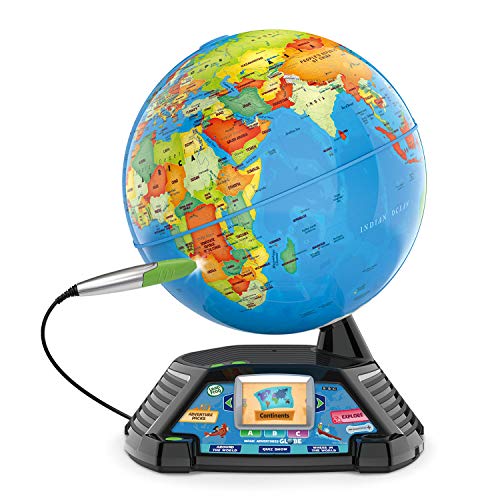
- Built-in 2.8-inch screen shows videos and animations
- Includes 5+ hours of BBC learning videos
- Combines facts, stylus interaction, and games
Best For: Kids 5+ who learn well with videos and guided play
Classroom Study Globe
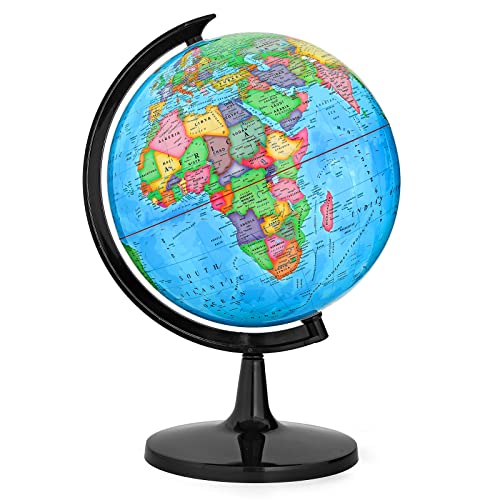
- Writable, erasable surface for geography practice
- Large 13-inch size with detailed political labels
- Lightweight build and 360° spinning base
Best For: Teachers and kids who want a hands-on study globe
Classic Raised-Relief Globe
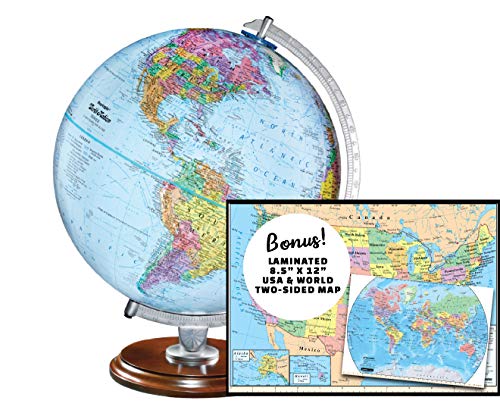
- Raised relief adds a tactile 3D-like texture
- Includes tilted axis, time dial, and population centers
- Made in the USA and comes with a bonus map
Best For: Students and families wanting a classic study globe
Interactive Explorer
LeapFrog LeapGlobe Light-Up Interactive Globe

- 48 touch points for interactive discovery
- Exploration, Music, and Find-It play modes
- Teaches animals, landmarks, languages, and music
Best For: Ages 3+ kids who learn best through sounds, lights, and touch
Simple Classroom Pick
Juvale 8-Inch Kids World Globe
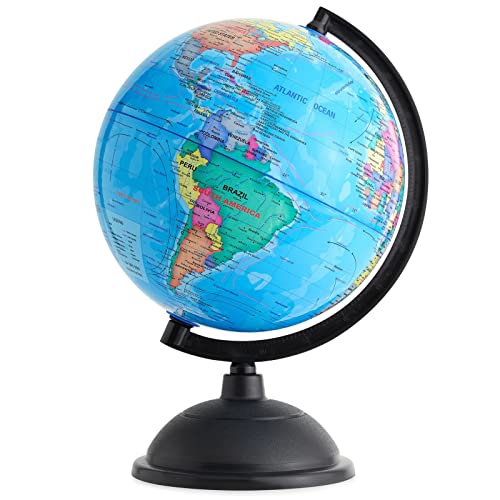
- Compact 8-inch globe for desks and shelves
- Rotating design supports hands-on learning
- Durable plastic build for classroom use
Best For: Classrooms or homes that want a simple, compact globe
STEM Deep Dive
PlayShifu Orboot Core Interactive Globe

- Three-layer Earth globe reveals surface, crust, mantle, and core
- App adds fossils, minerals, and 1000+ facts
- No subscriptions, ads, or hidden fees
Best For: Ages 4-10 kids who want a deeper science-and-geography experience
Classic Classroom Globe
KISEER 8 Inch Rotating World Globe

- 8-inch plastic globe with stand
- Clear political map with rich detail
- Rotates for hands-on geography learning
Best For: Simple geography lessons, classrooms, and home study
Interactive AR Globe
PlayShifu Orboot Earth Explorer

- 10-inch smart globe with app-based AR
- 400+ wonders and 1000+ facts
- Includes games, quizzes, and constellation mode
Best For: Ages 4+ STEM learning with interactive play
Light-Up STEM Globe
9" Illuminated Kids World Globe

- 9-inch spinning globe with LED light
- Shows 88 constellations in celestial mode
- Includes STEM flags and card game
Best For: Kids who want geography plus astronomy and light-up display
AR Globe Adventure – PlayShifu Orboot Earth
If you want educational globes for kids that feel more like a game than a lesson, the PlayShifu Orboot Earth adds an AR layer to world geography. It includes a 10-inch globe, a free app, and more than 1,000 facts about animals, places, monuments, and cultures, making it a strong pick for hands-on discovery.
Best For: Kids ages 4-10 who enjoy interactive STEM learning, homeschool activities, and app-based exploration.
Pros:
- Includes augmented reality activities, quizzes, and interactive games.
- Offers 1,000+ facts across animals, places, monuments, and global wonders.
- Comes with a passport, stamps, and country flag stickers for added engagement.
- Compatible with many iPads, iPhones, and Android devices with 3GB RAM or higher.
Cons:
- Device is not included with the globe.
- Not compatible with Amazon Fire devices.
- Requires a supported app and a compatible mobile device to use the AR features.
As a learning globe, this one stands out for kids who stay engaged when geography feels interactive and tech-powered. It is especially useful if you want a globe that supports both independent play and guided learning.
Screen-Backed Explorer – LeapFrog Magic Adventures Globe
The LeapFrog Magic Adventures Globe is a good option if you want educational globes for kids with more visual storytelling built in. Its 2.8-inch video screen, stylus interaction, and BBC videos help children explore cultures, habitats, animals, and facts through guided activities and games.
Best For: Kids ages 5+ who learn best with videos, quizzes, and interactive guided exploration.
Pros:
- Features a 2.8-inch screen that displays videos and animations.
- Includes more than five hours of BBC videos covering cultures, animals, and habitats.
- Offers thousands of facts plus three interactive games.
- Comes with a stylus, globe, USB cord, and parent’s guide.
Cons:
- Requires 4 AA batteries for regular use.
- Batteries are included for demo purposes only.
- Designed for one player at a time.
This globe is a strong fit for families who want a more guided, multimedia learning experience. The built-in screen adds variety, while the games and facts keep the geography lessons moving.
Classroom Study Globe – GOCHANGE 13in Political Globe
For educational globes for kids in a classroom or homeschool setting, the GOCHANGE 13-inch globe focuses on clear, hands-on geography study. It has crisp political labeling, a writable and erasable surface, and a lightweight build that makes it easier to pass around during lessons.
Best For: Teachers, homeschool families, and older kids who need a larger study globe for geography practice.
Pros:
- Writable and erasable surface lets kids mark locations and wipe them clean.
- 13-inch size provides more readable detail for studying countries, oceans, and landmarks.
- Lightweight ABS plastic construction is easier to handle in classroom use.
- 360° spinning design supports hands-on geography learning.
Cons:
- Assembly guidance is referenced for a stable base installation.
- It is a political globe, so it is more study-focused than play-focused.
- No digital or app-based features.
This is a practical choice if your priority is straightforward geography instruction rather than tech features. The larger size and erasable surface make it especially useful for repeated lesson use.
Classic Raised-Relief Globe – Replogle Student World Globe
The Replogle Student is a traditional option for educational globes for kids who need a classic, desk-ready world globe with extra study details. It combines a blue ocean design, raised relief texture, a tilted axis, and reference features like population centers and a time dial.
Best For: Students, teachers, and families who want a classic educational globe with tactile cartography details.
Pros:
- Raised relief embossing adds a tactile 3D-like texture.
- Includes an accurately tilted axis, time dial, and population centers.
- US states are separated by different colors for easier reference.
- Made in the USA and includes a bonus map.
Cons:
- Heavier than many plastic kids’ globes.
- More traditional and less interactive than app-based models.
- Best suited to reference and study rather than active play.
This globe works well if you want a more classic educational tool with dependable cartography and durable desk presence. Its raised relief and reference details make it useful for visual and tactile learning.
Interactive Explorer – LeapFrog LeapGlobe Light-Up Interactive Globe
If you want educational globes for kids that keep little learners engaged, the LeapFrog LeapGlobe adds a strong interactive element. With 48 touch points, multiple play modes, and light-up feedback, it gives children a hands-on way to explore animals, landmarks, greetings, and world music.
Best For: Preschoolers and early learners ages 3+ who enjoy touch-based, audio-driven geography play.
Pros:
- 48 touch points create lots of ways to explore the globe.
- Includes Exploration, Music, and Find-It modes for varied play.
- Covers animals, landmarks, greetings in French, Mandarin, and Spanish, plus world music.
- Light-up globe effect adds visual excitement during play.
Cons:
- Requires 2 AA batteries for regular use.
- More feature-rich than a simple display globe, so it may be more than some families need.
This is a good pick if you want a globe that feels more like a learning toy than a static map. It combines geography, language, and music in a format that should work well for short, repeat play sessions.
Simple Classroom Pick – Juvale 8-Inch Kids World Globe
For families looking for educational globes for kids with a straightforward, classroom-friendly design, the Juvale 8-inch world globe is a practical option. Its compact size, rotating base, and clear world map style make it easy to use on a desk, shelf, or classroom table.
Best For: Kids, classrooms, and small spaces that need a simple hands-on geography globe.
Pros:
- 8-inch size is compact and easy to place on desks or shelves.
- Rotating globe encourages hands-on geography exploration.
- Plastic construction is designed for frequent handling.
- Works well as both a learning tool and classroom decor.
Cons:
- Does not include interactive audio, lights, or quiz features.
- Smaller size offers less display presence than larger globes.
This globe makes sense if you want a durable, no-frills option that helps kids explore continents, countries, and oceans without extra electronics. It is best viewed as a simple learning aid and decorative desk globe.
STEM Deep Dive – PlayShifu Orboot Core Interactive Globe
If you want educational globes for kids that go beyond geography, the PlayShifu Orboot Core adds a geology twist with a three-layer openable Earth design. Kids can explore the surface, crust, mantle, and glowing core, then use the app to dig into facts about fossils, minerals, cultures, maps, and more.
Best For: Ages 4-10 who are ready for a deeper STEM-focused globe with app-based learning.
Pros:
- Three-layer design lets kids explore inside the Earth.
- Covers fossils, minerals, geology, and world geography.
- Free app access with no subscriptions, ads, or hidden fees.
- Works offline after setup and includes hands-on extras like a passport and sticker book.
Cons:
- Requires app setup to unlock the full experience.
- More involved than a basic globe, so it may not suit families wanting a simple map toy.
This is the most STEM-heavy option in the group and is well suited to kids who like discovery-based learning. It offers a strong mix of physical play and digital content without recurring costs.
Classic Classroom Globe – KISEER 8 Inch Rotating World Globe
If you’re comparing educational globes for kids, this 8-inch KISEER globe is a simple, practical choice for early geography learning. The rotating design, clear political map, and compact size make it easy for children to explore countries, continents, oceans, and more without taking up much space.
Best For: Kids, classrooms, and homes that want a straightforward spinning globe for basic geography lessons and display.
Pros:
- 8-inch size is easy to store, transport, and display.
- Detailed political map shows countries, capitals, oceans, islands, rivers, and deserts.
- Rotating globe adds hands-on exploration for children and students.
- Removable stand and frame work well for classroom demos or home decor.
Cons:
- Plastic construction may feel less premium than metal-based models.
- No interactive lights, app features, or quiz elements.
Overall, this is a solid no-frills globe for families or teachers who want a durable, easy-to-use geography aid. It focuses on the essentials and keeps the learning experience simple and visual.
Interactive AR Globe – PlayShifu Orboot Earth Explorer
Among educational globes for kids, the PlayShifu Orboot Earth Explorer stands out for turning geography into an interactive activity. Kids scan the 10-inch smart globe with the companion app to unlock facts, games, wonders, constellations, and guided learning tasks.
Best For: Families and teachers who want an app-based STEM globe with games, quizzes, and augmented reality features for ages 4+.
Pros:
- Interactive AR experience with a free companion app.
- Includes 400+ wonders and 1000+ facts for broad learning.
- Constellation mode lights up 60+ constellations on the globe.
- Magic stylus, passport, sticker book, and games add variety to play-based learning.
Cons:
- Device is not included, so the AR features require your own tablet or phone.
- More complex than a basic globe if you want a simple visual aid.
This is a strong pick if you want a globe that feels closer to a full learning system than a display piece. It combines geography, astronomy, and interactive challenges in one package.
Light-Up STEM Globe – 9" Illuminated Kids World Globe
If you want educational globes for kids that do more than show maps, this 9-inch illuminated globe adds both geography and constellation learning. It combines a spinning political world map with a light-up celestial mode and an included STEM card game for a more hands-on experience.
Best For: Students, homeschoolers, and families who want a globe that doubles as a night light and STEM learning tool.
Pros:
- Dual-purpose design switches between world map and constellation display.
- 88 constellations and a guide support extra astronomy learning.
- Interactive geography card game encourages hands-on STEM activity.
- Sturdy base and LED illumination make it useful for desks and bedrooms.
Cons:
- More features may be more than needed for basic geography-only learning.
- Requires care with internal assembly and bulb maintenance.
This model is a good fit if you want a classroom-style globe with added glow and night-sky appeal. It offers a balanced mix of practical geography learning and engaging visual features.
How We Picked Educational Globes for Kids
We focused on learning value, age suitability, durability, accuracy, and engagement. The best Educational Globes for Kids should teach real geography while keeping children interested long enough to explore repeatedly. We also considered whether a globe works well at home, in a classroom, or as a gift.
Quick Comparison
Interactive AR globes are best for kids who like apps, games, and guided discovery. Classic spinning globes are better for straightforward map reading and schoolwork. Light-up and talking globes sit in the middle, offering extra engagement without relying as heavily on a phone or tablet. Larger classroom-style models are usually easier to read, while smaller desk globes are better for tight spaces.
Key Buying Factors for Educational Globes for Kids
Age and Learning Level
Match the globe to your child’s reading level and attention span. Preschool and early elementary learners often do best with simple labeling, sound effects, or color coding. Older kids may prefer more detailed map features, raised relief, or app-based exploration.
Interactivity
Consider how your child likes to learn. AR and electronic models add quizzes, facts, and games, while traditional globes build map recognition and spatial thinking. If you want screen-free learning, a classic physical globe is usually the better choice.
Map Clarity and Accuracy
Look for easy-to-read text, clearly marked continents and oceans, and accurate country placement. For Educational Globes for Kids, readability matters more than decorative detail.
Size and Stability
Smaller globes are ideal for desks and bedrooms, while larger globes improve visibility in shared learning spaces. A sturdy base helps prevent tipping during frequent use.
Extra Learning Features
Bonus maps, relief texture, illumination, or included activities can add value. Just make sure those features support learning instead of distracting from it.
Who Should Buy Which Educational Globes for Kids?
Choose an interactive AR globe if you want a high-engagement STEM toy for curious kids who enjoy apps and exploration. Pick a classic desktop globe if your priority is school support, simple geography practice, or a more budget-friendly option. If you’re shopping for a classroom, go with a larger, easy-to-read model. For gifts, illuminated or talking globes often feel more exciting right out of the box.
In the end, the best choice depends on how your child learns best. The right globe should invite repeat use, not just look good on a shelf.