Choosing the right electronic load makes power-supply validation, battery testing, and component evaluation more repeatable. The best models let you control current precisely while monitoring voltage, power, and test behavior.
This roundup covers 10 options across bench instruments, programmable DC loads, and compact USB testers, with different voltage, current, power, interface, and dynamic-testing capabilities.
Best 10 Electronic Loads for Electronics Testing Picks for 2026
Versatile Automation Pick
OWON OEL3030 Programmable DC Load

- 300 V, 30 A, and 300 W capacity
- USB, RS232, RS485, and SCPI control
- Four modes plus battery cycling functions
Best For: Automated lab testing and battery analysis
Balanced Bench Tester
Rigol DL3021 200W Electronic Load

- 200 W programmable DC load
- 15 kHz dynamic testing capability
- LAN, USB, RS232, and SCPI control
Best For: Moderate-power lab and battery testing
High-Speed Precision Choice

- 30 kHz dynamic testing and 60 A capacity
- 350 W rating with 0.1 mV/0.1 mA resolution
- USB, LAN, RS232, and multiple test functions
Best For: Fast transients and detailed power characterization
Advanced DC Testing

- 200W, 120V, and 20A DC capability
- CC/CV/CR/CP plus dynamic and list modes
- USB PC control for R&D and QC
Best For: Automated battery and power-supply testing
Precision Bench Testing
EL15 150W Programmable DC Load

- 1mV/1mA resolution for precise measurements
- CC, CV, and CP programmable modes
- Compact aluminum housing with dual fans
Best For: Portable battery and power-supply characterization
USB Charger Checking
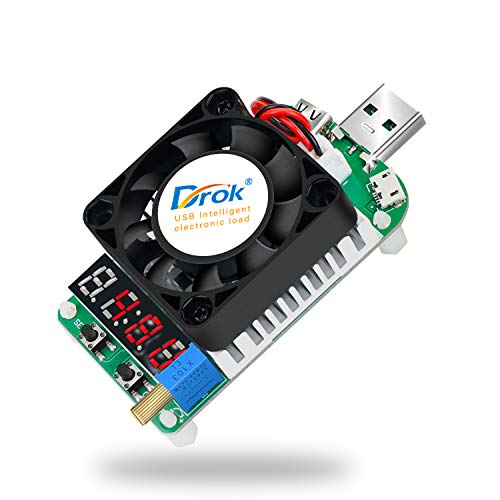
- Adjustable 0.25A–4A constant-current load
- USB and Type-C interfaces with LED readings
- Fan cooling plus multiple protection functions
Best For: Charger, cable, and USB output testing
Smart Safety Tester
Eyes.sys 180W Electronic Load Tester

- Four constant-load operating modes
- 180W, 200V, and 20A stated capability
- Color display, reporting, and temperature probe
Best For: Monitored battery, cable, and charging tests
Versatile Automation Pick – OWON OEL3030 Programmable DC Load
The OWON OEL3030 is a flexible choice among electronic loads for electronics testing, combining 300 V, 30 A, and 300 W capacity with four operating modes. USB, RS232, and RS485 connectivity plus SCPI support make it suitable for both hands-on bench work and automated test setups.
Best For: R&D labs, production-line automation, dynamic power-supply testing, and battery charge/discharge analysis.
Pros:
- Supports CC, CV, CR, and CP operating modes.
- Offers up to 5 kHz dynamic testing with adjustable current rise rate.
- Includes OCP, OVP, OPP, OTP, and reverse-polarity protection.
- Provides battery cycling functions and a 2.8-inch TFT color display.
Cons:
- Its 300 W maximum may not suit higher-power DUTs.
- Dynamic frequency is lower than the fastest model in this roundup.
Choose the OEL3030 when broad voltage and current coverage, automation interfaces, and integrated battery testing matter more than maximum dynamic bandwidth.
Balanced Bench Tester – Rigol DL3021 200W Electronic Load
The Rigol DL3021 is a programmable 200 W electronic load for electronics testing that supports constant-current, constant-voltage, constant-resistance, and constant-power operation. Its 15 kHz dynamic mode and LAN, USB, and RS232 interfaces give engineers useful flexibility for transient testing and remote control.
Best For: Battery capacity testing, power-supply transient evaluation, and connected lab or production test benches.
Pros:
- Supports CC, CV, CR, and CP modes for varied test procedures.
- Provides 15 kHz dynamic testing with adjustable rise speed.
- Includes LAN, USB, RS232, and SCPI-compatible programmable control.
- Uses a 4.3-inch TFT display for simultaneous parameter readouts.
Cons:
- Its 200 W rating is lower than several alternatives here.
- The supplied specifications list a 150 V/40 A configuration, so application limits should be checked carefully.
The DL3021 is a well-rounded option when remote interfaces, clear visual monitoring, and reliable four-mode operation are priorities for moderate-power testing.
Compact Battery Monitor – 150W 20A Adjustable DC Load
This adjustable 150 W, 20 A unit is a practical entry in electronic loads for electronics testing, especially when battery discharge and capacity measurements are central. Its 2.4-inch TFT display shows voltage, current, power, capacity, internal resistance, and test status without requiring a separate readout.
Best For: Battery capacity checks, USB power testing, and straightforward bench discharge work.
Pros:
- Offers CC, CV, CP, and CR working modes.
- Displays capacity, internal resistance, elapsed time, and electrical values.
- Allows voltage, current, power, cutoff voltage, and discharge-time limits to be set.
- Supports external NTC temperature monitoring.
Cons:
- Its 150 W and 20 A limits are lower than the programmable Rigol and OWON models.
- The supplied notes do not list USB, LAN, RS232, or SCPI automation support.
- The smaller display may provide less viewing area for detailed monitoring.
This model makes the most sense for users who want a simpler, dedicated battery and power-source tester with built-in measurements rather than a communication-focused automated load.
High-Speed Precision Choice – Rigol DL3031A 350W Load
The Rigol DL3031A is the high-bandwidth option among these electronic loads for electronics testing, combining 150 V, 60 A, and 350 W capacity with dynamic operation up to 30 kHz. Its 0.1 mV and 0.1 mA readback resolution, multiple test functions, and built-in communications suit detailed power-device characterization.
Best For: Fast transient testing, regulator stability work, battery evaluation, and automated engineering test benches.
Pros:
- Supports 30 kHz dynamic testing with adjustable current rise speed.
- Provides 350 W total power, 60 A maximum current, and fine readback resolution.
- Includes CC, CV, CR, and CP static modes plus continuous, pulsed, and toggled dynamic modes.
- Offers USB, LAN, and RS232 interfaces along with battery, OCP, and OPP test functions.
Cons:
- Its 150 V maximum voltage is lower than the OWON OEL3030.
- The 7.34 kg listed weight makes it less portable than compact bench loads.
- Its greater capability may be unnecessary for basic low-power discharge checks.
For engineers who need the fastest dynamic response and highest current rating in this group, the DL3031A is the strongest fit, provided its 150 V ceiling matches the DUT.
Advanced DC Testing – ET5406A+ 200W Electronic Load
For demanding electronic loads for electronics testing, the East Tester ET5406A+ combines 200W capacity with CC, CV, CR, and CP modes. It is suited to battery discharge analysis, power-supply validation, and automated test sequences, with USB PC control for bench workflows.
Best For: R&D teams and production QC testing DC power supplies, chargers, adapters, and batteries.
Pros:
- Supports battery capacity testing and discharge-curve analysis.
- Dynamic, list, short-circuit, and scan tests expand testing coverage.
- Offers up to 200W, 120V, and 20A capability with USB control.
Cons:
- Its advanced feature set may be more than needed for basic USB checks.
- The supplied notes identify it as a DC load, so it is not intended for AC testing.
The ET5406A+ is the most feature-rich choice here for repeatable lab and production testing. Choose it when programmable sequences and load-analysis functions matter more than minimal size or simplicity.
Precision Bench Testing – EL15 150W Programmable DC Load
The Ransanx EL15 is a compact option for electronic loads for electronics testing, offering programmable CC, CV, and CP modes with 1mV/1mA resolution. Its 150W, 60V, and 12A rating supports battery capacity tests, power-supply characterization, and component evaluation.
Best For: Workbench and field testing where fine adjustment, portability, and clear real-time readings are important.
Pros:
- Provides 1mV/1mA resolution for precise test control.
- Includes CC, CV, and CP modes with dynamic and list programming.
- Aluminum housing and dual cooling fans support 150W continuous operation.
- 4mm banana sockets and XT30 plugs accommodate varied setups.
Cons:
- Its 150W/60V/12A limits are lower than some higher-capacity loads.
- The 1.9-inch display may provide less viewing area than larger bench instruments.
The EL15 balances precision and portability well. It is a practical middle ground for users who need programmable testing and detailed readings without moving to a larger high-end load.
USB Charger Checking – DROK LD25 25W USB Load Tester
For straightforward electronic loads for electronics testing, the DROK LD25 provides adjustable constant-current discharge from 0.25A to 4A through USB and Type-C interfaces. Its display shows voltage, current, and power, making it useful for charger output checks and cable testing.
Best For: USB charger capability checks, charger aging tests, and Micro USB or Type-C cable evaluation.
Pros:
- Supports up to 4A, 25V, and 25W within its stated operating range.
- Displays voltage, current, and power on a four-digit LED readout.
- Includes adjustable current control and intelligent fan cooling.
- Provides over-voltage, over-power, and over-temperature protection.
Cons:
- It is limited to 25W and is not suited to higher-power supply testing.
- There is no reverse-connection protection; incorrect polarity can permanently damage the unit.
- The supplied notes specify a 4V minimum operating voltage.
The LD25 is the simplest and most focused choice for USB-oriented work. Its protections and live display are convenient, but careful polarity and operating-range checks are essential before connecting a device.
Versatile Desktop Tester – Programmable DC Electronic Load 120W
For electronic loads for electronics testing, this programmable desktop model offers a broad 0–150V and 0–20A range in a compact format. Its four operating modes, short-circuit testing, and integrated capacity measurements make it a practical option for checking batteries and DC power supplies.
Best For: Bench testing batteries, power supplies, and other DC sources where multiple load modes are useful.
Pros:
- Supports constant current, voltage, resistance, power, and short-circuit testing.
- Handles up to 150V, 20A, and 120W within its stated operating limits.
- Measures watt-hours and amp-hours for battery and power-supply testing.
- LED display and dedicated controls simplify front-panel operation.
Cons:
- Maximum power handling is limited to 120W.
- Upper temperature rating is 40°C.
This is a well-rounded choice when flexible operating modes and desktop controls matter more than very high power capacity.
Compact Capacity Module – MakerHawk 150W USB Load Tester
This compact module is a budget-conscious option for electronic loads for electronics testing, with voltage measurement up to 200V and current measurement up to 20A. It supports capacity, power, and time settings, but careful setup is essential before applying a high-power load.
Best For: DIY battery discharge testing and users comfortable managing an adjustable electronic load module.
Pros:
- Measures 0.00–200V and 0.00–20A.
- Supports up to 150W within the stated power limit.
- Provides capacity, power, and timed discharge settings.
- Offers DC 6–12V or Micro USB power options.
Cons:
- Requires current adjustment to be set to minimum before connection to help prevent burnout.
- Exceeding 150W can damage the unit.
- Its small module format may require more hands-on setup than a desktop tester.
The MakerHawk is useful for DIY work, but its safety warnings and adjustment procedure make it better suited to careful, experienced users.
Smart Safety Tester – Eyes.sys 180W Electronic Load Tester
For electronic loads for electronics testing, the Eyes.sys tester combines four operating modes with an HD color display and automated data reporting. Its temperature probe and flexible wiring interface add useful monitoring and connection options for battery, cable, and charging tests.
Best For: Users who want multifunction testing with temperature monitoring and built-in reporting.
Pros:
- Offers constant current, voltage, power, and resistance modes.
- Supports up to 180W, 200V, and 20A according to its product description.
- Includes automatic data-report generation and a 2.4-inch color screen.
- Provides three safety protections and an external wired NTC temperature probe.
Cons:
- Its advanced features may be more than needed for simple load testing.
- Testing at the full stated power, voltage, or current limits requires staying within the product’s operating specifications.
This model stands out for monitoring and reporting features, making it a strong fit when test visibility and temperature information are priorities.
How We Picked These Electronic Loads for Electronics Testing
We selected models spanning common laboratory and workshop requirements, then compared their maximum voltage, current, power rating, operating modes, display and readback capabilities, interfaces, and stated dynamic response. The list includes programmable bench loads for demanding power-supply work as well as simpler modules for USB devices, battery capacity checks, and portable projects.
Ratings should be treated as operating limits, not targets for every test. A load may require derating, active cooling, or a particular wiring method when operated near its maximum output.
Quick Comparison
| Best For | What to Prioritize | Typical Pick |
|---|---|---|
| Laboratory power-supply testing | Higher power, programmable modes, stable readback | OWON or Rigol bench loads |
| Fast transient testing | High dynamic frequency and responsive control | Rigol DL3021 or DL3031A |
| Battery capacity testing | Constant-current operation, voltage limits, logging | EL15 or a programmable 200W-class model |
| USB and Type-C devices | Native connectors, adjustable current, compact size | DROK USB load tester |
| Budget bench experiments | Useful power range and clear display | 150W or MakerHawk tester |
Key Buying Factors for Electronic Loads for Electronics Testing
Voltage, Current, and Power Headroom
Confirm that the load supports the source under test across all three limits. Power is voltage multiplied by current, so maximum current may be available only at lower voltages. Choose meaningful headroom rather than running continuously at the stated maximum.
Operating Modes and Protection
Constant current is essential for many battery and supply tests, while constant resistance, constant voltage, and constant power add flexibility. Look for overvoltage, overcurrent, overtemperature, and reverse-polarity protection where appropriate. A voltage cutoff is particularly important for battery discharge work.
Control, Readback, and Data Capture
A readable display is useful for local adjustments, but USB or RS232 connectivity can matter more for repeatable test sequences and logging. Check the software or command support before buying if automation is part of your workflow. Better readback resolution helps with low-voltage or low-current measurements, but accuracy and stability are equally important.
Dynamic Response and Thermal Design
High-frequency dynamic testing requires more than a large power rating. Check the specified dynamic frequency, response behavior, load-step controls, and cooling arrangement. Fans can improve sustained performance but may add noise, while compact modules may need airflow and external heat management.
Who Should Buy Which Electronic Loads for Electronics Testing?
Choose a programmable Rigol or OWON bench load if you test power supplies, converters, chargers, or development boards regularly and need multiple modes, remote control, or faster load transitions.
Choose a 150W–200W adjustable tester if you need a versatile general-purpose instrument for battery discharge, adapter checks, and routine bench work without the requirements of a high-end automated lab setup.
Choose a compact USB load for phone chargers, power banks, USB-C supplies, and other low-voltage devices. These are convenient and inexpensive, but their connector and thermal limits make them less suitable for high-power DC testing.
Choose a battery-focused constant-current model when capacity testing is the priority. Verify cutoff behavior, measurement accuracy, cooling, and whether test results can be recorded before relying on it for formal capacity comparisons.