The best electronics microscopes make tiny solder joints, circuit-board traces, components, and collectible details easier to see without the eye strain of a traditional eyepiece.
We selected 10 digital models ranging from compact USB and wireless microscopes to larger HDMI systems with adjustable stands, multiple lenses, autofocus, and 3D viewing.
Best 10 Electronics Microscopes Picks for 2026
Best Portable Pick
Skybasic Wireless Digital Microscope

- WiFi for Android and iOS devices
- USB support for Windows and Mac
- Compact design with adjustable LEDs
Best For: Portable learning and basic close-up inspection
Best Complete Workstation
Andonstar AD249S-M Plus 3-Lens Microscope

- Three lenses for repair and specimen viewing
- 2160P video with HDMI output
- Expanded soldering station accessories
Best For: Serious electronics repair and multi-purpose use
Best Large-Screen Value
TOMLOV DM9 Max Digital Microscope

- 10.1-inch IPS screen for comfortable viewing
- 20MP photos and 1080p video
- Large stand with ten adjustable lights
Best For: Coin collecting and hobby electronics inspection
Best Multi-Lens Starter Kit
Andonstar AD246S-M 3-Lens Microscope

- Three lenses for repair and education
- 2160P recording with HDMI output
- Includes stand, slides, remote, and SD card
Best For: Versatile family use and beginner electronics repair
Best Autofocus Pick

- TOF-assisted autofocus for stable viewing
- 4K video, 52MP images, and 8-inch display
- Flexible arm with soldering accessories
Best For: PCB soldering, electronics repair, and uneven surfaces
Best Budget Portable Pick

- 4.3-inch 720P display with eight LEDs
- Rechargeable battery lasts up to three hours
- Windows and MacBook connectivity
Best For: Beginners, coin viewing, and portable inspections
Best Budget Pick
Bysameyee USB Digital Microscope
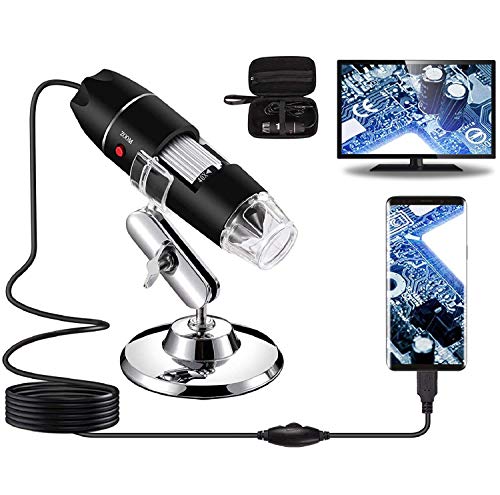
- 40x–1000x magnification with adjustable LED lighting
- Captures photos and video through connected devices
- Includes stand, case, OTG adapter, and ruler
Best For: Students, hobbyists, collectors, and basic PCB inspection
Best for 3D Soldering
TOMLOV TM3K-3D Digital Microscope
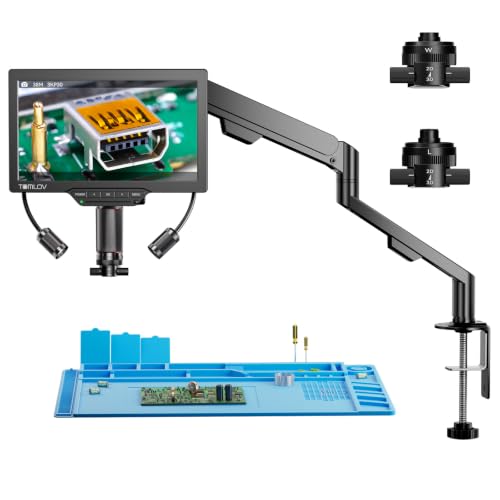
- 3D side-viewing with 360-degree image rotation
- 3K resolution on a 7-inch IPS screen
- Dual magnetic lenses for wide and long-distance viewing
Best For: PCB repair, soldering, precision work, and electronics professionals
Best for Coin and Hobby Inspection
TOMLOV DM9B Digital Microscope

- 7-inch screen with 1200x magnification for close-up viewing
- 12MP photos, 1080P video, and included 16GB storage
- Metal base with adjustable LEDs and gooseneck lights
Best For: Coin collecting, hobby electronics, demonstrations, and small-part inspection
Best Portable Pick – Skybasic Wireless Digital Microscope
If you want a lightweight option among electronics microscopes, the Skybasic is designed for quick, close-up viewing on a phone, tablet, or computer. Its WiFi connection works with Android and iOS devices, while USB supports Windows and Mac computers.
Best For: Portable inspection, children’s projects, plants, insects, minerals, and basic electronic or surface-detail viewing.
Pros:
- WiFi and USB connectivity for phones, tablets, Windows, and Mac computers.
- Eight adjustable LED lights help illuminate close-up subjects.
- Compact handheld design with one-button photo and video capture.
- Records up to 1920×1080 resolution on smartphones.
Cons:
- It is a fixed-focus magnifying device rather than a traditional microscope.
- Best results require maintaining a 3–60 mm focal distance.
- Computer setup may require camera settings changes or additional software.
This is a practical entry-level choice when portability and smartphone viewing matter more than professional biological work. Its handheld design makes it convenient, but serious electronics repair users may prefer a sturdier stand-based model.
Best Complete Workstation – Andonstar AD249S-M Plus 3-Lens Microscope
The Andonstar AD249S-M Plus is a full-featured choice among electronics microscopes, combining three interchangeable lenses with a 10.1-inch display and an expanded soldering setup. It is built to handle electronics repair, general observation, and biological slides.
Best For: Electronics repair, soldering, coin and specimen viewing, and users who want an integrated workstation with a large screen.
Pros:
- Three lenses cover soldering, general objects, and biological slides.
- 2160P video, HDMI output, and a 10.1-inch microscope monitor support detailed viewing.
- Expanded base, tool holder, helping hands, storage boxes, and anti-static mat support repair work.
- Includes measurement software support for Windows PCs and a 32GB SD card.
Cons:
- The workstation-style setup occupies more space than a handheld microscope.
- Lens changes require removing and installing screws.
- Professional measurement software requires a Windows PC connection.
With its multi-lens design and soldering accessories, this is one of the most versatile options in the group. Choose it if you want a dedicated repair station rather than a simple inspection camera.
Best Large-Screen Value – TOMLOV DM9 Max Digital Microscope
The TOMLOV DM9 Max offers a large 10.1-inch IPS display and a broad 5X–1500X zoom range, making it a convenient choice among electronics microscopes for viewing coins, solder joints, PCB components, and other small details without relying on a phone.
Best For: Coin collectors, hobbyist repairers, soldering tasks, and users who want a built-in screen with remote-controlled capture.
Pros:
- 10.1-inch IPS display with a 178-degree viewing angle.
- 20MP photo capability and 1080p video recording with included 16GB storage.
- Tall 12.6-inch stand and larger 7×8-inch base provide useful workspace.
- Ten adjustable lights combine lens illumination with two gooseneck side lights.
Cons:
- Its stand-based design is less portable than a handheld microscope.
- Maximum zoom claims vary by viewing setup and digital magnification.
- PC or TV connection is needed for a larger external display.
The DM9 Max is a strong fit for comfortable bench viewing and documentation. Its large screen, lighting options, and remote can make prolonged inspection easier, especially for collectors and hobby electronics work.
Best Multi-Lens Starter Kit – Andonstar AD246S-M 3-Lens Microscope
The Andonstar AD246S-M is a flexible starter option among electronics microscopes, pairing three lenses with a metal boom-arm stand, 2160P video, and HDMI output. Its included slides and accessories also make it useful beyond circuit-board repair.
Best For: Adults and children exploring electronics repair, coins, plants, stones, and prepared biological slides.
Pros:
- Interchangeable lenses support soldering, general observation, and slides.
- 2160P video recording and HDMI output enable larger-screen viewing.
- Adjustable metal boom arm provides a larger work envelope for repair tasks.
- Includes remote control, adjustable LED lighting, slides, tweezers, and a 32GB SD card.
Cons:
- Changing lenses requires removing and installing screws.
- The stand requires dedicated bench space.
- Measurement software is intended for connection to a Windows PC.
This model balances electronics-repair capability with educational versatility. It is a sensible choice for households or workshops that want one microscope for soldering, collecting, and general exploration.
Best Autofocus Pick – TOMLOV TM4K-AF Flex
For shoppers comparing electronics microscopes for soldering and detailed inspection, the TOMLOV TM4K-AF Flex stands out for its autofocus system, large 8-inch display, and flexible arm. Its TOF-assisted autofocus is designed to keep moving or uneven subjects clear, while the included accessories make it ready for electronics work.
Best For: PCB soldering, electronics repair, uneven surfaces, coin observation, and users who want autofocus convenience.
Pros:
- Autofocus system with TOF sensor and AI-driven focus adjustment.
- 4K video, 52MP images, and an 8-inch IPS display.
- 360-degree articulating flex arm for adjustable viewing angles.
- Includes a soldering mat, HDMI cable, microSD card, remote, and LED lighting.
Cons:
- The feature-rich design may be more than casual users need.
- The listed maximum magnification is 2000x, but practical results depend on working distance and display conditions.
Choose the TOMLOV if autofocus and a broad, adjustable work setup are higher priorities than keeping the microscope especially compact. It is the most purpose-built option here for hands-on soldering and detailed repair work.
Best Budget Portable Pick – Elikliv EDM4
The Elikliv EDM4 is a compact choice among electronics microscopes for basic circuit-board checks, coin viewing, and general close-up work. Its 4.3-inch display, adjustable LEDs, rechargeable battery, and height-adjustable stand provide a straightforward setup for home projects and portable inspections.
Best For: Beginners, coin collectors, STEM activities, light electronics inspection, and portable use.
Pros:
- 720P display with eight adjustable LED lights.
- Rechargeable battery provides up to three hours of continuous use.
- Connects to Windows or MacBook for a larger live view and saved media.
- Height-adjustable stand helps accommodate different working distances.
Cons:
- The included display is smaller and lower resolution than the other listed models.
- A memory card is required for photo and video storage but is not included.
- Its 16-degree listed real angle of view is narrower than the other options.
The EDM4 makes sense when portability and simple controls matter more than premium imaging or a large work area. It offers useful lighting and computer connectivity without the larger stand footprint of the soldering-focused models.
Best Large-Workspace Pick – Andonstar AD109
For electronics microscopes used across a generous work surface, the Andonstar AD109 combines a 10.1-inch IPS screen with a boom arm extending up to 27.56 inches. Its 1080p video, dual LED lighting, and PC connectivity suit soldering, large PCBs, coin inspection, and projects requiring room for multiple tools.
Best For: Large PCB soldering areas, coin inspection, multi-tool workspaces, and users who prefer a wide display.
Pros:
- 10.1-inch IPS display with 1080p video and 12MP photos.
- Boom arm extends up to 27.56 inches, rotates 360 degrees, and tilts up to 170 degrees.
- Combines eight built-in LEDs with a 56-LED ring light for adjustable illumination.
- Includes USB-C connectivity, remote control, and a 32GB SD card.
Cons:
- The 260x listed maximum magnification is lower than the other two models.
- The extended boom-arm design requires more workspace than a compact stand.
- Remote-control batteries are not included.
The AD109 is the strongest fit when reach and workspace flexibility are central to your setup. Its lower listed magnification makes it less focused on extreme zoom, but the large screen and long boom arm are practical advantages for soldering and broad-area inspection.
Best Budget Pick – Bysameyee USB Digital Microscope
If you want an approachable option among electronics microscopes, the Bysameyee USB Digital Microscope offers adjustable 40x–1000x magnification in a compact, portable design. It connects to Windows, Mac, Linux, and compatible Android devices, though it does not work with iPhone or iPad.
Best For: Students, children, hobbyists, collectors, and basic PCB or component inspection.
Pros:
- Adjustable 8-LED lighting with a brightness control knob
- Supports image capture and video recording through installed software
- Includes a metal stand, carrying case, OTG adapter, and ruler
- Works with Windows, Mac, Linux, and OTG-enabled Android devices
Cons:
- Not compatible with iPhone or iPad
- Measurement software is limited to Windows users
- Requires a wired connection to a compatible device
This is a practical starter microscope for viewing coins, hair, skin, PCBs, and other small objects. Its included accessories and broad computer compatibility add convenience, but shoppers should confirm device support before buying.
Best for 3D Soldering – TOMLOV TM3K-3D Digital Microscope
For demanding electronics microscopes work, the TOMLOV TM3K-3D stands out with side-viewing and 360-degree rotation. Its 3K image, 7-inch IPS screen, dual magnetic lenses, and flexible arm are designed for soldering, PCB inspection, and other precision tasks.
Best For: Electronics technicians, serious DIYers, repair work, jewelry inspection, and detailed soldering.
Pros:
- 3D side-viewing and 360-degree rotation reveal components from multiple angles
- Includes interchangeable wide-angle and long-distance magnetic lenses
- 7-inch IPS display provides a comfortable built-in viewing option
- Supports HDMI, USB computer analysis, split-screen, and grid-line features
Cons:
- Its professional feature set may be more than casual users need
- Uses a larger flex-arm setup rather than a compact handheld design
The TM3K-3D is the most task-focused choice here for hands-on electronics repair. Its long-distance lens and articulating arm help preserve working space, while the side-viewing design is useful when a top-down image is not enough.
Best for Coin and Hobby Inspection – TOMLOV DM9B Digital Microscope
The TOMLOV DM9B is a versatile pick among electronics microscopes and close-up inspection tools, pairing a 7-inch screen with a stable metal base and adjustable stand. Although it is aimed at coin collectors, it also supports small PCB checks, soldering tasks, jewelry examination, and general hobby use.
Best For: Coin collectors, hobbyists, DIY electronics users, and anyone who wants a built-in screen for shared viewing.
Pros:
- 7-inch LCD screen provides a comfortable enlarged view
- 12MP camera captures photos and records 1080P video
- Solid black metal base helps reduce glare and reflections
- Includes adjustable LEDs, two gooseneck lights, and 16GB storage
Cons:
- Its coin-focused design may be less specialized for advanced soldering
- Computer connection is described for Windows and Mac rather than mobile devices
- Adjusting viewing height and focus is required to change the viewing range
The DM9B makes a strong choice for collectors who also inspect electronics and small parts. Its screen, lighting flexibility, documentation features, and stable base make it convenient for solo examination, demonstrations, and keeping inspection records.
How We Picked the Best Electronics Microscopes
We focused on practical features that affect real bench work: image quality, working distance, magnification control, display size, lighting, stand stability, focusing method, connectivity, and ease of use. The selection includes affordable handheld and USB models as well as more capable soldering and inspection microscopes with HDMI output, large screens, flexible arms, or multiple lenses.
Magnification claims vary widely between manufacturers, so we gave more weight to usable working distance, image clarity, controls, and mechanical stability than to the highest advertised number alone. We also considered whether each microscope is better suited to electronics repair, coin inspection, general hobby work, or portability.
Quick Comparison
| Best For | Look For | Recommended Type |
|---|---|---|
| Basic inspection and children’s projects | Simple controls, USB power, built-in LEDs | Compact USB or wireless microscope |
| Soldering and board repair | Stable stand, long working distance, adjustable lighting | HDMI desktop microscope |
| Coin collecting | High-detail imaging, large display, even illumination | Digital coin microscope with screen |
| Frequent bench work | Comfortable viewing, flexible arm, easy focus | 4K or autofocus model |
| Depth-sensitive repairs | Reduced hand obstruction and dimensional viewing | 3D or dual-lens microscope |
Key Buying Factors for Electronics Microscopes
Magnification and Working Distance
Choose a microscope based on how much room you need beneath the lens. Soldering benefits from generous working distance, while coin inspection can prioritize close-up detail. Extremely high digital magnification may enlarge pixels without revealing more useful information.
Display, Resolution, and Connectivity
A built-in 7-inch or 10.1-inch screen is convenient for shared viewing and reduces the need for a computer. USB models are typically more portable, while HDMI models can provide a responsive live image on a monitor. Check whether the device records photos or video and whether its software works with your operating system.
Stand, Lighting, and Focus
A rigid metal stand helps keep the image steady during soldering. Adjustable LED lighting is useful for reflective components and coins, but excessive brightness can wash out surface details. Manual focus is dependable; autofocus is convenient when objects vary in height, though it can hunt during intricate work.
Lens Design and Workspace
Multi-lens systems can provide different fields of view or working distances. Flex arms and magnetic dual-lens designs are helpful when you need to reposition the microscope or keep tools visible. Measure your bench space before choosing a large screen or articulated stand.
Who Should Buy Which Electronics Microscopes?
Choose a wireless or USB microscope if you need an inexpensive, portable option for occasional inspection, demonstrations, simple repairs, or classroom use.
Choose a desktop HDMI model if soldering, circuit-board repair, and stable hands-free viewing are your main priorities. A large screen and strong stand are usually more valuable than an extreme magnification rating.
Choose a coin-focused model if you collect, grade, or photograph coins. Look for even illumination, a clear screen, and enough detail to show scratches, mint marks, and surface errors.
Choose an autofocus, 4K, or 3D model if you work frequently, inspect objects with uneven heights, or need better depth awareness. These features can improve comfort and workflow, but they may cost more and require a larger workspace.