Talking globes can turn geography into an interactive game, helping kids learn countries, capitals, landmarks, and more through voice prompts and quizzes.
In this roundup, we focus on the best options for different ages, learning styles, and budgets so you can choose a globe that keeps kids engaged.
Best 10 Talking Educational Globes for Kids Picks for 2026
Interactive Learning Globe
Interactive Globe with BBC Videos
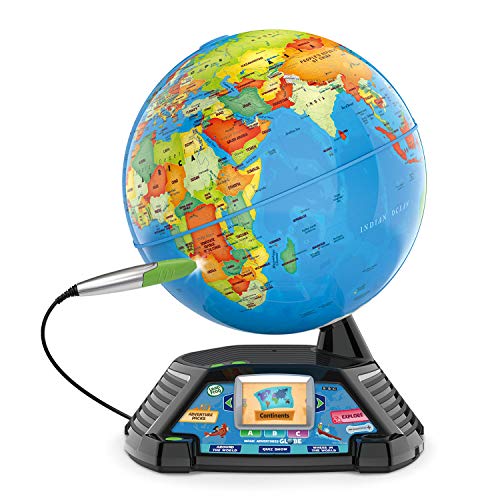
- 2.8" screen with BBC videos and animations
- Thousands of facts plus 3 quiz-style games
- Covers geography, cultures, animals, and habitats
Best For: Kids 5+ who want a video-rich globe with games
Wildlife Geography Globe
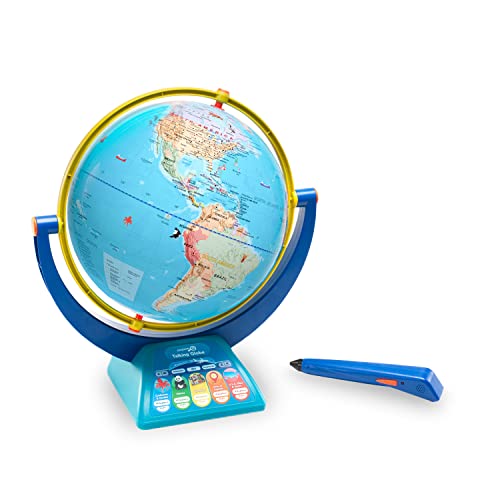
- Voiced by Bindi Irwin for wildlife-focused learning
- Over 1,000 facts and quiz questions
- 3 modes: Explore, Find It, and Measure It
Best For: Ages 4-8 that like animals and geography
Screen-Enhanced Globe
10-Inch Magic Adventures Globe
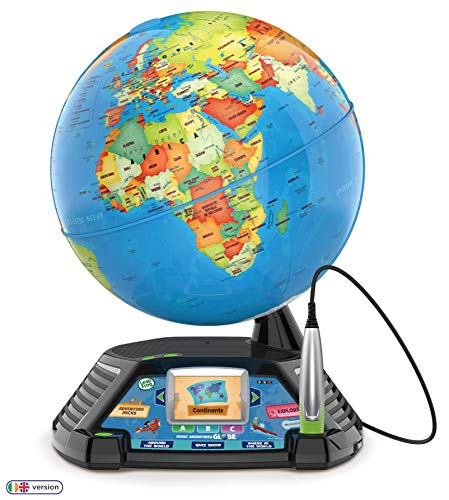
- 5+ hours of BBC videos for visual learning
- Thousands of facts plus 3 interactive games
- Teaches geography, science, culture, and languages
Best For: Families and homeschoolers wanting a broad-learning globe
AI Storyteller Globe

- Answers questions and tells personalized stories
- Built-in LED night light for bedtime use
- Covers continents, oceans, capitals, mountains, and volcanoes
Best For: Kids who want a globe plus night light and stories
LeapGlobe
Light-Up Touch Globe with Music

- 48 touch points for geography, animals, and languages
- Three modes plus world music and quiz play
- Light-up design suits younger learners
Best For: Preschoolers who want a colorful first globe
Science Can
Openable Bilingual Talking Globe
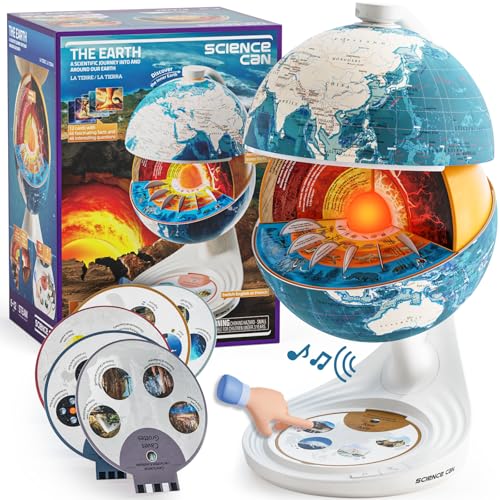
- Openable design shows crust, mantle, and inner core
- Bilingual English/French talking and quiz modes
- Includes 48 facts plus LED-lit Earth core
Best For: Kids who want a geography globe with geology features
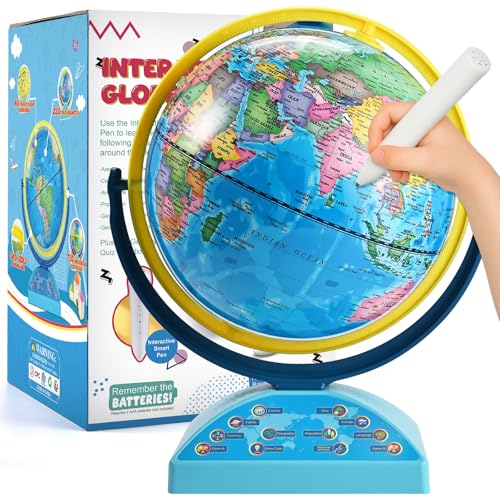
Smart Pen Learning Globe
9" Talking Globe for Ages 8–12

- Smart pen plays real-time audio facts.
- Teaches geography, capitals, currencies, and more.
- Includes 300 trivia questions for extra practice.
Best For: Kids ages 8–12 who want interactive learning at home or in class
Intelliglobe Discovery Set

- Includes a discovery book and rechargeable pen.
- Packed with facts, trivia, and compare games.
- 12-inch globe suits classroom or tabletop use.
Best For: Kids ages 4–8 and classrooms needing a fuller learning set
Quiz-Game Classroom Globe
14.56" Talking Geography Globe
- Touch countries for 10+ facts and audio narration.
- Includes 300+ quiz games with 30 difficulty levels.
- Large, durable globe fits home or classroom use.
Best For: Kids ages 6–12 who want a larger quiz-based learning globe
Interactive Learning Globe – Interactive Globe with BBC Videos
If you want talking educational globes for kids that go well beyond basic geography, this LeapFrog option mixes facts, games, and video into one hands-on learning tool. It uses a stylus, a 2.8″ screen, and over five hours of BBC videos to help children explore countries, cultures, animals, habitats, and more.
Best For: Kids ages 5+ who learn best through a mix of quiz games, video, and interactive globe play.
Pros:
- Includes a 2.8″ video screen with animations and playful characters.
- Offers thousands of facts plus three interactive games.
- Covers countries, capitals, cultures, animals, and habitats.
- Comes with globe, USB cord, and parent’s guide.
Cons:
- Requires 4 AA batteries for regular use.
- Best suited to ages 5 and up, so it may be too advanced for younger kids.
Overall, this is a strong pick if you want a feature-rich globe that feels more like an interactive learning station than a simple map. The screen-based videos add depth that many talking globes do not offer.
Wildlife Geography Globe – Bindi Irwin Talking Globe
This GeoSafari talking globe is a practical choice for families looking for talking educational globes for kids that combine geography with wildlife and science. With Bindi Irwin guiding the experience, children can tap the smart pen to explore continents, countries, cities, oceans, animals, and more.
Best For: Ages 4-8 who enjoy hands-on geography learning with animal and nature facts.
Pros:
- Voiced by Bindi Irwin for a wildlife-focused learning experience.
- Includes over 1,000 facts and quiz questions.
- Has three play modes: Explore, Find It, and Measure It.
- Rotating 12″ globe works well for home or classroom use.
Cons:
- The smart pen requires 2 AAA batteries, which are not included.
- Focused on ages 4-8, so older kids may outgrow it quickly.
It stands out if you want a globe that blends geography with STEM-friendly animal and nature content. The stylus-based design makes it interactive without adding a screen.
Screen-Enhanced Globe – 10-Inch Magic Adventures Globe
Among talking educational globes for kids, this LeapFrog model is built for children who want facts, games, and visual learning in one device. It uses a stylus to trigger thousands of facts, 5+ hours of BBC videos, and three interactive games that cover geography, culture, animals, and habitats.
Best For: Kids ages 5+ who want an engaging globe for home learning or homeschool support.
Pros:
- Includes 5+ hours of BBC video content.
- Offers thousands of facts with stylus-based interaction.
- Three learning games add variety and replay value.
- Designed to teach geography, science, culture, and languages.
Cons:
- Requires 4 AA batteries, sold as disposable battery power.
- Best for ages 5 and up rather than younger children.
This version keeps the core Magic Adventures formula but presents it as a straightforward 10-inch learning globe. If you want a dependable interactive globe with strong educational breadth, it’s an easy one to compare.
AI Storyteller Globe – 8-Inch AI Talking Globe Lamp
If you’re comparing talking educational globes for kids and want something a little different, this 8-inch model combines geography, voice interaction, and room lighting. It answers “why” questions, tells personalized stories, and includes a built-in LED night light for a screen-free learning setup.
Best For: Kids who want a globe that doubles as a night light and bedtime storyteller.
Pros:
- AI-style voice interaction can answer questions and start chats.
- Includes personalized stories, riddles, and other voice games.
- Built-in LED night light adds a calming bedroom feature.
- Shows continents, oceans, countries, capitals, mountains, and volcanoes.
Cons:
- Smaller 8-inch size may offer less display detail than larger globes.
- Product details are more focused on smart features than on traditional map-learning extras.
This is the most unusual option in the group because it leans into storytelling and ambient light as much as geography. It makes sense for families who want an educational globe that feels useful at bedtime as well as during the day.
LeapGlobe – Light-Up Touch Globe with Music
If you’re comparing talking educational globes for kids, the LeapFrog LeapGlobe is a strong pick for early learners who like hands-on discovery. It combines 48 touch points, light-up effects, and three play modes so children can explore landmarks, animals, greetings, and world music in a playful, repeatable way.
Best For: Preschoolers ages 3+ who enjoy interactive learning, music, and simple world discovery.
Pros:
- 48 touch points across geography, animals, languages, and foods
- Three modes: Exploration, Music, and Find-It
- Light-up globe effect adds visual engagement
- Includes greetings in French, Mandarin, and Spanish
Cons:
- Requires 2 AA batteries
- Content is geared toward younger kids, so older children may outgrow it quickly
Overall, this globe is a good fit if you want a simple, engaging introduction to world geography with enough variety to hold a young child’s attention. Its music and quiz elements make learning feel more like play than study.
Science Can – Openable Bilingual Talking Globe
Among talking educational globes for kids, this Science Can model stands out because it teaches both geography and basic Earth science. The openable design reveals the crust, mantle, and inner core, while the bilingual English/French talking mode and quiz mode keep lessons active and interactive.
Best For: Kids ages 6 to 12 who like science, geology, and a more hands-on globe.
Pros:
- Openable globe shows Earth’s layered core structure
- Bilingual talking mode in English and French
- Knowledge mode delivers 48 facts about geography and landmarks
- Quiz mode adds challenge and reinforcement
Cons:
- Openable feature may be more complex than a basic globe for very young children
- Requires understanding of the marker alignment to open properly
This is a smart option if you want a globe that goes beyond country names and introduces geology in a visual way. It works well as both a learning tool and a display piece for a bedroom, playroom, or classroom.
Dr. STEM Toys – Smart Pen Talking Quiz Globe
If you want talking educational globes for kids with a stronger quiz focus, this Dr. STEM Toys globe offers a lot of content in a compact format. The smart pen, game panel, and 300+ quiz questions give children a structured way to learn country facts, while the talking and music features help keep sessions lively.
Best For: Ages 6+ who enjoy quizzes, guided learning, and detailed country facts.
Pros:
- 300+ geographic quiz questions across 30 difficulty levels
- Smart pen lets kids touch countries for information
- Covers facts like capital, language, currency, climate, and more
- Compact size works well for home or classroom use
Cons:
- Requires 2 AAA batteries, which are not included
- More quiz-driven than open-ended play, so it may suit guided learners best
For families or teachers who want a more content-rich talking globe, this one offers plenty to explore. It’s a practical pick when the goal is repetition, factual recall, and a bit of challenge as kids grow.
Smart Pen Learning Globe – 9" Talking Globe for Ages 8–12
If you’re comparing talking educational globes for kids, this 9-inch interactive model is built for hands-on world discovery. The smart pen plays real-time voice recordings when kids touch countries and locations, helping them learn geography, capitals, currencies, languages, climates, and more in a simple, engaging way.
Best For: Kids ages 8–12 who want an interactive globe for home learning, classroom use, or trivia-based play.
Pros:
- Smart pen gives instant audio facts on countries and locations.
- Covers a wide range of topics, including anthems, populations, area codes, and climate.
- Includes 300 trivia questions for extra challenge and replay value.
- Compact 9-inch size works well for desks, play areas, or classrooms.
Cons:
- Smaller globe size may feel limited if you want a larger display piece.
- Designed for ages 8–12, so it may be less engaging for younger children.
This is a practical pick if you want a talking globe that mixes reference-style learning with quiz play. It leans more toward structured educational content than toy-like gimmicks, which makes it useful for both family learning and classroom reinforcement.
Intelliglobe Discovery Set – 12" Talking Globe with Book
For shoppers looking at talking educational globes for kids, this 12-inch Replogle model stands out for its included book and rechargeable pen. It combines touch-based exploration with narrated facts, making it a strong option for children who like a more detailed world-learning experience.
Best For: Kids ages 4–8, classrooms, and families who want a feature-rich interactive globe with guided learning materials.
Pros:
- Includes the Intelliglobe World Discovery Book and rechargeable pen.
- Offers thousands of facts across topics like anthems, populations, volcanoes, and fauna.
- Built-in activities include compare features, trivia, find games, and multiple-choice challenges.
- 12-inch size gives it a fuller tabletop presence than smaller kid globes.
Cons:
- Pen charging is required, so it needs a bit more setup than simpler models.
- Troubleshooting may be needed if the pen does not read the globe correctly.
This globe is a good fit if you want a more complete learning set rather than just an interactive toy. The combination of narrated content, activities, and the discovery book makes it especially useful for structured early education.
Quiz-Game Classroom Globe – 14.56" Talking Geography Globe
If you’re shopping talking educational globes for kids and want one focused on quizzes, this large interactive globe is built around progressive game play. Touching a country triggers facts like the capital, population, language, currency, and anthem, while the included quiz system adds layered challenges for children who like to test what they know.
Best For: Kids ages 6–12, homeschool families, and classrooms that want a larger quiz-driven geography globe.
Pros:
- Offers 10+ facts per country for interactive geography learning.
- Includes 300+ quiz games with 30 difficulty levels.
- Large 14.56-inch build and durable ABS+PVC construction suit regular use.
- High-quality speaker supports clear narration and music.
Cons:
- Requires 2 AAA batteries, which are not included.
- Only supports English, so it is not a multilingual option.
This globe makes the most sense for families or teachers who want a more game-based learning tool with room to grow. Its larger size, durable build, and adjustable quiz difficulty give it a strong classroom-friendly advantage.
How We Picked the Best Talking Educational Globes for Kids
We looked for Talking Educational Globes for Kids that balance clear audio, age-appropriate content, durable construction, and engaging learning modes. We also favored models with strong quiz features, useful extras like smart pens or light-up functions, and formats that make it easy for children to explore independently or with a parent.
Quick Comparison
For younger kids, simple touch-to-learn globes with large controls and fewer modes are usually easier to use. For older children, smart-pen globes and quiz-heavy models add more challenge and replay value. If you want a classroom-friendly option, prioritize size, readability, and build quality over bells and whistles.
Key Buying Factors for Talking Educational Globes for Kids
Age Range and Skill Level
Choose a globe that matches your child’s reading level and attention span. Ages 3 to 5 generally do best with basic voice prompts, while ages 6 to 12 can usually handle more detailed geography facts, quizzes, and multi-step games.
Learning Content
Look for coverage that goes beyond country names. The best models may include capitals, continents, languages, landmarks, animals, science facts, or cultural information. Broader content keeps the globe useful as kids grow.
Audio and Interaction Style
Some Talking Educational Globes for Kids use touch points, while others rely on a smart pen or button-based game panel. Touch models are simple and immediate; smart-pen systems often offer more precise responses and deeper quiz modes.
Size, Visibility, and Durability
A larger globe can be easier to read, especially for shared family learning or classrooms. Smaller globes fit better on desks and nightstands. Also check for sturdy stands, bright labels, and materials that can handle frequent handling.
Who Should Buy Which Talking Educational Globes for Kids?
If you’re buying for preschoolers or early elementary kids, choose a simple interactive globe with light-up features and easy narration. If your child already enjoys quizzes or independent learning, a smart-pen globe with more questions and modes is the better pick. For families wanting a shared learning tool, choose a mid-size globe with broad content and clear voice output that can grow with your child.
For shoppers comparing Talking Educational Globes for Kids, the best choice is usually the one that matches age, curiosity level, and how much interaction your child will actually use day to day.