Choosing the right anatomy model can make a big difference in how quickly medical concepts click. The best skeleton models for medical students combine realistic proportions, durable materials, and practical features that support hands-on learning.
In this roundup, we focus on models that are useful for studying major bones, joint movement, and anatomical landmarks without adding unnecessary complexity.
Best 10 Skeleton Models for Medical Students Picks for 2026
Premium Full-Size Disarticulated Model

- Life-size PVC skeleton for anatomy study
- Includes laminated bone identification poster
- Disarticulated parts are not meant for joint-motion demos
Best For: Students and instructors needing a full-size reference model
Study-Focused Premium Skeleton
Axis Scientific Life-Size Model

- Fully articulated joints for movement demos
- Includes three guides and 189 numbered stickers
- Rolling pelvic stand improves classroom mobility
Best For: Medical students and classrooms focused on active recall
Compact Entry-Level Desktop Model

- Small 17.7-inch desktop-friendly size
- Movable arms and legs for simple study
- Basic detail focused on spine, ribs, and skull
Best For: Beginners and students with limited desk space
Mobile Life-Size Study Model

- Life-size 70.8-inch anatomy reference
- Detachable limbs and movable jaw/head cover
- Rolling stand supports easy repositioning
Best For: Users needing a full-size skeleton that moves easily
Compact anatomy study pick
33.4'' Skeleton Model with Metal Stand

- Half-size 33.4-inch design
- Articulated joints and removable parts
- Ready-to-use with metal stand
Best For: Students needing a compact, hands-on anatomy model
Classroom display bundle
Life-Size Skeleton with Nervous System

- Life-size 70-inch PVC skeleton
- Includes nervous system and 3 posters
- Rolling stand for easy movement
Best For: Medical students and instructors who want a full-size teaching model
Full-size reference model
70.8'' Posable Skeleton with Charts

- Life-size 70.8-inch posable model
- Nervous system and carotid artery details
- Includes color illustrations and dust cover
Best For: Learners who want a durable, movable full-size reference model
Life-Size Study Model

- 70.8-inch life-size build
- 206 articulated bones
- Includes rolling stand and 3 posters
Best For: Medical students needing a full-size study and display skeleton
Precision Anatomy Model
70.8" Posable Skeleton with Charts
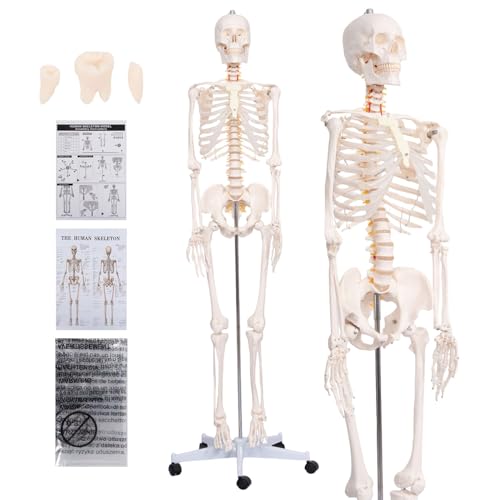
- Includes nervous system and carotid artery detail
- Movable jaw, skull cap, and detachable teeth
- Rolling stand plus dust-proof cover
Best For: Detailed anatomy teaching and hands-on study
Classic Medical Display

- 206 articulated bones in life-size form
- PVC body is washable and odorless
- Includes rolling stand and 3 posters
Best For: Simple, life-size anatomy study and display
Premium Full-Size Disarticulated Model – 67-inch EVOTECH Skeleton
If you want skeleton models for medical students that show the full scale of human anatomy, this 67-inch EVOTECH option gives you a life-size PVC build with a skull, spine, pelvic model, articulated hand and foot, and additional bones like the hyoid and coccyx. It is aimed at medical study, art reference, and general display use, with a cleanable plastic construction that is cast from a real male skeleton mold.
Best For: Students and instructors who want a full-size anatomy reference with broad skeletal coverage for study or display.
Pros:
- Life-size 1:1 proportions help with realistic anatomy study.
- Includes a laminated poster that identifies various bones.
- Good-quality PVC construction is designed to be easy to clean.
- Comes with articulated hand and foot plus key skeletal parts.
Cons:
- Disarticulated design cannot be assembled to show joint movement.
- Ribs and thoracic cartilage are not meant for full thoracic cage assembly without tools.
This is a strong choice if your priority is a complete-looking reference model rather than a movable teaching skeleton. The included bone labeling poster adds practical value for classroom review and self-study.
Study-Focused Premium Skeleton – Axis Scientific Life-Size Model
For skeleton models for medical students who need more than a display piece, this life-size Axis Scientific model is built around active learning. It includes fully articulated joints, three study guides, and 189 numbered stickers, so you can use it for labeling drills, terminology review, and hands-on anatomy instruction.
Best For: Medical students and classroom settings that benefit from guided self-labeling and joint-movement demonstrations.
Pros:
- Fully articulated joints demonstrate flexion, extension, abduction, and more.
- Three printed guides support structured study and labeling practice.
- 189 numbered stickers encourage active recall.
- Pelvic-mounted rolling stand makes it easier to reposition in class.
Cons:
- More study-focused and less compact than desktop models.
- Likely more than you need for simple display use.
This model stands out because it is clearly designed for teaching, not just appearance. The guides, stickers, and movable joints make it especially practical for repeat anatomy review.
Compact Entry-Level Desktop Model – breesky 17-inch Skeleton
If you need skeleton models for medical students in a smaller workspace, this 17.7-inch breesky model keeps the basics close at hand. It is a portable, entry-level skeleton with movable arms and legs, a removable skull cap, and simple anatomy detail focused on the spine, ribs, and skull.
Best For: Beginners, small desks, and quick visual review in tight spaces.
Pros:
- Compact 17.7-inch size fits small study areas.
- Movable arms and legs add simple hands-on learning.
- Removable skull cap helps with basic head anatomy study.
- Lightweight build makes it easy to move and reposition.
Cons:
- Only shows very basic anatomical detail.
- Not suited for advanced full-body study.
This is a practical starter model if you mainly want a small, affordable-feeling anatomy aid for desk-side review. It is best used as a quick visual reference rather than a detailed teaching skeleton.
Mobile Life-Size Study Model – GIANTEX 70.8-inch Skeleton
GIANTEX Life Size 70.8" Human Anatomical Anatomy Skeleton Medical Model + Stand
Check Price On AmazonAmong skeleton models for medical students, this GIANTEX life-size option is built for easy handling and broad study use. It includes detachable arms and legs, a movable jaw and head cover, plus a stand with casters and a stainless steel holder, making it suitable for moving between rooms and using as a full-size anatomy reference.
Best For: Buyers who want a movable full-size skeleton for classroom, clinic, or home study use.
Pros:
- Life-size 70.8-inch format supports realistic anatomy reference.
- Detachable arms and legs add study flexibility.
- Mobile stand with casters makes repositioning easier.
- Easy-to-clean plastic body is designed for wipe-down maintenance.
Cons:
- Does not emphasize labeled study materials or guides.
- Large size may be more than some users need for simple desk use.
This model is a sensible pick if mobility matters as much as size. It offers the convenience of a wheeled stand while still giving you a full-size structure for anatomy review.
Compact anatomy study pick – 33.4'' Skeleton Model with Metal Stand
If you want a smaller, easy-to-handle skeleton models for medical students option, this 33.4-inch anatomy model is built for close study and quick setup. It offers articulated joints, a removable calvarium, and visible anatomical details that make it practical for learning basic skeletal structure and movement.
Best For: Students who want a compact, study-focused skeleton for anatomy review, lab practice, or home use.
Pros:
- 33.4-inch half-size format is easier to manage in tighter spaces.
- Articulated mandible, shoulders, elbows, wrists, hips, knees, and ankles support movement study.
- Removable arms, legs, and calvarium help with focused anatomical inspection.
- Ships ready to use with simple assembly and a metal stand.
Cons:
- Half-size design is less immersive than a full-size model.
- No posters or extra teaching accessories are included.
Overall, this model is a straightforward choice if you need a detailed but compact skeleton for frequent handling and basic anatomy reference. It emphasizes usability and visible structure over classroom display extras.
Classroom display bundle – Life-Size Skeleton with Nervous System
For skeleton models for medical students that do double duty as a teaching display, this life-size PVC skeleton adds a nervous system representation and three anatomy posters. The rolling stand makes it easy to move between rooms, while the detachable skull and articulated joints support closer study of individual structures.
Best For: Medical students, instructors, and clinics that want a full-size learning aid with extra visual teaching materials.
Pros:
- Life-size 70-inch model with 206 articulated bones for detailed study.
- Includes a nervous system display plus 3 wall-mountable anatomical posters.
- Rolling five-wheel stand improves mobility across classrooms, offices, or study spaces.
- Non-toxic PVC material is easy to clean and built for regular use.
Cons:
- Some included organ pieces are small and require careful handling.
- The bundled posters add utility, but this is still a floor-standing model rather than a portable teaching prop.
This is a strong pick if you want a full-size skeleton that supports both reference study and visual instruction. The included charts and nervous system details make it more teaching-oriented than a basic model.
Full-size reference model – 70.8'' Posable Skeleton with Charts
This full-size option is a practical skeleton models for medical students choice when you want a realistic standing anatomy reference with extra visual aids. It combines a posable 70.8-inch skeleton, nervous system and carotid artery details, and color illustrations to make bone identification and structure review more approachable.
Best For: Learners who want a durable, movable full-size skeleton with clear visual reference materials.
Pros:
- Life-size 70.8-inch build gives a realistic study scale.
- Includes nervous system and carotid artery details for broader anatomy reference.
- Movable jaw, removable skull cap, and detachable teeth support closer inspection.
- Metal stand with five wheels and dust-proof cover add convenience for storage and movement.
Cons:
- It is a larger floor model, so it needs dedicated space.
- Assembly and use may be more involved than with a smaller desktop model.
For students who want a full-size skeleton with extra detail and useful reference charts, this model covers the essentials well. Its mobility and protective cover make it a sensible long-term study piece.
Life-Size Study Model – NLShan Human Skeleton Model
If you want skeleton models for medical students that feel close to a real classroom teaching aid, this 70.8-inch NLShan model gives you a full-size reference with 206 articulated bones, a detachable skull cap, and included anatomy posters. It is built for hands-on study, display, and repeated movement of the joints.
Best For: Medical students and instructors who want a life-size, easy-to-move anatomy skeleton for study and demonstration.
Pros:
- Life-size 70.8-inch model with 206 articulated bones
- Detachable skull and removable calvarium for closer study
- Rolling stand with five wheels makes repositioning easy
- Includes 3 posters for visual reference
Cons:
- Designed as a study/display model rather than a specialty classroom system
- Assembly and disassembly are mentioned, so setup may take time
This is a practical option if you need a full-size skeleton that supports observation and basic movement at the joints. The included posters and rolling stand add usefulness for classrooms, offices, and study spaces.
Precision Anatomy Model – 70.8" Posable Skeleton with Charts
For shoppers comparing skeleton models for medical students, this 70.8-inch PVC skeleton stands out for its detailed anatomy display, including a nervous system and carotid artery. It is built for classroom teaching, lab use, and hands-on study, with flexible posing and learning charts included.
Best For: Students and teaching environments that need a detailed, posable anatomy model with visual learning aids.
Pros:
- Shows skeleton structure plus nervous system and carotid artery details
- Removable skull cap, movable jaw, and three detachable teeth
- Hinged arms, legs, and joints allow flexible posing
- Rolling stand and dust-proof cover support storage and mobility
Cons:
- Material is PVC plastic, which may not appeal to buyers wanting a more specimen-like feel
- Product is heavy enough that it may be less convenient than smaller models despite the wheels
This model is a strong fit if your priority is anatomical detail and flexible classroom presentation. The included charts and stand make it more complete for structured study sessions than a basic skeleton alone.
Classic Medical Display – breesky Human Skeleton Model
If you’re looking at skeleton models for medical students and want a straightforward life-size teaching aid, this breesky model offers 206 articulated bones, a nervous system display, and three anatomy posters. The detachable skull design and rolling stand make it easy to use for study, display, and moving between rooms.
Best For: Medical students and healthcare learners who want a classic life-size skeleton with simple mobility and reference charts.
Pros:
- Life-size 70.8-inch skeleton with 206 articulated bones
- Detachable skull cap and articulated joints for interaction
- Non-toxic, odorless, washable PVC material
- Detachable rolling stand for classrooms, offices, or hospitals
Cons:
- Less feature-heavy than models that include extra charting or storage accessories
- Bullets focus on general study use rather than specialized anatomy components
This model keeps the essentials in focus: life-size proportions, movable joints, and easy cleaning. It is a sensible choice when you want a dependable anatomy skeleton without extra complexity.
How We Picked These Skeleton Models for Medical Students
We prioritized life-size accuracy, stable stands, removable or movable parts, and overall build quality. We also considered whether a model supports exam prep and independent study with features like labeled charts, nervous system details, and easy assembly.
Quick Comparison
For most buyers, the biggest split is between compact desktop models and full-size anatomical skeletons. Smaller models are better for early study, demonstrations, and limited space, while full-size options are stronger choices for lab-style learning and more realistic anatomical reference.
Key Buying Factors for Skeleton Models for Medical Students
Size and Realism
Life-size models are usually the most useful for medical study because they better reflect real proportions and bone relationships. Smaller models can still help with memorization, but they are less effective for understanding spatial anatomy.
Mobility and Disarticulation
Movable arms, legs, jaw, or spine sections can improve learning by showing how joints connect and function. If you need a model for detailed anatomy review, disarticulated or partially movable designs may be more educational.
Included Study Aids
Charts, guides, and labeled nerve or vascular features can help if you are learning independently. These extras are especially useful for first- and second-year students who need reinforcement beyond lecture notes.
Stand Quality and Material
Look for a sturdy rolling or fixed stand if the model will be used in a shared study room or classroom. Durable PVC or similar medical-grade materials tend to hold up better to frequent handling.
Who Should Buy Which Skeleton Models for Medical Students?
If you want the most realistic study tool, choose a full-size skeleton with a stable stand and anatomical details. If you are tight on space or budget, a smaller desktop model can still be a practical learning aid. Students focused on neuroanatomy or advanced anatomy should lean toward models that include the nervous system and extra reference materials. In short, the best Skeleton Models for Medical Students are the ones that match your course level, study space, and how hands-on you want your learning to be.