Engineering kits can turn homeschool science into something kids can build, test, and understand. The right set helps learners explore forces, structures, motion, circuits, and simple machines with real hands-on practice.
This roundup focuses on practical engineering kits for homeschool that are engaging, educational, and flexible enough for different ages and learning styles.
Best 10 Engineering Kits for Homeschool Picks for 2026
Structural Engineering Focus
Bridge and tower building STEM kit

- Builds 20 models around structural concepts
- Includes 285+ interchangeable pieces
- Covers force, load, compression, and tension
Best For: Intermediate homeschool structural engineering lessons
Simple Machines Starter
Hands-on levers and pulleys set

- Teaches levers, pulleys, and screws
- Designed for ages 5+
- Good for guided homeschool activities
Best For: Early elementary homeschool STEM lessons
Working Engine Model
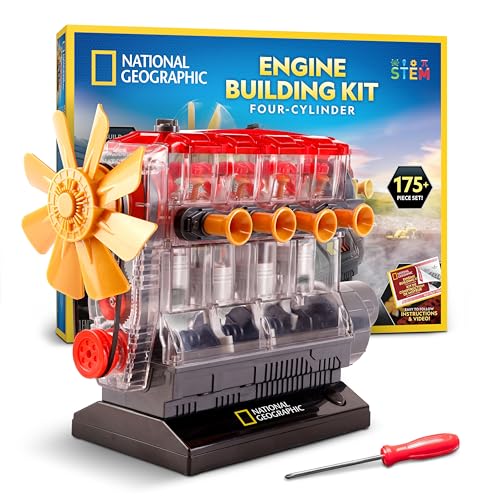
- Shows pistons, valves, and gears in motion
- Includes 175+ pieces and tools
- Best for ages 10+
Best For: Older homeschoolers studying mechanics and engines
Mechanical Building Starter
Thames & Kosmos Mechanical Engineering: Machines & Vehicles

- 20 buildable mechanical models
- 22 supplemental physics experiments
- Reusable parts with 80-page manual
Best For: Homeschoolers wanting a hands-on mechanical engineering introduction
Simple Machines Lab

- 26 models cover 6 classic simple machines
- Includes spring scale for force measurements
- Compatible with other Thames & Kosmos kits
Best For: Learners who want a focused simple-machines lesson
Hands-On Machine Starter
Doctor Jupiter Ultimate Engineering Kit

- Three builds: catapult, race car, and scribbling robot
- Teaches motion, energy conversion, circuits, and vibrations
- Illustrated guides and QR videos support independent use
Best For: Homeschoolers ages 8-13 who want a guided STEM intro
Flight and Circuit Builder

- Five projects centered on planes, saucers, balls, and fans
- Covers electricity, physics, aerodynamics, and air pressure
- Includes directions for independent use; batteries not included
Best For: Age 8+ homeschoolers who want circuit-based flight experiments
Robotic Arm Challenge

- Builds a robotic arm with motors, wires, and microcontroller boards
- Blends wooden assembly with robotics and circuit basics
- No soldering required, but 6 AA batteries are needed
Best For: Older kids who want a tougher robotics-style homeschool project
Structural Engineering Focus – Bridge and tower building STEM kit
If you’re comparing engineering kits for homeschool, this Thames & Kosmos set stands out for hands-on lessons about force, load, compression, and tension. It includes 20 model builds and a large set of interchangeable pieces, so learners can follow the manual or experiment with structural ideas in a more open-ended way.
Best For: Homeschoolers who want an intermediate structural engineering kit with guided model builds.
Pros:
- Teaches core structural concepts like force, load, compression, and tension.
- Includes over 285 interchangeable building pieces for multiple model options.
- Comes with a 36-page illustrated experiment manual and assembly guide.
- Builds 20 different models for repeated practice.
Cons:
- Skill level is listed as intermediate, so it may be less ideal for beginners.
- Focused specifically on structural engineering rather than broad STEM topics.
This is a strong pick if you want a homeschool-friendly engineering kit that balances instruction with practical building. The model variety and clear topic focus make it useful for structured lessons.
Simple Machines Starter – Hands-on levers and pulleys set
For families shopping engineering kits for homeschool, this Learning Resources set is a practical way to introduce simple machines through guided activities. It covers levers, pulleys, and screws, and the manual, hands-on format fits well into early elementary science time or small-group learning.
Best For: Younger homeschool learners starting with simple machines and cause-and-effect.
Pros:
- Introduces levers, pulleys, and screws in an approachable STEM format.
- Supports guided experiments and open-ended exploration.
- Made for ages 5+ and suited to homeschool or classroom use.
- Designed to build critical thinking and sequential reasoning.
Cons:
- Limited to simple machines, so it is not a broad engineering kit.
- Manual operation only, with no battery-powered features.
This set works well when you want a low-prep homeschool activity centered on basic engineering ideas. It is especially useful for introducing how machines make work easier through direct experimentation.
Hydraulic Robotics Build – Hydraulic wearable robot hand
If you want engineering kits for homeschool that feel especially memorable, this Mega Cyborg Hand kit delivers a wearable build with a strong mechanics lesson. Kids assemble a mechanical hand that uses air pressure and water instead of motors or batteries, then adjust the joints for different angles and gripping positions.
Best For: Big kids who enjoy a dramatic hands-on build with hydraulics and pneumatics.
Pros:
- Uses hydraulic pistons and air pressure rather than motors or batteries.
- Adjustable finger joints support precision movement and different hand configurations.
- Can be built as a right hand, left hand, or claw-like hand.
- Teaches how pneumatic and hydraulic systems are used in industrial robots.
Cons:
- Listed for big kids, so it may be too advanced for younger learners.
- Focuses on one specific mechanical system rather than general engineering topics.
This is a standout choice for homeschoolers who want a build with real mechanical motion and a robotics connection. The adjustable design and no-battery operation make it a hands-on learning project with strong engagement value.
Working Engine Model – Clear working engine model
Among engineering kits for homeschool, this National Geographic engine build is a strong fit for learners who want to see moving parts in action. The clear model shows pistons, valves, and gears, and the included tools and instructions make it a guided STEM project with a clear mechanical payoff.
Best For: Older homeschool students who want a working engine model with visible motion.
Pros:
- Clear 4-cylinder design makes engine movement easy to observe.
- Includes 175+ pieces, tools, illustrated instructions, and a learning guide.
- Battery-powered model brings pistons, valves, and gears to life.
- Supports problem-solving and curiosity through hands-on construction.
Cons:
- Requires 3 AA batteries, which are not included.
- Listed for ages 10 and up, so it is best for older learners.
This kit is a good pick if your homeschool student is ready for a more detailed mechanical build. The visible engine action makes it especially useful for explaining how moving parts work together in a real engine.
Mechanical Building Starter – Thames & Kosmos Mechanical Engineering: Machines & Vehicles
If you’re shopping for engineering kits for homeschool, this Thames & Kosmos set is a strong intro to mechanical engineering. It pairs 20 hands-on building projects with 22 supplemental experiments, so kids can learn by building and then see the physics behind the models.
Best For: Homeschool families who want a reusable, intro-level mechanical engineering kit with clear step-by-step guidance.
Pros:
- Builds 20 mechanical models, including a crane, windmill, elevator, and all-wheel drive ATV.
- Includes 22 supplemental experiments covering forces, gravity, energy, momentum, gears, and more.
- Durable, reusable building system lets kids reconfigure parts into different models.
- 80-page full-color manual gives illustrated, easy-to-follow instructions and explanations.
Cons:
- More focused on mechanical systems than broader engineering topics.
- Best suited to ages 8+, so it may be too advanced for younger homeschoolers.
Overall, this is a practical choice if you want a hands-on kit that teaches core mechanical concepts without requiring complicated setup. It works well as a first engineering kit for homeschool science lessons centered on motion, force, and simple machines.
Electronics Project Box – 66-Piece Circuit Kit
This electronics kit is a solid pick for engineering kits for homeschool if you want a broad, highly active introduction to circuitry. With 66 color-coded parts and 1,200+ projects, it offers a lot of room for repeated practice and exploration.
Best For: Families looking for a large, beginner-friendly electronics kit with lots of project variety and no-solder setup.
Pros:
- Includes 66 parts and supports 1,200+ project combinations.
- No soldering or extra tools required, so setup stays simple.
- Color-coded, numbered pieces snap onto the grid for frustration-free building.
- Focuses on circuitry fundamentals, creativity, and problem-solving through play.
Cons:
- Broader age range claims may make it harder to judge the best starting point.
- More electronics-focused than mechanical engineering-focused.
For homeschoolers who want a screen-free circuit builder with lots of repeat use, this kit offers strong value. It is especially appealing if you want kids to experiment independently and gain confidence with basic electrical engineering concepts.
Simple Machines Lab – Thames & Kosmos 26-Model Kit
For homeschoolers focusing on foundations, this is one of the most straightforward engineering kits for homeschool because it teaches the six classic simple machines through hands-on model building. Kids can test how gears, levers, pulleys, and other mechanisms change force and motion.
Best For: Students who need a clear, hands-on introduction to simple machines and mechanical physics.
Pros:
- Builds 26 models while covering wheels and axles, levers, pulleys, inclined planes, screws, and wedges.
- Includes a spring scale for measuring force changes.
- Compatible with other Thames & Kosmos construction, physics, and engineering kits.
- 32-page full-color manual provides step-by-step building instructions and science notes.
Cons:
- Less varied than larger multi-topic engineering kits.
- Best suited to ages 8+, so it is not ideal for very young learners.
This kit is a smart choice if your homeschool curriculum is built around simple machines and mechanical concepts. It keeps the lessons focused and practical, making it easy to connect each model to everyday examples like flagpoles, wheelbarrows, and playground seesaws.
Hands-On Machine Starter – Doctor Jupiter Ultimate Engineering Kit
If you want engineering kits for homeschool that feel active and approachable, this Doctor Jupiter set offers a compact, project-based introduction to motion and simple machine concepts. Kids build a catapult machine, race car, and scribbling robot, making it a practical option for families who prefer learning through doing rather than worksheets alone.
Best For: Homeschoolers ages 8-13 who want a guided, screen-free STEM kit with three different builds.
Pros:
- Includes three projects: catapult machine, race car, and scribbling robot.
- Teaches engineering and physics ideas like projectile motion, energy conversion, circuits, and vibrations.
- Step-by-step illustrated manuals and QR video tutorials support independent building.
- Pre-cut wooden parts and included components mean no glue, tools, or soldering.
Cons:
- Only three projects, so it may feel limited for families wanting a larger set.
- Requires a bit of setup with included parts and a motorized component.
- Designed for kids 8+, so it may be too advanced for younger learners.
Overall, this is a solid entry-level homeschool engineering kit if you want a straightforward build experience with clear instructional support. It balances hands-on fun with real STEM concepts, which makes it easy to slot into a home learning routine.
Flight and Circuit Builder – Snap Circuits Flight Deck
Snap Circuits Flight Deck Science/STEM Toy kit | Ages 8+ | Construction Gift for Boys and Girls
Check Price On AmazonFor families comparing engineering kits for homeschool, this Snap Circuits set stands out for mixing electricity, physics, and flight-themed play in one compact package. The five projects focus on launching paper airplanes, flying saucers, and balls, plus air-pressure and spinning-wheel activities that can fit neatly into a hands-on science lesson.
Best For: Homeschoolers age 8+ who want a circuit-based STEM kit with flight and physics projects.
Pros:
- Five projects provide a variety of play and learning experiences.
- Teaches electricity, physics, aerodynamics, and air pressure concepts.
- Easy-to-follow directions help kids work independently.
- No extra tools are needed; kit includes everything except batteries.
Cons:
- Batteries are not included, so you’ll need to supply them separately.
- Fewer projects than some larger Snap Circuits sets.
- Flight-focused theme may appeal more to some kids than others.
This is a practical pick if you want a homeschool STEM toy that feels interactive without becoming overly complicated. Its strength is the clear connection between the builds and core science ideas, which makes it easy to use as part of a lesson or independent exploration.
Robotic Arm Challenge – Wood Robot Arm Kit
If your goal is to find engineering kits for homeschool that push kids into more challenging builds, this robotic arm set offers a more advanced hands-on experience. It combines wooden assembly with motors, wires, and PCB microcontroller boards, giving learners a first look at circuits and mechanical movement through a single project.
Best For: Older homeschool students ages 8+ who want a challenging robotics and engineering build.
Pros:
- Introduces robotics and circuits through motors, wires, and microcontroller boards.
- Combines a 3D puzzle style build with electrical engineering concepts.
- Includes a precise assembly tutorial and no soldering is required.
- Designed to build problem-solving skills, patience, and confidence.
Cons:
- Requires 6 AA batteries, which are not included.
- The more complex build may be better suited to older or patient learners.
- Single-project format offers less variety than multi-build kits.
This kit is a good fit when you want a more ambitious homeschool engineering activity that feels substantial and skill-building. It should appeal to kids who like detailed assembly and want to see how mechanical parts and electronics work together.
How We Picked the Best Engineering Kits for Homeschool
We looked for kits that offer clear educational value, repeat use, and age-appropriate challenges. Strong picks should encourage problem-solving, fit well into home lessons, and provide enough variety to justify the purchase.
For homeschooling, the best kits also need a balance of guided activities and open-ended exploration so they can support both structured lessons and curiosity-led learning.
Quick Comparison
Before choosing, think about the type of engineering your student enjoys most. Structural and mechanical kits are great for design and physics. Simple machines and circuits work well for foundational STEM learning. More advanced kits, like robotics or hydraulic hands, can challenge older students and build confidence with more complex assembly.
Key Buying Factors for Engineering Kits for Homeschool
Skill Level and Age Range
Match the kit to your child’s current ability, not just the recommended age. Younger learners often do best with big, tactile builds and straightforward instructions, while older students may benefit from multi-step projects and more technical concepts.
Lesson Depth
Some Engineering Kits for Homeschool are designed as single-project experiences, while others include many models or experiments. If you want a curriculum supplement, choose a kit with multiple builds and clear explanations of the science behind them.
Material Quality and Reusability
Durable parts matter, especially when a kit will be used by multiple children or revisited over time. Reusable components add value and let students experiment beyond the first build.
Independent Learning Support
Look for instructions that are easy to follow, visually clear, and suitable for self-paced work. This is especially important if your homeschool schedule includes independent STEM blocks.
Budget and Educational Return
A higher price can be worthwhile if a kit includes many models, strong educational content, and long-term replay value. Cheaper kits may still be a good fit if you need a focused introduction to one topic.
Who Should Buy Which Engineering Kits for Homeschool?
Choose structural or simple machines kits for younger students and early elementary learners who are just starting to connect engineering with real-world problem solving. Pick circuit, engine, or robotics-style kits for middle and high school students who are ready for more technical STEM concepts.
If your goal is broad exposure, select a kit with multiple build types. If you want a deeper dive into one topic, choose a specialized option that reinforces a specific unit in your homeschool plan. The best Engineering Kits for Homeschool are the ones your student will actually use, rebuild, and learn from more than once.