Choosing electronic loads for solar panels can make it much easier to verify real-world output, test charge controllers, and measure battery performance. The right tool helps you move beyond label specifications by applying a controlled load under repeatable conditions.
This roundup includes programmable DC loads, compact capacity testers, PV meters, charge controllers, and solar panel kits. Use the guide below to match each option to your system voltage, current, testing goals, and available budget.
Best 10 Electronic Loads for Solar Panels Picks for 2026
Programmable Bench Testing
Tekpower TP3710A 150W Electronic Load

- 150W programmable DC load with USB control
- Supports CC, CP, and CR operating modes
- Protection features and calibration certificate included
Best For: Bench testing compatible solar panels, batteries, and DC supplies
Portable PV Measurement
EY800W 800W Solar Panel Tester

- Tests solar panels up to 800W and 60V
- Automatic or manual MPPT detection
- Solar-powered with a sunlight-readable LCD
Best For: Portable, foldable, car, boat, and roof-panel output checks
Advanced Lab Load Testing
Rigol DL3021 200W Electronic Load

- 200W programmable load with four operating modes
- 15kHz dynamic testing for transient response
- LAN, USB, and RS232 with SCPI support
Best For: R&D labs, battery testing, and automated DC-source evaluation
High-Power System Regulation
120A MPPT Solar Charge Controller
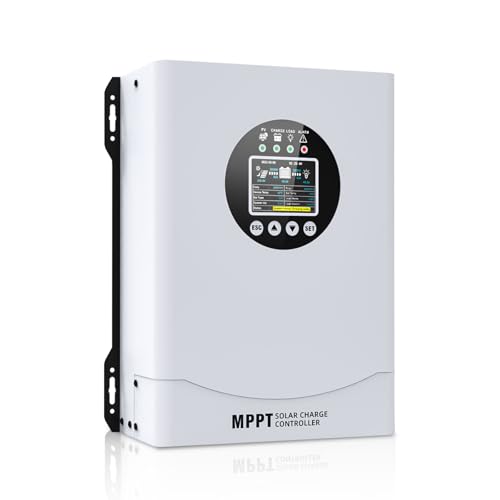
- Supports battery systems from 12V through 96V
- Up to 230V PV input with LCD display
- MPPT tracking and broad battery-chemistry compatibility
Best For: High-capacity solar charging and battery-storage systems
Professional Solar Testing
ET5410A+ 400W Programmable DC Load

- 0–150V, 0–40A, and 400W testing range
- Multiple battery, LED, dynamic, and scanning modes
- Comprehensive electrical protection features
Best For: Detailed bench testing of solar, battery, and power-supply outputs
Complete Solar Setup
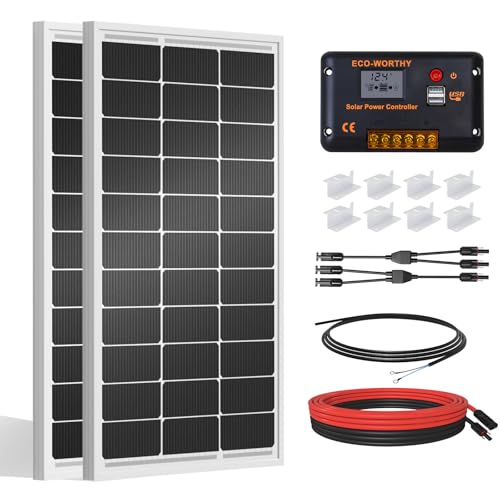
- Includes two 100W mono panels and a 30A PWM controller
- Can be wired for 12V or 24V applications
- Includes brackets, cables, and connectors
Best For: RV, camper, cabin, and other off-grid solar systems
High-Capacity Array

- Two 400W monocrystalline panels
- 9.84-foot MC4 leads per panel
- Outdoor-ready aluminum and tempered glass construction
Best For: Larger 12V/24V off-grid systems
Efficient Mid-Size Panel

- 25% listed efficiency
- Bypass diodes help with partial shade
- Durable glass and aluminum outdoor construction
Best For: 12V RV, marine, and cabin battery systems
Compact Maintenance Panel

- Compact monocrystalline 25W design
- Designed for 12V battery maintenance
- Waterproof box and corrosion-resistant frame
Best For: Small vehicles, batteries, and LED-lighting applications
Programmable Bench Testing – Tekpower TP3710A 150W Electronic Load
For testing electronic loads for solar panels, the Tekpower TP3710A offers programmable DC loading with a 150W capacity. Its constant-current, constant-power, and constant-resistance modes make it practical for evaluating compatible panels, batteries, and DC power supplies.
Best For: Bench testing solar panels and other DC devices up to 150W, 30A, and 360V DC.
Pros:
- Supports constant current, constant power, and constant resistance modes.
- Programmable PC USB interface includes software.
- Offers high accuracy, resolution, and precision with a calibration certificate.
- Includes overvoltage, overcurrent, overpower, overheat, and reverse-polarity protection.
Cons:
- Its 150W capacity may not suit higher-powered solar panels.
- At 10 pounds, it is less convenient for portable field testing.
The TP3710A is a strong choice when you need controlled, repeatable bench measurements rather than a simple field meter. Check the panel’s voltage, current, and wattage against its limits before connecting it.
Portable PV Measurement – EY800W 800W Solar Panel Tester
The EY800W is a dedicated option for checking electronic loads for solar panels and measuring panel output in the field. It supports solar panels up to 800W and 60V, with automatic or manual MPPT detection and a large LCD for viewing results in sunlight.
Best For: Portable and roof-mounted solar panel testing up to 800W and 60V.
Pros:
- Supports automatic and manual MPPT detection.
- Measures panels up to 800W and 60V, including portable and foldable systems.
- Provides overvoltage, overtemperature, overcurrent, reverse-connection, and power protection.
- Solar-powered operation requires no separate battery.
Cons:
- It is a panel meter rather than a programmable electronic load.
- Its operating range starts at 12V and is limited to 60V.
Choose the EY800W when your priority is quick, direct PV output testing rather than applying a controlled load profile. Its broad wattage range and solar-powered design make it especially convenient for field checks.
Advanced Lab Load Testing – Rigol DL3021 200W Electronic Load
For demanding electronic loads for solar panels and broader DC power testing, the Rigol DL3021 combines 200W capacity with CC, CV, CR, and CP modes. Its high-speed dynamic mode and multiple control interfaces suit detailed development and automated test work.
Best For: Laboratory testing, battery discharge analysis, and automated evaluation of compatible DC sources.
Pros:
- Provides constant-current, constant-voltage, constant-resistance, and constant-power modes.
- 15kHz dynamic mode supports transient-response and regulator-stability testing.
- LAN, USB, and RS232 interfaces support programmable SCPI control.
- Includes OVP, OCP, and OTP protection with a 4.3-inch TFT display.
Cons:
- Its 200W capacity may be insufficient for larger solar arrays.
- The advanced interface and lab-oriented features may be more than casual users need.
The DL3021 is the most automation-focused choice in this group. It makes sense when you need repeatable battery or power-source testing, dynamic behavior analysis, and integration with a test bench.
High-Power System Regulation – 120A MPPT Solar Charge Controller
This 120A MPPT controller is a system-level alternative for managing power from solar panels rather than acting as a standalone electronic load. It supports PV input up to 230V and is designed for battery systems from 12V through 96V, with LCD monitoring and extensive protection.
Best For: High-capacity solar charging systems using compatible lithium-ion or lead-acid batteries.
Pros:
- Supports 12V, 24V, 36V, 48V, 60V, 72V, 84V, and 96V battery systems.
- Handles up to 230V PV input and system-dependent power ratings up to 11,520W.
- MPPT tracking efficiency is rated at no less than 99%, with peak conversion efficiency up to 98%.
- Includes PV, battery, load, temperature, low-temperature, and electronic fault protections.
Cons:
- It is a charge controller, not a programmable electronic load for controlled panel testing.
- System compatibility requires careful matching of battery voltage, chemistry, and PV limits.
Consider this controller when your goal is to use and regulate solar energy in a battery system, not to characterize panel output on a test bench. Its wide voltage support is useful for larger installations, provided the system is configured within the stated limits.
Professional Solar Testing – ET5410A+ 400W Programmable DC Load
The ET5410A+ is a versatile choice for evaluating electronic loads for solar panels, power supplies, chargers, and batteries. Its 0–150V, 0–40A range, 400W capacity, detailed measurements, and multiple test modes make it suited to more demanding bench testing.
Best For: Users who need broad-range solar, battery, charger, and power-supply testing with programmable functions.
Pros:
- Supports up to 400W, 150V, and 40A.
- Offers constant-current, constant-voltage, dynamic, scanning, list, LED, battery, and short-circuit test modes.
- Includes over-voltage, over-current, over-power, over-temperature, and reverse-polarity safeguards.
- Uses a 2.8-inch TFT display with high-resolution voltage and current readings.
Cons:
- Its broad feature set may be more than needed for simple load checks.
- It is a corded bench instrument rather than a portable battery-powered tester.
Choose this model when flexibility and protection features matter more than a minimal setup. USB connectivity, key lock, and intelligent fan control add convenience during repeated testing.
Complete Solar Setup – ECO-WORTHY 200W 12V/24V Kit
The ECO-WORTHY kit is a complete starting point for creating a solar-powered load test setup or off-grid power system. It combines two 100W monocrystalline panels with a 30A PWM controller, mounting hardware, and cables, helping you connect loads without sourcing each component separately.
Best For: RVs, campers, cabins, backup power, and other 12V or 24V off-grid applications.
Pros:
- Includes 200W of monocrystalline solar panels and a 30A PWM charge controller.
- Supports series connection for 24V or parallel connection for 12V systems.
- Includes Z brackets, solar cables, connectors, and tray cable.
- Aluminum frames and an IP65-rated junction box support outdoor use.
Cons:
- The included controller is PWM rather than MPPT.
- Solar output depends on available sunlight; the stated daily output assumes four hours of full sun.
- At 31.6 pounds, the kit is less convenient to move frequently.
This kit is better for powering or assembling an off-grid system than for precision electronic load measurements. Its included components simplify installation, while the 12V/24V flexibility suits a range of solar panel loads.
Compact Load Monitoring – 150W 20A Adjustable DC Electronic Load
This 150W adjustable electronic load offers a straightforward way to check smaller solar panels, batteries, and DC power sources. For users comparing electronic loads for solar panels, its four operating modes, color display, and adjustable protections provide useful control without the higher capacity of a full-size bench tester.
Best For: Testing smaller DC solar, battery, and power-supply outputs with live capacity and discharge information.
Pros:
- Handles up to 150W and 20A.
- Provides constant-current, constant-voltage, constant-power, and constant-resistance modes.
- Displays voltage, current, power, capacity, internal resistance, and discharge information on a 2.4-inch TFT screen.
- Allows voltage, current, power, stop-voltage, and discharge-time limits to be set.
Cons:
- Its 150W and 20A limits are lower than those of larger electronic loads.
- The listed minimum operating voltage is 12V DC, limiting very-low-voltage testing.
- A suitable power source is needed because it is battery powered.
This model is a practical fit for controlled discharge tests and routine monitoring of smaller DC systems. An external NTC sensor can also monitor the temperature of the power supply during testing.
High-Capacity Array – 800W Solar Panel 2-Pack
For larger off-grid setups, this DOKIO pair delivers 800W of rated output from two 400W monocrystalline panels. The long MC4 leads and reduced number of connections make it a practical choice when comparing electronic loads for solar panels and planning a higher-power array.
Best For: Cabins, sheds, patios, yards, and off-grid systems using 12V or 24V battery banks.
Pros:
- Two 400W panels provide 800W of rated STC power.
- Tempered glass, aluminum frames, and sealed IP65 junction boxes suit outdoor use.
- Each panel includes a 9.84-foot MC4 lead, helping reach controllers or combiners.
- Compatible with AGM, Gel, and LiFePO4 batteries through suitable PWM or MPPT controllers.
Cons:
- The large two-panel format is less portable than smaller panels.
- A controller or inverter must be sized for the array’s total power and current.
- Parallel wiring is recommended for 12V systems; series wiring requires a suitable controller.
This is the strongest option here for buyers who need substantial solar capacity and fewer interconnections. Plan the controller, wiring, and mounting layout around its 800W output and full-size dimensions.
Efficient Mid-Size Panel – Renogy 50W N-Type Solar Panel
This Renogy 50W N-type panel offers a compact step up from small maintenance panels, with listed 25% efficiency and compatibility with 12V battery systems. Its protected construction is useful when evaluating electronic loads for solar panels in RV, marine, rooftop, and cabin applications.
Best For: 12V battery charging or maintenance on RVs, boats, trailers, cabins, and small off-grid systems.
Pros:
- 25% listed efficiency and a positive 0–3% output tolerance.
- Bypass diodes help reduce power loss from shading and support low-light performance.
- Corrosion-resistant aluminum frame and impact-resistant tempered glass are suited to outdoor use.
- Pre-drilled grounding holes and compatibility with several Renogy mounts simplify installation.
Cons:
- At 50W, it is intended for smaller charging needs rather than high-demand loads.
- A separate charge controller may be needed for safe battery charging.
- The panel is designed around 12V systems, limiting its fit for larger banks without proper system planning.
Choose this model when you want a durable, relatively efficient panel without moving to a large array. Its 50W capacity fits maintenance and modest charging duties better than power-hungry applications.
Compact Maintenance Panel – ECO-WORTHY 25W 12V Panel
The ECO-WORTHY 25W monocrystalline panel is a compact option for maintaining or lightly charging 12V batteries. Its small footprint and included extension cable make it approachable for modest electronic loads for solar panels, including lights and backup applications.
Best For: RV, boat, trailer, ATV, car, gate-opener, LED-light, and other small 12V battery applications.
Pros:
- Compact 16.57-by-12.6-inch format is easy to carry and install.
- Designed for 12V battery charging or maintenance, with a listed daily output of up to 100Wh under stated conditions.
- Waterproof junction box and corrosion-resistant aluminum frame support outdoor use.
- Pre-drilled mounting holes and a 39.3-inch extension cable simplify setup.
Cons:
- Its 25W rating is suited to maintenance and light loads, not high-power equipment.
- Daily energy production depends on receiving the stated full-sun conditions.
- The supplied details list a USB connector, so connector compatibility should be confirmed before installation.
This panel makes sense when portability and simple 12V maintenance matter more than maximum output. It is a practical fit for keeping small batteries topped up or supporting low-power lighting in off-grid locations.
How We Picked These Electronic Loads for Solar Panels
We selected products that address the main jobs involved in solar-system testing: applying a controlled electrical load, measuring panel voltage and current, checking battery capacity, and evaluating charge-controller performance. We also considered power and voltage limits, adjustment range, display quality, operating modes, portability, and the needs of beginners versus experienced users.
Because a solar panel’s output changes with sunlight, temperature, wiring, and battery state, no single product is ideal for every setup. Programmable DC loads are generally the most flexible for controlled tests, while PV meters and complete solar kits are better suited to installation checks or practical off-grid projects.
Quick Comparison
- For laboratory-style testing: Choose a programmable load with constant-current, constant-voltage, and adequate power headroom.
- For battery capacity checks: Look for adjustable current, timed operation, readable measurements, and protection against overheating or overvoltage.
- For panel troubleshooting: A dedicated PV meter can simplify open-circuit voltage, current, and MPPT-related checks.
- For small off-grid systems: A solar panel and charge-controller kit may be more useful than a standalone electronic load.
- For larger systems: Confirm that the tester supports the panel or battery bank’s maximum voltage, current, and wattage before connecting it.
Key Buying Factors for Electronic Loads for Solar Panels
Power, Voltage, and Current Ratings
Start with the maximum expected test conditions. A 150W load is suitable for many small panels, batteries, and power supplies, but larger modules may require 200W, 400W, or more. Never exceed the load’s voltage or current rating, and leave operating margin for measurement spikes.
Operating Modes and Adjustment
Constant-current mode is useful for simulating a steady demand, while constant-voltage mode helps evaluate regulated supplies and charging behavior. Some models also provide constant-power, resistance, battery-discharge, or pulse modes. Fine adjustment and stable readings are especially valuable when comparing panels under changing sunlight.
Cooling, Protection, and Duty Cycle
Electronic loads turn electrical energy into heat. Check whether the unit uses active cooling, how loudly its fan operates, and whether it can sustain the desired wattage continuously. Overtemperature, overvoltage, overcurrent, and reverse-polarity protection can prevent an inexpensive test from becoming costly equipment damage.
Measurement and Usability
A clear display, USB connectivity, data logging, and simple controls can save time. For field work, portability and a durable enclosure matter more than advanced automation. For bench testing, computer control and repeatable test profiles may justify a more capable model.
Who Should Buy Which Electronic Loads for Solar Panels?
Choose a programmable DC electronic load if you need repeatable tests for panels, batteries, adapters, or charge controllers. Higher-power models are preferable when testing larger modules or battery banks.
Choose a compact adjustable load tester for occasional battery-capacity checks, USB devices, and small solar projects. These are convenient but should not be pushed beyond their thermal or electrical limits.
Choose a PV testing meter when your priority is diagnosing panel output, open-circuit voltage, or MPPT behavior in the field. It complements rather than replaces a true electronic load.
Choose a solar panel kit or charge controller when you are building or upgrading a working RV, boat, shed, or backup-power system. These products focus on collecting and managing solar energy, not on laboratory load testing.