Choosing among astronomy cameras for deep-sky imaging means balancing sensor performance, cooling, field of view, software support, and the demands of your telescope. The right camera can make faint nebulae and galaxies easier to capture while fitting your budget and workflow.
This roundup covers cooled color cameras, planetary-focused options, USB eyepieces, and smart telescopes. Use the guide below to narrow the field by imaging goals, compatibility, and ease of use.
Best 10 Astronomy Cameras for Deep Sky Imaging Picks for 2026
Complete Cooled Kit
SC571CC Deep-Sky Camera Bundle
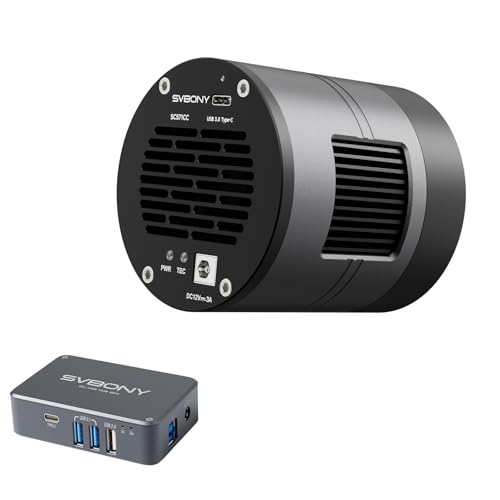
- 26MP APS-C IMX571 sensor
- 35°C below-ambient two-stage cooling
- Includes SV241 power and data hub
Best For: Streamlined cooled deep-sky imaging setups
Pocket Smart Scope
Dwarf Mini Portable Astro Telescope

- Weighs about 1.85 pounds
- App control with Auto GoTo and EQ mode
- Up to 90-second exposures with processing
Best For: Portable beginner-friendly deep-sky imaging
Low-Noise APS-C Camera
SC571CC Cooled Color Astronomy Camera

- 26MP APS-C IMX571 sensor
- Cooling to 35°C below ambient
- 16-bit ADC and zero amp-glow design
Best For: Dedicated long-exposure deep-sky imaging
Dual-Purpose Smart Scope
Dwarf 3 App-Controlled Telescope

- Telephoto and wide-angle imaging system
- 4K auto-tracking with AZ/EQ modes
- App-based cloud image processing
Best For: Portable day-and-night smart imaging
High-Resolution Deep-Sky Pick

- 20.1MP color CMOS sensor with 2.4µm pixels
- TEC cooling reaches about 40–45°C below ambient
- USB 3.0 transfer up to 19fps with 256MB buffer
Best For: Detailed cooled color imaging of nebulae and galaxies
Wide-Dynamic-Range Choice

- Cooled 4/3-inch IMX294 color sensor
- 63ke- full-well capacity and 14-bit ADC
- USB 3.0 reaches 19fps in RAW8 or 16fps in RAW16
Best For: Cooled deep-sky imaging and electronic assisted astronomy
Beginner Planetary Option
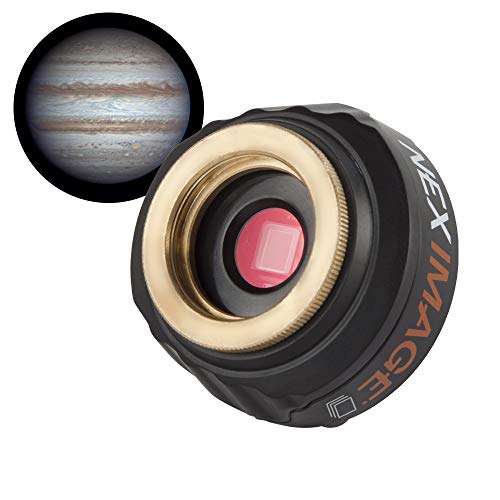
- 10.7MP color sensor for lunar and planetary detail
- Includes capture and stacking software
- Standard 1.25-inch barrel with C-thread connection
Best For: Beginners learning lunar and planetary astroimaging
Beginner Lunar Detail

- 8MP sensor with up to 4K video
- 1.25-inch barrel and removable IR-cut filter
- Primarily designed for lunar and planetary imaging
Best For: Beginner Moon and bright-planet imaging
Flexible Entry-Level EAA

- IMX662 color sensor with low readout noise
- ROI, binning, and image-buffer features
- Supports planetary, lunar, and EAA use
Best For: Entry-level color EAA and planetary imaging
High-Sensitivity EAA Upgrade

- IMX585 sensor with 3856×2180 resolution
- USB 3.0 and high near-infrared sensitivity
- Suitable for EAA and entry-level deep-sky shooting
Best For: EAA enthusiasts and entry-level deep-sky imaging
Complete Cooled Kit – SC571CC Deep-Sky Camera Bundle
For shoppers seeking astronomy cameras for deep sky imaging, this bundle combines SVBONY’s SC571CC cooled color camera with the SV241 power hub adapter. The 26MP APS-C sensor, two-stage TEC cooling, and included connectivity are designed to simplify extended imaging sessions.
Best For: Astrophotographers who want a cooled APS-C camera bundled with a practical power and data hub.
Pros:
- 26MP IMX571 APS-C BSI sensor with 3.76 μm pixels
- Two-stage cooling reaches up to 35°C below ambient
- Compatible with APO, Newtonian, RC, and catadioptric telescopes
- SV241 hub provides multiple power and data interfaces
Cons:
- Input and output interfaces must be connected correctly
- Hub output limits include a maximum 12V/10A input specification
- Some hub ports require a data connection to activate their power output
This is a strong convenience-focused option for building a streamlined deep-sky setup, especially if you need both camera cooling and centralized connectivity. Verify your power requirements and cable layout before imaging.
Pocket Smart Scope – Dwarf Mini Portable Astro Telescope
The DWARFLAB Dwarf Mini is a compact alternative for beginners comparing astronomy cameras for deep sky imaging. Its app control, automatic GoTo, EQ mode, and up-to-90-second exposures make it approachable for portable observing and casual deep-space photography.
Best For: Beginners, families, and travelers who want an easy, battery-powered smart telescope for dark-sky trips.
Pros:
- Lightweight 1.85-pound design for backpacks and travel
- App-controlled sky atlas with automatic GoTo and 360° pivoting
- EQ mode supports single-frame exposures up to 90 seconds
- Built-in light-pollution filters and cloud processing simplify results
Cons:
- Its 30mm objective and 1/2.8-inch sensor are less substantial than dedicated cooled-camera systems
- Designed around smartphone app control rather than a standalone astronomy-camera workflow
- Manual-and-auto focus may offer less setup control for advanced users
The Dwarf Mini prioritizes portability and ease of use over the flexibility of a conventional telescope-and-camera rig. It is a practical entry point for exploring nebulae and clusters without assembling a larger mount system.
Low-Noise APS-C Camera – SC571CC Cooled Color Astronomy Camera
The SVBONY SC571CC is aimed at photographers who need astronomy cameras for deep sky imaging with a larger sensor and controlled thermal performance. Its 26MP APS-C IMX571 sensor, 16-bit ADC, zero amp-glow design, and two-stage cooling support detailed long-exposure capture.
Best For: Dedicated deep-sky imagers seeking a cooled color camera for faint nebulae, Ha regions, and extended imaging sessions.
Pros:
- 26MP APS-C BSI sensor with high QE above 80%
- Two-stage TEC cooling lowers temperature up to 35°C below ambient
- Zero amp-glow design and 16-bit ADC help preserve clean tonal detail
- Front-window heater, USB 3.0, and 512MB DDR3 buffer support longer sessions
Cons:
- Requires a compatible telescope, computer, and supporting imaging equipment
- Dedicated cooled-camera workflows involve more setup than smart telescopes
- The camera weighs 1.31 pounds and is not positioned as an ultra-portable system
With its APS-C format and cooling-oriented feature set, the SC571CC is the more specialized choice here for users building a conventional deep-sky rig. Its connectivity and dew-management features are useful for sustained all-night sequences.
Dual-Purpose Smart Scope – Dwarf 3 App-Controlled Telescope
The DWARFLAB Dwarf 3 offers a straightforward route into astronomy cameras for deep sky imaging while also supporting daytime subjects. Its dual-lens design, automatic tracking, EQ mode, and app-based processing make it a flexible travel-friendly system.
Best For: Users who want one lightweight smart telescope for deep-space objects, Milky Way scenes, landscapes, and wildlife.
Pros:
- Portable design marketed at approximately 3 pounds
- Telephoto and wide-angle lenses cover different imaging uses
- 4K auto-tracking, Auto GoTo, and AZ/EQ modes simplify operation
- Cloud-powered processing works through the dedicated app without complex PC software
Cons:
- Its integrated smart-telescope approach offers less component-level control than a dedicated cooled camera
- App and cloud processing are central to the intended workflow
- The supplied specifications list differing weight figures, so confirm the final carrying weight before purchase
The Dwarf 3 is a versatile option for buyers who value convenience and multiple imaging modes more than a traditional observatory-style setup. It is especially appealing when portability and daytime photography matter alongside deep-space capture.
High-Resolution Deep-Sky Pick – ZWO ASI183MC Pro
ZWO ASI183MC Pro 20.18 MP CMOS Color Astronomy Camera with USB 3.0 # ASI183MC-P
Check Price On AmazonFor photographers seeking astronomy cameras for deep sky imaging, the ZWO ASI183MC Pro combines a 20.1MP color sensor with integrated TEC cooling. Its fine 2.4-micron pixels and high quantum efficiency are suited to detailed images of nebulae, galaxies, and supernova remnants when used with a telescope and motorized equatorial mount.
Best For: Deep-sky imagers who prioritize high resolution, color capture, and cooled operation.
Pros:
- 20.1MP resolution and 5496×3672 output capture fine astronomical detail.
- TEC cooling lowers the sensor to approximately 40–45°C below ambient for reduced noise during longer exposures.
- USB 3.0 transfer reaches up to 19 frames per second and includes a 256MB DDR3 buffer.
- Built-in USB 2.0 hub can power accessories such as an autoguiding camera or electronic focuser.
Cons:
- A separate 12V/3A power supply is required for the TEC cooler and is not included.
- Small 2.4-micron pixels may require careful matching with telescope focal length and seeing conditions.
- Solar imaging requires a solar filter, which is not included.
The ASI183MC Pro is a strong option when detailed, cooled color imaging matters most. Its compact body, broad telescope compatibility, and fast USB transfer add practical flexibility for field and home setups.
Wide-Dynamic-Range Choice – SVBONY SV405CC
The SVBONY SV405CC is one of the more capable astronomy cameras for deep sky imaging when light sensitivity and dynamic range are priorities. Its cooled 4/3-inch IMX294 sensor, 14-bit output, and high full-well capacity are designed to retain detail in both faint targets and brighter areas.
Best For: Deep-sky photographers and EAA users seeking a cooled one-shot color camera with broad software compatibility.
Pros:
- Back-illuminated 11.7MP sensor uses 4.63µm pixels for strong light capture.
- 63ke- full-well capacity and 14-bit ADC support wide dynamic range and smooth gradations.
- Two-stage TEC cooling lowers sensor temperature to 30°C below ambient, helping reduce long-exposure noise.
- USB 3.0 and a 256MB DDRIII buffer support up to 19fps in RAW8 or 16fps in RAW16 at full resolution.
Cons:
- The camera weighs 3.08 pounds, so users should check focuser and mounting capacity.
- Its 11.7MP resolution is lower than some high-resolution deep-sky cameras.
- Operation with some platforms may require specific software or drivers, such as AstroDMx Capture for Raspberry Pi.
With cooling, HCG mode, and broad compatibility across Windows, Linux, Mac, Chrome OS, and Raspberry Pi, the SV405CC is a flexible choice for both long-exposure imaging and live viewing workflows.
Beginner Planetary Option – Celestron NexImage 10
Although it is designed primarily for the Moon, Sun, and planets rather than faint deep-sky targets, the Celestron NexImage 10 can suit beginners comparing astronomy cameras for deep sky imaging and general astroimaging. Its plug-and-play design, 10.7MP color sensor, and included capture and stacking software make it approachable for learning planetary workflows.
Best For: Beginners focused on lunar and planetary imaging with occasional general astroimaging use.
Pros:
- 10.7MP color sensor uses ON Semiconductor technology to help reduce image noise.
- Included software supports live viewing, capture, frame stacking, and manual image adjustments.
- Standard 1.25-inch barrel fits telescopes that accept 1.25-inch eyepieces and permits use of eyepiece filters.
- Offers region-of-interest sub-framing, 2×2 binning, progressive scan, and integrated C-threads.
Cons:
- It is primarily a planetary camera and is not cooled for long-exposure faint deep-sky imaging.
- A solar filter is required for safe solar use and is not listed as included.
- Its 1.25-inch format and planetary-focused design may be limiting for advanced deep-sky setups.
The NexImage 10 is best viewed as an accessible entry point for lunar and planetary capture rather than a dedicated deep-sky camera. The included software and 1.25-inch compatibility make it a practical choice for beginners building foundational imaging skills.
Beginner Lunar Detail – 4K 8MP Telescope Camera
For shoppers comparing astronomy cameras for deep sky imaging, the FIBONAX NOVA8M is better understood as a lightweight camera for lunar and planetary work. Its 8MP sensor supports up to 4K video, while UVC connectivity enables viewing with compatible Windows, macOS, or Linux software.
Best For: Beginners who want to record the Moon and bright planets, share live telescope views, or experiment with optional Windows ASCOM support.
Pros:
- 8MP sensor supports up to 4K video and high-frame-rate 1080P capture.
- Standard 1.25-inch barrel fits many telescope focusers.
- UVC plug-and-play viewing works with compatible computers and software.
- Removable IR-cut filter and compact aluminum body.
Cons:
- Designed primarily for lunar and planetary imaging rather than long-exposure deep-sky photography.
- Manual focusing is required through the telescope.
- Compatibility and focus depend on the telescope, software, and available focuser travel.
The NOVA8M is a straightforward choice for high-resolution Moon and planet video, but deep-sky buyers should look for a camera specifically designed for long exposures. Confirm that your telescope can reach focus before purchasing.
Flexible Entry-Level EAA – SV305C IMX662 Color Camera
The SVBONY SV305C is an entry-level color option among astronomy cameras for deep sky imaging, with features aimed at planetary photography, lunar capture, and electronically assisted astronomy (EAA). Its IMX662 sensor, ROI controls, binning, and built-in image buffer provide useful flexibility for compatible computer-based setups.
Best For: Beginners seeking a color camera for planetary and lunar imaging, EAA, and experimentation with shorter deep-sky exposures.
Pros:
- IMX662 sensor offers low readout noise, no glow, and improved near-infrared sensitivity.
- ROI and 2×2 binning can help adjust capture speed and sensitivity.
- 128MB DDRIII buffer helps cache images when the USB connection is busy.
- Supports planetary high-speed and sky-space long-exposure modes in SharpCap.
Cons:
- Its 2.1MP resolution is modest compared with higher-resolution imaging cameras.
- USB 2.0 may limit transfer speed for some capture workflows.
- The UV/IR-cut filter is built in and is not removable.
The SV305C offers a useful balance of planetary performance and EAA-oriented controls. It is more versatile than a basic planetary camera, though users planning demanding deep-sky projects should carefully match its resolution and connection speed to their setup.
High-Sensitivity EAA Upgrade – SV705C IMX585 USB 3.0 Camera
The SVBONY SV705C is the strongest deep-sky-oriented option in this group for shoppers comparing astronomy cameras for deep sky imaging. Its IMX585 sensor, USB 3.0 connection, high full-well capacity, and strong near-infrared sensitivity support EAA, lucky imaging, and entry-level deep-sky shooting.
Best For: EAA enthusiasts and beginners who want a larger sensor, faster data transfer, and better sensitivity for planetary, lunar, and entry-level deep-sky work.
Pros:
- IMX585 sensor provides a 3856×2180 maximum resolution and a 1/1.2-inch format.
- USB 3.0 supports faster image transfer than a USB 2.0 connection.
- High full-well capacity, dual-gain HCG, and peak QE of about 90% support dynamic-range and sensitivity claims in the supplied specifications.
- CS port with C-CS adapter supports compatible C-mount and CS-mount lenses.
Cons:
- Positioned as entry-level for deep-sky shooting rather than a dedicated long-exposure deep-sky system.
- Manual focus is required.
- Its larger sensor may require careful telescope and software matching for the desired field of view.
With its IMX585 sensor and USB 3.0 interface, the SV705C is the most capable fit here for EAA and entry-level deep-sky experimentation. It also remains suitable for planetary and lunar imaging, making it a versatile choice for users who want one camera for several observing styles.
How We Picked the Best Astronomy Cameras for Deep Sky Imaging
We focused on the features that matter most when recording faint deep-sky targets: sensor size and resolution, cooling, amp-glow control, low-light performance, connection options, software compatibility, and overall ease of use. We also included several camera types because a dedicated cooled astronomy camera is not the best fit for every observer.
Dedicated cooled models are generally the strongest choices for long-exposure imaging and calibration with dark frames. Smart telescopes simplify acquisition through integrated optics and mobile apps, while uncooled planetary or USB eyepiece cameras can be useful for lunar, solar, planetary, and entry-level experiments.
Quick Comparison
| Camera type | Best suited to | What to prioritize |
|---|---|---|
| Cooled color CMOS | Nebulae, galaxies, and serious deep-sky work | Cooling, sensor size, read noise, and software support |
| Smart telescope | Portable, automated observing and imaging | App quality, integrated optics, battery life, and portability |
| Planetary or USB camera | Moon, planets, guiding, and beginner use | Frame rate, USB connection, compatibility, and ease of focusing |
Key Buying Factors for Astronomy Cameras for Deep-Sky Imaging
Cooling and Noise Control
Thermoelectric cooling helps maintain a stable sensor temperature and reduces thermal noise during long exposures. It also makes dark-frame calibration more consistent. If you plan to image from warm locations or stack many long exposures, cooling is one of the most valuable upgrades.
Sensor Size, Pixel Size, and Field of View
A larger APS-C sensor captures a wider portion of the sky than a smaller sensor, but it may require a telescope with a sufficiently large corrected image circle. Pixel size affects sampling: match it to your telescope’s focal length and typical atmospheric seeing rather than choosing resolution by megapixels alone.
Color Versus Monochrome
One-shot color cameras are simpler and efficient for broadband targets and many emission nebulae. Monochrome cameras can deliver more flexible narrowband results, but they require filters, a filter wheel, and a more involved processing workflow.
Connectivity and Software
Check USB speed, cable length, driver support, and compatibility with your capture and stacking software. A camera that works smoothly with your preferred astronomy platform can be more useful than one with better headline specifications but limited integration.
Telescope and Mount Compatibility
Confirm the camera’s mounting thread or nosepiece size, backfocus requirements, weight, and power needs. Deep-sky imaging also depends heavily on a stable equatorial mount, accurate tracking, and proper guiding, so reserve part of the budget for the complete system.
Who Should Buy Which Astronomy Cameras for Deep Sky Imaging?
- Choose a cooled APS-C camera if you want a broad field of view and a capable long-exposure setup for nebulae and larger galaxies.
- Choose a cooled smaller-sensor camera if you already own a compatible telescope and want controlled noise without the cost or image-circle demands of APS-C.
- Choose a smart telescope if portability, automated alignment, and app-based imaging matter more than interchangeable components and advanced manual control.
- Choose a planetary or USB eyepiece camera for lunar and planetary video, basic guiding, classroom use, or a lower-cost introduction to electronic observing.
Before buying, verify the camera’s sensor format, cooling requirements, drivers, backfocus, and power connections against your existing telescope and mount. The best option is the one that fits the entire imaging system, not simply the model with the highest resolution.