The best astronomy cameras can make it easier to capture the Moon’s craters, planetary detail, and faint deep-sky targets—but the right choice depends on your telescope, imaging goals, and workflow.
Our 2026 roundup covers dedicated planetary cameras, cooled color models, guide cameras, and app-controlled smart telescopes, so you can match features and price to the way you observe.
Best 10 Astronomy Cameras Picks for 2026
High-Resolution Deep-Sky Pick

- 20.1MP color CMOS sensor with 2.4-micron pixels
- TEC cooling supports lower-noise deep-sky imaging
- USB 3.0 transfer up to 19 fps at full resolution
Best For: Dedicated deep-sky astrophotography setups
Portable Smart Telescope

- Lightweight 3-pound app-controlled design
- Dual imaging system for day and night subjects
- 4K auto-tracking with cloud-powered processing
Best For: Traveling beginners and quick astrophotography
Planetary Imaging Choice

- 20MP BSI CMOS sensor for lunar and planetary detail
- ROI sub-framing helps increase frame rate
- USB-C and included iCap capture software
Best For: Moon, planet, and filtered solar imaging
Urban-Friendly Smart Scope
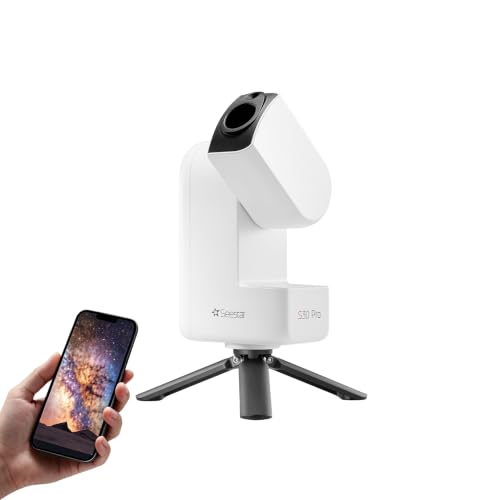
- Automatic GOTO and tracking through a smartphone app
- Built-in filters help with urban light pollution
- One-tap deep-sky capture with AI processing
Best For: Beginners imaging deep-sky targets from home or while traveling
Flexible EAA Pick
SV705C IMX585 Astronomy Camera

- 3856×2180 IMX585 sensor
- Supports planetary, EAA, and entry-level deep-sky imaging
- CS mount with C-CS adapter
Best For: EAA enthusiasts and versatile entry-level imaging
Cooled Deep-Sky Choice
SV605CC IMX533 Astronomy Camera
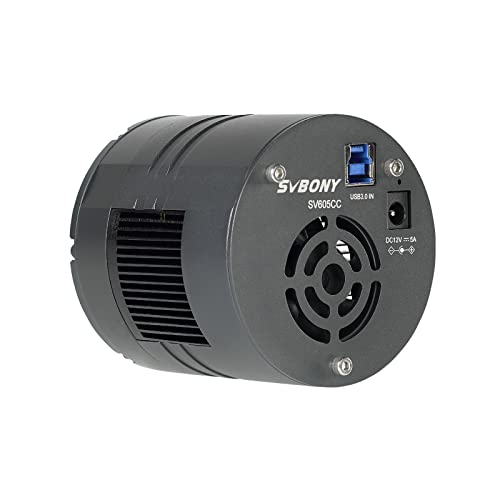
- 9MP square IMX533 color sensor
- Cooling reaches 30°C below ambient
- Designed for deep-sky photography
Best For: Cooled deep-sky imaging and extended sessions
High-Speed Planetary Pick
SV305C Pro IMX662 Astronomy Camera

- 1920×1080 capture at up to 107FPS
- 0.7e− stated readout noise and HDR
- ST4 guiding interface with 128MB buffer
Best For: High-frame-rate planetary imaging and guiding
Best High-Resolution Planetary Detail

- 1.45μm IMX715 sensor for detailed 4K imaging
- USB 3.0 supports up to 45.5 fps at full resolution
- Compatible with SharpCap, AstroDMX Capture, and NINA
Best For: Dedicated planetary imaging setups using a computer
Best for Autoguiding

- 1.23MP color CMOS sensor for guiding and planetary imaging
- 80% peak QE and low read noise help capture faint guide stars
- 1.25-inch body with ST4 interface
Best For: Compact guide-scope and autoguiding systems
Best Beginner-Friendly Option
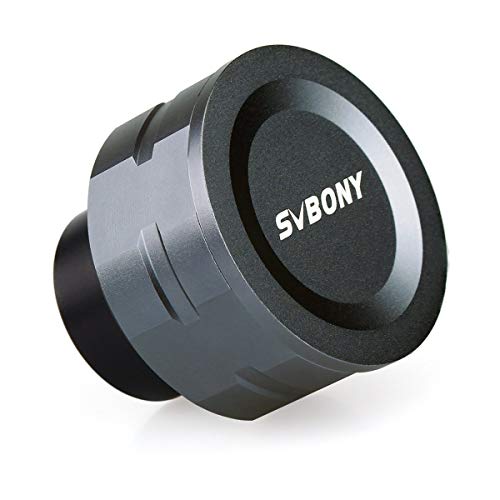
- Plug-and-play camera for straightforward telescope imaging
- 1920x1080 capture at up to 30 frames per second
- 1.25-inch body with M28.5x0.6 filter thread
Best For: Beginners recording lunar and planetary views
High-Resolution Deep-Sky Pick – ZWO ASI183MC Pro
ZWO ASI183MC Pro 20.18 MP CMOS Color Astronomy Camera with USB 3.0 # ASI183MC-P
Check Price On AmazonThe ZWO ASI183MC Pro is a cooled color option for astronomy cameras aimed at detailed deep-sky imaging. Its 20.1MP sensor, small pixels, and TEC cooling suit nebulae, galaxies, supernova remnants, and lunar imaging when paired with a compatible telescope and motorized equatorial mount.
Best For: Experienced astrophotographers who want high-resolution color deep-sky images and low-noise performance.
Pros:
- 20.1MP resolution with 2.4-micron pixels for fine detail.
- TEC cooling reduces sensor temperature by approximately 40–45°C below ambient.
- USB 3.0 transfer reaches up to 19 frames per second at maximum resolution.
- Includes 1.25-inch and 2-inch telescope connection options plus a USB 2.0 accessory hub.
Cons:
- Separate 12V/3A power supply is required for the TEC cooler and is not included.
- Requires a telescope, mount, computer, and imaging software setup.
Choose this model when image resolution and cooled-sensor performance matter more than a simple plug-and-play experience. It is a capable platform for users building a dedicated deep-sky imaging system.
Portable Smart Telescope – DWARFLAB Dwarf 3
The DWARFLAB Dwarf 3 combines astronomy cameras and telescope functions in a lightweight, app-controlled system. Its dual imaging setup supports deep-sky objects, Milky Way scenes, star trails, wildlife, and landscapes, while automatic tracking and cloud-powered processing simplify capture.
Best For: Beginners and travelers who want an easy, portable astrophotography system with automatic tracking.
Pros:
- Portable design weighs about 3 pounds and includes a carrying bag.
- Dual lenses cover telephoto subjects and wide-angle night scenes.
- 4K auto-tracking follows celestial objects and moving subjects.
- Dedicated app provides one-touch processing without requiring a PC.
Cons:
- Its app-based workflow offers less manual control than a conventional cooled astronomy camera.
- Battery operation requires the included lithium-ion battery to be charged for field use.
The Dwarf 3 is a practical all-in-one choice for quick results and easy transport. It makes a stronger fit for convenience-focused imaging than for users assembling a specialized telescope-camera rig.
Planetary Imaging Choice – Celestron NexImage 20
The Celestron NexImage 20 is a plug-and-play color camera designed primarily for lunar, planetary, and solar imaging through a telescope. Its 20MP back-illuminated CMOS sensor, region-of-interest capture, and included iCap software make it well suited to recording and stacking high-resolution Solar System video.
Best For: Telescope owners focused on the Moon, planets, and filtered solar imaging.
Pros:
- 20MP AR2020 BSI CMOS sensor with 1.4-micron pixels.
- Region-of-interest cropping can increase frame rate and speed stacking.
- USB-C connectivity includes a USB-A to USB-C cable and requires no extra power supply.
- Can also serve as an autoguider with a compatible guidescope.
Cons:
- Manual focus and exposure controls require hands-on setup.
- Solar imaging requires an appropriate solar filter.
- It is specialized for telescope-based imaging rather than a standalone smart-telescope experience.
This is a focused option among astronomy cameras for capturing detailed Solar System targets. The ROI feature is especially useful for planetary work, where smaller cropped regions can support faster capture and stacking.
Urban-Friendly Smart Scope – ZWO Seestar S30 Pro
The ZWO Seestar S30 Pro is an app-controlled smart telescope for users who want astronomy cameras with automatic targeting, tracking, and processing. Its apochromatic optics, built-in light-pollution filters, dual-camera imaging, and one-tap modes are designed for deep-sky and wide-field imaging, including use from brighter urban locations.
Best For: Beginners and casual imagers seeking automated deep-sky and wide-field results with a compact setup.
Pros:
- Automatic GOTO targeting and tracking simplify celestial imaging.
- Built-in light-pollution filters and apochromatic optics support clearer urban-sky images.
- Dual cameras provide deep-sky and wide night-scene imaging options.
- One-tap capture, AI noise reduction, and automatic mosaic stitching reduce processing work.
Cons:
- It is designed for deep-sky and wide-field imaging, not planetary observation.
- Deep-sky imaging requires keeping the device stationary for stable tracking.
- App-based automation provides less traditional manual control than a standalone astronomy camera.
The Seestar S30 Pro is a convenient choice for accessible deep-sky photography without a complex telescope-and-camera configuration. Its compact battery-powered design also suits camping, travel, and casual backyard use.
Flexible EAA Pick – SV705C IMX585 Astronomy Camera
The SVBONY SV705C is a versatile choice among astronomy cameras, combining a high-resolution IMX585 sensor with USB 3.0 connectivity. It is designed for planetary imaging, EAA, lucky imaging, and entry-level deep-sky work, making it a practical option for users who want more than a dedicated planetary camera.
Best For: EAA enthusiasts, planetary imaging, lucky imaging, and entry-level deep-sky capture.
Pros:
- IMX585 sensor delivers 3856×2180 resolution and a peak quantum efficiency of about 90%.
- High near-infrared sensitivity and dual-gain HCG help capture detail while reducing read noise.
- CS mount and included C-CS adapter support C-mount and CS-mount lenses.
Cons:
- Its 1.25- to 2-inch form factor may require checking compatibility with your telescope setup.
- The notes position it as an entry-level deep-sky camera rather than a specialized cooled model.
Choose the SV705C if flexibility is your priority. Its sensor and mounting options support several imaging styles, although dedicated deep-sky users may want the cooling offered by a more specialized camera.
Cooled Deep-Sky Choice – SV605CC IMX533 Astronomy Camera
The SVBONY SV605CC is one of the more specialized astronomy cameras in this lineup, pairing a 9MP square IMX533 color sensor with two-stage semiconductor cooling. It is aimed at deep-sky photography and can also serve panoramic astronomy, meteor monitoring, and lucky-imaging applications.
Best For: Deep-sky photographers who want a cooled color camera for longer imaging sessions.
Pros:
- TEC cooling can reduce the camera temperature to 30°C below ambient.
- Square 3008×3008 IMX533 sensor offers an 80% quantum efficiency rating.
- Glow suppression helps protect signal-to-noise performance in affected image areas.
Cons:
- At 1.6 kg, it is notably heavier than a basic planetary camera.
- Cooling and deep-sky features make it a more specialized choice for casual planetary use.
- The supplied specifications list manual focus and USB connectivity, so a computer-based setup may be needed.
The SV605CC stands out when thermal control and cleaner deep-sky data matter. Its square sensor and cooling system are particularly appealing for dedicated astrophotography workflows, but the added size and weight should be considered.
High-Speed Planetary Pick – SV305C Pro IMX662 Astronomy Camera
The SVBONY SV305C Pro is a focused planetary option among astronomy cameras, using an IMX662 sensor to record 1920×1080 video at up to 107 frames per second. Its low readout noise, HDR support, and 128MB buffer are useful for recording fast-moving targets such as Jupiter and Saturn.
Best For: Planetary imagers who prioritize high frame rates, low noise, and guiding compatibility.
Pros:
- 107FPS capture at 1920×1080 helps freeze detail on rapidly changing planetary targets.
- Very low stated readout noise of 0.7e− supports cleaner low-light images.
- ST4 guiding interface works with popular PHD2 and ASCOM software, while the 128MB DDR buffer supports continuous capture.
Cons:
- It does not support connection to an iPad and requires a computer, though MacBook compatibility is noted.
- The 2MP resolution and planetary-focused design are less suited to broad deep-sky imaging.
- It is not water resistant.
For fast planetary video, the SV305C Pro offers a strong feature set in a compact USB 3.0 camera. Its guiding interface broadens its usefulness, but buyers seeking cooled deep-sky imaging or tablet connectivity should consider other options.
Best High-Resolution Planetary Detail – SVBONY SC715C
For shoppers comparing astronomy cameras for detailed planetary imaging, the SVBONY SC715C stands out with its 1.45μm IMX715 color sensor and 4K-resolution capability. USB 3.0 connectivity, a 512MB DDR3 cache, and support for popular capture software make it suited to high-resolution video work.
Best For: Planetary astrophotographers who want detailed color images and video with advanced software support.
Pros:
- 1.45μm IMX715 sensor supports detailed 4K planetary imaging.
- USB 3.0 transfer reaches up to 45.5 frames per second at full resolution.
- Works with SharpCap, AstroDMX Capture, and NINA.
- Includes an ST4 autoguider interface and lightweight aluminum body.
Cons:
- Not compatible with smartphones.
- Requires dedicated download software.
- Has no built-in focus adjustment; focusing depends on the telescope focuser.
The SC715C is a strong choice when image detail and smooth high-resolution capture matter most. Its software requirements and telescope-dependent focusing make it better suited to a dedicated computer-based setup than casual phone viewing.
Best for Autoguiding – SVBONY SV905C
The SVBONY SV905C is a practical astronomy camera for autoguiding and basic planetary imaging. Its 1.23MP color CMOS sensor, small pixels, high peak quantum efficiency, and low read noise are designed to help capture faint guide stars.
Best For: Telescope users building a compact autoguiding or guide-scope setup.
Pros:
- 1/3-inch 1280×960 color CMOS sensor with 3.75-micron pixels.
- High peak QE of 80% and low read noise support guide-star detection.
- 1.25-inch form factor fits guide lenses and off-axis guider setups.
- Supports PHD2, MDL, NINA, SKY-X, and other guiding software.
Cons:
- Uses USB 2.0 rather than a higher-speed USB interface.
- Not compatible with ASI AIR.
- Latest driver software must be downloaded.
With its compact 1.25-inch design and ST4 guide interface, the SV905C is focused on guiding rather than high-resolution deep-sky imaging. Check software compatibility carefully, especially if your setup relies on ASI AIR.
Best Beginner-Friendly Option – SVBONY SV105
For beginners exploring astronomy cameras, the SVBONY SV105 offers a straightforward way to record lunar, planetary, and terrestrial views through a telescope. Its 1.25-inch format, plug-and-play design, and 1920×1080 capture make it an accessible starting point for computer-based observing and imaging.
Best For: Beginners who want simple lunar and planetary video capture from a laptop or PC.
Pros:
- Plug-and-play design requires no driver installation.
- IMX307 color sensor records up to 30 frames per second at 1920×1080.
- Standard 1.25-inch format includes an M28.5×0.6 filter thread.
- Supports SharpCap, AstroDMx Capture, and USB Camera across listed systems.
Cons:
- Designed primarily for lunar, planetary, and terrestrial targets.
- USB 2.0 limits transfer speed compared with newer interfaces.
- Works with Apple laptops running macOS but not iPhones or iPads.
The SV105 is a sensible entry-level pick for users who want to see and record telescope views without a complicated workflow. It is best viewed as a beginner planetary camera rather than a specialized deep-sky imaging solution.
How We Picked These Astronomy Cameras
We selected these Astronomy Cameras to represent the main ways beginners and experienced observers capture the night sky. The lineup includes high-speed planetary imagers, cooled deep-sky cameras, compact guide cameras, and smart telescopes with built-in imaging systems. We considered sensor size and type, pixel size, cooling, connection speed, software or app support, telescope compatibility, and the kind of targets each model is best suited to capture.
Because no single camera is ideal for every setup, the recommendations emphasize practical use rather than headline megapixel counts alone. A camera designed for lunar and planetary video has different priorities from a cooled model intended for long-exposure nebula photography.
Quick Comparison
| Best For | Recommended Type | What to Prioritize |
|---|---|---|
| Moon and planets | Fast planetary camera | High frame rate, low read noise, and suitable pixel size |
| Deep-sky imaging | Cooled color camera | Cooling, sensor area, low noise, and software support |
| Automatic astrophotography | Smart telescope | App controls, tracking, portability, and automated stacking |
| Autoguiding | Guide camera | Sensitivity, compatibility, and reliable USB connectivity |
| First telescope camera | Entry-level USB camera | Ease of use, driver support, and overall value |
Key Buying Factors for Astronomy Cameras
Sensor and Pixel Size
Sensor size affects field of view, while pixel size influences sampling and sensitivity. Smaller sensors can work well for planets, especially with long focal-length telescopes, but a larger sensor is generally more flexible for framing extended deep-sky objects.
Cooling and Exposure Control
Active cooling helps reduce thermal noise during long exposures and makes calibration more consistent. It is most valuable for serious deep-sky imaging, but it adds cost, power requirements, and setup complexity. Planetary cameras typically benefit more from fast frame rates than from cooling.
Color, Monochrome, and Connectivity
Color cameras are convenient for one-shot color imaging and simpler processing. Monochrome systems can offer greater flexibility with filters but require more equipment and processing time. USB 3.0 is useful when recording high-frame-rate planetary video, while dependable drivers and broad software compatibility are essential for any camera.
Mount and Telescope Compatibility
Check the camera’s nosepiece or thread size, back focus, weight, and power needs before buying. Also confirm that your mount can track accurately enough for the exposures you plan to make. A capable camera cannot compensate for poor alignment, insufficient tracking, or an unsuitable focal length.
Who Should Buy Which Astronomy Cameras?
Choose a fast planetary model if your priority is sharp lunar and planetary video. Beginners who want a straightforward, portable experience may prefer a smart telescope with integrated tracking and app-based controls. For nebulae and galaxies, a cooled color camera is the stronger long-term choice, particularly when paired with a stable equatorial mount and image-stacking software.
A guide camera is best for users adding autoguiding to an existing imaging setup, while an affordable USB eyepiece camera makes sense for casual lunar viewing, basic planetary experiments, or learning capture software. Before ordering, compare the camera’s sensor size with your telescope’s focal length and verify current driver, app, and operating-system support.