If you’re preserving family memories, the right film scanner can save time and help keep your images organized for years. The best models make it easier to turn slides, negatives, and older film formats into usable digital files.
Below, we’ve narrowed the field to 10 strong options for different needs, from simple one-touch scanners to higher-end tools for serious archiving.
Best 10 Film Scanners for Archiving Picks for 2026
Compact Home Archiving
Kodak Slide N Scan Film & Slide Scanner

- 22MP scanner with 5" LCD preview
- Handles 135, 110, 126 film and 50mm slides
- Saves to SD card and works standalone
Best For: Families and casual archivers who want simple, computer-free scanning
Pro 35mm Digitizing
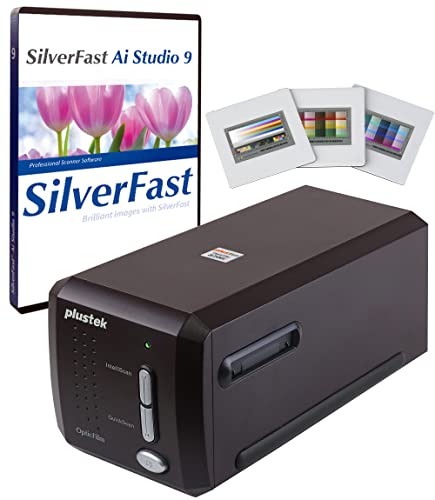
- 7200-resolution CCD scanner for 35mm slides
- Includes SilverFast 9 Ai Studio and Quick Scan Plus
- Comes with IT8 calibration target
Best For: Serious 35mm slide archiving with advanced software control
All-In-One Family Archive
Photo, Slide & Negative Scanner with 5" Screen

- Scans slides, negatives, photos, and business cards
- Standalone operation with 5" viewing screen
- Includes 8GB SD card and accessory bundle
Best For: Mixed home archives that need broad format support
Fast Standalone Archiving
Magnasonic FS71 24MP Film Scanner

- 24MP scans for film and slide archiving
- Supports 35mm, 110, 126, and Super 8 formats
- Scans quickly with no computer required
Best For: Fast, no-computer digitizing of mixed film collections
Editor Pick

- Handles 135mm, 110mm, 126, slides, and negatives
- Saves scans directly to SD/SDHC cards
- One-touch editing and up to 4208 x 3120 output
Best For: Users who want easy, computer-free archiving of mixed film formats
Budget-Friendly Pick
DigitPro 22MP 5-inch Film Scanner

- Supports 35mm/135, 110, 126, slides, and Super 8
- 5-inch LCD with one-touch scanning
- HDMI and USB output with included accessory kit
Best For: Beginners archiving mixed film formats with a simple all-in-one scanner
Premium Display Pick

- 7-inch touch LCD for preview and editing
- 13MP CMOS sensor for negatives and slides
- Quick-feed tray supports faster 135, 126, and 110 scanning
Best For: Users who want a large touch display and easy on-device editing
Portable Slide Digitizer
TCNEWCL 35mm Negative Slide Scanner

- Uses a smartphone for quick 35mm scanning
- Foldable body is compact for storage and travel
- Free app helps capture, edit, and share
Best For: Simple at-home archiving of 35mm slides and negatives
All-in-One Film Scanner
KODAK SCANZA Film & Slide Scanner
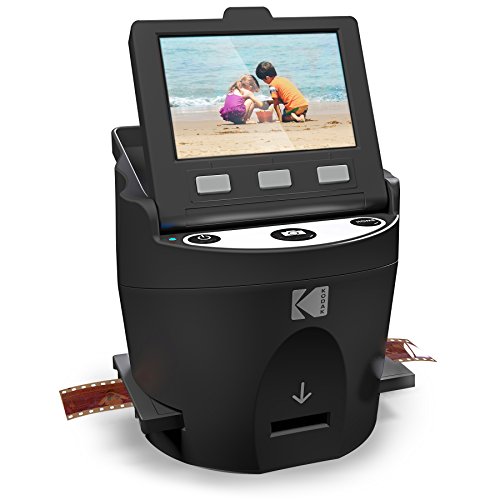
- Scans 35mm, 126, 110, Super 8, and 8mm
- Built-in 3.5-inch LCD for previewing scans
- Includes adapters, cables, and cleaning brush
Best For: Mixed-format home archiving with a self-contained scanner
Touchscreen Film Digitizer
ClearScan T7 7-inch Film Scanner

- 7-inch touch screen makes scanning easier
- Supports 35mm, 135, 126, 110, and Super 8
- Includes 16GB SD card; no computer needed
Best For: Beginners who want simple touchscreen archiving at home
Compact Home Archiving – Kodak Slide N Scan Film & Slide Scanner
If you want a straightforward option among film scanners for archiving, this KODAK model is built for quick at-home conversion of old slides and negatives. It handles 135, 110, and 126 film formats plus 50mm slides, saves directly to an SD card, and uses a 5-inch LCD so you can preview and edit without relying on a computer.
Best For: Families and casual users who want an easy standalone scanner for preserving mixed slide and negative collections.
Pros:
- 22MP output with a 5-inch LCD for previewing and editing on the device
- Supports 135, 110, and 126 negatives plus 50mm slides
- Standalone operation with SD card saving and simple one-touch scanning
- Includes film holders, adapters, cleaning brush, USB, and HDMI cables
Cons:
- SD card is not included
- Top supported card size is 32GB
- Minimum system support listed is Windows 7
Overall, this is a practical pick if your priority is convenience over pro-level control. It fits well for archiving family memories quickly and keeping the workflow simple.
Pro 35mm Digitizing – Plustek OpticFilm 8300i Ai
For dedicated film scanners for archiving, the Plustek OpticFilm 8300i Ai is aimed at users who want more control and higher-end scanning features. It focuses on 35mm slide work, offers 7200 resolution, and includes SilverFast 9 Ai Studio plus Plustek Quick Scan Plus for more advanced digitizing and color handling.
Best For: Serious 35mm slide archivists who want advanced software and calibration tools.
Pros:
- 7200 resolution with a CCD sensor for detailed 35mm scans
- Includes SilverFast 9 Ai Studio and Quick Scan Plus software
- Bundled IT8 target supports scanner color calibration
- Supports Windows and Mac OS, with USB drive included for setup
Cons:
- Designed specifically for 35mm slide media
- Software and calibration features may be more than casual users need
- No built-in screen for standalone scanning
This model makes the most sense if quality control and software tools matter more than speed or simplicity. It is the most specialized option here for focused 35mm archiving work.
All-In-One Family Archive – Photo, Slide & Negative Scanner with 5" Screen
This all-in-one model is a flexible choice if you want film scanners for archiving across more than one media type. It converts 35mm slides, 135 and 110 negatives, printed photos, and business cards into JPEGs, while the built-in 5-inch HD screen lets you preview and edit directly on the device.
Best For: Users who want one scanner to handle slides, negatives, and printed photos in a simple offline workflow.
Pros:
- Supports slides, film negatives, printed photos, and business cards
- 5-inch HD screen with wide viewing angles for previewing and editing
- Standalone operation with one-touch controls and no software setup
- Includes 8GB SD card, holders, trays, cleaning brush, power adapter, and USB cable
Cons:
- Resolution is listed as 1080P rather than a higher megapixel count
- SD card capacity is limited to the included 8GB card in the bundle notes
- It is a general-purpose scanner, not a specialist film-only machine
If you need broad format support and want to get scanning right out of the box, this is a convenient pick. It is especially useful for digitizing mixed family archives without extra setup.
Fast Standalone Archiving – Magnasonic FS71 24MP Film Scanner
Among film scanners for archiving, the Magnasonic FS71 is built for fast, simple conversion without needing a computer. It scans 35mm, 110, 126, and Super 8 film negatives as well as 135, 126, and 110 slides, then saves files as 24MP JPEGs for easy storage and sharing.
Best For: Users who want quick standalone scanning with broad film and slide compatibility.
Pros:
- 24MP output with support for multiple film and slide formats
- 5-inch LCD for on-device viewing, plus HDMI output for a larger display
- No computer needed for brightness and color adjustments
- Fast-loading trays let you scan images in under 5 seconds each
Cons:
- SD card is not included
- Maximum expandable memory is 128GB
- Minimum system requirement is Windows 7 for USB transfer use
This is a strong fit if speed and ease matter more than advanced editing tools. Its broad format support makes it a practical home archiving tool for mixed collections.
Editor Pick – KODAK Slide N Scan Max
If you want film scanners for archiving that keep the process simple, the KODAK Slide N Scan Max is built for fast, straightforward digitization. It handles 135mm, 110mm, and 126 film plus slides and both color and black-and-white negatives, while saving directly to SD/SDHC cards so you can work without a computer.
Best For: Home users who want a convenient, computer-free way to archive mixed film formats.
Pros:
- Supports 135mm, 110mm, 126, slides, and color or black-and-white negatives.
- Saves directly to SD/SDHC cards up to 32GB for a portable workflow.
- One-touch editing keeps resizing and conversion simple.
- 13MP CMOS sensor captures up to 4208 x 3120 resolution with 22MP interpolation.
Cons:
- Limited to SD/SDHC cards up to 32GB.
- Requires Windows 7 minimum system support if you use the connected workflow.
This is a practical archival scanner if you value ease of use and broad compatibility over advanced controls. It is especially appealing for people digitizing older family collections in a simple, self-contained setup.
Budget-Friendly Pick – DigitPro 22MP 5-inch Film Scanner
For film scanners for archiving on a simpler budget, this DigitPro model focuses on quick conversion and easy viewing. It supports 35mm/135, 110, 126 negatives, 50mm slides, and Super 8 film, while the 5-inch LCD helps you preview and playback scans right on the device.
Best For: Users who want an easy, all-in-one scanner for mixed home film collections.
Pros:
- Supports 35mm/135, 110, 126 negatives, 50mm slides, and Super 8 film.
- 5-inch LCD offers instant preview and playback.
- One-touch scanning keeps the workflow simple for beginners.
- Includes HDMI and USB output for TV viewing or PC transfer.
Cons:
- Built-in memory is only 128MB, so external storage is more practical.
- External SD card is required and is not included.
This scanner is a good fit when convenience matters more than a complex feature set. The included accessory kit and direct display options make it especially useful for family scanning sessions and quick archiving jobs.
Premium Display Pick – HP FilmScan 7-inch Touch LCD
If you prefer film scanners for archiving with a larger built-in display, the HP FilmScan puts a 7-inch touch LCD front and center. It uses a 13MP CMOS sensor for negatives and slides, supports rapid batch scanning with a quick-feed tray, and lets you edit scans directly on the device.
Best For: Users who want a touch-screen scanner that makes previewing and editing easy on the device.
Pros:
- 7-inch color touch display makes previewing and editing straightforward.
- 13MP CMOS sensor captures color and black-and-white negatives.
- Quick-feed tray and 50mm adapter help speed up 135, 126, and 110 scanning.
- USB and HDMI connectivity support PC transfer or TV display.
Cons:
- Resolution is listed at 1200 dpi, which may be less appealing for users seeking the highest spec sheet numbers.
- Best suited to the formats specifically supported by the included tray and adapter.
This is a strong choice if you want a more interactive archiving workflow and easy on-device control. It is especially useful for people digitizing family negatives and slides who want a larger screen for reviewing results before saving.
Portable Slide Digitizer – TCNEWCL 35mm Negative Slide Scanner
If you want a simple option in film scanners for archiving, this TCNEWCL model turns 35mm slides and negatives into digital images using only your smartphone. The foldable body keeps it compact, and the built-in LED backlight plus free app workflow make it approachable for quick home digitizing.
Best For: Casual archiving at home when you want a low-cost, smartphone-based way to digitize 35mm slides and negatives.
Pros:
- Works with 35mm slides and film negatives.
- Foldable design saves space and is easy to travel with.
- Uses your smartphone, so setup stays simple.
- Free app support for capturing, editing, rotating, and filtering images.
Cons:
- Image quality depends on your phone camera resolution.
- Limited to 35mm slides and negatives.
Overall, this is a straightforward pick for anyone who wants an affordable, no-computer path to preserve old film. It is best suited to light-duty archiving rather than maximum scan quality.
All-in-One Film Scanner – KODAK SCANZA Film & Slide Scanner
For buyers comparing film scanners for archiving, the KODAK SCANZA stands out because it handles multiple film formats and scans directly to JPEG in seconds. Its built-in 3.5″ LCD, included adapters, and one-touch controls make it a practical desktop choice for converting older negatives and slides without a complicated workflow.
Best For: Users who need a versatile scanner for 35mm, 126, 110, Super 8, and 8mm film formats.
Pros:
- Supports 35mm, 126, 110, Super 8, and 8mm film and slides.
- Built-in 3.5″ LCD makes previewing and viewing easy.
- Includes multiple film inserts, adapters, and a cleaning brush.
- Can edit RGB and resolution and saves to SD card.
Cons:
- SD card is not included.
- Not compatible with film types outside the listed formats.
- Requires a computer setup for some workflows and has a Windows 7 minimum system requirement.
This is a strong pick if you want broader format support and a more self-contained scanning experience. It is especially appealing for households with mixed film archives to sort through.
Touchscreen Film Digitizer – ClearScan T7 7-inch Film Scanner
The ClearScan T7 is a good fit for film scanners for archiving if you want a larger screen and a more guided experience. Its 7-inch touch interface makes previewing, adjusting, scanning, and saving easier, and the included SD card means you can digitize film without setting up a computer.
Best For: Beginners, parents, and grandparents who want an easy touchscreen scanner for preserving family film.
Pros:
- Large 7-inch touch screen simplifies operation.
- Scans 35mm, 135, 126, 110, and Super 8 film.
- 24MP output creates digital JPEG photos for archiving.
- Includes a 16GB SD card and works without a computer.
Cons:
- Scan quality can vary with the age and condition of the original film.
- Bulkier than small portable scanners.
If ease of use matters more than a tiny footprint, this model offers a very friendly path into home digitizing. The touchscreen design is especially helpful for anyone who wants to avoid button-heavy menus.
How We Picked the Best Film Scanners for Archiving
We focused on Film Scanners for Archiving that balance scan quality, format compatibility, workflow speed, and ease of use. Priority went to models that can handle common home-archiving formats like 35mm negatives and slides, while also offering enough resolution and color control for preservation work.
We also considered display size, file transfer options, included software or calibration features, and how practical each scanner is for scanning larger batches of old media.
Quick Comparison: What Matters Most
If you want the fastest setup, look for large-screen all-in-one scanners with built-in preview and simple controls. If quality and color accuracy matter more, dedicated desktop scanners with software support and calibration tools are usually the better choice. For casual digitizing, compact portable units can be enough, but they may trade off fine detail and editing flexibility.
Key Buying Factors for Film Scanners for Archiving
Supported Film Formats
Check whether the scanner handles the formats in your collection. Many buyers need 35mm first, but older archives may include 110, 126, 127, Super 8, or 8mm film. The wider the support, the fewer workarounds you’ll need.
Resolution and Real Detail
Higher megapixel numbers can help, but they do not guarantee better scans. For archiving, look for scanners that produce sharp, clean files with good dynamic range and minimal color loss.
Ease of Use and Batch Workflow
If you have hundreds of images, speed matters. Features like tray loading, automatic exposure, built-in screen previews, and direct save options can make a big difference during long scanning sessions.
Software and Color Correction
Useful software can improve dust handling, color restoration, and cropping. Some scanners are better suited for users who want more manual control, while others are designed for simple one-button digitizing.
File Output and Connectivity
Consider whether you need SD card storage, USB transfer, HDMI preview, or direct computer support. For long-term archiving, flexible output options make it easier to organize, edit, and back up files properly.
Who Should Buy Which Film Scanners for Archiving?
Casual users restoring a small family collection may prefer a simple all-in-one scanner with a built-in display. Hobbyists who want better control and more consistent results may be happier with a dedicated film scanner and software bundle. If you are digitizing a large archive, choose a model that prioritizes speed, dependable feeding, and format coverage over extras.
For most buyers, the best choice is the scanner that matches both your film formats and your patience level. The right tool will make archiving easier, faster, and much more consistent.