Folding play kitchens give children a dedicated space for pretend cooking without permanently taking over the playroom. The best options combine easy storage with engaging accessories, realistic sounds or lights, and sturdy construction.
Our roundup compares 10 portable and foldable kitchen playsets, from suitcase-style designs for travel to larger interactive models with sinks, cookware, play food, and electronic features.
Best 10 Folding Play Kitchens Picks for 2026
Best Portable Pick
Travel Kitchen Suitcase Playset

- Converts from play kitchen to suitcase
- Includes 25+ accessories
- Smooth, rounded ABS construction
Best For: Traveling toddlers and portable pretend play
Best Wooden Option

- Natural wood construction
- Folds for travel and storage
- Includes cookware and utensils
Best For: Portable wooden pretend cooking
Best Space-Saving Design
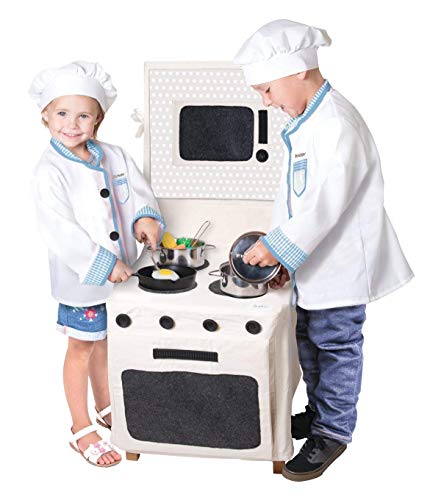
- Fits over a standard household chair
- Lightweight and portable
- Supports communication and counting skills
Best For: Small spaces and play on the go
Best Interactive Station

- Lights-and-sounds burner
- 25 included accessories
- Durable double-walled plastic
Best For: Interactive toddler and preschool play
Best for Easy Setup

- Folds with a built-in handle
- Includes food, cookware, and serving pieces
- Supports imaginative and fine-motor play
Best For: Portable indoor and outdoor pretend cooking
Best for Everyday Use

- Features lights and bubbling cooking sounds
- Includes a circulating-water sink feature
- Comes with 52 accessories and storage
Best For: Seated sensory play in a playroom corner
Best Convertible Design
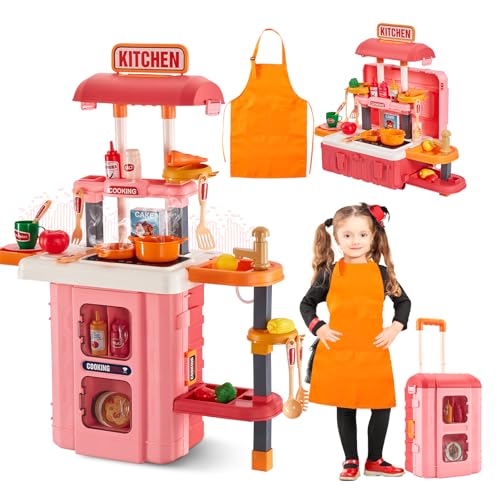
- Converts to a table, desktop set, or suitcase
- Adds lights, sounds, and flowing-water play
- Includes 50 accessories
Best For: Flexible play across floors, tables, and rooms
Most Immersive

- Electronic stovetop has lights and cooking sounds
- Steam and recirculating sink add realistic play
- Includes food, utensils, storage, oven, and refrigerator
Best For: Children who want interactive, feature-rich pretend cooking
Best Portable Value

- Case converts into a cooking table
- Includes 24 accessories
- Battery-free and easy to carry
Best For: Travel, small spaces, and simple pretend cooking
Best for Organized Play

- Folds into a case for storage and transport
- Includes stove, sink, food, and cookware
- Tool-free assembly with smooth ABS construction
Best For: Preschoolers who need portable, tidy pretend play
Best Portable Pick – Travel Kitchen Suitcase Playset
For families seeking folding play kitchens that travel easily, this 2-in-1 set combines a pretend kitchen with a suitcase-style storage box. It includes more than 25 accessories and is designed for children ages 3 and up.
Best For: Traveling toddlers and families who want portable pretend-play storage.
Pros:
- Converts between a play kitchen table and a suitcase.
- Includes more than 25 cooking, dish, utensil, and play-food accessories.
- ABS construction with smooth, rounded edges and non-toxic materials.
- Accessories can encourage cleanup and organization habits.
Cons:
- Plastic construction may be less substantial than a wooden play kitchen.
- Recommended for ages 3 and up, so it may not suit younger toddlers.
This is a practical choice when portability matters most. Its suitcase format makes it easier to bring pretend play to different locations while keeping the included accessories together.
Best Wooden Option – Foldable Portable Toy Stove
Dailyfunn Wooden Foldable &Portable Toy Stove Pretrend Kitchen PlaySet with Cooking Accessories
Check Price On AmazonThis wooden foldable stove is a compact option for shoppers comparing folding play kitchens. Its child-size design folds for transport and storage, while the included cookware supports hands-on pretend cooking.
Best For: Families who prefer a portable wooden stove for imaginative role-play.
Pros:
- Foldable design is suitable for camping, picnics, and easy storage.
- Made from natural wood with BPA-free, non-toxic paint.
- Includes a pot, pan, lid, utensils, spice jar, poached egg, and spatula.
- Supports creative thinking, imagination, and role-play.
Cons:
- Provides a stove-focused setup rather than a full kitchen layout.
- At 12 by 3.6 by 12 inches, the compact format may offer less play surface.
Choose this model if a wood construction and simple, packable design are higher priorities than electronic features or a large accessory collection. Its folding format makes post-play storage straightforward.
Best Space-Saving Design – PopOhVer Chair-Top Stove Set
Among folding play kitchens, the PopOhVer Stove Set stands out for using a standard household chair as its play surface. The soft canvas set unfolds over the chair, making it lightweight and easy to take to sleepovers, playdates, parties, or grandparents’ homes.
Best For: Families with limited space who already have a suitable chair available.
Pros:
- Quick setup over a standard household chair with stabilization inserts and ties.
- Lightweight, portable soft construction.
- Encourages storytelling, communication, counting, and hand-eye coordination.
- Works well for travel, sleepovers, playdates, and parties.
Cons:
- Chair is not included.
- Plush food and deluxe pots and pans are sold separately.
- Offers a stove setup rather than a freestanding kitchen.
This is a clever alternative to a traditional play kitchen when floor space is limited. It packs easily, but shoppers should confirm they have a compatible chair and budget for any optional accessories.
Best Interactive Station – Step2 Best Chefs Kitchen
Although larger than many folding play kitchens, the Step2 Best Chefs Kitchen offers a compact-depth design with interactive features for children ages 2 to 5. Working doors, a pass-through window, and a light-and-sound burner create a more immersive pretend kitchen.
Best For: Toddlers and preschoolers who want interactive features and shared play space.
Pros:
- Includes lights and sounds, working oven and refrigerator doors, and a pass-through window.
- Comes with 25 play kitchen accessories.
- Durable double-walled plastic with molded-in colors that resist chipping, fading, cracking, and peeling.
- Hooks, shelves, and a recycling bin help organize accessories.
Cons:
- Its 34.4-inch width makes it less portable than suitcase or chair-top designs.
- Requires more dedicated floor space than compact folding sets.
- Interactive lights and sounds require consideration when choosing a quieter play area.
This model is best viewed as a durable, feature-rich play station rather than a highly portable folding kitchen. It makes sense for homes that can accommodate its wider footprint and want accessories plus interactive play.
Best for Easy Setup – 45-Piece Folding Kitchen Set
If portability is your priority, this folding play kitchen packs a broad pretend-cooking setup into a compact, carry-friendly design. It folds down with a built-in handle and includes food, cookware, utensils, plates, a sink, and a basket for indoor or outdoor role-play.
Best For: Families, classrooms, and caregivers who need a portable kitchen toy for children ages 3 and up.
Pros:
- Folds into a compact size with a built-in carrying handle.
- Includes 45 pieces for cooking, serving, and grocery-style play.
- Supports imaginative role-play, food recognition, teamwork, and fine-motor practice.
- Made with smooth, non-sharp parts for play.
Cons:
- Its compact folded format may offer less workspace than a full-size play kitchen.
- The supplied details list different dimensions for the item and set size, so verify the fit before buying.
This is a practical choice when easy storage and transport matter more than a large stationary setup. The generous accessory selection also helps children create varied cooking and serving scenarios.
Best for Everyday Use – Sound-and-Light Kids Kitchen
This folding play kitchens option is designed as a more traditional workstation, with a light-up stove, bubbling cooking sounds, pretend running water, an oven, refrigerator, shelves, and hooks. Its storage bag helps keep the 52 accessories organized when play is finished.
Best For: Children ages 3 to 5 who enjoy sensory features and seated chef role-play in a dedicated playroom corner.
Pros:
- Combines stove lights, cooking sounds, a sink feature, oven knobs, and refrigerator storage.
- Water-circulation system lets children pretend to wash food and utensils.
- Includes 52 accessories plus a storage bag.
- Shelves and hooks provide places to organize pretend cookware and food.
Cons:
- The manufacturer notes that the kitchen is lower than a child and intended for seated floor play.
- It is less travel-oriented than suitcase-style folding play kitchens.
- Assembly is required.
Choose this model if interactive sounds, lights, and water-play elements are more important than maximum portability. Its storage features make it easier to keep a compact play area tidy.
Best Convertible Design – 3-in-1 Travel Kitchen
For families comparing folding play kitchens, this 3-in-1 model stands out for its convertible format. It can function as a standing kitchen table, desktop playset, or suitcase, while realistic cooking sounds, lights, flowing-water play, and 50 accessories add variety.
Best For: Children ages 2 to 6 who need multiple play positions and a kitchen that can be moved around the home.
Pros:
- Converts between a standing table, desktop kitchen, and suitcase.
- Includes cooking sounds, burner lights, a sink and faucet, and a flowing-water feature.
- Comes with 50 accessories, including pretend utensils, food-related items, and an apron.
- Uses rounded edges and is described as CPC Safety Test Approved.
Cons:
- The manufacturer-recommended age in the details is listed as 36 months to 8 years, while the product title says ages 2 to 6; check the current packaging and guidance.
- At 23 inches wide and 28 inches high, it may need more storage space than a small folding set.
- It uses batteries or interactive components for its lights and sounds, which may require maintenance.
This is the most versatile option of the three for households that want one toy to work on the floor, a table, or while being transported. Its multiple configurations can extend play across different spaces and routines.
Most Immersive – Electronic Steam Play Kitchen
For shoppers comparing folding play kitchens, this full-featured set stands out for its realistic electronic stovetop, steam effect, circulating-water sink, and broad collection of food and kitchen accessories. Its 31.5-inch height and 22-inch width make it a more substantial option for indoor pretend play.
Best For: Toddlers and children who want an immersive kitchen setup with interactive cooking and washing features.
Pros:
- Electronic stovetop provides lights and cooking sounds.
- Steam effect adds realism when water is added as directed.
- Sink includes a water-circulation system for pretend washing.
- Includes storage, play food, utensils, refrigerator, oven, clock, and chalkboard.
Cons:
- It is larger than suitcase-style folding kitchens and may need dedicated floor space.
- Electronic and water-play features require batteries or setup and supervision as appropriate.
This is the strongest choice for children who value realistic features over maximum portability. The larger footprint brings more immersive play, while the storage areas help keep the included accessories organized.
Best Portable Value – Rolling Carry-On Kitchen Set
This portable option brings the convenience shoppers often want from folding play kitchens: the carrying case stores the accessories and transforms into a cooking table. With 24 pieces, it offers a compact way for children ages 3 and up to take pretend cooking from room to room.
Best For: Families seeking a portable, battery-free kitchen toy with built-in storage.
Pros:
- 2-in-1 case works as storage and converts into a cooking table.
- Includes 24 cooking accessories for varied pretend-play scenarios.
- Portable design supports play at home or while traveling.
- Rounded, child-size ABS plastic pieces are described as durable and kid-friendly.
Cons:
- It does not include electronic lights, sounds, or water features.
- The compact child-size format provides less kitchen workspace than a full standing playset.
If portability and easy cleanup matter most, this rolling case design is a practical pick. It trades interactive features and workspace for convenient transport, storage, and battery-free play.
Best for Organized Play – Portable Suitcase Kitchen
Among folding play kitchens, this suitcase-style set is designed for quick transitions between play and cleanup. Open it to create a mini kitchen with a stove and sink; close it to store the accessories for indoor or outdoor use. It is recommended for children ages 3 and up.
Best For: Preschoolers who need a portable pretend kitchen that encourages organization and imaginative role play.
Pros:
- Folds into a portable case that holds the included accessories.
- Open format supports pretend cooking, washing, chopping, and stirring.
- Includes stove, sink, pots, pans, utensils, play food, and desserts.
- Tool-free assembly and smooth ABS construction simplify setup.
Cons:
- Its suitcase format offers less workspace than a larger freestanding kitchen.
- The listed details do not specify electronic lights, sounds, or a water-circulation feature.
This set is a good middle ground for families that want more than loose accessories but less bulk than a traditional play kitchen. Its fold-away storage and indoor/outdoor portability are especially useful for tidiness and flexible play.
How We Picked the Best Folding Play Kitchens
We focused on the features that matter most in everyday family use: foldability, portability, included accessories, play value, setup, storage, and apparent suitability for young children. The selection includes compact suitcase designs, wooden foldable sets, and larger interactive kitchens with lights, sounds, steam effects, or flowing-water features.
Because product specifications and included parts can vary, check the current listing for exact dimensions, materials, battery requirements, recommended age, and accessory counts before ordering.
Quick Comparison
- Best for travel: Rolling or suitcase-style kitchens with carry handles and compact storage.
- Best for accessory variety: Sets offering 25 to 50 pieces, including food, pans, utensils, baskets, and sink accessories.
- Best for interactive play: Models with stove sounds, lights, steam effects, or flowing-water features.
- Best for a classic look: Foldable wooden designs with simple stove-and-cookware layouts.
- Best for shared play: Taller, more spacious kitchens with multiple activity areas and generous counter space.
Key Buying Factors for Folding Play Kitchens
Size and Storage
Measure both the open and folded dimensions. A compact model is easier to store in a closet or take to another room, while a larger kitchen may offer more realistic play but require a permanent floor area.
Portability
For visits, vacations, or frequent room changes, look for a lightweight design with a secure folding mechanism, carry handle, wheels, or a rolling case. Confirm that accessories can be stored inside or with the unit.
Materials and Stability
Wooden sets may provide a solid feel, while plastic models are often lighter and easier to clean. Whichever style you choose, look for stable construction, smooth edges, secure connections, and a design that does not tip easily during play.
Features and Accessories
More pieces can expand pretend-play possibilities, but quantity is not everything. Prioritize useful combinations such as pots, pans, utensils, play food, baskets, and sink accessories. Lights and sounds add excitement, while quieter designs may suit bedrooms or shared living spaces better.
Age and Supervision
Follow the manufacturer’s age guidance and inspect small accessories for choking hazards. Younger children may benefit from larger, simpler pieces, while older preschoolers may appreciate realistic food, role-play props, and interactive functions.
Who Should Buy Which Folding Play Kitchens?
Choose a suitcase-style folding play kitchen if portability and quick cleanup are your top priorities. Pick a wooden foldable stove set for a simpler, durable-feeling setup with fewer electronic distractions. Families wanting maximum engagement should consider an interactive model with lights, sounds, steam, or flowing water, provided the child is ready for its accessories and battery needs.
For siblings or frequent group play, select the roomiest option that fits your space. If storage is limited, prioritize a compact folded profile and built-in accessory storage over a high accessory count. The right choice balances available space, portability, cleanup, realism, and your child’s preferred style of pretend play.