Forensic science kits for students turn evidence collection, observation, and problem-solving into hands-on STEM learning. They are especially useful for building critical thinking, teamwork, and attention to detail.
This roundup focuses on kits that fit different needs, from younger learners and home use to classroom labs and larger group investigations.
Best 10 Forensic Science Kits for Students Picks for 2026
Student Detective Lab
MindWare Forensics Starter Kit

- 7 forensic and crime-scene investigations
- Covers fingerprints, chromatography, and pH
- Step-by-step guidebook with safety info
Best For: Ages 8+ beginners who want guided forensic science fun
Classroom Case Study
Murder at Eagle Nest Harbor Kit

- Classroom lab format for forensic investigation
- Covers fingerprints, hair, blood, fiber, and handwriting
- Materials for 15 student groups included
Best For: Teacher-led group labs and evidence analysis lessons
CSI Classroom Pack
Forensic Evidence Collection Set
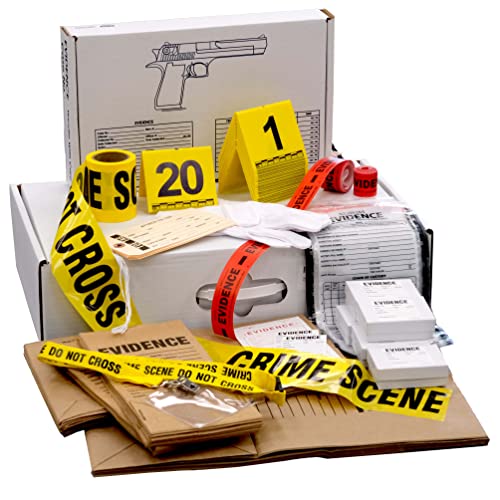
- Realistic tools for crime-scene setup
- Includes bags, tape, markers, boxes, and gloves
- Useful for classroom demonstrations and evidence handling
Best For: Hands-on evidence collection practice in class
Mystery Case Lab
Solve the Missy Hammond Murder
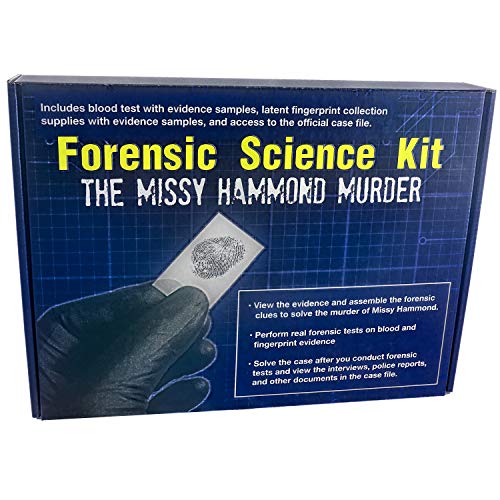
- Actual forensic tests with included evidence
- Fingerprint, blood, and latent-print analysis
- Comes with tools, instructions, and safety gear
Best For: Students ready for a more complete detective case
Hands-On Detective Play
Spy Labs Master Detective Toolkit V2

- Fingerprints, codes, and evidence tools
- 32-page storybook with practice cases
- Includes UV light, ink, and lab pieces
Best For: Ages 8+ learners who like detective-themed hands-on play
Best for Class Groups
Forensic Science Mega Kit: The Missy Hammond Case
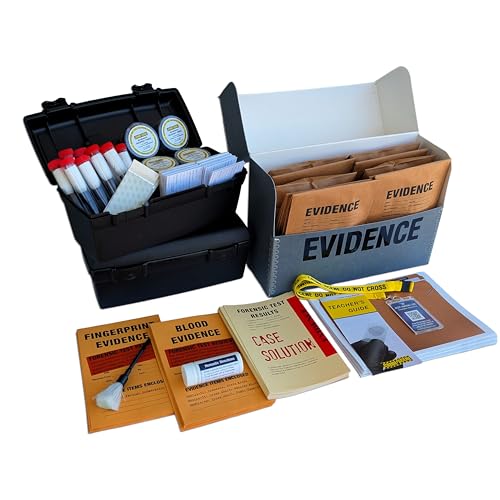
- Built for up to 40 students
- Includes evidence packets and fingerprint sets
- Good for camps and classroom groups
Best For: Large classes, camps, and group forensic activities
Lab-Style Starter Kit
Spy Labs Forensic Investigation Kit

- Large lab station with evidence tools
- 20-page manual guides experiments
- Includes UV flashlight, pH strips, and fingerprint powder
Best For: Ages 8+ students who want guided lab-style detective play
Blood Typing Lab Kit
Forensic Chemistry of Blood Typing

- Simulated blood keeps the activity safe for education
- Covers ABO/Rh typing and sample comparison
- Includes worksheets plus materials for two groups
Best For: Students learning blood chemistry through a crime-scene investigation
Hair Evidence Set
Forensic Chemistry of Hair Analysis

- Uses comparative exercises to build investigative skills
- Includes slides, coverslips, forceps, and hair samples
- Comes with manuals and student analysis materials
Best For: Students who are learning to compare hair evidence and practice microscopy
Mystery Substance Lab
Forensic Chemistry of Unknown Substances

- Focuses on identifying two mystery substances
- Includes known powders, reagents, and reaction plates
- Works well for guided classroom or remote learning
Best For: Students who enjoy chemical testing and mystery-style lab work
Student Detective Lab – MindWare Forensics Starter Kit
If you’re shopping for forensic science kits for students, this MindWare Detective Lab is a friendly, classroom-style introduction to basic evidence work. It focuses on hands-on activities like fingerprint lifting, chromatography, pH testing, and secret-message writing, with a guidebook that walks kids through each step.
Best For: Ages 8+ who want a fun, guided introduction to forensic basics and STEM thinking.
Pros:
- Includes 7 forensic and crime-scene investigations in one kit.
- Teaches fingerprint comparison, chromatography, pH, and basic analysis.
- Step-by-step guidebook adds instructions, safety info, and a code to crack.
- Designed for ages 8 and up with all necessary supplies included.
Cons:
- Best suited to younger students rather than advanced forensic study.
- Focuses on basic experiments instead of real classroom case materials.
This is a strong pick if you want a broad, engaging starter kit that blends detective play with science learning. It’s especially useful for students who need a structured, low-friction way to explore forensic concepts at home or in a small group.
Classroom Case Study – Murder at Eagle Nest Harbor Kit
Forensic science kits for students work best when they support group analysis, and this ALDON case study is built for classroom investigation. Students examine fingerprints, hair, blood, fiber, and handwriting evidence, then use their results to identify the most likely suspect.
Best For: Teacher-led labs and student groups that need a multi-evidence forensic case study.
Pros:
- Designed as a classroom lab activity simulating a forensic investigation.
- Lets students analyze fingerprints, hair, blood, fiber, and handwriting.
- Includes enough material for 15 groups of students.
- Teacher’s manual and student study guide copymasters are included.
Cons:
- Most useful in a classroom or group setting rather than for solo play.
- The murder-case theme may not suit every family or school audience.
This kit stands out for structured, evidence-based learning and scale. If you need a more serious forensic science kit for students that supports collaborative problem-solving, it offers a solid classroom-ready format.
CSI Classroom Pack – Forensic Evidence Collection Set
If you need forensic science kits for students that focus on evidence handling rather than case-solving, this CSI classroom pack is built for realistic scene setup. It includes evidence bags, tape, markers, boxes, gloves, toe tags, and labels so students can practice collection and organization during a crime-scene demonstration.
Best For: Classroom demonstrations and hands-on evidence collection practice.
Pros:
- Includes authentic investigative materials for a realistic classroom setup.
- Comes with over 50 evidence bags plus sealing tape and crime scene tape.
- Includes markers, evidence boxes, gloves, toe tags, and evidence labels.
- Designed for general forensic investigation and classroom demonstration.
Cons:
- Does not include a full mystery case or suspect-solving scenario.
- More focused on tools and scene staging than on testing or analysis.
This is the right choice if your priority is teaching evidence collection workflow. It gives students the materials they need to practice proper scene handling, but it works best when paired with a separate forensic lesson or case activity.
Mystery Case Lab – Solve the Missy Hammond Murder
Among forensic science kits for students, this Crime Scene kit is the most case-driven option in the group. It comes with actual forensic tests, suspect fingerprint exemplars, a latent-print evidence item, and a fabric sample with a possible bloodstain, plus online access to the police case file.
Best For: Students who want a more complete detective case with real testing supplies.
Pros:
- Includes actual forensic tests for analyzing the supplied evidence.
- Provides fingerprint exemplars, a latent print item, and a possible bloodstain sample.
- Comes with fingerprint powder, lifting tape, dusting brush, and a presumptive blood test.
- Includes complete instructions and safety gear.
Cons:
- Requires internet access for the full police case file.
- Single-set format is less suited to larger groups.
This kit is a good fit for students ready for a more immersive forensic challenge. It offers a stronger balance of evidence, testing, and case context than basic beginner kits, making it especially appealing for independent investigators.
Hands-On Detective Play – Spy Labs Master Detective Toolkit V2
For families looking at forensic science kits for students, this Spy Labs detective set offers a hands-on way to practice evidence gathering, fingerprint lifting, secret codes, and basic observation skills. The included storybook and practice cases give the activities some structure, while the mix of tools supports open-ended play too.
Best For: Ages 8+ students who want an interactive detective kit with lots of different crime-scene tools.
Pros:
- Includes a wide set of tools such as a UV light, fingerprint powder, invisible ink pen, magnifying glass, and more.
- Supports multiple activities, including fingerprints, footprints, tire tracks, secret messages, and code breaking.
- Comes with a 32-page experiment storybook plus practice cases for guided play.
- Good for creative, hands-on pretend detective work.
Cons:
- Designed for pretend investigations rather than real forensic lab work.
- Has many pieces, so setup and cleanup may take some time.
Overall, this kit is a strong pick if you want an engaging introductory forensic set with plenty of variety. It leans more toward imaginative mystery-solving than classroom-style testing, but that makes it appealing for home learning and play.
Best for Class Groups – Forensic Science Mega Kit: The Missy Hammond Case
Crime Scene Forensic Science Mega Kit: The Missy Hammond Case - 40-Student Pack
Check Price On AmazonWhen shopping for forensic science kits for students, this 40-student pack stands out for group use in camps and classrooms. It is built around shared investigation work, with enough materials for teams to dust for fingerprints, compare suspect prints, and test fabric samples with synthetic blood evidence.
Best For: Teachers, camp leaders, and group programs that need a forensic kit for up to 40 students.
Pros:
- Covers a full class of 40 students working in groups of four.
- Includes 10 evidence packets, 10 fingerprinting material sets, and 50 blood tests.
- Designed for hands-on group investigation with real forensic-style tests.
- Comes with 10 instruction sets to support multiple teams.
Cons:
- More suited to structured group activities than solo use.
- Materials are synthetic and classroom-focused rather than a toy-style kit.
This is the most practical choice for larger student groups that need repeatable forensic activities. Its strength is capacity and classroom utility, not compactness or casual at-home play.
Lab-Style Starter Kit – Spy Labs Forensic Investigation Kit
This Spy Labs kit is a practical choice if you want forensic science kits for students that focus on collecting and analyzing clues. The large lab setup, fingerprint powder, pH test strips, and UV flashlight give kids a more lab-like experience, and the manual walks them through make-believe crimes and mysteries step by step.
Best For: Young investigators ages 8+ who want a more lab-style forensic set with guided experiments.
Pros:
- Includes a large lab station with tools for collecting and analyzing evidence.
- Uses a full-color 20-page manual to guide experiments and mystery solving.
- Comes with fingerprint powder, pH test strips, UV flashlight, and lab report pad.
- Supports STEM-focused pretend detective play.
Cons:
- Contains only one battery-powered accessory requirement, so battery readiness matters.
- Geared toward guided pretend cases rather than open-ended classroom quantity.
For students who want a more organized introduction to forensic work, this kit offers a nice balance of tools and instruction. It feels more like a starter lab than a multi-user classroom pack, which makes it better for one child or one small project at a time.
Blood Typing Lab Kit – Forensic Chemistry of Blood Typing
Forensic science kits for students work best when they combine clear lab steps with a real problem to solve, and this blood typing kit does exactly that. It uses simulated blood and ABO/Rh testing to walk learners through a crime-scene style investigation while keeping the materials safe for educational use.
Best For: Students who want a hands-on introduction to blood typing, chemical testing, and suspect analysis in a guided forensic scenario.
Pros:
- Uses simulated blood for safe classroom or remote learning use
- Teaches ABO/Rh blood typing and basic forensic analysis
- Includes worksheets and enough materials for two groups
- Frames the activity around identifying suspect involvement
Cons:
- Focused on blood chemistry rather than a broad range of forensic topics
- Designed as a guided activity, not a large multi-experiment set
This is a strong pick if you want a focused, investigation-style kit that makes blood typing feel relevant and practical. The included trays, anti-sera, and sample set give students a complete workflow from testing to conclusion.
Hair Evidence Set – Forensic Chemistry of Hair Analysis
Forensic science kits for students should help them observe, compare, and draw conclusions, and this hair analysis kit is built around that process. It introduces learners to hair and fiber evidence through hands-on exercises that mirror the techniques forensic investigators use.
Best For: Students who want a simple, observation-based introduction to hair evidence, microscopy, and comparison skills.
Pros:
- Builds analytical and investigative skills through comparison exercises
- Includes microscope slides, coverslips, and sample hair types
- Comes with a teacher/parent manual and student study guide
- Designed for home learning and educational use
Cons:
- More focused on observation than on multiple chemical tests
- Includes a single set of materials rather than a larger class pack
Overall, this is a practical choice if you want students to practice careful observation and evidence comparison. The mix of deer, cat, and human hair samples helps make the differences easy to study in a structured way.
Mystery Substance Lab – Forensic Chemistry of Unknown Substances
Forensic science kits for students are most useful when they challenge learners to test evidence and identify a result, and this mystery-substance kit does that well. It introduces chemical forensic science through hands-on testing of known materials and two unknowns, making it a strong fit for classroom or remote investigation work.
Best For: Students who want a chemistry-focused forensic activity centered on identifying unknown substances through testing.
Pros:
- Teaches testing and analysis in a crime-lab style format
- Includes multiple known powders plus two mystery substances
- Supplies reaction plates, scoops, and common reagents
- Includes an instruction manual with worksheets for two groups
Cons:
- Centered on substance identification rather than physical evidence types
- Best suited to chemical analysis, so it may feel narrow for broader forensic study
This kit is a good pick if you want a clear, test-and-deduce activity that feels like real forensic chemistry. The included reagents and reaction plates give students a straightforward way to compare samples and reason out the unknowns.
How We Picked the Best Forensic Science Kits for Students
We prioritized Forensic Science Kits for Students that support real learning outcomes, not just novelty. The best options offer age-appropriate activities, clear instructions, useful evidence-handling tools, and a format that works for one learner, a small group, or an entire class.
We also considered whether each kit encourages observation, data recording, and interpretation of clues. For classroom use, setup time, consumables, and group scalability matter just as much as the science content.
Quick Comparison
Think of these kits in three broad categories: beginner-friendly detective kits for younger students, case-based investigation kits for middle and high school learners, and lab-focused forensic chemistry kits for more advanced science instruction. If you need a quick win for engagement, choose a narrative case. If you want stronger curriculum alignment, choose a kit that emphasizes evidence analysis and lab method.
Key Buying Factors for Forensic Science Kits for Students
Age and Skill Level
Match the kit to the student’s reading level and patience for multi-step work. Younger learners benefit from simpler clue collection and visual comparisons, while older students can handle blood typing, unknown substances, and more structured analysis.
Group Size and Classroom Fit
Some kits are built for a single student or family use, while others are designed for multiple groups. If you are buying for a class, check whether the kit includes enough materials for repeated trials or whether you will need replenishments.
Evidence and Lab Skills
The strongest Forensic Science Kits for Students teach core skills like fingerprinting, documenting scenes, comparing samples, and drawing conclusions from evidence. More advanced kits may add chemistry concepts such as classification, identification, and controlled testing.
Time, Setup, and Supplies
Look for kits with clear instructions and manageable prep time. Teachers and parents should also check whether common supplies are required, especially for distance learning or repeated classroom use.
Who Should Buy Which Forensic Science Kits for Students?
Choose a beginner detective kit if you want an engaging intro to STEM for younger students. Pick a case-study or classroom investigation kit if you need collaborative problem-solving and discussion. Go with chemistry-based kits if your goal is deeper science instruction and more advanced lab practice.
In short, the right choice depends on whether you want fun, class activity, or formal science learning. The best Forensic Science Kits for Students make evidence handling feel practical, memorable, and easy to teach.