A kneeling chair can encourage a more open hip angle and reduce prolonged slouching during desk work, but comfort depends on fit, padding, and adjustability.
We compared 10 kneeling chairs for posture across home-office features, support, mobility, materials, and everyday usability to help you choose a better workstation seat.
Best 10 Kneeling Chair for Posture Picks for 2026
Best Adjustable Rocking Pick
NYPOT Adjustable Kneeling Chair

- Adjustable seat for 29–35-inch desks
- Rocking base supports active sitting
- 5-year warranty and multi-position design
Best For: Home-office users seeking adjustable, versatile seating
Best Cross-Legged Upgrade
AtHope Cross Legged Office Chair
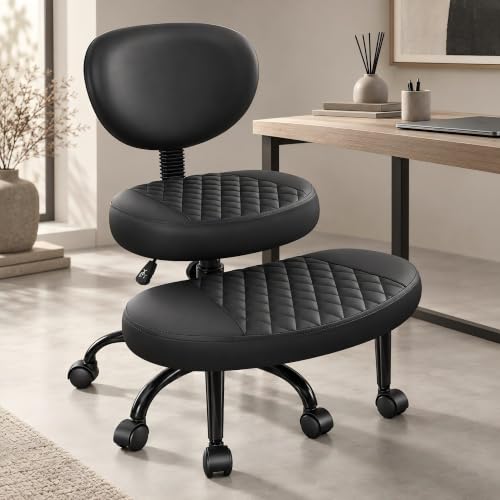
- Wide footrest for flexible sitting
- 360-degree rotating footrest
- Fixed lumbar support with durable casters
Best For: Active sitters wanting back support and position changes
Best Lightweight Rolling Classic
DRAGONN by VIVO Kneeling Chair
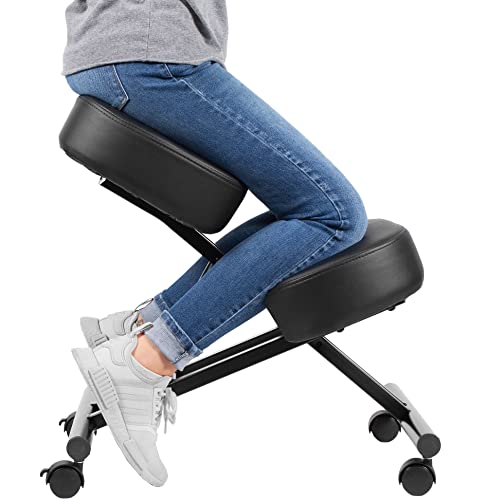
- 21–28-inch height adjustment
- Four casters with brake function
- Preassembled with thick vinyl cushioning
Best For: Users wanting a simple, mobile kneeling stool
Rocking Comfort Pick
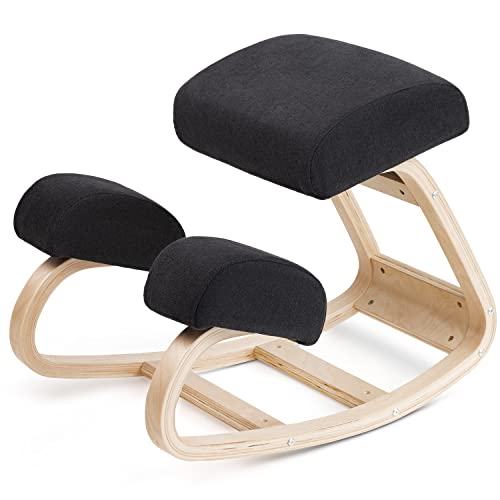
- Extra-padded foam cushion
- Gentle rocking base
- Supports up to 265 pounds
Best For: Cushioned posture support with a rocking motion
Adjustable Support Pick

- 21–26.5-inch hydraulic adjustment
- Optional backrest configuration
- Lockable rolling casters
Best For: Adjustable home-office seating with back support
Most Adjustable Wood Pick

- 24 adjustable angle combinations
- High-density slow-rebound foam
- Solid wood frame with rocking motion
Best For: Fine-tuned active sitting and posture support
Best Adjustable Mobile Pick
GIANTEX Ergonomic Kneeling Chair

- 5.5-inch height adjustment range
- Thick padded cushions with waterproof PVC leather
- Lockable wheels for movement and stability
Best For: Mobile office setups and adjustable posture support
Best Supported Design
Adjustable Kneeling Chair with Backrest

- Curved backrest, armrests, and foot support
- Height adjusts from 32.2 to 36.2 inches
- Four adjustable seat and leg-angle positions
Best For: Users wanting added support and compatibility with taller work surfaces
Best Rocking Frame
VIVO Wooden Rocking Kneeling Chair
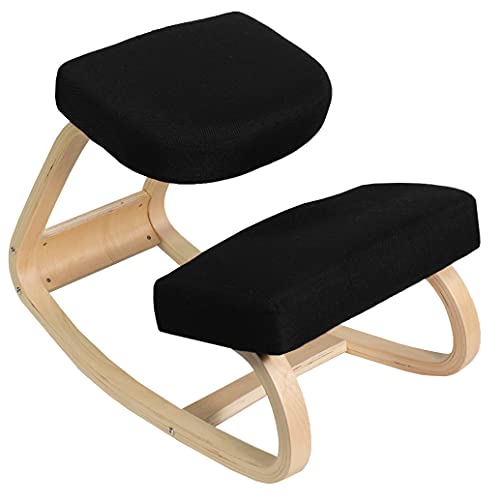
- Smooth rocker base encourages gentle movement
- Four-inch thick mesh cushions
- Solid wood frame supports up to 250 pounds
Best For: Backless ergonomic seating on hard floors
Best Adjustable Rocking Pick – NYPOT Adjustable Kneeling Chair
If you want a kneeling chair for posture that can adapt to different desks, the NYPOT is a flexible option. Its adjustable seat, rocking base, cushioned pads, and wood frame support an upright sitting position while allowing some movement during work.
Best For: Home-office users who want adjustable seating, gentle rocking, and multiple sitting positions.
Pros:
- Adjustable seat helps accommodate desks measuring 29 to 35 inches.
- Rocking design can help shift pressure points during longer sitting sessions.
- Supports up to 250 pounds and includes a 5-year warranty.
- Can also be used for cross-legged, meditation, yoga, or criss-cross seating.
Cons:
- Some users may need time to adapt to pressure on the shins or lower back.
- The supplied specifications list both a 250-pound support claim and a 200-pound maximum weight recommendation.
- Its 33-inch depth may require meaningful floor space.
The NYPOT stands out for adjustability and versatility. Match the seat and desk heights carefully, then introduce it gradually if you are new to kneeling-style seating.
Best Cross-Legged Upgrade – AtHope Cross Legged Office Chair
The AtHope is a broader cross-legged office chair rather than a traditional backless kneeling stool. For shoppers seeking a kneeling chair for posture with back support, its fixed lumbar support, rotating footrest, adjustable height, and casters provide several ways to change position.
Best For: Active sitters who alternate between cross-legged, kneeling, squatting, meditation, and standard desk positions.
Pros:
- Wide footrest supports cross-legged and other flexible sitting positions.
- 360-degree rotating footrest allows posture changes without moving the chair.
- Fixed backrest provides consistent lumbar support.
- Steel base, casters, and water-resistant faux leather are practical for daily use.
Cons:
- Its 28.5-inch width and 26.5-inch depth take more space than a compact kneeling stool.
- The chair has one listed height position, limiting adjustment compared with some alternatives.
- It is designed for hard floors and indoor use.
Choose the AtHope if you want posture-focused flexibility without giving up a backrest. Its design is especially suited to people who frequently shift positions while working, gaming, or meditating.
Best Angle-Adjustable Value – Yaheetech Rolling Knee Stool
The Yaheetech combines an angled seat with a separate knee cushion to redistribute weight and encourage a more upright position. It is a practical kneeling chair for posture when you want three tilt settings, pressure-locking casters, and easy-clean faux leather.
Best For: Desk users who want an adjustable kneeling stool with rolling mobility and a compact footprint.
Pros:
- Three adjustment levels let you choose among different kneeling angles.
- Pressure-lock casters help keep the stool in place while occupied.
- High-density foam and water-resistant faux leather provide padded support and easy maintenance.
- Metal framing and a 220-pound capacity suit everyday office use.
Cons:
- Assembly is required, and the instructions recommend at least two adults.
- The design may require an adjustment period for users accustomed to conventional chairs.
- It is intended for hard floors and indoor use.
The Yaheetech is a strong choice for shoppers prioritizing tilt adjustment over extra features. Its locking casters add convenience while preserving stability during kneeling.
Best Lightweight Rolling Classic – DRAGONN by VIVO Kneeling Chair
The DRAGONN by VIVO is a straightforward, backless kneeling chair for posture with an angled seat, thick vinyl cushion, four caster wheels, and a height range from 21 to 28 inches. Its simple design distributes weight through the buttocks and legs while keeping the spine more upright.
Best For: Home, office, or classroom users who want a simple rolling kneeling chair with broad height adjustment.
Pros:
- Height adjusts from 21 to 28 inches for a more personalized setup.
- Four caster wheels provide smooth mobility, with brake casters for stability.
- Thick 3-inch vinyl cushioning supports daily sitting.
- Supports up to 250 pounds and arrives already assembled.
Cons:
- Users may need to acclimate because the chair engages different muscles than a standard chair.
- The backless design does not provide lumbar support.
- Its posture-focused setup is best used with position changes during the day.
DRAGONN is a sensible pick for buyers who want a familiar kneeling-stool format without assembly. Its adjustable height and rolling base make it easy to integrate into different workspaces.
Rocking Comfort Pick – Extra-Padded Kneeling Chair
If you want a kneeling chair for posture with a little movement, this extra-padded model combines an angled seating position with a gentle rocking base. Its foam cushioning, natural wood frame, and 265-pound weight capacity make it a practical option for desk work, reading, gaming, or studying.
Best For: Users who want cushioned posture support and a rocking motion on hard indoor floors.
Pros:
- Extra-padded foam seat is designed for comfortable extended use.
- Angled ergonomic position helps encourage natural spinal alignment.
- Rocking base adds movement and may help users stay relaxed while working.
- Supports up to 265 pounds and has a sturdy wood frame.
Cons:
- It has no backrest, arms, or wheels.
- Its rocking design may not suit users who prefer a completely stationary chair.
- The manufacturer recommends use on hard floors, which may limit placement options.
This is a strong choice if padding and gentle motion matter more to you than adjustability or rolling mobility. The open-back design keeps it compact, while the higher weight rating adds versatility for different users.
Adjustable Support Pick – Kneeling Chair with Backrest
This adjustable kneeling chair is a versatile option if you want a kneeling chair for posture with a backrest and rolling mobility. Hydraulic height adjustment, thick padding, and lockable casters let you tune the chair for different working positions while keeping it stable when needed.
Best For: Home-office users who want adjustable height, optional back support, and lockable wheels.
Pros:
- Hydraulic height adjustment ranges from 21 to 26.5 inches.
- Available in backrest or backless configurations.
- Silent rolling casters make repositioning easier, while brakes help hold the chair in place.
- Reinforced frame supports up to 250 pounds and the cushion is extra thick.
Cons:
- The manufacturer positions it for posture correction rather than uninterrupted, all-day sitting.
- At 22.3 pounds, it is heavier than simpler fixed-frame kneeling chairs.
- Assembly is required.
Choose this model when adjustability and back support are priorities. It offers more positioning flexibility than a basic kneeling stool, though its rolling hardware and larger structure may be more than you need for a simple stationary setup.
Most Adjustable Wood Pick – Wooden-Frame Kneeling Chair
For shoppers seeking a highly customizable kneeling chair for posture, this wooden-frame model offers 24 angle combinations. Its forward-angled seat, high-density foam cushion, and gentle rocking motion are designed to support active sitting while you work, meditate, or read.
Best For: Users who want extensive angle adjustment, active sitting, and a solid wood frame.
Pros:
- Twenty-four adjustable angle combinations accommodate different heights and preferences.
- Forward seat angle encourages a more open posture and weight distribution.
- High-density slow-rebound foam is intended to reduce fatigue during kneeling sessions.
- Solid wood frame supports up to 250 pounds and includes assembly tools and instructions.
Cons:
- The manufacturer recommends beginning with 20- to 30-minute sessions and increasing gradually.
- Assembly is required.
- It has an open-back design without wheels or a conventional backrest.
This chair stands out for adjustability and active-sitting features rather than conventional office-chair comfort. Its gradual-use guidance is worth noting, but the multiple angle settings make it appealing for users who want to fine-tune their posture and seating position.
Best Adjustable Mobile Pick – GIANTEX Ergonomic Kneeling Chair
If you want a kneeling chair for posture that can move between desks, the GIANTEX model combines adjustable height, an angled seat, thick padding, and lockable wheels. Its 5.5-inch height range helps accommodate different desk setups, while the kneeling cushion is designed to shift some pressure away from the lower back.
Best For: Adults seeking a mobile, height-adjustable kneeling chair for office work or meditation.
Pros:
- Adjustable height and angled seat support personalized positioning.
- Four-inch high-density sponge cushions provide substantial padding.
- Universal wheels with brakes offer mobility and stability.
- Waterproof PVC leather is easy to wipe clean.
Cons:
- The 220-pound maximum weight recommendation may limit some users.
- It has no backrest or armrests for upper-body support.
- Wheeled seating may not suit users who prefer a stationary chair.
Choose this model if adjustability and easy movement matter most. The padded, compact design is versatile, but users wanting built-in back support may prefer a different style.
Best Supported Design – Adjustable Kneeling Chair with Backrest
This kneeling chair for posture adds features often missing from minimalist designs, including a curved backrest, padded armrests, and a foot support. Its gas-lift height adjustment suits regular desks, standing desk converters, and drafting tables, while separate seat and shin angle settings allow more customization.
Best For: Adults who want a kneeling chair with back, arm, and foot support for varied desk heights.
Pros:
- Curved backrest and padded armrests provide additional upper-body support.
- Height adjusts from 32.2 to 36.2 inches for multiple desk types.
- Four seat and leg-angle positions accommodate different users.
- Breathable mesh cushion and reinforced steel frame support daily use.
Cons:
- The recommended user height range is approximately 5’1″ to 6’1″.
- The product includes safety guidance to take breaks every 30 minutes.
- Users with existing knee, lumbar, or coccyx medical histories are advised not to use it.
This is the most feature-rich option for users who want more than a basic kneeling stool. Its multiple adjustments improve fit, but the stated safety guidance makes gradual use and regular breaks important.
Best Rocking Frame – VIVO Wooden Rocking Kneeling Chair
The VIVO CHAIR-K04R offers a distinctive approach to a kneeling chair for posture with its smooth rocker base and upright seating position. Thick mesh cushions distribute weight across the buttocks and legs, while the solid beech wood frame gives it a warm home-office or classroom look.
Best For: Users who want gentle rocking motion and a backless kneeling seat for hard floors.
Pros:
- Rocking frame provides smooth movement that may support concentration.
- Four-inch mesh cushions offer thick, breathable padding.
- Solid wood construction supports up to 250 pounds.
- Suitable for home offices, classrooms, and other indoor spaces.
Cons:
- The backless design does not provide lumbar or upper-body support.
- Users may need time to acclimate to using different muscles.
- It is intended for hard floors rather than carpeted surfaces.
Consider this VIVO model if you prefer a simple, stationary-feeling chair with controlled rocking rather than wheels or gas-lift adjustments. Its backless design encourages an upright position but offers fewer fit options.
How We Picked the Best Kneeling Chair for Posture
We focused on features that affect real desk use: adjustable seat height or angle, knee-pad comfort, frame stability, mobility, back support, and the ability to change positions. The selection includes rocking and balancing designs, rolling stools, wooden-frame models, wider footrests, extra padding, and chairs with adjustable backrests.
A kneeling chair is not automatically suitable for everyone. We treated posture support as a design goal rather than a medical claim, since comfort and alignment vary with body size, desk height, flexibility, and existing knee or back concerns.
Quick Comparison
| Feature | Best for | What to consider |
|---|---|---|
| Rocking or balancing base | Active sitters | Encourages movement but may feel less stable initially |
| Wheels | Flexible office movement | Check whether the casters lock and roll smoothly |
| Backrest | Users wanting additional upper-body support | Can reduce the open, active feel of a traditional kneeling chair |
| Adjustable seat or knee pad | Shared workspaces and varied body types | More adjustment improves fit but may add setup complexity |
| Wooden frame | Style-conscious home offices | Verify cushion thickness, finish, and weight capacity |
Key Buying Factors for a Kneeling Chair for Posture
Fit and Adjustability
Look for adjustable seat height, seat angle, knee-pad position, or footrest placement. Your hips should sit slightly higher than your knees without excessive pressure on the shins. A chair that cannot be tuned to your proportions may become uncomfortable quickly.
Padding and Pressure Distribution
Thick, supportive cushions can make longer sessions easier, but softer is not always better. Knee pads should spread pressure across the lower legs rather than concentrate it at the kneecaps. Check the cushion dimensions if you prefer to change positions.
Movement and Stability
Rocking bases and casters support movement, while fixed frames generally feel more planted. For video calls or tasks requiring precision, stability may matter more than mobility. A wide base and strong frame are especially important on angled designs.
Desk Compatibility
Measure the chair’s height range and compare it with your desk. A Kneeling Chair for Posture may place you lower than a conventional office chair, so keyboard and monitor height can affect whether the setup feels aligned.
Who Should Buy Which Kneeling Chair for Posture?
Choose a rocking model if you like to shift position while working. A wheeled design suits users who frequently move between nearby surfaces, provided the casters offer adequate control. Models with extra padding are sensible for longer sessions or anyone sensitive to pressure. A backrest-equipped chair is a better fit if you want more conventional support, while a wooden-frame option may appeal to buyers prioritizing appearance and simple construction.
Whichever style you choose, start with short sessions and alternate with standing or a standard chair. If kneeling causes pain, numbness, or persistent discomfort, stop using the chair and consider professional guidance.