The right label printer can speed up warehouse fulfillment, reduce packing errors, and keep shipping workflows moving during busy periods. Thermal models also avoid the recurring cost and mess of ink.
This roundup compares 10 label printers suited to warehouse shipping, inventory labels, barcodes, and small-business order processing, with attention to connectivity, compatibility, print speed, and operating costs.
Best 10 Label Printer for Warehouse Picks for 2026
Best Overall
Rollo USB Shipping Label Printer

- Prints 4x6 labels at one per second
- Inkless direct thermal operation
- Works with major shipping platforms
Best For: Fast, wired warehouse shipping stations
Best for Industrial Identification
Brother PT-E720BT Industrial Label Printer
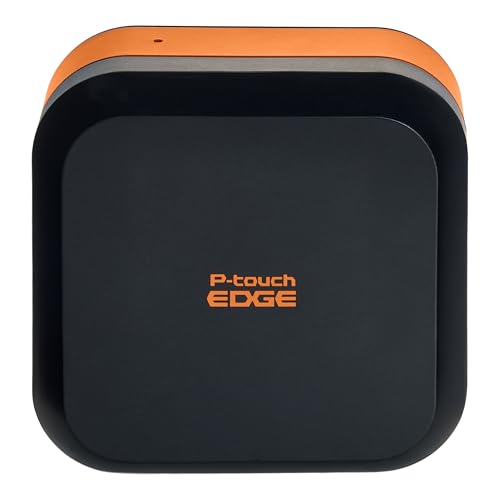
- Portable Bluetooth industrial labeler
- Creates laminated labels, barcodes, and QR codes
- Supports database-driven printing
Best For: Maintenance and industrial identification labeling
Best for High-Volume Shipping
Arkscan 2054A Shipping Label Printer
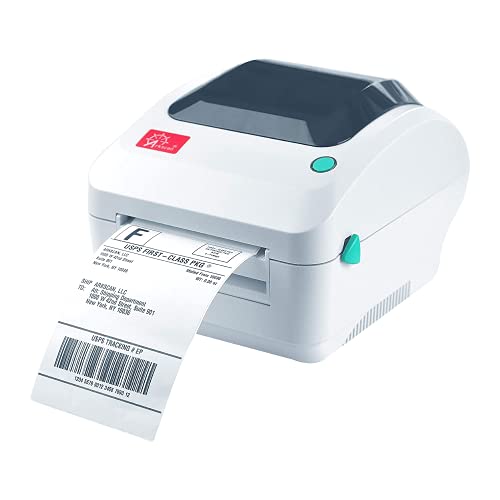
- Prints up to 5 inches per second
- Supports roll and fanfold labels
- Includes Windows BarTender design software
Best For: Flexible, busy warehouse shipping operations
Best Bluetooth Value
Phomemo 241BT Thermal Label Printer

- Prints wirelessly from iOS and Android
- Supports USB across major computer systems
- Handles labels up to 4.6 inches wide
Best For: Flexible mobile and desktop warehouse printing
Compact Warehouse Workhorse
Built-in-Bin Bluetooth Label Printer

- Built-in storage for up to 250 4x6 labels
- Bluetooth and USB connectivity
- Up to 72 labels per minute at 203 DPI
Best For: Compact warehouse shipping stations and small businesses
Shared Network Pick

- Wi-Fi printing for shared access
- Supports computers, smartphones, and tablets
- Includes design software and mobile app
Best For: Networked office and warehouse organization labels
Fast Bluetooth Shipping Choice

- Up to 72 4x6 labels per minute
- Bluetooth app and USB connectivity
- Supports roll and fanfold labels
Best For: Fast warehouse shipping and versatile label formats
Flexible Bluetooth Pick
JADENS Wireless 4x6 Label Printer

- 203-DPI inkless thermal printing
- Supports roll and fanfold labels
- Works with major shipping platforms
Best For: Small businesses needing flexible wireless warehouse labeling
Template-Rich Option
KNAON Portable 4x6 Label Printer
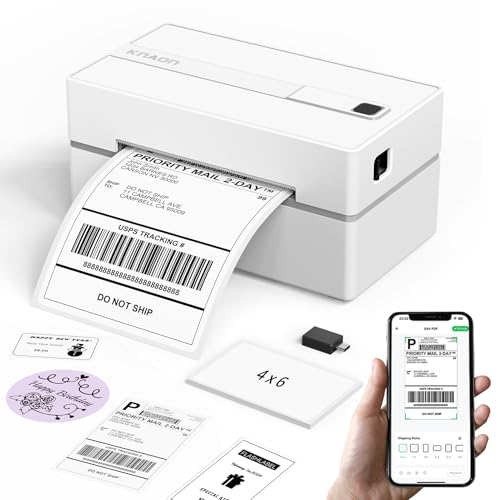
- Includes thousands of design templates
- Supports USB and app-based wireless printing
- Prints labels up to 4.2 inches wide
Best For: Custom warehouse labels, barcodes, tags, and shipping labels
Automatic Feed Choice
Rongta RP425 Bluetooth Label Printer
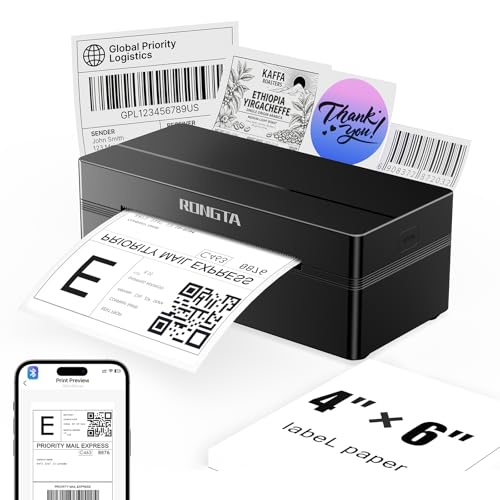
- Automatically identifies and feeds labels
- Supports media from 0.98 to 4.37 inches
- Prints at up to 150 mm/s
Best For: Warehouses handling multiple label sizes and formats
Best Overall – Rollo USB Shipping Label Printer
The Rollo USB is a practical label printer for warehouse workflows that need fast, readable 4×6 shipping, barcode, and inventory labels. Its USB connection, 203 DPI resolution, and direct thermal printing make it straightforward for Windows and Mac users.
Best For: Warehouses and shipping stations that prioritize quick USB printing and broad platform compatibility.
Pros:
- Prints one 4×6 label per second at 150 mm/s.
- Direct thermal printing eliminates ink and toner.
- Supports labels from 1.57 to 4.1 inches wide, including barcodes and QR codes.
- Works with major carriers, marketplaces, and shipping platforms.
Cons:
- USB connectivity is wired rather than wireless.
- Maximum media width is 4.1 inches.
- Limited to monochrome printing.
Choose the Rollo when a dependable desktop printer is more important than Bluetooth or mobile printing. Its speed and software compatibility suit busy packing areas, while the adjustable label width adds flexibility for warehouse labeling tasks.
Best for Industrial Identification – Brother PT-E720BT Industrial Label Printer
The Brother PT-E720BT is a portable label printer for warehouse and maintenance teams creating durable identification labels, barcodes, and QR codes. Bluetooth and PC connectivity support mobile or desktop workflows, while laminated tape is designed for industrial environments.
Best For: Industrial warehouses, electrical labeling, low-voltage work, and maintenance operations.
Pros:
- Prints laminated labels up to approximately 1 inch wide.
- Supports industrial labels, barcodes, and QR codes from existing databases.
- Bluetooth and micro-USB connectivity support mobile and PC use.
- Portable 1.4-pound design can be used in tight work areas.
Cons:
- Maximum media width is 24 mm, narrower than a standard 4×6 shipping label.
- Print speed is listed at 4.25 pages per minute.
- Designed for P-touch cartridges rather than general roll labels.
This is a better fit for asset, rack, panel, and equipment identification than high-volume parcel shipping. Its database support and durable laminated media can help teams standardize labels where resistance to industrial conditions matters.
Best for High-Volume Shipping – Arkscan 2054A Shipping Label Printer
The Arkscan 2054A is a versatile label printer for warehouse shipping operations using roll or fanfold media. It supports common 4×6 formats, prints at up to 5 inches per second, and includes Windows-only BarTender UltraLite software for product, barcode, and warehouse label design.
Best For: Busy shipping departments that need flexible media loading and broad carrier or marketplace support.
Pros:
- Prints at up to 5 inches per second.
- Accepts both roll and fanfold labels.
- Supports media from 0.75 to 4.25 inches wide and up to 90 inches long.
- Compatible with Windows, Mac, Chromebook, and Android through USB.
Cons:
- Connectivity is USB rather than wireless.
- BarTender UltraLite design software is Windows-only.
- The larger 3.3-pound body may require dedicated desk space.
The 2054A stands out when a warehouse needs more than standard parcel labels. Its media flexibility, fast output, and included design software make it useful for shipping, inventory, barcode, and product-label workflows.
Best Bluetooth Value – Phomemo 241BT Thermal Label Printer
The Phomemo 241BT is a flexible label printer for warehouse users who want Bluetooth printing from phones or tablets, along with USB support for computers. It handles label widths from 1 to 4.6 inches and supports shipping, barcode, QR code, and template-based printing.
Best For: Small warehouses and packing areas that need wireless printing plus broad device compatibility.
Pros:
- Supports Bluetooth printing through the Labelife app on iOS and Android.
- Also works through USB with Windows, Mac, Chrome OS, and Linux.
- Handles labels from 1 to 4.6 inches wide.
- Prints at 150 mm/s without ink or toner.
Cons:
- Black-and-white printing only.
- Computer setup requires downloading the appropriate driver.
- Notes recommend genuine Phomemo labels for consistent results.
The 241BT is a convenient choice when staff need to print from mobile devices as well as computers. Its wireless flexibility is useful for distributed packing tasks, while the broad label-width range covers many common warehouse applications.
Compact Warehouse Workhorse – Built-in-Bin Bluetooth Label Printer
If you need a label printer for warehouse tasks without giving up much desk space, the Omezizy D450BT is a compact option. Its built-in bin holds up to 250 4×6 roll labels, while Bluetooth and USB connectivity support printing from phones, computers, and several major operating systems.
Best For: Small warehouses, shipping stations, and businesses that need compact 4×6 shipping, barcode, pricing, or product labels.
Pros:
- Built-in compartment stores up to 250 4×6 labels and helps reduce workspace clutter.
- Supports Bluetooth and USB connections across Android, iOS, Windows, macOS, Linux, and ChromeOS.
- Prints up to 72 labels per minute at 203 DPI without ink or toner.
- Handles label widths from 1 to 4.6 inches and works with major shipping platforms.
Cons:
- The 203 DPI resolution is practical for standard labels but not intended for especially fine graphics.
- Its built-in media capacity is limited to 250 labels.
The D450BT stands out when a warehouse needs flexible connectivity and fast everyday output in a small footprint. Its internal label storage is particularly useful for organized shipping desks.
Shared Network Pick – DYMO Wireless LabelWriter
For teams looking for a label printer for warehouse use that can serve multiple workstations, the DYMO LabelWriter Wireless offers Wi-Fi network printing. It works with Macs, PCs, smartphones, and tablets, making it suitable for shared shipping, asset-tracking, and identification tasks.
Best For: Offices and small warehouse teams that want one wireless label printer accessible across a network.
Pros:
- Built-in Wi-Fi allows cable-free printing from computers and mobile devices.
- One printer can be added to a network for shared access.
- Direct thermal printing avoids desktop printer ink and toner.
- Includes DYMO Label software, Microsoft Office plug-ins, and a mobile app for label creation.
Cons:
- Its listed maximum media size is 2-5/16 by 4 inches, so it is less suited to standard 4×6 shipping labels.
- The listed print speed is 51 pages per minute.
- Wireless networking may require more setup than a direct USB connection.
The DYMO is a sensible choice for shared labeling and organization, especially when Wi-Fi access matters more than large-format shipping labels. Check label-size requirements before choosing it for warehouse dispatch work.
Fast Bluetooth Shipping Choice – Nelko 4×6 Thermal Printer
The Nelko PL70E-BT is a practical label printer for warehouse shipping stations that need quick 4×6 output and flexible media support. It uses Bluetooth through the Nelko app or USB with compatible computers, and it accepts both roll and fanfold labels.
Best For: Warehouse and small-business shipping workflows using 4×6 labels, with occasional barcode, price, name-tag, or mailing-label needs.
Pros:
- Prints up to 72 4×6 labels per minute at 203 DPI.
- Supports Bluetooth through the app and USB connections for Windows, macOS, and ChromeOS.
- Works with roll and fanfold labels from 1.54 to 4.1 inches wide.
- Uses thermal printing, so no ink or toner is required.
Cons:
- Mac computers use USB only rather than direct Bluetooth printing.
- Bluetooth printing requires the Nelko app and an additional PDF upload step from logistics platforms.
- The maximum listed label width is 4.1 inches, which may not accommodate every wider format.
The PL70E-BT offers strong speed and useful media flexibility for routine warehouse shipping. Its app-based workflow is convenient for mobile users, but teams should confirm that it fits their preferred computer and label-printing process.
Flexible Bluetooth Pick – JADENS Wireless 4×6 Label Printer
For shoppers comparing a label printer for warehouse tasks, the JADENS JD268BT offers 203-DPI direct thermal printing, wireless connectivity, and support for both fanfold and roll labels. Its broad label-width range makes it useful for shipping, inventory, and general warehouse labeling.
Best For: Small businesses that need a versatile wireless printer for shipping and warehouse labels.
Pros:
- Prints without ink or toner at 203 DPI.
- Supports Bluetooth on compatible Windows and Mac computers, plus app-based mobile printing.
- Handles labels from 1.57 to 4.1 inches wide, including 4×6 labels.
- Works with platforms such as ShipStation, Shopify, Amazon, eBay, and Etsy.
Cons:
- iPhone and Android printing requires the Jadens app rather than direct Bluetooth printing.
- Labels must be recalibrated when changing label types.
The JADENS is a practical all-around choice when label-size flexibility and marketplace compatibility matter. Its included setup resources and one-year warranty add reassurance for regular business use.
Template-Rich Option – KNAON Portable 4×6 Label Printer
The KNAON Y813 is a compact label printer for warehouse and small-business workflows that need more than standard shipping labels. Its app includes thousands of templates, icons, and fonts, while USB and app-based wireless connections support several operating systems.
Best For: Users who want customizable shipping, barcode, price, and identification labels from a compact printer.
Pros:
- Offers 3,000+ templates, 5,000+ icons, and 100+ fonts through the app.
- Supports paper widths from 1.5 to 4.2 inches.
- Provides USB connectivity for Windows, macOS, ChromeOS, and Linux.
- Prints at speeds up to 180 mm/s and includes 10 test papers.
Cons:
- Mobile and computer Bluetooth printing requires the FlashLabel Pro app.
- Shipping-platform labels need to be saved as PDFs and imported into the app.
The KNAON stands out for customization rather than a simple plug-and-print workflow. It is a strong fit for warehouses or small operations printing varied label types, provided the app-based process suits your setup.
Automatic Feed Choice – Rongta RP425 Bluetooth Label Printer
For a label printer for warehouse use, the Rongta RP425 emphasizes simpler media handling with automatic label identification, grabbing, and feeding. It supports common shipping, barcode, QR-code, and circular labels while connecting through Bluetooth or USB.
Best For: Warehouses and offices that want automatic label detection and broad label-size support.
Pros:
- Automatically detects and feeds compatible labels.
- Supports media widths from 0.98 to 4.37 inches, including 4×6 labels.
- Offers Bluetooth app printing for iOS and Android devices.
- Prints at up to 150 mm/s with 203-DPI resolution.
Cons:
- Windows and Mac drivers must be downloaded from Rongta’s website.
- Mobile Bluetooth printing requires the Rongta app.
The RP425 is a sensible option when reducing manual label adjustment is a priority. Its broad media compatibility and automatic feeding make it well suited to mixed-label warehouse routines.
How We Picked the Best Label Printer for Warehouse
We focused on practical features that matter in a warehouse: support for common 4 x 6 shipping labels, reliable thermal printing, connection options, platform compatibility, setup requirements, and ease of replacing media. The selection includes wired USB models, Bluetooth printers, and wireless options so different warehouse sizes and workflows are represented.
We also considered whether each printer is better suited to high-volume shipping, occasional fulfillment, mobile printing, or broader labeling tasks. Because warehouse environments vary, the best choice is not always the most feature-packed model—it is the one that fits your order volume, devices, and label types.
Quick Comparison
| Best For | What to Look For |
|---|---|
| High-volume shipping | Fast direct thermal printing, dependable USB connectivity, and broad label support |
| Flexible device access | Bluetooth or wireless printing from phones, tablets, and computers |
| Small warehouses | Compact design, simple setup, and low ongoing media costs |
| Inventory and barcode work | Clear resolution, consistent alignment, and compatibility with varied label sizes |
Key Buying Factors for a Label Printer for Warehouse Use
Printing Method and Volume
Direct thermal printers are usually the simplest choice for shipping labels because they use heat-sensitive media rather than ink or toner. Check the recommended duty cycle and print speed if the printer will run continuously during fulfillment peaks.
Connectivity and Software
USB is often the most stable option for a dedicated packing station. Bluetooth and Wi-Fi add flexibility for mobile or shared workspaces, but confirm compatibility with Windows, macOS, ChromeOS, Android, iOS, and your selling or shipping platforms before buying.
Label Sizes and Print Quality
Most shipping workflows use 4 x 6-inch labels, but warehouse operations may also need smaller product, shelf, or barcode labels. Look for adjustable media guides, automatic calibration, and sufficient resolution for dense barcodes and small text.
Supplies and Maintenance
Compare the cost and availability of compatible rolls or fanfold labels. A printer with inexpensive, widely available media can cost less over time. Built-in label storage, simple roll loading, and automatic detection can also reduce interruptions.
Who Should Buy Which Label Printer for Warehouse?
Choose a USB commercial-grade model for a fixed, high-throughput packing station where stability matters most. A Bluetooth or wireless printer is a better fit when staff need to print from multiple computers or mobile devices. Compact Bluetooth options suit small businesses, pop-up fulfillment areas, and lower-volume sellers. If you print inventory labels, barcodes, or name badges in addition to shipping labels, prioritize flexible label-size support over portability.
Before ordering, verify your preferred shipping software, operating system, label dimensions, and available workspace. Those checks will help ensure your Label Printer for Warehouse operations works smoothly from the first shipment.