Thermal imaging cameras with video recording make it easier to document hotspots, track changing temperatures, and share findings with clients or teammates.
In this roundup, we focus on models that balance image quality, recording features, usability, and value for real-world inspections.
Best 10 Thermal Imaging Camera with Video Recording Picks for 2026
Pocket Thermal Camera

- 240x240 enhanced thermal detail
- Auto photo capture on temperature alerts
- 15-hour battery with IP54 durability
Best For: Portable inspections and quick photo-based temperature documentation
Touchscreen Recording Thermal Camera
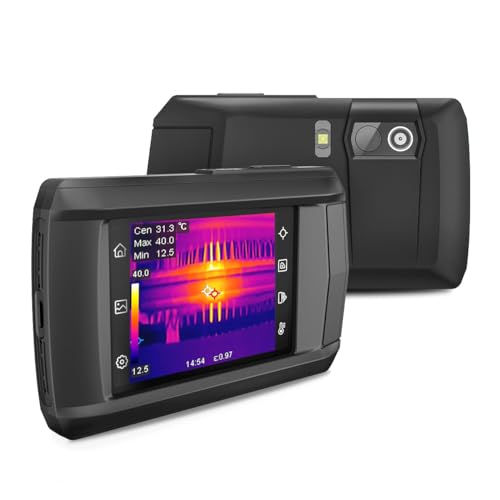
- 3.5-inch touchscreen with easy controls
- Live video and audio recording support
- Dual cameras with 5 imaging modes
Best For: Touchscreen-driven inspections with built-in recording and flexible imaging
Super Resolution Thermal Camera

- 256x192 to 640x480 super resolution
- Wi-Fi image sharing to phone or tablet
- AI scene detection with 4 image modes
Best For: High-detail inspections with wireless sharing and AI-guided detection
Field-Ready Thermal Inspector
TOPDON TC004 3.5" Thermal Camera

- 3.5-inch display for easier inspection viewing
- 256×192 IR resolution with TISR up to 512×384
- 64GB storage plus Wi-Fi for images and videos
Best For: Field inspections that need rugged durability and lots of onboard storage
Diagnostic Thermal Workhorse

- 2.8-inch LCD with 320×240 display and 25Hz view
- TISR raises effective resolution to 240×180
- 8GB storage holds over 20,000 images and videos
Best For: Users who want Windows-based thermal analysis and automatic reports
Phone-Friendly Thermal Pro
TOPDON TC001 Max Dual-Lens Camera

- Dual-lens thermal and visible-light imaging
- Works with USB-C iPhone, Android, and Windows devices
- App supports photo, video, 3D analysis, and graphs
Best For: Mobile diagnostics with app-based video capture and trend analysis
Durable High-Detail Pick
H128 Thermal Camera with 240x240 TISR

- 240x240 TISR boosts clarity over 128x128.
- Up to 24-hour battery life for long inspections.
- IP65 protection and drop resistance for tough use.
Best For: Technicians needing a rugged, long-lasting handheld thermal imager.
Trusted Rugged Classic

- MSX improves thermal image readability.
- Bullseye laser helps target the measurement area.
- IP54 enclosure adds dust and oil resistance.
Best For: Buyers who want a simple, rugged thermal camera for quick field checks.
Connected Storage Pick
256x192 Thermal Camera with 2MP Visual Camera

- 8GB built-in storage supports photo/video recording.
- WiFi and USB help with sharing and analysis.
- 256x192 IR resolution with visible, infrared, and fusion modes.
Best For: Inspectors who want recording support, connectivity, and versatile imaging modes.
AI Scene Detection Thermal Camera – HF96 with Laser Pointer
If you want a thermal imaging camera with video recording for faster inspections, the HF96 stands out for its AI scene recognition and practical 3-in-1 design. It combines thermal imaging, temperature reading, and a laser pointer, while also supporting image capture and video recording for documenting findings. The live super resolution upgrade helps sharpen thermal detail during both viewing and capture.
Best For: Users who want automated scene detection, long recording storage, and a rugged camera for home or jobsite inspections.
Pros:
- IntellFault AI scene detection can help identify water leaks and insulation gaps faster.
- Supports image capture and video recording, with 4 GB storage rated for over 30,000 images and 14 hours of video.
- Live super resolution boosts thermal clarity to 240×240, with 25Hz viewing for smoother scanning.
- Built-in laser pointer, tripod support, and IP54 / 6.6 ft drop protection add usability and durability.
Cons:
- No moisture readings are included, even though it can detect cold spots associated with leaks.
- Uses button controls instead of a touchscreen, which may feel less modern.
- Best suited to practical inspection tasks rather than advanced lab-style workflows.
The HF96 is a strong fit if you value guided anomaly detection and reliable recording capacity in a compact inspection tool. Its mix of AI assistance, video recording, and rugged build makes it especially practical for everyday thermal troubleshooting.
Pocket Thermal Camera – TOPDON TC004 Mini
The TOPDON TC004 Mini is a compact thermal imaging camera with video recording-style photo documentation features for quick daily diagnostics, though its main recording function is manual and automatic photo capture rather than video. It starts with 128×128 thermal imaging and uses TISR enhancement to reach 240×240 detail, making it a practical pick for home checks, leak detection, and electrical work. Its pocket size and simple alert system make it easy to carry and use.
Best For: Buyers who want a small, durable thermal imager for fast temperature checks and photo-based documentation.
Pros:
- TISR enhancement improves clarity from 128×128 to 240×240.
- Automatically captures a photo when preset temperature limits are exceeded.
- Pocket-friendly body with 15-hour runtime and auto shut-off options.
- IP54 rating and 2-meter drop resistance add everyday durability.
Cons:
- Storage is limited to 512MB eMMC, enough for up to 8,000 photos.
- Does not offer the advanced recording or smart scene features found on some higher-end models.
- No charging head is included in the box.
For straightforward inspections, the TC004 Mini keeps things simple and portable. It is best suited to users who care more about dependable temperature checks and photo documentation than feature-heavy recording tools.
Touchscreen Recording Thermal Camera – HP96 3.5" Display
If you want a thermal imaging camera with video recording and a more tablet-like interface, the HP96 is built around its 3.5-inch touchscreen and onboard audio/video recording. It adds intelligent scene recognition, dual-camera imaging modes, and live super resolution, so it can support both detailed inspections and easy documentation. The result is a flexible tool for users who prefer touch control over physical buttons.
Best For: Users who want touchscreen control, dual-camera imaging, and built-in video recording for inspections.
Pros:
- 3.5-inch touchscreen makes brightness, palette, and range adjustments easy.
- Supports live video/audio recording and playback with built-in storage.
- Dual cameras and five imaging modes improve detail and scene contrast.
- Live super resolution raises thermal clarity from 96×96 to 240×240.
Cons:
- Built-in battery runtime is up to 4 hours, which is shorter than some alternatives.
- No moisture readings are included with the scene detection feature.
- Best suited to inspection and documentation tasks rather than basic budget use.
The HP96 is a strong option if you want a more interactive workflow and the ability to record findings directly on the device. Its touchscreen, recording support, and imaging flexibility make it easy to use in the field.
Super Resolution Thermal Camera – HSFTOOLS F2VW 640×480
The HSFTOOLS F2VW is a thermal imaging camera with video recording-focused workflow features like quick image capture, Wi-Fi sharing, and AI scene detection to speed up inspections. Its standout feature is live AI super resolution, which enhances the image from a 256×192 detector to 640×480 output for clearer thermal viewing. That makes it a strong choice when you need high detail and easy sharing in the field.
Best For: Technicians who want high-resolution thermal detail, wireless sharing, and AI-assisted fault spotting.
Pros:
- Live AI super resolution boosts imaging to 640×480 on the display.
- Built-in IR and visual cameras support thermal, visual, fusion, and PIP modes.
- Wi-Fi makes it easy to share images to a smartphone or tablet.
- IntellFault scene detection can flag suspicious areas automatically.
Cons:
- Recording support is centered on image capture rather than dedicated video features in the notes.
- Screen size is 3.2 inches, which may feel compact for some users.
- Heavier than pocket mini models at 2.01 pounds.
The F2VW is best for users who care most about image clarity and workflow speed. With wireless sharing and AI guidance, it suits professional troubleshooting where visual detail matters.
Field-Ready Thermal Inspector – TOPDON TC004 3.5" Thermal Camera
If you want a thermal imaging camera with video recording for inspections and reporting, the TOPDON TC004 is built around a larger screen, solid image detail, and easy file storage. Its 3.5-inch display, 256×192 infrared resolution with TISR up to 512×384, and 64GB of built-in memory make it practical for capturing and reviewing thermal findings during a busy workday.
Best For: Technicians and inspectors who want a rugged thermal camera with ample on-device storage and Wi-Fi transfer.
Pros:
- 3.5-inch display gives a wider, more comfortable viewing experience.
- 256×192 IR resolution enhanced to 512×384 with TISR for sharper thermal detail.
- 64GB built-in storage supports thousands of images and videos.
- Wi-Fi connectivity speeds up file transfer to the TopInfrared app for reporting.
Cons:
- Designed as a field tool, so it is larger than a phone accessory style camera.
- Its best workflow depends on using the TopInfrared mobile app for analysis and reports.
- No video-specific controls are highlighted beyond storage and transfer support.
Overall, the TC004 stands out for users who need a rugged handheld camera that can store a lot of thermal documentation and move data quickly to a mobile workflow. It is a strong fit when image clarity, storage capacity, and durability matter more than compact size.
Diagnostic Thermal Workhorse – FOXWELL RT280 Thermal Camera
The FOXWELL RT280 is a practical thermal imaging camera with video recording support for users who need clear thermal visuals, temperature analysis, and reliable storage. Its 2.8-inch 320×240 LCD, TISR-enhanced effective resolution up to 240×180, and 8GB eMMC memory make it a capable tool for documenting inspections and reviewing thermal data later on a Windows PC.
Best For: Home inspectors, electricians, and technicians who want PC-based analysis and automatic report generation.
Pros:
- 2.8-inch 320×240 LCD and 25Hz frame rate provide smooth thermal viewing.
- TISR boosts effective resolution to 240×180 for finer temperature differences.
- Stores more than 20,000 images and videos on 8GB eMMC memory.
- Windows software supports 2D/3D analysis, temperature tools, and auto reports.
Cons:
- PC analysis is limited to Windows, not Mac.
- Display is smaller than some larger-screen handheld alternatives.
- Storage is fixed at 8GB, so it is less expandable than higher-capacity models.
For buyers who want structured analysis and report generation, the RT280 offers a good balance of image quality, storage, and workflow tools. It is especially appealing if you plan to move thermal files to a PC for deeper review after the inspection.
Phone-Friendly Thermal Pro – TOPDON TC001 Max Dual-Lens Camera
The TOPDON TC001 Max is a compact thermal imaging camera with video recording support that turns a compatible phone or Windows device into a high-sensitivity inspection tool. With dual-lens imaging, TISR-enhanced resolution up to 512×384, and app features for capturing video, 3D analysis, and trend tracking, it is built for users who want portable thermal inspection without carrying a separate standalone unit.
Best For: Mobile users who want a pocket-sized thermal camera for phone-based diagnostics and video capture.
Pros:
- Dual-lens design combines infrared and visible-light imaging for clearer outlines.
- USB-C and Lightning compatibility supports plug-and-play use on phones and Windows devices.
- TopInfrared and TopView apps support photos, video, 3D analysis, and real-time graphs.
- Compact 33 g design makes it easy to carry and use on the go.
Cons:
- Requires a compatible phone or Windows device to operate.
- Uses app-based workflow rather than a standalone handheld screen.
- Best suited to mobile inspection tasks, not users who want a dedicated built-in display.
As a portable thermal camera option, the TC001 Max is ideal when convenience and app-driven analysis matter most. Its video capture, trend tools, and broad device compatibility make it a strong pick for technicians who already work from a phone or tablet.
Durable High-Detail Pick – H128 Thermal Camera with 240×240 TISR
If you want a thermal imaging camera with video recording-ready inspection workflow and a strong focus on clarity, the H128 is built for practical field use. Its 240×240 TISR image output, 25Hz refresh rate, and temperature alarm make it a solid option for spotting hot spots quickly while keeping views smooth and readable.
Best For: Technicians and inspectors who need a rugged handheld thermal camera for daily troubleshooting, longer work sessions, and reliable anomaly detection.
Pros:
- 240×240 TISR resolution improves clarity over 128×128 imaging.
- 25Hz frame rate helps produce smooth, stutter-free thermal views.
- Up to 24 hours of battery life supports long inspection days.
- IP65 rating and 6.56-foot drop resistance suit tougher environments.
Cons:
- No built-in Wi-Fi or USB data-sharing features are listed.
- Video recording is not specified in the supplied notes.
- Focused on inspection performance rather than advanced connected workflows.
This model stands out for buyers who value durability, long runtime, and better-than-basic thermal detail. If your priority is dependable onsite inspection with temperature alerts and stable handling, the H128 is a practical choice.
Trusted Rugged Classic – FLIR TG165-X Thermal Camera
The FLIR TG165-X is a straightforward thermal imaging camera with video recording-style simplicity in mind, especially for users who want quick readings and easy-to-interpret thermal images. Its 4,800-pixel IR camera, MSX image enhancement, and bullseye laser make it useful for fast spot checks in demanding environments.
Best For: Users who want a rugged, easy-to-use thermal camera for quick temperature checks and field diagnostics.
Pros:
- MSX technology adds visual detail to thermal images for easier interpretation.
- Bullseye laser helps indicate the measurement area.
- Rugged IP54 enclosure protects against dust, dirt, and oil.
- Compact, battery-powered design is suited to portable use.
Cons:
- Lower 4,800-pixel IR spec is less detailed than higher-resolution options.
- Temperature range tops out at 300°C, which is narrower than some rivals.
- The supplied notes do not list video recording support.
For buyers who prioritize durability, ease of use, and FLIR’s image-enhancing MSX approach, the TG165-X remains a dependable inspection tool. It is less feature-packed than newer connected cameras, but it should appeal to those who want a simple, proven handheld device.
Connected Storage Pick – 256×192 Thermal Camera with 2MP Visual Camera
If you need a thermal imaging camera with video recording support, this model is the most directly aligned with that workflow thanks to its built-in 8GB storage. It pairs 256×192 IR resolution with a 2MP visual camera, WiFi and USB connectivity, and multiple imaging modes to support inspections and data handling in the field.
Best For: Inspectors and technicians who want storage, connectivity, and more advanced thermal analysis tools in one handheld unit.
Pros:
- 8GB built-in storage supports photo/video recording.
- WiFi and USB connectivity enable sharing and PC analysis.
- 256×192 IR resolution with 25Hz refresh gives smooth thermal detail.
- Visible light, infrared, and fusion modes add flexibility.
Cons:
- It is heavier than some compact handheld thermal cameras.
- No manual focusing, since it uses fixed focus.
- Battery life is listed at over 6 hours, which is shorter than long-runtime models.
For buyers who care about capturing and reviewing thermal data, this is the most feature-complete option in the group. Its storage, connectivity, and alarm tools make it a strong fit for more structured diagnostic work.
How We Picked the Best Thermal Imaging Camera with Video Recording
We prioritized image clarity, recording usefulness, temperature range, ease of navigation, battery life, and practical features like visual cameras, laser pointers, and scene detection. For a Thermal Imaging Camera with Video Recording, the goal is not just seeing heat patterns, but capturing them in a way that is useful later for reporting and comparison.
Quick Comparison
Higher-resolution sensors generally help with edge detail and smaller targets, while compact models are better for quick checks and portability. Dual-lens options and built-in visual cameras can make documentation easier, especially when you need to match thermal data with a standard image. Touch screens and intuitive menus also reduce time in the field.
Key Buying Factors for a Thermal Imaging Camera with Video Recording
Resolution and Image Quality
Look for enough thermal resolution to identify small anomalies without guesswork. Enhanced processing can improve apparent detail, but native sensor quality still matters most.
Recording and Documentation
Confirm how the camera stores video, images, and reports. If you need to show before-and-after conditions or preserve evidence, simple export options and clear file organization are important.
Temperature Range and Sensitivity
Choose a range that matches your work. Electrical, HVAC, automotive, and building inspections may all require different upper and lower limits, plus enough sensitivity to spot subtle differences.
Display, Controls, and Workflow
A readable screen, fast start-up, and easy controls save time. Touch screens can help, but physical buttons may be better if you wear gloves or work in harsh conditions.
Who Should Buy Which Thermal Imaging Camera with Video Recording?
If you want the best balance of portability and everyday usefulness, a compact handheld model is usually the safest choice. Professionals who need richer documentation may prefer dual-lens or higher-resolution units. For occasional home checks, a simpler, lower-cost camera can be enough. If you plan to record findings regularly, focus on models that make saving, reviewing, and transferring thermal clips straightforward.