Learning to tell time is easier when kids can see, touch, and practice with the right clock. The best options for 6-year-olds combine clear numbers, simple hands, and durable designs.
Below, we focused on clocks that support early learners at home, in classrooms, and in homeschool settings, with picks that balance teaching value, visibility, and kid-friendly features.
Best 10 Learning Clocks for 6 Year Olds Picks for 2026
Hands-On Classroom Set
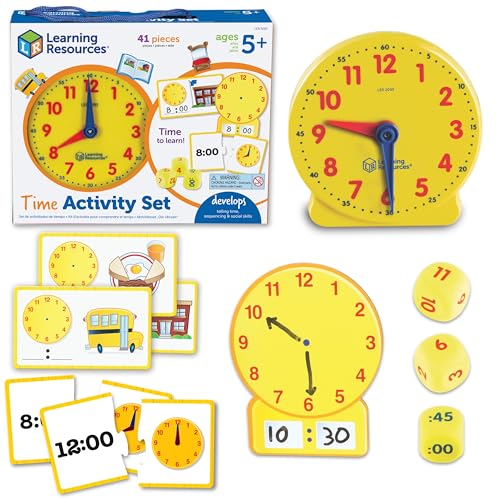
- Includes teaching clock, activity cards, puzzles, and more
- Helps kids practice hours, half-hours, and time concepts
- Good for classrooms, centers, or guided home practice
Best For: Teacher-led lessons and hands-on time practice
Silent Wall Clock
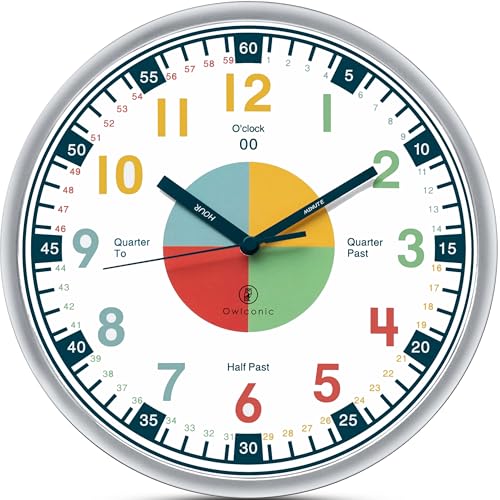
- Color-coded numbers and labeled hands teach analog time
- Silent sweep movement keeps rooms and classrooms quiet
- Includes a free downloadable learning workbook
Best For: Quiet rooms, homeschool, and classroom wall learning
Classic Demo Clock

- Hidden gears show how hour and minute hands work together
- Minute hand moves in 1-minute increments
- Includes stand and activity guide for instruction
Best For: Teacher demos and guided analog time lessons
Fully Labeled Wall Clock

- Every minute is numbered for easier analog reading
- Color-coded, labeled hands reduce confusion
- Silent sweep movement works well in quiet spaces
Best For: Daily time practice in bedrooms, classrooms, and homeschool
Talking Time Learning Toy
BEST LEARNING Talking Time Clock

- Reads time aloud in simple and advanced ways.
- Quiz Mode gives kids patient practice with feedback.
- Includes lullabies, lights, and batteries in the box.
Best For: audio-led solo practice and bedtime routines
Classroom Practice Set
Oyster&Pop 3-Pack Analog Teaching Clocks
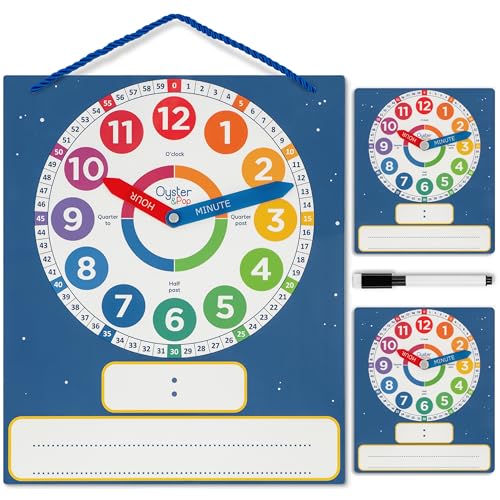
- Includes 1 magnetic teacher clock and 2 student clocks.
- Clearly labeled hands and color coding reduce guessing.
- Dry erase surface supports repeated time-telling practice.
Best For: homeschool, classroom, and sibling practice
Best for Comfort
LittleHippo TimeTots Learning Clock

- ROYGBIV colors help show the passage of time.
- Silent sweep movement avoids ticking noise.
- Clearly labeled hands and quarters support learning.
Best For: quiet rooms and everyday visual time practice
Classroom Demo Pick
Learning Resources Write & Wipe Demonstration Clock

- 12-inch face is easy to see
- Movable hands teach analog time
- Write-on surface supports digital practice
Best For: Guided classroom or homeschool time lessons
Quiet Wall Decor Pick
Roymnie 8" Silent Learning Clock

- Silent sweep movement avoids ticking
- Labeled hands and bold markings aid reading
- Colorful 8-inch design suits kids' spaces
Best For: A quiet wall clock for rooms and classrooms
Interactive Game Pick
Coogam Wooden Time Learning Clock Game

- Combines clock practice with a board game
- Includes analog, digital, and flashcard activities
- Reusable dry-erase cards add repeat practice
Best For: Hands-on kids who learn through games
Hands-On Classroom Set – Time Activity Set for Kids
If you want learning clocks for 6 year olds that go beyond decoration, this time activity set gives kids a hands-on way to practice telling time. The mix of a teaching clock, write-and-wipe clock, activity cards, puzzles, dice, and guide makes it easy to turn lessons into repeatable practice at home or in the classroom.
Best For: Teacher-led lessons, learning centers, and independent practice for kids ages 5 and up.
Pros:
- Includes multiple tools for varied time-telling practice.
- Uses a realistic analog clock with moving hour and minute hands.
- Supports hours, half-hours, and other foundational time concepts.
- Durable and suitable for classrooms, small groups, or home use.
Cons:
- Manual activity set, so it relies on adult or lesson structure.
- Best suited to practice, not a wall-mounted daily clock.
- No batteries or electronic features for interactive feedback.
For families or teachers who want a flexible teaching tool, this set offers a lot of ways to reinforce analog time skills. It is especially useful when you want children to practice by doing rather than just watching a clock.
Silent Wall Clock – Multicolor Learning Clock
This learning clock for 6 year olds is designed to teach, not just display, time. With color-coded numbers, labeled hour and minute hands, and time-language markers like Quarter Past and Half Past, it gives kids a clear step-by-step way to read an analog clock.
Best For: Bedrooms, classrooms, and homeschool spaces where a quiet wall clock also needs to teach time.
Pros:
- Color-coded layout and labeled hands make analog time easier to follow.
- Silent sweep movement avoids ticking distractions.
- 10-inch size and shatter-proof acrylic face suit regular kid use.
- Includes a free downloadable learning workbook for practice.
Cons:
- Requires one AA battery.
- Wall-mount design may not fit every learning setup.
- Best as a daily reference, not a hands-on manipulable clock.
This is a strong choice if you want a kid-friendly wall clock that reinforces time reading throughout the day. The silent movement and clear labeling make it practical for shared spaces where focus matters.
Classic Demo Clock – Big Time Student Clock
For learning clocks for 6 year olds that are built for direct instruction, this demonstration clock makes time lessons straightforward. The easy-to-read 12-hour face, moveable minute hand, and hidden gear mechanism help show how the hour hand changes as the minute hand moves.
Best For: Teacher demonstrations, small-group instruction, and early math time-telling practice.
Pros:
- Hidden gears automatically advance the hour hand when the minute hand moves.
- Minute hand moves in 1-minute increments for precise practice.
- Includes a removable stand and activity guide.
- Simple 12-hour display is easy for young learners to read.
Cons:
- Requires a 12V battery.
- Primarily a teaching aid rather than a decorative clock.
- Not designed as a wall-mounted everyday room clock.
This clock is a dependable pick when the goal is to teach the mechanics of analog time clearly and repeatedly. It works best as a classroom or homeschool demonstration tool where an adult is guiding the lesson.
Fully Labeled Wall Clock – Color-Coded Learning Clock
This learning clock for 6 year olds is built to make telling time feel less like guessing and more like reading. With every minute numbered, color-coded hands, and a silent sweep movement, it functions as both a classroom wall clock and a daily learning aid for kids who are still mastering analog time.
Best For: Families, classrooms, and homeschoolers who want a silent wall clock with built-in teaching support.
Pros:
- Fully numbered minute track supports step-by-step time reading.
- Color-coded, labeled hands help kids tell hour from minute hand.
- Silent movement is ideal for bedrooms, naps, and study time.
- Includes a printable teaching-time activity e-book.
Cons:
- Requires one AA battery.
- Wall-mount format is less hands-on than a classroom teaching clock.
- Best for ongoing reference rather than interactive manipulation.
As a teaching clock that also looks good in a kid’s room or school space, this model balances daily usefulness with visual clarity. It is a strong fit when you want an everyday clock that keeps reinforcing time skills in the background.
Talking Time Learning Toy – BEST LEARNING Talking Time Clock
For parents shopping for learning clocks for 6 year olds, this BEST LEARNING talking clock keeps the lesson interactive and self-guided. Kids can set the hands, hear the time read aloud in two ways, and move between time, quiz, and sleep modes without needing constant help.
Best For: Kids who learn best with audio feedback, simple solo practice, and a clock that can also double as a calming bedtime helper.
Pros:
- Reads the time aloud in simple and advanced formats.
- Includes Quiz Mode with patient retries and a green light response.
- Offers 7 learning skills, plus music and 10 classical lullabies.
- Carries easily and comes with 3 AAA batteries included.
Cons:
- Designed for younger kids, so older children may outgrow it quickly.
- Best suited to indoor tabletop use rather than wall mounting.
This is a strong pick if you want an interactive, all-in-one learning clock for 6 year olds that teaches telling time through repetition, sound, and play. The sleep timer and quiet volume options add extra usefulness beyond basic practice.
Classroom Practice Set – Oyster&Pop 3-Pack Analog Teaching Clocks
If you want learning clocks for 6 year olds that make hands-on practice easy, this Oyster&Pop 3-pack is built for repeated use. The set includes one large magnetic teaching clock and two student clocks, so kids can work through analog time, digital time, and time in words without waiting long for a turn.
Best For: Homeschooling, classrooms, or families who want multiple practice clocks for active, repeatable time-telling lessons.
Pros:
- Comes with 3 clocks, including a large magnetic demo clock and 2 student clocks.
- Hours, minutes, quarters, and color-coded hands are clearly labeled.
- Dry erase surface lets kids write digital time and time in words.
- Durable EVA foam and PET surface are made for repeated wipe-clean practice.
Cons:
- No batteries or electronic features for kids who prefer sound or lights.
- Works best as a teaching/practice set rather than a decorative clock.
This set stands out when you need more than one clock for practice and want a straightforward teaching tool. It is especially practical for children learning to connect analog hands with written time formats.
Best for Comfort – LittleHippo TimeTots Learning Clock
This LittleHippo option is a wall-mounted choice for learning clocks for 6 year olds who need a visual reference throughout the day. Its rainbow ROYGBIV design and clearly labeled hands help children connect the hour numbers and the passage of time in a way that is easy to see at a glance.
Best For: Bedrooms, classrooms, nurseries, and playrooms where a quiet, always-visible teaching clock is more useful than a handheld toy.
Pros:
- Uses ROYGBIV colors to show the passage of time.
- Hands, quarters, and hour numbers are clearly labeled for easier learning.
- Silent, non-ticking movement is ideal for quiet spaces.
- Fits a room decor style with a faux wood grain frame.
Cons:
- Requires a separate AA battery, which is not included.
- It is a wall clock, so it does not offer hands-on manipulation like a teaching toy.
If you want a clock that stays in view and reinforces time every day, this is a practical pick. It is less interactive than toy-style learning clocks, but it works well as a calm, readable teaching aid.
Classroom Demo Pick – Learning Resources Write & Wipe Demonstration Clock
If you’re comparing learning clocks for 6 year olds, this demonstration clock is a strong pick for guided practice. The oversized 12-inch face, movable hands, and write-on surface make it easy to teach analog and digital time together in a clear, hands-on way.
Best For: Teachers, homeschoolers, and parents who want a large, reusable demo clock for lessons and group time practice.
Pros:
- Large 12″ face is easy for students to see during lessons
- Movable hands support analog time demonstrations
- Write-on/wipe-off surface adds digital clock and practice space
- Works well for classroom use, circle time, and group instruction
Cons:
- Designed more for demonstration than independent play
- Battery powered, so it still needs setup for use
This is best suited to structured teaching rather than a toy-style clock. For kids learning time with adult guidance, the visual layout and reusable surface make lessons more interactive and repeatable.
Quiet Wall Decor Pick – Roymnie 8" Silent Learning Clock
For learning clocks for 6 year olds, this wall clock blends simple time-reading features with everyday room use. The bold markings, labeled minute hands and quarters, and silent sweep movement make it a practical option for kids who need a clear analog clock without ticking noise.
Best For: Kids’ rooms, classrooms, and home spaces where a quiet, easy-to-read analog clock is useful.
Pros:
- Silent, non-ticking movement keeps rooms quiet
- Bold markings and labeled hands make it easier to read
- 8-inch size works well as a visible wall clock
- Colorful design doubles as room decor
Cons:
- It teaches through display, not interactive practice
- Requires wall mounting and one AA battery
This is a straightforward analog clock for daily exposure to time reading. It makes the most sense when you want a kid-friendly wall clock that reinforces learning while fitting into a bedroom or classroom.
Interactive Game Pick – Coogam Wooden Time Learning Clock Game
If you want learning clocks for 6 year olds that feel like a game, this wooden set stands out. It combines an analog clock, digital time practice, flashcards, and a board game for 2-4 players, giving kids multiple ways to practice telling time.
Best For: Kids who learn best through hands-on games, plus homeschool and classroom time lessons.
Pros:
- Includes analog and digital time learning in one set
- Board game format keeps practice active and engaging
- Reusable dry-erase cards support repeated practice
- Wooden build feels sturdy and screen-free
Cons:
- Best for guided play, not a simple standalone clock
- May be more involved than needed for quick review sessions
This is the most interactive option of the three, with enough variety to hold attention during repeated practice. It’s a good fit when you want time-telling to feel like play while still covering core learning skills.
How We Picked These Learning Clocks for 6 Year Olds
We looked for clocks that make time concepts easier to understand, not just decorative kids’ room accessories. Strong picks needed readable faces, clear minute and hour markings, and teaching features that match early elementary skill levels.
We also favored models with practical formats for learning: silent wall clocks for daily exposure, demonstration clocks for guided lessons, and interactive toys for hands-on reinforcement. Durability, ease of use, and age-appropriate design all mattered.
Quick Comparison: Which Type Works Best?
For steady practice, wall clocks are great because children see them every day. For direct instruction, demonstration clocks and write-and-wipe models give parents and teachers more control. For engaged learners, talking or game-based models can make practice feel less like schoolwork.
If you want the simplest route, choose a clearly labeled analog clock. If your child already knows the basics, an interactive learning tool can help them move from recognition to real confidence with time-reading skills.
Key Buying Factors for Learning Clocks for 6 Year Olds
Readability
Look for large numerals, color-coded hour and minute hands, and clearly marked minute increments. The easier the face is to scan, the faster kids can connect clock position to time.
Learning Support
Many Learning Clocks for 6 Year Olds work best when they include labeled faces, removable covers, teaching cards, or practice activities. These features help children learn both whole hours and more advanced half-hour and quarter-hour concepts.
Noise Level
For bedrooms and classrooms, non-ticking or silent clocks are usually the better choice. Quiet operation keeps the clock useful without becoming distracting.
Format and Placement
Wall clocks are ideal for constant exposure, while tabletop teaching clocks are better for lessons and practice sessions. A combo of both can be especially helpful if your child is still building confidence.
Who Should Buy Which Learning Clocks for 6 Year Olds?
If you’re teaching at home, a demonstration or write-and-wipe clock gives you the most flexibility. If you want a clock that reinforces learning throughout the day, a labeled silent wall clock is a smart pick. If your child learns best through play, choose an interactive model with sounds, lights, or game-style practice.
For classrooms and homeschool spaces, the best choice is usually a durable, easy-to-read analog clock that makes time visible and consistent. For bedroom use, prioritize silence, clear numbers, and a face that supports quick recognition without extra distraction.