Metal-rich ground can make a great detector seem unstable, noisy, or simply blind to deeper targets. That is why the best metal detectors for mineralized soil focus on ground handling, target ID, and coil performance as much as raw depth.
In this roundup, we’ve narrowed the field to 10 options that suit prospecting, relic hunting, and general detecting in tough soil conditions, so you can choose with more confidence.
Best 10 Metal Detectors for Mineralized Soil Picks for 2026
Ultra-Frequency Gold Specialist
Fisher Gold Bug 2 for Tiny Gold in Mineralized Ground

- 71 kHz operation for high gold sensitivity
- Manual ground balance and mineralization switch
- Lightweight 2.9 lb build with iron discrimination
Best For: Tiny gold nuggets in highly mineralized soils
High-Frequency Prospecting Pick
Garrett A.T. Gold with Pro-Pointer

- 18 kHz operation supports small gold and relic hunting
- Manual and automatic ground balance for varied soils
- Includes waterproof Pro-Pointer AT
Best For: Prospectors who want a versatile detector and pinpointer bundle
All-Terrain Waterproof Detector
Minelab X-Terra PRO for Flexible Hunting
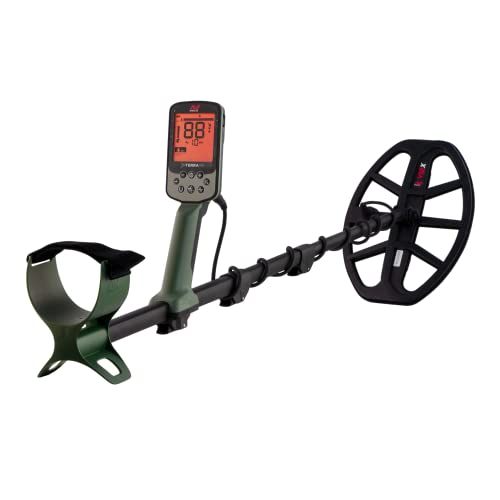
- PRO-SWITCH frequency control for adaptable detecting
- IP68 waterproof to 16 ft with all-terrain modes
- Lightweight 2.9 lb design with easy setup
Best For: Hunters who want a waterproof detector for varied terrain
Versatile Performance Detector
Fisher F75 for Trashy Ground and Prospecting

- Mineralization readout and FastGrab ground balance
- Double-filter discrimination for trashy sites
- Ergonomic design with backlight and pinpointing
Best For: Mixed-use hunting in difficult, mineralized ground
Portable Deep Search
SAKOBS Foldable Waterproof Metal Detector

- Lightweight 2.7-pound foldable design
- 11-inch IP68 DD coil for beach and shallow water
- Up to 12.8-inch detection depth under suitable conditions
Best For: Travelers and outdoor hobbyists who want a portable deep-search detector
Ultra-Frequency Gold Specialist – Fisher Gold Bug 2 for Tiny Gold in Mineralized Ground
If you want metal detectors for mineralized soil that are built to chase small gold, the Fisher Gold Bug 2 is a focused choice. Its 71 kHz operating frequency, manual ground balance, and mineralization switch are all geared toward keeping performance stable in hot ground, black sand, and rocky conditions.
Best For: Prospectors who want a lightweight detector for tiny gold nuggets and difficult mineralized sites.
Pros:
- 71 kHz frequency boosts sensitivity to small and deep gold nuggets.
- Manual 16-turn ground balance and 3-position mineralization switch help tune for changing soil conditions.
- Iron discrimination and audio boost improve signal clarity around trash and faint targets.
- Light 2.9 lb design with cushioned grip and hip-mountable housing supports longer hunts.
Cons:
- Manual tuning may take more practice than simpler detectors.
- Designed with gold prospecting in mind, so it is less of an all-purpose choice.
The Gold Bug 2 is a strong pick if your main goal is finding small gold in challenging ground rather than using one detector for everything. Its controls and frequency are clearly aimed at precision in mineralized soil.
High-Frequency Prospecting Pick – Garrett A.T. Gold with Pro-Pointer
For buyers comparing metal detectors for mineralized soil, the Garrett A.T. Gold offers a useful mix of high-frequency detection and ground balance control. Its 18 kHz operation, true all metal mode, and manual/automatic ground balance are designed to help you work small gold and other targets in changing ground conditions.
Best For: Prospectors who want a versatile detector with a bundled pinpointer for faster target recovery.
Pros:
- 18 kHz frequency is tuned for small gold nuggets, jewelry, coins, and relics.
- True all metal mode delivers maximum depth and sensitivity.
- Ground Balance Window helps handle varying soil conditions.
- Includes waterproof Pro-Pointer AT for quicker target recovery.
Cons:
- 5-inch coil is compact, so coverage may be slower in open areas.
- Not as specialized in ultra-high-frequency gold hunting as some dedicated nugget machines.
This is a practical choice if you want a detector that can prospect without giving up everyday usability. The included pinpointer adds convenience, especially when recovering targets in tougher soil.
All-Terrain Waterproof Detector – Minelab X-Terra PRO for Flexible Hunting
If you need metal detectors for mineralized soil that can also handle wet environments, the Minelab X-Terra PRO brings a flexible all-terrain layout. Its selectable Park, Field, and Beach modes, PRO-SWITCH frequency control, and fully waterproof IP68 build make it easy to adapt to different hunting conditions.
Best For: Hunters who want an easy-to-use waterproof detector for general detecting across changing terrain.
Pros:
- PRO-SWITCH technology lets you switch frequencies for different targets and conditions.
- IP68 waterproof design is rated to 16 ft.
- Park, Field, and Beach modes provide quick setup out of the box.
- Light 2.9 lb build and compact pack-down size improve portability.
Cons:
- 7.69 kHz operating frequency is lower than dedicated gold prospecting models.
- Less specialized for tiny gold than ultra-high-frequency detectors.
The X-Terra PRO is best viewed as a flexible all-around detector rather than a pure nugget machine. Its ease of use and waterproof design make it a strong option if your hunting spots vary a lot.
Versatile Performance Detector – Fisher F75 for Trashy Ground and Prospecting
The Fisher F75 is a practical option for metal detectors for mineralized soil when you also want strong all-around versatility. It combines trigger-actuated ground balance, mineralization readout, and double-filter discrimination to help you work trashy sites, beach areas, and gold prospecting locations more efficiently.
Best For: Detectorists who want a fast, ergonomic machine for mixed-use hunting in difficult ground.
Pros:
- Magnetic mineralization bar graph and readout help you monitor difficult soil.
- Trigger-actuated FastGrab ground balance speeds up setup.
- Double-filter discrimination modes help in trashy areas.
- Lightweight ergonomic design and backlight support longer hunts.
Cons:
- Not as specialized for tiny gold as higher-frequency prospecting detectors.
- At 4.7 lb, it is heavier than some lighter field-focused models.
The F75 stands out as a balanced detector for users who need adaptability more than one narrow specialty. Its ground handling tools and ergonomic design make it a solid fit for challenging detecting sessions.
Entry-Level Treasure Hunter – Garrett ACE 300
If you want metal detectors for mineralized soil that are still straightforward to run, the Garrett ACE 300 is a practical starter option. Its numeric target ID, improved iron resolution, and adjustable frequency help you separate wanted targets from trash and reduce interference in noisy hunting areas.
Best For: Beginners and casual detectorists who want easy target identification and solid trash separation.
Pros:
- Digital target ID gives a 0–99 conductivity scale for easier identification.
- Improved iron resolution helps separate valuable targets from iron trash.
- Electronic pinpointing aids accurate target location in All-Metal Mode.
- Adjustable frequency can help minimize interference in crowded areas.
Cons:
- It is battery powered rather than rechargeable.
- No waterproof coil rating is listed beyond the included cover.
- Less advanced than multi-frequency detectors for difficult ground.
Overall, the ACE 300 is a sensible choice if you want a simple detector that emphasizes identification and usability. It gives you core features that matter when working through messy ground without adding a complicated learning curve.
Easy Multi-Frequency Hunter – Minelab Vanquish 340
For buyers comparing metal detectors for mineralized soil, the Minelab Vanquish 340 stands out for its Multi-IQ technology, which runs 5 frequencies at once and automatically selects settings based on your soil. That makes it a strong pick if you want less guesswork and a detector that is built to adapt as conditions change.
Best For: Users who want an easy, turn-on-and-go detector with multi-frequency handling.
Pros:
- Multi-IQ uses 5 frequencies at once for broader detection coverage.
- Auto-select settings remove the need to choose frequencies or ground balance.
- Three search modes cover Park, Field, and Beach conditions.
- Lightweight 2.6 lb design and collapsible build improve portability.
Cons:
- Only 3 search modes, so it is less customizable than more advanced units.
- Operating frequency is listed at 10 kHz, which may feel basic on paper.
- Battery-powered operation means you will need spare batteries on hand.
The Vanquish 340 is a good fit if you value simplicity but still want the benefits of simultaneous multi-frequency performance. Its auto-adjusting design makes it especially appealing for detectorists who prefer to start searching quickly.
Feature-Packed Gold Finder – ULHUND DSP Detector
If you are shopping for metal detectors for mineralized soil and want more control over what you dig, this ULHUND model brings a DSP chip, a 10-inch coil, and four search modes. The adjustable stem, backlit LCD, and waterproof coil and stem make it a versatile option for beach, yard, and outdoor use.
Best For: Beginners and hobbyists who want more settings, better stability, and waterproof search capability.
Pros:
- Upgraded DSP chip is designed to improve stability and accuracy.
- 4 modes and 9 detectable metal types offer flexible searching.
- 10-inch IP68 waterproof search coil supports beach and water use.
- Lightweight design, adjustable stem, and included accessories add convenience.
Cons:
- The control box is not waterproof.
- At 5.5 lb, it is heavier than some competing detectors.
- Operating frequency is listed at 7 kHz, so it is not a multi-frequency model.
Overall, this detector offers a lot of practical features for the price-minded buyer who wants flexibility in different environments. It is a strong all-around choice if you want waterproof search hardware and a beginner-friendly display.
Field-Ready Precision – SUNPOW Professional Metal Detector for Adults
If you want one of the more versatile metal detectors for mineralized soil, the SUNPOW model leans into control and convenience. Its DSP chip, 5 search modes, and pinpoint accuracy help you sort targets more confidently, while the 12-inch waterproof coil broadens where you can hunt on land and in shallow water.
Best For: Adults who want a portable, easy-to-use detector with a larger coil and strong all-around performance for beaches, fields, and gardens.
Pros:
- 12-inch IP68-rated coil handles land and water hunting.
- 5 detection modes let you tailor searches to different targets.
- Backlit LCDs and pinpoint accuracy improve control in low light.
- Adjusts from 19 to 59 inches and folds for easier transport.
Cons:
- Control box is not waterproof.
- At 2 pounds, it is portable but still a full-size detector.
For buyers comparing metal detectors for mineralized soil, this SUNPOW unit stands out for flexibility rather than extreme specialization. It offers a practical mix of depth, visibility, and portability that suits mixed hunting conditions well.
Beginner-Friendly Depth – DR.ÖTEK Metal Detector for Adults
For shoppers looking at metal detectors for mineralized soil, the DR.ÖTEK model is built around simple controls and dependable target separation. Its DSP chip, 5 modes, and 10-inch IP68 coil make it a sensible pick for beach hunting, wet sand, and shallow-water use, while the larger LCD keeps readings easy to follow.
Best For: Beginners and casual detectorists who want an easy-to-read detector with useful depth and a complete accessory kit.
Pros:
- 5 modes include All Metal, Jewelry, and Pinpoint for flexible hunting.
- Up to 10-inch detection depth under suitable conditions.
- Large backlit LCD shows mode, depth, sensitivity, and battery status.
- Includes headphones, shovel, carrying bag, and battery.
Cons:
- Control box is not waterproof.
- In seawater, sensitivity may need to be lowered to reduce interference.
This is a straightforward option if you want a detector that is easy to learn but still has practical features for challenging ground conditions. It is especially appealing if you value an all-in-one starter kit for immediate use.
Portable Deep Search – SAKOBS Foldable Waterproof Metal Detector
If you are comparing metal detectors for mineralized soil and want something lightweight, the SAKOBS detector offers a strong balance of portability and search capability. Its upgraded DSP chip, 11-inch IP68 DD coil, and backlit target ID display are aimed at helping you work efficiently in beach sand, wet sand, and shallow water.
Best For: Travelers and outdoor hobbyists who want a foldable, lightweight detector with deep-search potential and a carrying backpack.
Pros:
- Foldable design and 2.7-pound weight make it easy to carry.
- 11-inch IP68 DD coil is suited to beach, wet sand, and shallow water.
- Supports up to 12.8-inch detection depth under suitable conditions.
- Includes headphones, digging shovel, and custom backpack.
Cons:
- Only four search modes versus some competitors with more options.
- Shortest extended length is 47 inches, so taller users may want to check fit.
This model is a practical choice when portability matters as much as performance. It gives you the core features most buyers want for outdoor treasure hunting without adding much bulk.
How We Picked These Metal Detectors for Mineralized Soil
We prioritized models with stronger ground balance options, proven sensitivity to small targets, stable operation in challenging terrain, and practical coil sizes for real-world use. We also looked at ease of setup, waterproofing, target identification, and overall versatility, since mineralized ground often demands more than just high power.
Quick Comparison: What Matters Most
For hot ground, the best detector is not always the deepest detector. Multi-frequency or higher-frequency units often respond better to small gold and low-conductive targets, while detectors with reliable ground balance can reduce false signals and improve stability. If you want a simpler experience, fully automatic models can still work well, but manual controls usually give more flexibility in difficult soil.
Key Buying Factors for Metal Detectors for Mineralized Soil
Ground Balance and Stability
Look for adjustable ground balance or strong automatic ground tracking. These features help cancel out the soil’s natural interference and make targets easier to hear and identify.
Frequency and Target Type
Higher frequencies are often better for small gold, while multi-frequency detectors can offer a balanced approach for mixed hunting conditions. If you plan to search for nuggets or tiny jewelry, prioritize sensitivity over simple power claims.
Coil Design and Size
A smaller coil can be easier to manage in heavily mineralized ground because it reduces noise and improves target separation. Larger coils may cover more ground, but they can be less forgiving in trashy or highly reactive soil.
Target ID, Audio, and Discrimination
Clear target ID and adjustable discrimination help you decide whether a signal is worth digging. In mineralized soil, where false responses are common, audio clarity matters just as much as display features.
Waterproofing and Build Quality
If you hunt streams, washes, or damp ground, waterproof coils and weather-resistant construction add flexibility. Durable materials also matter because rough terrain and frequent ground contact are common in prospecting areas.
Who Should Buy Which Metal Detectors for Mineralized Soil?
If you want the best chance at finding small gold in harsh ground, choose a detector built for sensitivity and ground balance rather than beginner simplicity. If you want a versatile all-around option, consider a multi-frequency or general-purpose model with good discrimination. Beginners should lean toward easy controls, strong visual feedback, and automatic tuning, while experienced users may prefer more manual adjustment to squeeze out better performance in mineralized soil.
In short, the right choice depends on your ground conditions and target goals. Matching frequency, coil size, and ground handling to the soil is the fastest way to get better results from Metal Detectors for Mineralized Soil.