If you want to preserve old slides and negatives on a Mac, the right scanner can save time and improve image quality dramatically. The best models balance resolution, color accuracy, and easy software compatibility.
Below, we’ve rounded up 10 of the best slide scanners for Mac in 2026, including high-resolution film scanners, standalone units, and budget-friendly all-in-one options.
Best 10 Slide Scanners for Mac Picks for 2026
Premium 35mm Detail Scanner

- 7200 DPI / 69 MP output
- 48-bit color with strong tonal range
- Mac support via downloaded driver
Best For: Mac users scanning 35mm slides and negatives who want maximum detail
Standalone Film Scanner

- Supports 135, 110, and 126 film
- Saves directly to SD/SDHC cards
- One-touch editing and tray feed
Best For: Users who want a simple standalone scanner for mixed film formats
Easy-View Film Converter

- 24MP output with built-in LCD
- Supports multiple film and slide formats
- No computer needed for scanning
Best For: Users who want fast standalone scanning with preview on the device
Touchscreen Multi-Format Scanner
HP Film & Slide Scanner HPFS500
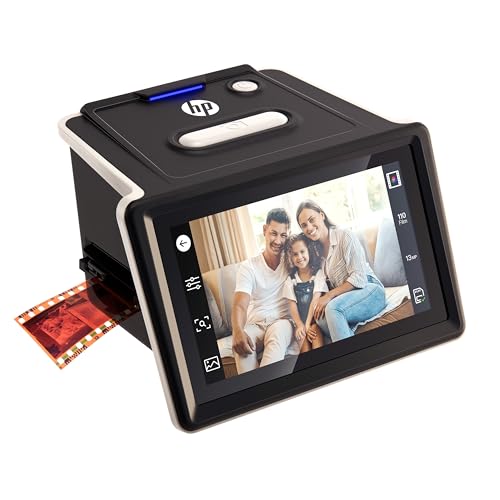
- Supports macOS 10.15+
- 5-inch touch screen with editing
- USB-C powered with SD saving
Best For: Mac users wanting a compact standalone scanner with direct SD workflow
Editor Pick
Plustek OpticFilm 8200i SE 35mm Slide Scanner

- 7200 dpi for 35mm slides and negatives
- Infrared dust and scratch removal
- Mac support with SilverFast SE Plus 9
Best For: Mac users who want high-resolution 35mm archival scanning
Best Standalone
5" Screen Photo, Slide & Negative Scanner

- Works without a computer or software
- 5-inch HD screen for previewing scans
- Supports slides, negatives, photos, and business cards
Best For: Users who want an easy standalone scanner and simple Mac transfers
Most Productive
Plustek OpticFilm 135i Automatic Slide Scanner

- Batch scans multiple slides and frames
- Up to 7200 dpi for 35mm film
- Supports panoramic and half-frame formats
Best For: High-volume 35mm scanning workflows with fast batch output
Easy Standalone Option
Fast no-computer scanner for old photos and slides
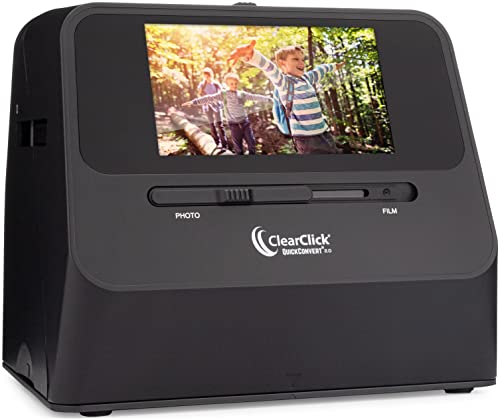
- No computer or drivers needed
- Built-in battery and 5" LCD
- Scans slides, negatives, and 4x6 photos
Best For: Quick, portable scanning with minimal setup
Mac-Friendly Film Scanner
High-resolution 35mm film scanner with Mac support

- Supports Mac OS 10.13 to 12.x
- 7200 dpi with infrared dust removal
- Includes SilverFast SE Plus 9 and Quick Scan Plus
Best For: Detailed 35mm slide and negative scanning on Mac or Windows
Standalone Multi-Format Pick
All-in-one film scanner with large display

- Scans film and slides in multiple formats
- 5" LCD plus HDMI viewing
- No computer needed for adjustments and saving
Best For: Fast, standalone conversion of mixed slide and film collections
Premium 35mm Detail Scanner – Plustek OpticFilm 8100
If you want slide scanners for mac that prioritize image quality over convenience, the Plustek OpticFilm 8100 is built for serious 35mm archiving. Its 7200 DPI resolution, 48-bit output, and CCD sensor are aimed at capturing fine detail and tonal range from slides and negatives, while Mac support is available through downloadable drivers.
Best For: Mac users who want high-resolution 35mm slide and negative scans with a desktop workflow.
Pros:
- 7200 DPI / 69 MP output for highly detailed scans
- 48-bit color depth and dynamic range support for shadow and highlight detail
- Includes SilverFast SE Plus 8 software bundle
- Supports Mac OS 10.8.x through 13.x via driver download
Cons:
- Designed for 35mm media only, not larger film formats
- Requires a computer-based workflow rather than standalone scanning
- Mac support depends on downloading the driver from Plustek
This is a strong choice if scan quality matters more than speed. It suits users restoring small-format film who want a detailed, software-assisted workflow on macOS.
Standalone Film Scanner – KODAK Slide N Scan Max
For buyers comparing slide scanners for mac, the KODAK Slide N Scan Max stands out as a computer-free option. It scans 135, 110, and 126 film formats and saves directly to an SD card, so it’s more about simple archiving than a Mac-connected editing workflow.
Best For: Anyone who wants a fast, standalone way to digitize mixed film formats without using a computer.
Pros:
- Works with 135mm, 110mm, and 126 film, including slides and negatives
- Saves directly to SD/SDHC cards up to 32GB
- One-touch editing keeps the process simple
- Streamlined tray feeding reduces constant repositioning
Cons:
- Windows 7 is listed in the minimum system requirements, so Mac integration is not the focus
- Resolution is lower than higher-end dedicated film scanners
- Best suited to convenience rather than professional-grade detail
This model makes sense if you want a quick, self-contained scanner for old film and slides. It’s a practical choice for easy digitization, but not the best fit if your priority is a Mac-based scanning setup.
Easy-View Film Converter – Magnasonic FS71
The Magnasonic FS71 is a straightforward pick among slide scanners for mac if you want a simple, no-computer scanning station. It converts multiple film and slide formats to 24MP JPEG files, with a built-in 5-inch LCD and HDMI output for viewing directly on the device or a larger screen.
Best For: Users who want fast, standalone film and slide scanning with on-device preview and editing.
Pros:
- Converts 35mm, 110, 126, and Super 8 film plus slides
- 5-inch LCD screen and HDMI output for easy viewing
- Scans and saves to SD card without needing a computer
- On-scanner brightness and RGB color correction controls
Cons:
- Minimum system requirements list Windows 7, so it is not Mac-first
- 24MP output is useful, but not as specialized as a dedicated high-resolution film scanner
- SD card is not included
If you want quick digitizing with minimal setup, this scanner keeps things simple. It is best for users who value speed, previewing, and basic control over a computer-connected workflow.
Touchscreen Multi-Format Scanner – HP Film & Slide Scanner HPFS500
If you’re shopping for slide scanners for mac and want a modern standalone unit, the HPFS500 is a practical option with macOS support listed in its requirements. It uses a 5-inch touch screen, USB-C power, and direct SD-card saving, making it easy to digitize slides and film without a complicated setup.
Best For: Mac users who want a compact, touchscreen film and slide scanner with direct-to-SD workflow.
Pros:
- Supports macOS 10.15 or later
- 5-inch touch screen for previewing and editing on-device
- Handles 135, 126, and 110 film strips and positive slides
- USB-C powered and saves directly to SD card
Cons:
- 13MP sensor with 22MP interpolation is lower than some higher-end models
- Limited to smaller film formats listed in the specs
- Designed as a standalone scanner, not a computer-tethered workflow
This is a good fit if you want a simple Mac-compatible scanner that doesn’t demand extra software. It favors convenience and portability, while still offering the essentials for digitizing old slides and film.
Editor Pick – Plustek OpticFilm 8200i SE 35mm Slide Scanner
If you want slide scanners for mac that prioritize image quality, the Plustek OpticFilm 8200i SE is built for serious 35mm film and mounted slide digitizing. It offers 7200 dpi resolution, 48-bit input, and integrated infrared dust and scratch removal, making it a strong choice when preserving detail matters more than speed.
Best For: Mac users who want a high-resolution 35mm film and slide scanner with infrared defect removal.
Pros:
- Integrated infrared channel helps detect dust and scratches for easier cleanup.
- 7200 x 7200 dpi output is well suited to detailed 35mm slides and negatives.
- Includes SilverFast SE Plus 9 and Plustek software support for Mac.
- Supports Mac OS 10.7 to 14.x, with drivers available from Plustek.
Cons:
- Designed for 35mm media, so it is not an all-in-one photo scanner.
- Requires software setup and driver installation instead of standalone use.
This is a good fit if your priority is quality-first scanning and you want Mac compatibility with tools that help reduce retouching work. It is less convenient than standalone models, but more capable for detailed archival scans.
Best Standalone – 5" Screen Photo, Slide & Negative Scanner
For slide scanners for mac that keep things simple, this all-in-one photo, slide, and negative scanner works without a computer. It scans 35mm slides, 135 and 110 negatives, printed photos, and business cards to JPEGs, then lets you transfer files to your Mac later through USB.
Best For: Families or beginners who want a standalone scanner with a built-in screen and easy Mac transfer.
Pros:
- 5-inch HD viewing screen makes previews and edits easy on-device.
- Standalone operation means no software, apps, or drivers are needed to scan.
- Supports multiple formats, including slides, negatives, printed photos, and business cards.
- Saves files directly to the included SD card for quick archiving.
Cons:
- Resolution is 1080P, so it is not aimed at high-end archival detail.
- Uses a basic offline workflow rather than advanced editing software.
This model is best when convenience matters more than maximum resolution. It is especially practical if you want fast family photo digitizing and only need a simple USB transfer to your Mac afterward.
Most Productive – Plustek OpticFilm 135i Automatic Slide Scanner
If you are comparing slide scanners for mac but care most about batch efficiency, the Plustek OpticFilm 135i is built for faster 35mm workflows. It scans slides and film negatives at up to 7200 dpi, supports batch scanning with multiple holders, and is designed to work with 3rd-party editing software export.
Best For: Users who need faster batch scanning of 35mm slides and negatives with Mac-friendly editing workflows.
Pros:
- Batch scans multiple slides or frames at once for better productivity.
- 7200 x 7200 dpi resolution supports detailed 35mm scans.
- 5-element lens is designed to improve edge stability and infrared dust/scratch detection.
- Supports multiple 35mm film types, including panoramic and half-frame formats.
Cons:
- Mac support is not listed in the supplied notes, so compatibility should be checked carefully.
- Focused on 35mm media rather than general-purpose photo scanning.
This is the strongest option here for users with a lot of 35mm material to digitize. Its batch workflow and high-resolution output make it better suited to efficient archival work than casual one-off scans.
Easy Standalone Option – Fast no-computer scanner for old photos and slides
If you want slide scanners for mac-free digitizing and don’t want to deal with software setup, the ClearClick QuickConvert 2.0 is built for simple one-at-a-time scanning. It converts 35mm slides, negatives, and 4×6 photos to JPEG files directly onto an SD card, with a built-in screen and rechargeable battery for portable use.
Best For: Quick, standalone scanning of mixed photo, slide, and negative collections without a computer.
Pros:
- No computer or drivers required; scans save straight to SD memory card.
- Built-in rechargeable battery and 5″ preview LCD make it easy to use anywhere.
- Scans photos, 35mm slides, and 110/126 negatives in about 2-3 seconds each.
- Can scan photos without removing them from albums or mounts.
Cons:
- Works one item at a time and does not have an autofeeder.
- Does not support 5×7 photos.
- Best suited to 4×6 photos or smaller rather than larger prints.
For easy home archiving, this is a practical pick if you value speed and simplicity over advanced editing. It’s less about high-end software workflows and more about turning old memories into digital files with minimal effort.
Mac-Friendly Film Scanner – High-resolution 35mm film scanner with Mac support
For Mac users looking at slide scanners for mac compatibility, the Plustek OpticFilm 8300i SE is a dedicated 35mm film and slide scanner with included software support for both Mac and Windows. It focuses on higher-detail film digitizing with 7200 dpi resolution, infrared dust-and-scratch removal, and bundled tools for managing the scan process.
Best For: Mac and Windows users who want a dedicated 35mm scanner with higher-resolution film digitizing.
Pros:
- Supports Mac OS 10.13 through 12.x, plus Windows 7/8/10/11.
- Up to 7200 x 7200 dpi scanning with 3.91 Dmax and multi-exposure support.
- Built-in infrared channel helps detect and remove dust and scratches.
- Includes SilverFast SE Plus 9 and Plustek Quick Scan Plus software.
Cons:
- Designed specifically for 35mm negatives and slides, not general photo scanning.
- Uses USB and software workflow rather than standalone onboard saving.
- May be more involved than simple all-in-one scanners.
This is the most specialized option in the group, and it makes sense if your priority is detailed 35mm film archiving on a Mac. The included software and dust-removal features point to a more serious scanning workflow rather than quick casual use.
Standalone Multi-Format Pick – All-in-one film scanner with large display
If you want slide scanners for mac alternatives that don’t depend on a computer, the Magnasonic FS71 is a straightforward all-in-one choice for digitizing old film and slides. It converts 35mm, 110, 126, and Super 8 film as well as 135, 126, and 110 slides into 24MP JPEG files, while letting you preview and adjust scans right on the unit.
Best For: Users who want a fast standalone scanner for mixed slide and film formats with easy onboard controls.
Pros:
- Converts multiple formats, including 35mm/110/126/Super 8 film and several slide sizes.
- Large 5″ LCD and HDMI output make it easy to view scans directly or on a monitor.
- No computer needed; brightness, RGB color correction, flip, and mirror can be adjusted on the scanner.
- Fast loading trays let you scan in less than 5 seconds per image.
Cons:
- Not a Mac software-based workflow; it operates as a standalone scanner.
- Uses an SD card for storage, which is not included.
- Best for quick conversion rather than advanced desktop editing.
Overall, this model is a strong pick if you want a self-contained way to clear out a box of old slides without setting up drivers or editing software. Its bigger screen and tray-based handling make it especially convenient for batch-style home archiving.
How We Picked the Best Slide Scanners for Mac
To narrow down the best Slide Scanners for Mac, we prioritized Mac compatibility, real-world ease of use, optical resolution, dust and scratch handling, and scan workflow. We also looked for models that make sense for different users, from casual family archiving to more serious film restoration.
Quick Comparison
In this roundup, you’ll find two main categories: dedicated 35mm film scanners that typically deliver the best image quality, and standalone photo/slide scanners that are simpler to use and don’t require a computer during scanning. Dedicated scanners are usually the better choice if quality and editing flexibility matter most, while standalone units are often better for speed and convenience.
Key Buying Factors for Slide Scanners for Mac
Compatibility and Software
Make sure the scanner supports your version of macOS and includes software that runs smoothly on Mac. Some models bundle scanning software, while others work best with third-party tools. If you plan to edit heavily, look for good file output options and stable drivers.
Resolution and Output Quality
For 35mm slides, optical resolution matters more than inflated “interpolated” numbers. Higher true DPI can help capture fine detail, but workflow and sensor quality are just as important. A 48-bit color depth can also help preserve tonal range for editing.
Dust and Scratch Removal
If you’re scanning old slides, infrared dust and scratch correction can be a major advantage. It won’t fix everything, but it can save a lot of cleanup time and improve the final result on damaged film.
Batch Speed and Film Handling
Batch scanning is valuable if you have boxes of slides to digitize. Automatic feeders and fast preview cycles can make a big difference, especially when scanning large archives. Just check whether speed comes at the expense of image quality.
Standalone Vs. Computer-Based Use
Some buyers want a scanner that works without a computer, while others prefer the control of a Mac-connected workflow. Standalone units are simpler, but computer-based scanners usually offer better image adjustment and more consistent archiving.
Who Should Buy Which Slide Scanners for Mac?
If you want the highest-quality results for 35mm film and slides, choose a dedicated scanner with strong optical resolution and Mac support. If you’re digitizing mixed media or want the easiest setup, a standalone all-in-one scanner may be the better fit. For large collections, prioritize batch capability and software that makes repetitive scanning less tedious.
For most buyers, the best Slide Scanners for Mac are the ones that match their archive size, editing needs, and tolerance for hands-on setup. Picking the right workflow matters as much as picking the highest specs.