The right preamp can make a quiet dynamic microphone easier to record, stream, or broadcast without forcing you to raise noisy gain levels later. For home studios, the best choice depends on your microphone, interface, available power, and how much control you need.
We compared 10 microphone preamps for home studios, including compact inline boosters, standalone XLR units, multi-input models, and the Focusrite Scarlett Solo interface. Use the guide below to narrow the options by gain, connectivity, phantom-power requirements, and intended workflow.
Best 10 Microphone Preamps for Home Studios Picks for 2026
Best Inline Booster
Cloudlifter CL-1 Mic Activator

- Adds up to +25 dB of gain
- Does not pass phantom power to passive mics
- Designed for vocals, podcasts, and ribbons
Best For: Passive microphones needing extra clean gain
Best Low-Noise Class-A Option
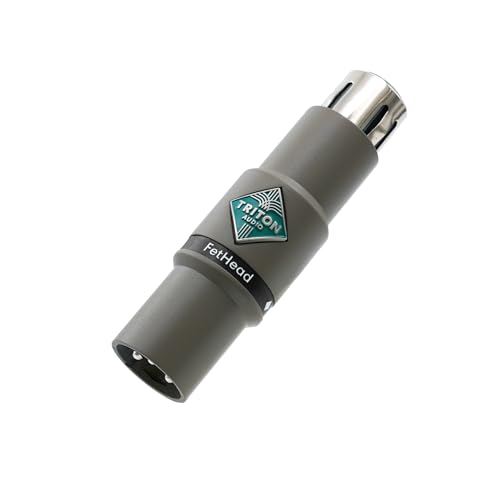
- Low-noise Class-A JFET amplifier
- Shielded enclosure for signal protection
- Compact inline microphone preamp
Best For: Existing microphone chains needing inline amplification
Best Complete Recording Hub
Focusrite Scarlett Solo 3rd Gen
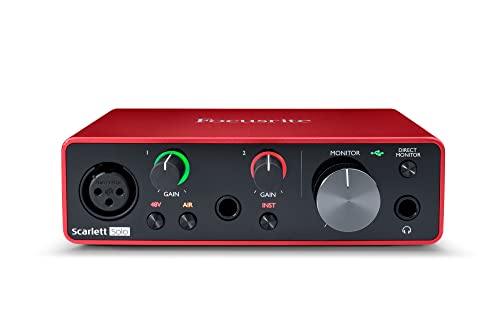
- One XLR mic preamp with 56 dB gain
- Hi-Z input for guitar or bass
- 24-bit/192 kHz USB recording
Best For: Solo musicians and podcasters recording to a computer
Best Multi-Channel Mixer

- 10–60 dB adjustable gain
- Three-channel mixing with 48V support
- XLR, 6.35 mm, and 3.5 mm connectivity
Best For: Multi-mic podcasting, streaming, and flexible studio routing
Compact Condenser Booster

- Adds 29dB of gain for condenser microphones
- LED confirms phantom-power operation
- Locking XLR connection supports stable setups
Best For: Simple condenser-mic signal boosting in a home studio
Multi-Mic Studio Hub
- Provides up to 60dB of microphone gain
- Includes 48V phantom power
- Connects up to three mics with independent level controls
Best For: Podcasts, interviews, and small group recordings
Ultra-Low-Noise DI Preamp

- Offers variable gain from 19dB to 66dB
- Uses USB-C 5V/1A power for portable setups
- Works with microphones or high-impedance instruments as a DI box
Best For: Flexible home recording with microphones and instruments
Compact Clean Gain

- 20dB balanced gain
- 48V support for dynamic and condenser mics
- Compact low-noise metal design
Best For: Home studios needing simple, portable XLR gain
Dynamic Mic Specialist

- Up to 29dB clean gain
- For dynamic and ribbon microphones
- Requires external 48V phantom power
Best For: Low-output dynamic-mic podcasting and recording
Flexible Output Hub
+38dB Studio Microphone Preamp

- Up to 38dB gain
- 48V support for dynamic and condenser mics
- XLR, 3.5mm, and 6.35mm outputs
Best For: Flexible home-studio and live-streaming connections
Best Inline Booster – Cloudlifter CL-1 Mic Activator
For home studios using passive microphones, the Cloudlifter CL-1 adds up to 25 dB of gain while helping preserve the microphone’s natural sound. It uses phantom power from the connected preamp without passing that phantom power to the microphone, making it a practical partner for quiet vocals, podcasts, voiceovers, and passive ribbon microphones.
Best For: Home-studio owners who need clean extra gain for passive microphones.
Pros:
- Provides up to +25 dB of microphone gain.
- Uses standard +48V phantom power without transferring it to passive microphones.
- Works with passive ribbons and tube, battery, or power-supply-driven microphones.
- Compact stainless-steel enclosure suits studio, streaming, and live applications.
Cons:
- It is a one-channel inline activator, not a complete audio interface or standalone recording system.
- It requires a connected microphone input with phantom power.
The CL-1 is a focused gain solution rather than a full preamp setup. Choose it when your existing interface or mixer is compatible but struggles to provide enough clean gain for a quiet passive mic.
Best Low-Noise Class-A Option – Triton Audio FetHead
The Triton Audio FetHead is an in-line microphone preamp for home studios that want a low-noise gain stage in a compact format. Its Class-A JFET amplifier, double single-ended topology, matched JFETs, and shielded enclosure are aimed at strengthening a microphone signal while limiting unwanted noise and interference.
Best For: Users seeking a compact, low-noise inline preamp with Class-A JFET circuitry.
Pros:
- Uses a low-noise Class-A JFET amplifier.
- Includes four matched JFETs for its amplification design.
- Shielded enclosure helps support quieter operation.
- Compact in-line format integrates with an existing microphone setup.
Cons:
- The supplied notes do not specify a gain range or detailed connector configuration.
- It is an in-line preamp rather than a complete USB recording interface.
FetHead makes the most sense when your recording chain already includes an interface or mixer and you want a dedicated, low-noise inline amplification stage. Confirm your setup’s power and connector requirements before buying.
Best Complete Recording Hub – Focusrite Scarlett Solo 3rd Gen
The Focusrite Scarlett Solo 3rd Gen is a practical choice for home studios that need microphone preamps plus computer connectivity. It combines one XLR mic preamp with a Hi-Z instrument input, 56 dB of gain range, switchable Air mode, 24-bit/192 kHz recording, and USB connectivity for recording music, podcasts, vocals, and instruments.
Best For: Solo creators recording one microphone and one guitar or bass into a computer.
Pros:
- Provides a dedicated XLR microphone preamp with a 56 dB gain range.
- Includes a separate Hi-Z instrument input for guitar or bass.
- Supports recording and mixing up to 24-bit/192 kHz.
- Offers Air mode, low-noise balanced outputs, and bundled recording software.
Cons:
- Its single XLR mic input limits simultaneous microphone recording.
- It depends on USB-connected computer or compatible iPad workflows rather than operating as a purely standalone preamp.
Among microphone preamps for home studios, the Scarlett Solo is the most broadly useful option here if you also need an interface for instruments, headphones, monitors, and recording software. It is especially well matched to one-person music and podcast setups.
Best Multi-Channel Mixer – 3-Channel Mic Gain Booster
This multi-channel microphone preamp offers 10–60 dB of gain and is designed for home studios, podcasts, and live streaming. It combines balanced XLR connectivity with 6.35 mm and 3.5 mm inputs and outputs, plus 48V power and three-channel mixing for flexible connections to interfaces, mixers, consoles, and speakers.
Best For: Podcasters and streamers who need multiple inputs and flexible connection options.
Pros:
- Offers an adjustable 10–60 dB gain range.
- Supports three-channel mixing and simultaneous condenser and dynamic microphone use.
- Provides balanced XLR connections alongside 6.35 mm and 3.5 mm options.
- Uses a compact metal enclosure designed to reduce interference.
Cons:
- The 3.5 mm and 6.35 mm inputs are unbalanced.
- The supplied notes do not identify a specific brand, model name, or included accessories.
- Its broader mixing layout may be more than needed for a single-microphone recording chain.
This unit is a flexible choice when a home-studio setup needs more than one input type or channel. Its 10–60 dB gain range and 48V support make it adaptable, while the unbalanced auxiliary connections are worth considering when planning the signal chain.
Compact Condenser Booster – 29dB Low-Noise XLR Preamp
For home studios seeking microphone preamps for home studios, the StudioMan CPM1L is a compact option for adding up to 29dB of gain to condenser microphones. Its plug-and-play XLR design, LED status light, and locking mechanism make it straightforward for recording or stage use.
Best For: Condenser microphone users who want a simple, compact signal boost.
Pros:
- Provides 29dB of gain with a low-noise preamp circuit.
- LED indicates when phantom power is supplied.
- Locking mechanism helps prevent accidental disconnections.
- Standard XLR ports and gold-plated contacts support broad equipment compatibility.
Cons:
- Its stated design is specifically focused on condenser microphones.
- It provides a fixed 29dB gain level rather than variable gain control.
The CPM1L is a practical choice when you need a small, easy-to-check XLR booster rather than a multi-input preamp. The status light and locking connection are useful conveniences for a home recording setup.
Multi-Mic Studio Hub – 60dB Preamp with 3 XLR Inputs
This three-input unit is one of the more flexible microphone preamps for home studios, especially if you record podcasts, interviews, or small group sessions. It combines up to 60dB of gain, 48V phantom power, and independent level controls in a compact metal chassis.
Best For: Multi-person podcasts, broadcasts, and home studios needing three microphone inputs.
Pros:
- Offers up to 60dB of gain for dynamic and condenser microphones.
- Built-in 48V phantom power supports professional condenser microphones.
- Three independent XLR inputs allow simultaneous microphone connections.
- Compact metal housing and plug-and-play operation suit daily desktop use.
Cons:
- The product is described as a preamp to pair with an existing audio interface, not a complete recording interface.
- Its three-input layout may be unnecessary for single-microphone setups.
Choose this model when input count matters more than the smallest possible footprint. Independent controls and phantom power make it a convenient center for basic multi-microphone recording or broadcast setups.
Ultra-Low-Noise DI Preamp – Variable 19–66dB Gain Preamp
The RO03 stands out among microphone preamps for home studios by combining variable 19–66dB gain with a stated -120dB EIN noise performance. USB-C power, multiple outputs, and a high-impedance TS input also make it suitable for portable setups and instruments as well as microphones.
Best For: Home recordists who need adjustable gain, low noise, USB-C power, or DI functionality.
Pros:
- Provides variable gain from 19dB to 66dB.
- Uses a 5V/1A USB-C power input compatible with chargers and power banks.
- Offers three simultaneous outputs and selectable +4dBu and -10dBV output levels.
- Approximately 1MΩ TS input impedance helps preserve high-impedance instrument tone.
Cons:
- Only one input can be active at a time.
- It requires an appropriate cable and connected audio interface or other compatible equipment for typical recording use.
- The controls and output options may be more involved than needed for a basic single-mic setup.
With adjustable gain, USB-C power, and DI-box capability, the RO03 is a versatile choice for creators working with microphones and instruments. Its single-input design favors signal fidelity and flexibility over multi-mic recording.
Compact Clean Gain – 20dB Microphone Preamp
For home studios seeking microphone preamps for home studios, this compact XLR unit offers 20dB of balanced gain, low-noise operation, and 48V power for dynamic and condenser microphones. Its lightweight metal housing also suits podcasting, recording, and live streaming setups.
Best For: Home-studio users who need straightforward, clean gain and phantom-power support in a compact format.
Pros:
- Provides 20dB of clean, transparent gain.
- Supports both dynamic and condenser microphones with 48V power.
- Balanced circuitry and a metal case help minimize noise and interference.
- Compact, lightweight design is easy to carry and store.
Cons:
- Offers less gain than some higher-gain alternatives.
- The supplied details do not mention additional output formats beyond XLR.
This is a practical choice when you want a simple inline preamp for improving microphone level without adding much bulk to your setup.
Dynamic Mic Specialist – StudioMan DPM1 XLR Preamp
Among microphone preamps for home studios, the StudioMan DPM1 is aimed specifically at low-output dynamic and ribbon microphones. It adds up to 29dB of clean gain in a plug-and-play XLR form, while requiring 48V phantom power from the connected interface or mixer.
Best For: Podcasters, streamers, and studio users with dynamic or ribbon microphones who need extra gain without replacing their interface.
Pros:
- Delivers up to 29dB of clean, transparent signal boost.
- Designed for low-output dynamic and ribbon microphones.
- Metal housing provides durability and interference shielding.
- Compact male-to-female XLR design is easy to place between a microphone and interface.
Cons:
- Not compatible with condenser microphones.
- Requires 48V phantom power, which is not included.
The DPM1 makes the most sense for dynamic-mic users whose interface becomes noisy when its preamp is turned up, but it is not a flexible option for mixed condenser-microphone collections.
Flexible Output Hub – +38dB Studio Microphone Preamp
This +38dB model is one of the more versatile microphone preamps for home studios, combining high gain with 48V support for dynamic and condenser microphones. XLR, 3.5mm, and 6.35mm outputs make it easier to connect with interfaces, mixers, speakers, and live-streaming equipment.
Best For: Home-studio and live-streaming setups that need high gain plus multiple connection options.
Pros:
- Offers up to 38dB of signal gain.
- Supports dynamic and condenser microphones with 48V power.
- Provides XLR, 3.5mm, and 6.35mm output options.
- Balanced circuitry is designed for low noise and low distortion.
Cons:
- Its multiple output formats may be unnecessary for a basic XLR-only setup.
- The supplied details do not specify included accessories or controls.
Choose this unit when connection flexibility matters as much as gain. Its compact metal enclosure also makes it practical for moving between studio and live-streaming applications.
How We Picked the Best Microphone Preamps for Home Studios
We focused on practical features that affect recording quality and everyday usability: available gain, noise performance, input and output connections, phantom-power compatibility, power requirements, build quality, and setup simplicity. The selection includes established products such as the Cloudlifter CL-1, Triton Audio FetHead, and Focusrite Scarlett Solo, alongside affordable standalone preamps with different gain ranges and connection options.
Because these products are not identical, we considered their intended roles rather than treating every model as a direct substitute. Inline boosters are designed to add clean gain before an existing interface, while standalone preamps may provide their own controls, inputs, outputs, or mixing functions.
Quick Comparison
| Best For | Look For | Typical Choice |
|---|---|---|
| Low-output dynamic microphones | Inline gain boost and low noise | Cloudlifter CL-1 or FetHead |
| Simple USB recording | Built-in interface and computer connectivity | Focusrite Scarlett Solo |
| Flexible home setups | Multiple inputs, outputs, or gain controls | Standalone multi-input preamp |
| Budget upgrades | Plug-and-play XLR operation | Compact 29dB or 38dB booster |
Key Buying Factors for Microphone Preamps for Home Studios
Gain and Noise
Dynamic and ribbon microphones can need substantially more gain than many condenser microphones. A booster with around 20–30dB may be enough for a reasonably sensitive microphone, while quieter broadcast models may benefit from a higher-gain preamp. More gain is not automatically better: the preamp should remain quiet at the level you need.
Phantom Power and Compatibility
Check whether the unit requires 48V phantom power from an interface or mixer, supplies phantom power itself, or is intended only for compatible microphones. Inline boosters commonly use phantom power while passing it through to a dynamic microphone without powering the microphone element in the same way a condenser requires. Follow the manufacturer’s instructions, especially with ribbon microphones.
Connections and Workflow
Choose an inline XLR booster if you already own an interface and only need more clean gain. A standalone model may be better if you need multiple inputs, 3.5mm or 6.35mm connections, extra outputs, or basic mixing. An audio interface such as the Scarlett Solo is the most practical route when you also need computer recording, headphone monitoring, and conversion in one device.
Power, Build, and Placement
Confirm whether the preamp uses phantom power, USB-C, an external adapter, or another power source. Metal housings and short signal paths can suit fixed studio setups, while compact inline units are easier to mount directly between a microphone and XLR cable.
Who Should Buy Which Microphone Preamps for Home Studios?
Buy the Cloudlifter CL-1 or FetHead if you already have a capable interface but your dynamic microphone needs more gain. These are the simplest choices for podcasting and broadcast-style vocals.
Choose the Focusrite Scarlett Solo if you need a complete computer recording setup rather than a gain booster alone. It combines microphone preamplification with USB connectivity and monitoring features.
Choose a standalone multi-input preamp if your setup includes several microphone types, multiple connection formats, or a need for built-in controls. These models can offer more flexibility, but check their noise specifications and exact routing before buying.
Choose a compact budget booster if you want a straightforward upgrade for one microphone and already have compatible equipment. Prioritize clean gain, phantom-power requirements, and XLR compatibility over unusually high maximum gain.