The right microscope can make fine-pitch soldering, PCB inspection, and component identification far easier. The models in this roundup range from compact digital units with built-in screens to more advanced systems with HDMI output, multiple lenses, and continuous optical magnification.
Use the buying guide below to compare image quality, working space, ergonomics, and connectivity before choosing a microscope that matches your bench, projects, and repair workflow.
Best 10 Microscopes for Electronics Repair Picks for 2026
Best High-Resolution Camera
Mechanic MOS-8K Industrial Microscope

- 41MP Sony IMX678 sensor
- 8K, 4K, and 1080p capture modes
- HDMI and USB image output
Best For: Professional micro-soldering and PCB imaging
Best Compact Budget Option
Aikokkl 5-Inch LCD Soldering Microscope

- Standalone 5-inch IPS display
- C-clamp keeps both hands free
- Plug-and-play Windows and Mac viewing
Best For: Beginner soldering checks and compact benches
Best Complete Soldering Station
Andonstar AD249S-M Plus 3-Lens Microscope

- Three interchangeable lenses
- 2160p video with HDMI output
- Helping hands and expanded soldering base
Best For: Dedicated benches needing a full repair workstation
Best Optical Precision
MOLIMOLLY 7-45x Binocular Microscope

- Continuous 7x-45x optical magnification
- 100mm working distance for bench repairs
- Adjustable LED ring light and eyepiece refraction
Best For: Binocular PCB, phone, watch, and jewelry inspection
Best All-Purpose Kit
Andonstar AD246S-M 3-Lens Digital Microscope

- 2160P video with HDMI output and 7-inch display
- Soldering lens plus two additional lenses
- Adjustable boom arm and measurement software
Best For: Repair, recording, demonstrations, and general inspection
Best 4K Workspace
LINKMICRO LM208S-A Digital Soldering Microscope
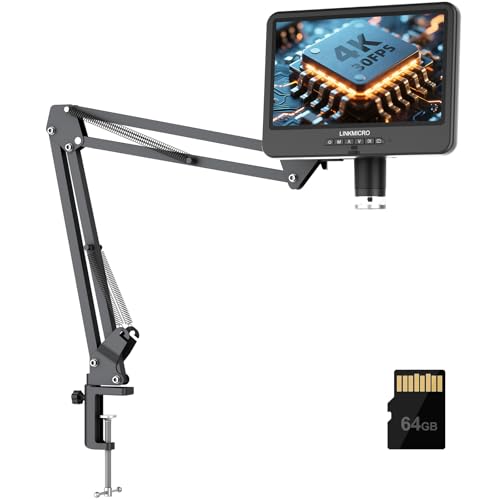
- Real-time 4K at 30FPS with 10.1-inch IPS screen
- 70cm reach and 60cm working height
- HDMI/USB output plus microphone and 64GB card
Best For: Large electronics repairs, soldering, and recorded demonstrations
Versatile Repair Pick
Andonstar AD249S-M 3-Lens 2160P Microscope

- Dedicated soldering lens and adjustable boom arm
- 2160P video with HDMI output and 32GB card
- Three lenses for repair, general viewing, and slides
Best For: Multi-purpose electronics repair and inspection
Large-Workspace Choice
Andonstar 10.1-Inch HDMI Soldering Microscope

- 10.4-inch-high stand for larger work envelopes
- Large metal base suits computer circuit boards
- 2160P video, HDMI output, UV filter, and remote
Best For: Large-board repair and high-clearance bench work
Fully Equipped Bench Pick
Andonstar AD249S-Max 3-Lens Microscope

- Oversized Max station for professional soldering work
- Helping hands, tool holder, mat, and 3 lenses included
- 2160P HDMI imaging with up to 2040x listed output magnification
Best For: Dedicated, fully equipped electronics repair benches
Best Flexible-Arm Pick – Andonstar AD109 10.1-Inch Digital Microscope
For shoppers comparing microscopes for electronics repair, the Andonstar AD109 stands out for its large display and unusually long boom arm. Its 10.1-inch 1080p IPS screen, adjustable lighting, and broad positioning range make it practical for soldering over larger PCBs or arranging several tools around the work area.
Best For: Electronics repairers who need a spacious, flexible setup with a large built-in screen.
Pros:
- 10.1-inch IPS display shows 1080p video and supports 12MP photos.
- 27.56-inch boom arm rotates 360 degrees and tilts through 170 degrees.
- USB-C connectivity works with Windows and Mac, and a 32GB SD card is included.
- Built-in and ring-light LEDs offer adjustable illumination for soldering and inspection.
Cons:
- The remote requires batteries, which are not included.
- The long boom-arm design may require more bench space than a compact stand.
The AD109 is a strong choice when workspace flexibility matters as much as image clarity. Its included accessories and two-year manufacturer warranty add value for regular electronics and general detail work.
Best High-Resolution Camera – Mechanic MOS-8K Industrial Microscope
The Mechanic MOS-8K is aimed at demanding microscopes for electronics repair, especially micro-soldering and PCB inspection where image detail is a priority. Its Sony IMX678 sensor supports 8K output at 20 frames per second, while HDMI and USB connections make it suitable for live viewing on a monitor or computer.
Best For: Advanced repair work requiring very high-resolution live imaging and multiple output options.
Pros:
- 41MP Sony IMX678 sensor captures up to 7440×4176 resolution.
- Supports 8K at 20fps, 4K at 60fps, and 1080p at 120fps.
- HDMI and USB outputs support monitor and PC connections.
- Smart Freeze can pause left, right, or full-screen views for inspection.
Cons:
- The supplied notes identify the camera but do not list a stand, lighting, or other workstation accessories.
- Its advanced output capabilities may be more than needed for basic repair checks.
Choose the MOS-8K when camera performance is the central requirement. Its high-resolution sensor and flexible frame-rate options are well suited to professional-style inspection, provided you already have or plan to add the rest of the microscope setup.
Best Compact Budget Option – Aikokkl 5-Inch LCD Soldering Microscope
The Aikokkl 5-inch model is a straightforward option among microscopes for electronics repair. It combines a standalone IPS display, flexible arm, and C-clamp so you can inspect solder joints without connecting a computer. Keep in mind that its advertised magnification is digital and requires careful adjustment of both working distance and the focus wheel.
Best For: Beginners and hobbyists who want a compact, computer-free soldering inspection setup.
Pros:
- 5-inch IPS screen supports comfortable standalone viewing.
- C-clamp and flexible arm help keep both hands available for repair work.
- PC Camera mode works with Windows Camera and Mac Photo Booth without extra software.
- Battery-powered design and included USB charging cable support flexible placement.
Cons:
- It is not autofocus; users must adjust distance and the focus wheel manually.
- A Micro SD card up to 32GB is required for saving photos and videos but is not included.
- The 5-inch display is intended for small details rather than large object views.
This microscope makes sense for basic solder-joint checks and occasional electronics work. Its simple PC connection and hands-free clamp are useful, but users should factor in the manual focusing process and the need to supply a Micro SD card.
Best Complete Soldering Station – Andonstar AD249S-M Plus 3-Lens Microscope
For buyers wanting more than a camera, the Andonstar AD249S-M Plus is a complete workstation among microscopes for electronics repair. It includes a 10.1-inch monitor, three interchangeable lenses, an extended base, helping hands, tool holder, soldering mat, and other accessories for organizing hands-on repair tasks.
Best For: Repairers who want one versatile microscope station for soldering, inspection, and broader magnification needs.
Pros:
- Three lenses cover soldering and repair, general objects, and biological slides.
- 2160p video and HDMI output support detailed viewing on the included screen or a larger display.
- Extension base increases the soldering area by 230% and adds component storage boxes.
- Includes helping hands, tool holder, anti-static mat, 32GB card, and remote.
Cons:
- Its extensive accessory package takes up more space than a basic microscope.
- Lens changes and focus require manual installation and adjustment.
- The measurement software is intended for Windows PCs.
The AD249S-M Plus is the most workstation-oriented choice in this group. Its three-lens system and included soldering accessories provide broad flexibility, though the larger setup is best suited to a dedicated repair bench.
Best Optical Precision – MOLIMOLLY 7-45x Binocular Microscope
For hands-on electronics repair, this binocular microscope provides continuous 7x-45x optical magnification and a standard 100mm working distance. Its metal construction, adjustable eyepiece refraction, and dimmable LED ring light make it a practical choice for inspecting circuit boards and soldering work.
Best For: Repairers who prefer binocular optical viewing for PCB, phone, watch, and jewelry work.
Pros:
- Continuous 7x-45x magnification supports both broad inspection and close detail work.
- 100mm working distance leaves useful room for repair tools.
- Adjustable LED brightness and eyepiece refraction improve viewing flexibility.
- Metal objective and enclosure components are suited to a workshop setting.
Cons:
- It is an optical binocular microscope rather than a digital display-based system.
- The supplied notes do not mention HDMI, USB, or image-recording functions.
This is a focused option for users who value direct, stereoscopic optical observation over recording or screen sharing. The included 10x eyepiece pair and LED ring light make it ready for detailed bench inspection.
Best All-Purpose Kit – Andonstar AD246S-M 3-Lens Digital Microscope
The Andonstar AD246S-M is a versatile choice among microscopes for electronics repair, pairing a soldering lens with a 7-inch display, HDMI output, and an adjustable boom-arm stand. Its interchangeable lenses also extend the system to coins, general objects, and prepared biological slides.
Best For: Users who want one digital microscope for circuit-board repair, demonstrations, documentation, and general observation.
Pros:
- Lens L is designed for circuit-board and mobile-phone repair.
- 2160P video, HDMI output, photo and video capture support detailed documentation.
- Adjustable pro boom arm provides a larger working envelope for soldering.
- Three lenses and Windows measurement software add versatility.
Cons:
- Changing lenses requires removing and installing screws.
- The multi-purpose design may be more equipment than needed for electronics-only work.
- Its highest listed magnification depends on digital zoom and the selected lens or external monitor.
Choose this model if screen-based inspection and recording matter as much as magnification. The included HDMI cable, remote, Micro SD card, accessories, and multiple lenses make it especially adaptable for repair benches and teaching.
Best 4K Workspace – LINKMICRO LM208S-A Digital Soldering Microscope
For demanding electronics work, the LINKMICRO LM208S-A combines real-time 4K 30FPS output with a 10.1-inch IPS screen and a flexible arm stand. Its extended reach and generous working height are designed to provide clearance for soldering tools, motherboards, and larger repair projects.
Best For: Electronics technicians and creators who need a large working envelope, 4K viewing, and recording or computer connectivity.
Pros:
- Real-time 4K 30FPS output is available on the built-in screen and HDMI monitors.
- Flexible arm reaches up to 70cm and supports up to 60cm of working height.
- HDMI and USB connections support external viewing, recording, and image capture.
- Built-in microphone, 64GB card, remote, and 8-level LED lighting support documentation.
Cons:
- The larger flexible-arm setup requires more bench space than a compact stand.
- The listed 1500x magnification includes digital magnification capabilities, so results can vary by setup.
- Its recording and display features may be unnecessary for simple visual inspection.
This is the strongest fit for users who need both precision viewing and room to work. The 4K output, foldable arm, wide viewing angle, and computer support make it well suited to repair demonstrations and larger electronics projects.
Versatile Repair Pick – Andonstar AD249S-M 3-Lens 2160P Microscope
For shoppers comparing microscopes for electronics repair, the Andonstar AD249S-M stands out for its dedicated soldering lens, adjustable boom arm, and 2160P video output. Its three interchangeable lenses also make it useful beyond circuit-board work.
Best For: Electronics repairers who want one microscope for soldering, inspection, documentation, and occasional coin or slide viewing.
Pros:
- Lens L is designed for circuit-board, mobile-phone, soldering, and repair work.
- 2160P recording, HDMI output, remote control, and included 32GB Micro SD card support convenient viewing and documentation.
- Adjustable metal boom arm provides a larger, flexible work envelope and suits high-temperature soldering environments.
- Three lenses cover repair, general viewing, and biological slides, with Windows measurement software available.
Cons:
- Changing lenses requires removing and reinstalling screws.
- The wide range of accessories and lens options may be more than needed for a repair-only setup.
The AD249S-M is a strong all-purpose choice when flexibility matters. It offers a repair-focused lens and stand while retaining useful imaging, measurement, and educational features.
Large-Workspace Choice – Andonstar 10.1-Inch HDMI Soldering Microscope
This Andonstar model is a practical option among microscopes for electronics repair when you need extra clearance and a broad base. Its 10.4-inch stand height and large metal plate are intended for larger circuit boards, while the 2160P system supports viewing on the built-in screen or an HDMI display.
Best For: Repair work involving larger computer boards, extended working distance, and users who also want coin and slide viewing.
Pros:
- High stand and large base plate accommodate larger workpieces such as computer circuit boards.
- 2160P video, simultaneous screen and HDMI output, and an adjustable viewing setup support comfortable inspection.
- UV filter helps protect the lens during soldering and repair work.
- Includes adjustable LED lighting, remote control, bottom light stage, prepared slides, and Windows measurement software.
Cons:
- This model does not list interchangeable lenses like the AD249S-M and AD249S-Max.
- The larger stand and base require more bench space than a compact repair microscope.
Choose this model if workspace and clearance are higher priorities than a multi-lens system. The tall stand, broad base, lighting options, and HDMI capability make it especially suitable for larger electronics projects.
Fully Equipped Bench Pick – Andonstar AD249S-Max 3-Lens Microscope
The Andonstar AD249S-Max is aimed at serious bench setups. For microscopes for electronics repair, its oversized Max station, soldering mat, tool holder, and helping hands add practical support around the three-lens 2160P microscope.
Best For: Dedicated electronics repair benches that need a large soldering area, integrated accessories, and multiple magnification ranges.
Pros:
- Oversized 18.1-by-14.6-by-18.7-inch station increases the soldering area by 370% compared with the referenced prior setup.
- Includes rotatable soldering helping hands, tool holder, soldering mat, and other bench accessories.
- Three lenses cover soldering and repair, general objects, and biological slides, with up to 2040x listed output magnification.
- 2160P capture, HDMI support, remote control, adjustable LED lighting, 32GB card, and Windows measurement software expand its usefulness.
Cons:
- The oversized station needs substantial bench space.
- Its extensive tool and lens package may be excessive for occasional repairs or small work areas.
The AD249S-Max is the most complete repair-oriented package in this group. Its value is concentrated in the large station and included bench tools, making it better suited to a permanent workspace than a portable setup.
How We Picked the Best Microscopes for Electronics Repair
We focused on features that directly affect electronics work: usable magnification, image clarity, working distance, lighting, camera performance, display options, and stand stability. The selection includes digital microscopes with integrated LCD screens, HDMI-capable models, and binocular systems for users who prefer a more traditional optical viewing experience.
We also considered practical bench use. A microscope may advertise very high magnification, but a stable stand, adjustable illumination, and enough room beneath the lens are often more important for soldering and probing. Models with interchangeable or multiple lenses can provide greater flexibility for both broad board inspection and close detail work.
Quick Comparison
- Best for straightforward bench work: Choose a digital microscope with an integrated 10.1-inch screen and adjustable stand.
- Best for high-resolution video: Look for 4K or 2160p output, a capable sensor, and HDMI connectivity.
- Best for flexible magnification: A binocular microscope with continuous 7–45x magnification offers a more familiar optical workflow.
- Best for limited spaces: A 5-inch LCD model or compact C-clamp setup can fit smaller repair stations.
- Best for multiple tasks: Three-lens systems can shift between inspection, soldering, and larger components more easily.
Key Buying Factors for Microscopes for Electronics Repair
Magnification and Working Distance
High magnification is useful for inspecting solder joints and tiny components, but it should not come at the expense of working room. For repair, prioritize a comfortable distance between the lens and board so you can use an iron, tweezers, and probes without constantly bumping the stand.
Image Quality and Display
Resolution matters when you need to distinguish bridges, cracked joints, trace damage, or component markings. Digital models with 2160p or 4K output can provide a detailed view, while HDMI connectivity lets you use a larger monitor. A built-in screen is convenient and reduces setup complexity.
Lighting and Adjustability
Even excellent cameras struggle with glare and shadows. Look for adjustable LED illumination and, ideally, brightness control. A flexible arm or adjustable stand helps position the light and lens around awkward boards and connectors.
Stand Stability and Ergonomics
A rigid base and smooth height adjustment are essential for precise work. Consider the available bench space, whether a C-clamp suits your setup, and whether the viewing angle remains comfortable during longer repair sessions.
Connectivity and Recording
HDMI, USB, and Type-C connections can support external displays, image transfer, or video recording. Confirm which outputs are included and whether the microscope can show a live image without noticeable delay.
Who Should Buy Which Microscopes for Electronics Repair?
Beginners and occasional repairers will usually get the best value from an all-in-one digital microscope with a built-in screen, integrated lighting, and a simple stand. These systems are easy to set up for soldering, inspection, and hobby projects.
Frequent repair technicians should prioritize a stable stand, generous working distance, adjustable lighting, and HDMI output. A higher-resolution camera or multi-lens design is worthwhile when you regularly work on fine-pitch boards or need to share the live view.
Users who want natural depth perception and hands-on control may prefer a binocular model with continuous optical magnification. For small workbenches, a compact LCD unit or C-clamp microscope can save space, while advanced users should compare sensor quality, lens options, and stand rigidity rather than relying on maximum advertised magnification alone.