Montessori sensory materials help children learn by touching, sorting, matching, scooping, and repeating. The right picks can support fine motor growth, concentration, and independent play.
Below, you’ll find a focused roundup of the best options for toddlers and preschoolers, with practical choices for sensory bins, tactile matching, counting, and early skill building.
Best 10 Montessori Sensory Materials Picks for 2026
Wooden Sensory Bin Starter Set
Montessori Sensory Bin Tools for Toddlers

- 10-piece wooden set with storage bag
- Smooth natural wood with hand-sanded edges
- Good for pouring, scooping, and pretend play
Best For: Toddlers starting sensory bin and fine motor activities
LED Busy Board
Montessori Busy Board with Clocks and Lights

- Compact board with switches, clock, and LED lights
- Travel-friendly size for on-the-go play
- Wooden build with rounded edges and low-brightness lighting
Best For: Travel and short attention-span play for toddlers
Premium 30-Piece Sensory Tool Set

- 30-piece set with scoops, bowls, and more
- Birch or maple hardwood with smooth finish
- Includes drawstring bag for storage and travel
Best For: Kids who need a larger sensory bin tool set
First Fabric Box
Montessori Tactile Matching Set

- 24 fabric swatches with 12 texture pairs
- Includes guide for matching and grading activities
- Finished edges and storage box for durability
Best For: Preschool and homeschool tactile discrimination practice
Colorful Rice Bin Filler
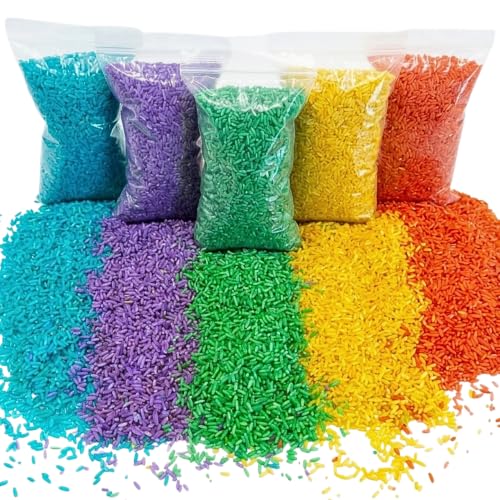
- Five-color rice for sensory bins and pouring play
- Supports fine motor skills, focus, and self-regulation
- ASTM F963 tested and made in the USA
Best For: Sensory bins, quiet-time play, and fine-motor practice
Wooden Sensorial Cylinder Blocks

- Solid wood blocks with smooth, burr-free finish
- Knobbed cylinders build grasp, focus, and hand strength
- Helps with size differentiation and writing readiness
Best For: Structured sensorial practice and early writing preparation
Tactile Math Tracing Trays

- Textured trays support tracing and pre-writing
- Counting side builds number recognition and sequencing
- Stackable design with recycled plastic construction
Best For: Preschool math, tracing practice, and tactile number learning
Wooden Bin Tool Set
Wooden Box + 11 Sensory Tools for Kids
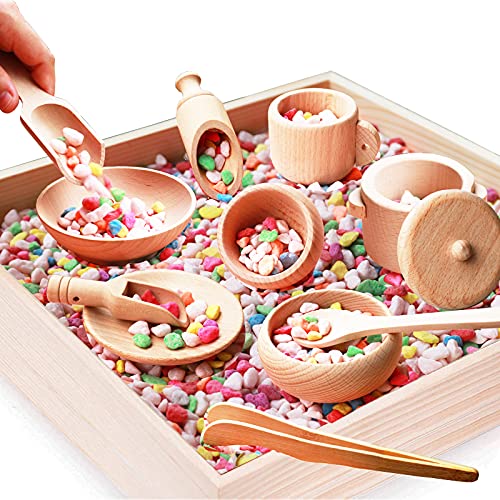
- Includes a wooden box and 11 child-sized tools
- Great for pouring, transferring, stacking, and pretend play
- Smooth natural wood with hand-sanded edges
Best For: Toddlers and preschoolers who want simple sensory bin activities
Animal Sorting Math Set
36 Animal Counters With Bowls and Tweezers

- 36 colorful animals with 6 sorting bowls
- Helps with counting, color matching, and grouping
- Includes tweezers and a storage bucket
Best For: Preschoolers learning early math through sorting play
Wooden Transfer Tools
11-Piece Wooden Sensory Bin Set With Bag

- Includes pots, cups, bowls, scoops, clamp, and spoon
- Supports pouring, nesting, and transferring practice
- Natural wood with smooth, sanded edges
Best For: Families wanting durable wooden tools for fine motor play
Wooden Sensory Bin Starter Set – Montessori Sensory Bin Tools for Toddlers
If you want simple montessori sensory materials for pouring, scooping, and transferring practice, this 10-piece wooden set is a practical place to start. It includes small child-sized tools like scoops, tongs, cups, bowls, and a plate, plus a storage bag for easy cleanup and travel.
Best For: Toddlers and preschoolers who are just starting sensory bin play and fine motor practice.
Pros:
- Includes 10 wooden sensory bin tools plus a storage bag.
- Made from premium natural wood with smooth, hand-sanded edges.
- Supports pouring, transferring, stacking, and pretend play.
- Useful at home, in classrooms, or outdoors.
Cons:
- Sensory fillers like rice, beans, or sand are not included.
- Designed for ages 3+, so it is not ideal for younger toddlers.
- Only one set is included, so it may feel limited for group play.
This set works well if you want durable Montessori sensory materials that stay focused on open-ended hands-on activity. It is a straightforward, low-prep option for building fine motor skills through everyday play.
LED Busy Board – Montessori Busy Board with Clocks and Lights
This busy board adds a more stimulating take on montessori sensory materials by combining switches, LED lights, a clock face, and an alpha-numeric chart. It is sized for travel and built to keep toddlers engaged with hands-on exploration of colors, numbers, and coordination.
Best For: Families looking for a compact travel toy that keeps 1- to 3-year-olds busy and engaged.
Pros:
- Includes multiple switches, 23 LED lights, and a clock design.
- Travel-friendly size makes it easy to use on the go.
- Crafted from drop- and wear-resistant wood with rounded edges.
- Designed to support recognition, coordination, and fine motor development.
Cons:
- Requires 2 AAA batteries, which are not included.
- LED features may be more engaging than a traditional Montessori material set.
- Maximum age listing is 36 months, so the usable range is narrow.
This is a good pick if you want a compact sensory board that emphasizes busy hands and visual engagement. It is especially useful for short outings, quiet play, or keeping toddlers focused during downtime.
Premium 30-Piece Sensory Tool Set – Wooden Bin Tools for Kids
For families who want a larger selection of montessori sensory materials, this 30-piece wooden set offers more variety for scooping, pouring, digging, and sorting. The pieces are child-sized, smoothly sanded, and packed in a muslin drawstring bag for storage and transport.
Best For: Preschoolers who need a larger, more varied sensory bin tool collection.
Pros:
- Large 30-piece set gives more variety than basic starter kits.
- Made from premium birch or maple hardwood.
- Sanded smooth with no sharp edges for safer play.
- Includes a muslin drawstring bag for easy storage and transport.
Cons:
- Exact item sizes require checking the size chart in the product images.
- It is designed for indoor use only.
- At 30 pieces, the set may be more than some families need.
This set is a strong choice if you want sturdy wooden sensory tools with enough pieces for varied play. It should appeal to parents and educators who want a higher-capacity kit for repeated fine motor activities.
First Fabric Box – Montessori Tactile Matching Set
If you are looking for montessori sensory materials that focus on touch discrimination, this 24-piece fabric set is a strong foundational option. It includes 12 textured pairs and a simple guide for matching and grading activities, making it easy to use at home or in a classroom.
Best For: Preschool and homeschool settings that want a structured tactile matching activity.
Pros:
- Includes 24 fabric swatches forming 12 matching texture pairs.
- Supports tactile discrimination, concentration, memory, and language.
- Comes with a simple printed operation guide.
- Finished edges and a storage box help keep the set durable and organized.
Cons:
- Indoor-only material, so it is not meant for outdoor use.
- Best suited for ages 3+, not younger toddlers.
- More structured than open-ended sensory toys, so it may not suit every play style.
This set is ideal if you want a classic sensorial material that builds touch awareness through clear, repeatable activities. It is especially useful when you want a quiet, self-correcting lesson that supports focus and independence.
Colorful Rice Bin Filler – Calm, Creative Play Rice Set
This Montessori sensory materials option is a colorful rice filler designed for scooping, pouring, sifting, and open-ended bin play. With five individually packaged colors and a generous 2.25 lbs total, it gives toddlers and preschoolers plenty of room to explore texture, color mixing, and quiet, focused play.
Best For: Calm sensory bins, fine-motor practice, and relaxed creative play at home or in a classroom.
Pros:
- Supports fine-motor development, hand-eye coordination, focus, and problem-solving
- Soothing scooping and pouring motions can help with self-regulation and transitions
- Five colors arrive separately packaged for mixing, matching, or color blending
- Independently tested to ASTM F963 toy safety standards and made in the USA
Cons:
- Not for children under 3 years because of small parts
- Adult supervision is recommended during sensory play
- Best suited to indoor use rather than active, on-the-go play
Overall, this rice set is a strong choice if you want a simple, versatile sensory base that supports calm play and early learning goals. It is especially useful when you want Montessori sensory materials that feel practical, safe, and easy to rotate into different activities.
Wooden Sensorial Cylinder Blocks – Montessori Cylinder Set
For families looking for classic Montessori sensory materials, this wooden cylinder block set offers hands-on size discrimination and fine-motor practice. The four beechwood blocks each use knobbed cylinders that children can grasp, compare, and fit into matching sockets while building focus and control.
Best For: Montessori-style sensorial work, size differentiation, and early writing preparation for ages 2+.
Pros:
- Made from premium solid wood with a smooth, burr-free surface
- Knobbed cylinders support grasping, hand strength, and hand-eye coordination
- Teaches size differentiation, spatial awareness, and logical thinking
- Useful as an indirect writing-preparation tool through precise finger movement
Cons:
- More structured than open-ended sensory toys
- Includes only four blocks, so it is a focused rather than large-scale activity
- Designed for ages 2+, but younger children still need supervision
This is a good pick if you want a traditional Montessori material with a clear educational purpose. It keeps the sensory experience tactile and simple while emphasizing control, comparison, and early cognitive skills.
Tactile Math Tracing Trays – Sensory Number Trays
This set blends Montessori sensory materials with early math and pre-writing practice in a simple, stackable format. The double-sided trays let children trace textured numbers on one side and count on the other, making them useful for number recognition, sequencing, and tactile learning.
Best For: Preschool math practice, number tracing, and sensory-friendly pre-writing activities.
Pros:
- Textured number paths support tracing and pre-writing skills
- Counting side helps reinforce number recognition up to 10
- Includes a getting-started guide with five early math activities
- Stackable trays are easy to store and made with 100% recycled plastic
Cons:
- Dry-erase markers are sold separately
- Plastic construction may feel less traditional than wood-based Montessori tools
- Focused mainly on numbers rather than broader sensory exploration
If you want a practical mix of tactile learning and early math work, this set fits well into a home or classroom routine. It is especially appealing for children who learn best with touch-based tracing and hands-on counting.
Wooden Bin Tool Set – Wooden Box + 11 Sensory Tools for Kids
If you want montessori sensory materials that support real scooping, pouring, transferring, and stacking, this wooden bin set is a straightforward option. It includes a wooden box plus 11 child-sized tools, so kids can move grains, beans, rice, sand, or similar fillers while practicing hands-on play and fine motor control.
Best For: Toddlers and preschoolers who enjoy open-ended sensory bin play with real wooden tools.
Pros:
- Includes 11 wooden tools plus a wooden storage box for all-in-one use.
- Supports pouring, transferring, picking, stacking, and pretend kitchen play.
- Made from natural wood with hand-sanded, smooth edges.
- Useful at home, in classrooms, kindergartens, or outdoor play setups.
Cons:
- Sensory filler materials shown in photos are not included.
- Best suited to children 3 and up, despite the broader age listing.
This is a practical choice if you want a durable Montessori-style set that focuses on simple, real-world actions instead of flashy features. The wooden pieces are small, easy for little hands to use, and designed for repeated sensory bin activities.
Animal Sorting Math Set – 36 Animal Counters With Bowls and Tweezers
For families looking for montessori sensory materials with a math focus, this animal sorting set gives kids a hands-on way to count, sort, and match colors. It includes 36 animals, 6 rainbow sorting bowls, and 2 tweezers, making it a compact learning toy for preschool practice and sensory bin filler use.
Best For: Kids ages 3-5 who are learning early counting, color matching, and sorting skills.
Pros:
- Includes 36 multi-colored animals, 6 bowls, and 2 tweezers.
- Supports number counting, color matching, and animal sorting.
- Good for home, classroom, kindergarten, or teacher-led learning.
- Made from non-toxic, washable materials with a storage bucket for cleanup.
Cons:
- Plastic construction may be less tactile than wooden sensory toys.
- Animal theme may be less versatile than open-ended bin tools.
This set works well when you want a playful sorting activity that still reinforces early math skills. It can hold attention through tweezing and color grouping, while staying simple to store and carry after play.
Wooden Transfer Tools – 11-Piece Wooden Sensory Bin Set With Bag
If you prefer montessori sensory materials made from wood, this 11-piece set is built around basic transfer and nesting activities. It includes two sizes of wooden bean pots, cups, bowls, scoops, a clamp, a spoon, a stirring rod, and a cloth storage bag for organized play.
Best For: Babies and toddlers who are practicing pouring, nesting, and simple fine motor tasks.
Pros:
- Comes with 11 wooden pieces plus a cloth bag for storage.
- Designed for transferring, pouring, nesting, and self-care style play.
- Made from natural wood with smooth, sanded edges.
- Sturdy enough to handle rougher play better than fragile toy materials.
Cons:
- No sensory filler materials are included.
- Limited to basic kitchen-style tools rather than a broader activity set.
This set is a solid fit if you want simple, durable wooden tools that encourage hands-on practice. It emphasizes practical motor work and attention-building play without adding extra complexity.
How We Picked These Montessori Sensory Materials
We looked for materials that encourage purposeful hands-on activity, not just passive entertainment. Priority went to tools that support fine motor control, tactile exploration, counting, sorting, and open-ended play. We also favored durable construction, child-safe finishes, age-appropriate designs, and sets that offer real learning value for home or classroom use.
Quick Comparison
Not every child needs the same type of sensory set. Some products work best for scooping and filling sensory bins, while others focus on matching textures, practicing counting, or building hand strength. Larger tool sets tend to offer more open-ended play, while focused learning materials are better when you want a specific skill such as number recognition or tactile discrimination.
Key Buying Factors for Montessori Sensory Materials
Skill Focus
Choose materials that match your goal. For fine motor practice, look for tongs, scoops, knobs, and box-opening activities. For early math, number trays and counting sets are more useful. For sensory development, fabric matching and tactile sorting can be especially effective.
Age and Independence
Make sure the activity matches your child’s developmental stage. Simpler tools are best for younger toddlers, while preschoolers can handle more complex matching, counting, and multi-step tasks. A good Montessori set should allow a child to work independently with minimal adult correction.
Material Quality
Wood, fabric, and non-toxic fillers are common in quality Montessori Sensory Materials. Check for smooth edges, sturdy construction, and parts that are easy for small hands to grasp. If the set will be used often, durability matters as much as educational value.
Storage and Cleanup
Bins, pouches, and compact kits make cleanup easier and help keep materials organized. This is especially important for sensory play, where loose pieces can quickly spread across a room.
Who Should Buy Which Montessori Sensory Materials?
If you want open-ended sensory play, choose bin tools or filler-based kits. If your goal is fine motor development, look for tongs, scoops, and knobbed materials. For toddlers who need more engagement on the go, busy boards can be a strong fit. For preschool learning, counting sets, fabric matching materials, and number trays offer more structured practice.
For most families, the best approach is to pick one open-ended sensory set and one focused learning set. That gives children both freedom and repetition, which is a strong combination for early development.