If you want faster local storage without jumping to enterprise gear, NAS enclosures with 2 5GbE are a sweet spot. They offer noticeably better throughput than standard Gigabit models while staying approachable for home labs, media libraries, and small teams.
In this roundup, we focus on options that balance performance, app support, expandability, and value so you can choose the right enclosure for your drives, workflow, and budget.
Best 10 Nas Enclosures with 2 5gbe Picks for 2026
Gaming-Ready 2-Bay NVMe NAS
Asustor AS5402T 2-bay with dual 2.5GbE and 4x NVMe
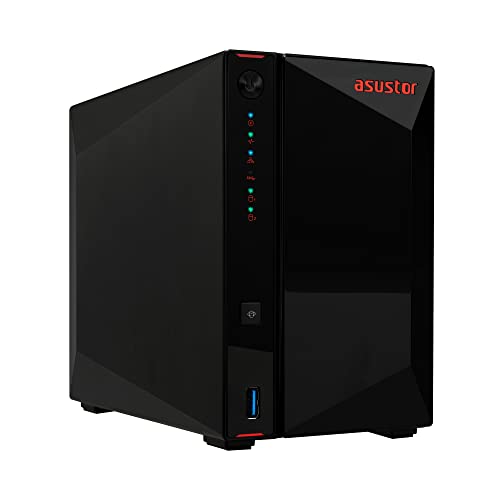
- Dual 2.5GbE ports for faster transfers
- Four M.2 NVMe slots for cache or storage
- Intel N5105 with HDMI 2.0b for media use
Best For: Gamers and streamers who want fast networking and NVMe expansion.
Creator Cloud NAS
UGREEN DXP2800 GT 2-bay with 10GbE and expansion

- 10GbE networking for faster workflows
- UGOS Pro supports Docker, VMs, and SAN Manager
- 2 SATA bays plus U.2 and M.2 SSD expansion
Best For: Creators and freelancers who want faster networking and app flexibility.
Simple 2-Bay 2.5GbE NAS
QNAP TS-216G-US budget 2-bay with dual 2.5GbE

- Dual 2.5GbE ports for quicker transfers
- Quad-core ARM CPU with 4GB DDR4 RAM
- Built-in NPU for face and object recognition
Best For: Families and home users who want an affordable 2.5GbE NAS.
High-Speed 5GbE Expansion NAS
TerraMaster F2-425 Plus 2-bay with dual 5GbE

- Dual 5GbE LAN with link aggregation support
- Triple M.2 SSD design for cache or storage pools
- Intel N95 and 8GB RAM for demanding workloads
Best For: Video editors and small teams who want dual 5GbE speed.
2.5GbE Compact Home NAS
QNAP TS-262A-4G 2-Bay Desktop NAS

- Built-in 2.5GbE for faster everyday transfers
- Dual M.2 SSD slots for caching and Qtier
- Hardware transcoding for smooth media streaming
Best For: Home backups, personal cloud, and compact media storage
Easy-Setup 2.5GbE Media NAS

- 2.5GbE speeds up backups and file sharing
- Quad-core CPU with 2GB DDR4 for daily tasks
- Tool-free bays and 4K media support
Best For: First-time NAS buyers and small home media servers
High-Performance Dual-10GbE NAS

- Dual 10GbE for very fast transfers and link aggregation
- Ryzen CPU with up to 64GB RAM support
- Docker, VMs, and large 4-bay expansion
Best For: Creators and teams that need speed, apps, and expansion
Entry-Level 2-Bay Pick

- 2.5GbE port for faster home transfers
- Quad-core CPU with 1GB DDR4 memory
- Tool-free setup for quick installation
Best For: Beginners wanting a simple personal-cloud NAS
Feature-Rich Family NAS

- 4 bays with up to 128TB capacity
- 2.5GbE port plus 8GB LPDDR4X RAM
- AI photo backup and beginner-friendly setup
Best For: Families needing a roomy private-cloud NAS
Quiet Multimedia Choice
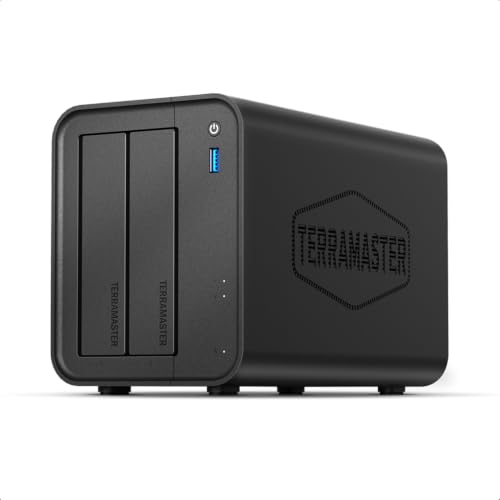
- Intel x86 quad-core CPU with 4GB RAM
- 2.5GbE port for faster file transfers
- 19dB(A) operation with tool-free trays
Best For: Quiet home media and backup storage
Gaming-Ready 2-Bay NVMe NAS – Asustor AS5402T 2-bay with dual 2.5GbE and 4x NVMe
If you want one of the more feature-packed nas enclosures with 2 5gbe-style high-speed networking alternatives in a compact 2-bay design, the Asustor AS5402T is built for speed-focused home and small-office use. It pairs a quad-core Intel N5105 CPU with dual 2.5GbE ports and four M.2 NVMe slots, so it can handle file storage, caching, media streaming, and other multitasking workloads with a clear performance bias.
Best For: Gamers, streamers, and power users who want fast networking plus heavy NVMe expansion.
Pros:
- Dual 2.5GbE ports support faster transfers and link aggregation.
- Four M.2 NVMe SSD slots add flexible cache or full-flash storage options.
- Intel N5105 quad-core processor is suited to multitasking and media tasks.
- HDMI 2.0b and USB 3.2 Gen2 expand its direct-connect versatility.
Cons:
- Drives are not included, so total cost depends on the storage you add.
- Only 4GB RAM is installed by default, which may feel light for heavier workloads.
The AS5402T stands out if you care about fast networking and SSD flexibility more than basic low-cost storage. Its mix of dual 2.5GbE, NVMe support, and HDMI output makes it especially appealing for media and performance-oriented setups.
Creator Cloud NAS – UGREEN DXP2800 GT 2-bay with 10GbE and expansion
For buyers comparing nas enclosures with 2 5gbe-class performance needs against a higher-speed option, the UGREEN DXP2800 GT is a strong 2-bay choice centered on 10GbE, SSD expansion, and app flexibility. Its Ryzen Embedded R2514 platform, 8GB of DDR4 RAM, and UGOS Pro software make it a practical pick for creators and freelancers who want fast local storage, Docker support, and room to grow.
Best For: Creators, freelancers, and smart-home users who want 10GbE and broad app support.
Pros:
- 10GbE networking is designed for faster transfers and heavier workflows.
- Supports Docker, virtual machines, and SAN Manager through UGOS Pro.
- Can be expanded with 2.5-inch drives, U.2 NVMe SSDs, and M.2 SSDs.
- Built-in surveillance features support compatible ONVIF/RTSP cameras.
Cons:
- Drives are not included and must be purchased separately.
- Plex runs via Docker and requires manual setup.
This is a more advanced NAS for users who want performance and software flexibility in the same box. If your workflow includes large files, self-hosted apps, or local smart-home storage, the DXP2800 GT has a lot to offer.
Simple 2-Bay 2.5GbE NAS – QNAP TS-216G-US budget 2-bay with dual 2.5GbE
QNAP TS-216G-US 2-Bay 2.5GbE Desktop NAS | ARM Quad-Core CPU, Built-In NPU, 4GB RAM, Diskless
Check Price On AmazonThe QNAP TS-216G-US is a straightforward choice if you want nas enclosures with 2 5gbe connectivity in a budget-friendly desktop format. It combines a quad-core ARM Cortex-A55 processor, 4GB of DDR4 RAM, and two 2.5GbE ports, making it a practical fit for faster file sharing, family media storage, and everyday home NAS use.
Best For: Home users and families who want an affordable 2-bay NAS with 2.5GbE.
Pros:
- Two 2.5GbE ports help speed up file transfers across devices.
- Built-in NPU adds AI acceleration for face and object recognition.
- Quad-core ARM processor and 4GB RAM suit basic storage and multimedia tasks.
- Compact, budget-friendly design fits simple home setups.
Cons:
- This model is aimed at basic home use rather than advanced workloads.
- Storage drives are not included.
The TS-216G-US keeps the focus on easy, everyday NAS use without extra complexity. If you mainly want faster-than-gigabit networking for family storage and media, it hits a sensible middle ground.
High-Speed 5GbE Expansion NAS – TerraMaster F2-425 Plus 2-bay with dual 5GbE
If your search for nas enclosures with 2 5gbe points you toward maximum wired throughput, the TerraMaster F2-425 Plus is the strongest match here with dual 5GbE LAN ports. It combines an Intel N95 quad-core CPU, 8GB of memory, and triple M.2 SSD support, giving it a more performance-oriented layout for editing, backups, media, and multi-user access.
Best For: Video editors, small teams, and enthusiasts who want dual 5GbE and flexible SSD expansion.
Pros:
- Dual 5GbE LAN ports support link aggregation and SMB Multichannel.
- Triple M.2 SSD design adds cache or independent storage-pool flexibility.
- Intel N95 CPU and 8GB RAM suit demanding everyday NAS workloads.
- Supports Docker, virtual machines, and 4K/8K media streaming.
Cons:
- Drives are not included, so you must supply your own storage.
- Setup is more feature-rich than a basic home NAS, which may be overkill for simple file sharing.
The F2-425 Plus is the most network-forward option in this group and makes good use of that bandwidth with SSD expansion and strong app support. For users who want speed first, it is an especially compelling 2-bay NAS.
2.5GbE Compact Home NAS – QNAP TS-262A-4G 2-Bay Desktop NAS
If you want a practical NAS enclosure with 2 5gbe for a desktop setup, the QNAP TS-262A-4G is built around responsive everyday storage, easy remote access, and smooth media streaming. Its built-in 2.5GbE, dual M.2 PCIe SSD slots, and Intel UHD Graphics make it a solid fit for users who want quick backups and reliable home cloud features without a complicated setup.
Best For: Home users who want a compact 2-bay NAS for backups, personal cloud access, and media playback.
Pros:
- Built-in 2.5GbE helps keep transfers and backups responsive.
- Dual M.2 PCIe SSD slots support caching and Qtier auto-tiering.
- Intel UHD Graphics hardware-transcodes video for smooth streaming.
- Tool-less, hot-swappable 2-bay design fits easily on a desk or shelf.
Cons:
- Only two drive bays, so expansion is limited versus larger NAS units.
- Best suited to everyday home workloads rather than heavy multi-user use.
Overall, this is a balanced small NAS for people who value simple cloud access, fast-enough networking, and media-friendly hardware in a compact chassis. The added SSD cache options and backup-focused features make it especially appealing if you want convenience without sacrificing day-to-day speed.
Easy-Setup 2.5GbE Media NAS – Asustor Drivestor 2 Pro Gen2
The Asustor Drivestor 2 Pro Gen2 is a straightforward option if you’re comparing nas enclosures with 2 5gbe for home storage and streaming. With a Realtek quad-core processor, 2.5GbE networking, and 2GB DDR4 memory, it focuses on stable file sharing, backups, and smooth 4K media use in a compact 2-bay design.
Best For: Home users who want an easy-to-set-up 2-bay NAS for backups, personal cloud use, and 4K streaming.
Pros:
- 2.5GbE improves transfer speed over standard Gigabit NAS models.
- Quad-core CPU and 2GB DDR4 support everyday multitasking.
- Optimized for 4K playback and transcoding in a home media setup.
- Tool-free drive installation makes setup and swapping drives simple.
Cons:
- Only 2GB of built-in memory, so heavier workloads may feel constrained.
- Not aimed at advanced office or creator-focused workloads.
This model keeps the feature set practical rather than flashy, which makes it appealing for first-time NAS buyers and smaller households. If your priority is a reliable 2-bay system with faster-than-Gigabit networking and easy setup, it delivers a clear, no-fuss value proposition.
High-Performance Dual-10GbE NAS – UGREEN DXP4800 GT 4-Bay
For buyers who need more than basic storage, this UGREEN model goes well beyond typical nas enclosures with 2 5gbe thanks to dual 10GbE networking and a performance-focused design. It’s aimed at creators, office teams, and advanced home users who want fast file transfers, local media editing, Docker support, and plenty of expansion for growing storage needs.
Best For: Creators, power users, and small teams that need high-speed networking, app expansion, and large local storage.
Pros:
- Dual 10GbE networking supports very fast transfers and link aggregation.
- Ryzen Embedded CPU with expandable RAM handles multitasking well.
- Supports Docker, virtual machines, Plex, and other self-hosted workflows.
- Four bays plus SSD expansion options provide substantial storage growth.
Cons:
- More complex and overbuilt for simple backup-only home use.
- Drives are not included, so total system cost rises quickly.
If speed, app flexibility, and capacity matter more than simplicity, the DXP4800 GT is the most ambitious option in this group. Its networking and software support make it a strong pick for users who expect the NAS to do far more than sit on a shelf and hold files.
Entry-Level 2-Bay Pick – Asustor Drivestor 2 Gen 2
If you want nas enclosures with 2 5gbe support, the Asustor Drivestor 2 Gen 2 is worth a look as a compact entry-level option with a 2.5GbE port, a quad-core 1.7GHz processor, and tool-free drive installation. It is built for straightforward home file storage, backups, and personal cloud use rather than heavy-duty virtualization or advanced multi-app workloads.
Best For: Beginners and home users who want a simple 2-bay NAS for backup, private cloud storage, and faster-than-gigabit transfers.
Pros:
- 2.5GbE networking gives it a clear speed bump over standard Gigabit NAS models.
- Quad-core Realtek RTD1619B CPU and 1GB DDR4 are suited to everyday storage and backup tasks.
- Tool-free installation makes drive setup quick and beginner-friendly.
- Supports personal cloud use with ADM and cross-platform multi-user access.
Cons:
- Only 1GB of RAM limits headroom for more demanding multitasking.
- Designed mainly for basic home use rather than advanced workloads.
Overall, this Asustor model is a sensible starting point if you want a simple 2-bay NAS with 2.5GbE and easy setup. It emphasizes practical everyday storage features over premium expansion or performance extras.
Feature-Rich Family NAS – UGREEN NAS DH4300 Plus
For shoppers comparing nas enclosures with 2 5gbe in a broader home-storage context, the UGREEN NAS DH4300 Plus stands out as a beginner-friendly 4-bay enclosure with a 2.5GbE port, 8GB LPDDR4X RAM, and support for Docker. It is positioned around private cloud storage, remote access, and organized family media rather than virtualization.
Best For: Families and home users who want a roomy 4-bay NAS for photos, remote access, and private cloud storage.
Pros:
- 4 bays and up to 128TB capacity provide plenty of room for long-term storage growth.
- 2.5GbE networking and 8GB LPDDR4X RAM support smooth multitasking and fast transfers.
- Smart Photo Backup and AI Album features help organize large photo libraries.
- Beginner-friendly setup with NFC, app support, and video instructions.
Cons:
- Supports Docker but not virtual machines.
- Diskless design means you still need to buy storage drives separately.
This is a strong choice if you want a private cloud with more capacity and more convenience-focused features than a basic two-bay unit. Its combination of 2.5GbE, app-based setup, and media tools makes it especially appealing for families.
Quiet Multimedia Choice – TERRAMASTER F2-425
The TERRAMASTER F2-425 is a practical option if you are shopping for nas enclosures with 2 5gbe and want a quiet 2-bay setup for media and file sharing. It pairs an Intel x86 quad-core CPU with 4GB RAM, a 2.5GbE port, and 4K H.265 decoding support for home streaming and multitasking.
Best For: Home media users who want a quiet 2-bay NAS for streaming, backups, and fast transfers.
Pros:
- Intel x86 quad-core processor and 4GB RAM handle multitasking and 4K transcoding.
- 2.5GbE port supports fast file transfers and concurrent access.
- Very quiet operation at 19dB(A) is ideal for bedrooms or shared spaces.
- Tool-free Push-Lock trays make drive installation fast and easy.
Cons:
- Two-bay design limits expansion compared with larger NAS enclosures.
- Diskless model requires separate hard drives or SSDs.
If your priority is quiet operation plus solid media features, this TerraMaster model is an easy recommendation. It focuses on efficient everyday storage, simple setup, and strong home entertainment support without unnecessary complexity.
How We Picked These Nas Enclosures with 2 5gbe
We looked for enclosures that combine dual 2.5GbE networking with hardware that makes sense for real-world use: capable CPUs, enough memory for common apps, decent upgrade paths, and practical software ecosystems. We also favored models that work well for backups, file sharing, media streaming, and light creator workloads rather than raw benchmark numbers alone.
Because the best choice depends on your setup, we also considered bay count, NVMe or M.2 support, RAM expandability, noise and power expectations, and how well each model fits first-time buyers versus more advanced users.
Quick Comparison
As a rule, 2-bay models are best for simple mirrored storage, media libraries, and personal cloud use. 4-bay units offer more flexibility for capacity growth, RAID options, and mixed workloads. If you plan to move large video files, edit directly over the network, or back up multiple PCs, the extra bandwidth from dual 2.5GbE can make a real difference.
Also note that the network ports are only part of the equation. A strong CPU and enough RAM matter just as much when you run containers, transcode media, sync folders, or index large photo collections.
Key Buying Factors for Nas Enclosures with 2 5gbe
CPU and Memory
For basic backup and file sharing, a modest processor is usually fine. For Plex-style streaming, multitasking, or app-heavy use, choose a newer Intel-based system or a model with more RAM headroom.
Drive Bays and Expansion
Two-bay units keep things compact and affordable, but four-bay models give you better long-term storage flexibility. If you expect your data to grow, that extra bay count can matter more than a small price difference today.
Software and App Support
The enclosure’s operating system can be the deciding factor. Good mobile apps, backup tools, user management, and container support often matter more than a few extra hardware features.
Connectivity and Workflow Fit
Dual 2.5GbE helps when multiple users access the NAS or when a single user pushes large transfers. For creators, it is especially useful for moving photos, project files, and backups faster than Gigabit networking allows.
Who Should Buy Which Nas Enclosures with 2 5gbe?
If you want a simple personal cloud or home media server, a 2-bay option is usually enough. If you are a creator, power user, or small office team that expects growth, a 4-bay model with stronger hardware may be the better investment. For buyers focused on value, look for the least expensive model that still has the CPU, RAM, and software features you actually need.
In short, the best NAS enclosure is the one that matches your storage growth, app usage, and network demands—not just the highest specs on paper.