A reliable Ethernet switch can turn a crowded home office network into a faster, cleaner, and more dependable setup. The right model adds ports for computers, printers, access points, NAS devices, cameras, and other wired equipment without requiring complicated installation.
We compared 10 network switches for home office use across port count, speed, management features, PoE support, build quality, and installation flexibility. Whether you need a simple plug-and-play upgrade or faster multi-gigabit connectivity, this guide helps narrow the choices.
Best 10 Network Switches for Home Office Picks for 2026
Best Overall
NETGEAR GS308 8-Port Gigabit Switch
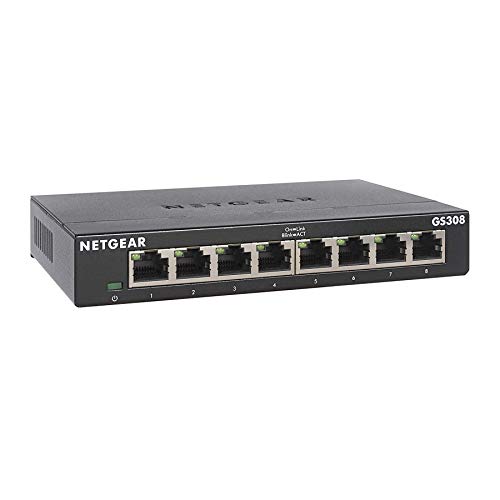
- Eight 1Gbps Ethernet ports
- Plug-and-play, fanless operation
- Desktop or wall-mount installation
Best For: Quiet, simple home office networks
Best for Network Control
TP-Link TL-SG108E Easy Smart Switch
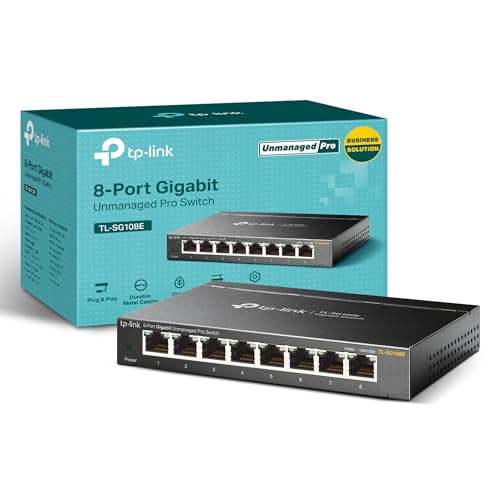
- Eight Gigabit ports
- VLAN, QoS, monitoring, and LAG support
- Metal desktop or wall-mount design
Best For: Managed home office network expansion
Best Compact Pick
NETGEAR GS305 5-Port Gigabit Switch

- Five 1Gbps Ethernet ports
- Simple plug-and-play setup
- Compact, silent metal design
Best For: Small home offices with limited wired devices
Best Multi-Gig Upgrade
UGREEN 8-Port 2.5Gb Ethernet Switch

- Eight 2.5Gbps Ethernet ports
- Supports 100M, 1G, and 2.5G links
- Fanless metal housing with thermal design
Best For: NAS, gaming, and multi-gigabit home offices
Best Managed Pick

- Eight 1Gbps Ethernet ports
- Browser-based management with VLAN and QoS support
- Fanless metal housing with silent operation
Best For: Managed home office networks needing traffic organization
Best for Maximum Ports
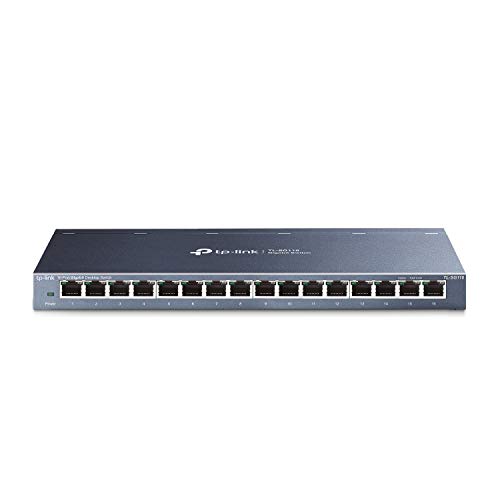
- Sixteen Gigabit Ethernet ports
- Plug-and-play setup with no software
- Fanless metal design with QoS and IGMP Snooping
Best For: Expanding a larger wired home office network
Best PoE Option

- Eight PoE+ Gigabit ports with a 65W total budget
- PoE Extend Mode reaches up to 820 feet
- Fanless, plug-and-play design with PoE Auto Recovery
Best For: Powering compatible cameras and network devices over Ethernet
Best with Extra Features
TP-Link TL-SG108 8-Port Gigabit Switch

- Eight Gigabit ports for computers, printers, and consoles
- Fanless metal design operates quietly
- Plug-and-play setup with energy-efficient operation
Best For: Most home offices needing several standard Gigabit connections
Best for Multi-Gig
TP-Link TL-SG108S-M2 2.5G Switch

- Eight 2.5Gbps ports and 40Gbps switching capacity
- Supports 100Mbps, 1Gbps, and 2.5Gbps links
- Silent, plug-and-play design for high-speed networks
Best For: Home offices with multi-gig internet, NAS, or workstations
Best Simple Pick
TP-Link TL-SG105 5-Port Gigabit Switch
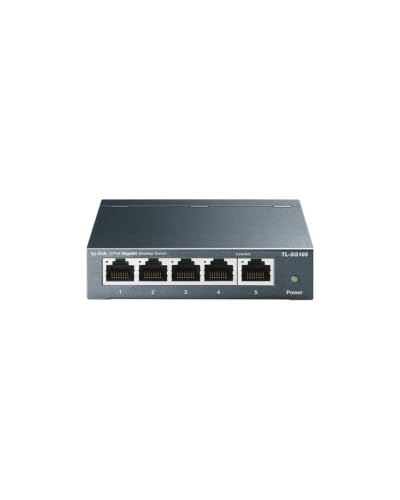
- Five Gigabit ports for smaller wired setups
- Compact, fanless metal design supports wall mounting
- Plug-and-play setup with QoS and IGMP Snooping
Best For: Small home offices with limited desk space and fewer devices
Best Overall – NETGEAR GS308 8-Port Gigabit Switch
For a straightforward home office, the NETGEAR GS308 is one of the more flexible network switches for home office setups. It provides eight Gigabit Ethernet ports, works with existing Cat5e or Cat6 cables, and requires no software or configuration.
Best For: Home offices needing several wired connections with quiet, low-maintenance operation.
Pros:
- Eight auto-negotiating 1Gbps Ethernet ports
- Plug-and-play setup with no software required
- Fanless, energy-efficient operation
- Metal housing supports desktop or wall mounting
Cons:
- Unmanaged design does not provide VLAN or traffic-control features
- Listed for use in the U.S. and Canada only
The GS308 is a practical choice when you want to add wired capacity without managing network settings. Its compact metal design and silent operation suit a desk, shelf, or wall-mounted installation.
Best for Network Control – TP-Link TL-SG108E Easy Smart Switch
The TP-Link TL-SG108E is a strong option among network switches for home office users who need more control than a basic unmanaged model offers. Its eight Gigabit ports are paired with web and software management plus VLAN, QoS, monitoring, and link-aggregation features.
Best For: Home offices that need traffic prioritization, network segmentation, or basic monitoring.
Pros:
- Eight Gigabit Ethernet ports with auto negotiation
- Supports VLANs, QoS, IGMP snooping, and link aggregation
- Includes port mirroring, loop prevention, and cable diagnostics
- Sturdy metal case with desktop or wall-mount options
Cons:
- More setup and configuration than an unmanaged switch
- Advanced features may be unnecessary for a basic network
If you are comfortable managing network settings, the TL-SG108E offers useful flexibility for separating traffic and supporting latency-sensitive applications. It remains compact enough for a typical desk or wall installation.
Best Compact Pick – NETGEAR GS305 5-Port Gigabit Switch
For smaller workspaces, the NETGEAR GS305 keeps network switches for home office setups simple and compact. It offers five auto-negotiating Gigabit ports, plug-and-play installation, and a fanless metal design that can sit on a desk or mount on a wall.
Best For: Small home offices with a few wired devices such as a computer, printer, or access point.
Pros:
- Five 1Gbps Ethernet ports
- No software or configuration required
- Silent, energy-efficient fanless design
- Compact metal housing supports desktop or wall placement
Cons:
- Fewer ports than eight-port alternatives
- Unmanaged design lacks advanced traffic controls
- Listed for use in the U.S. and Canada only
The GS305 is a sensible fit when you only need a handful of wired connections. Its small footprint and quiet operation make it easy to add Ethernet without adding much equipment to your workspace.
Best Multi-Gig Upgrade – UGREEN 8-Port 2.5Gb Ethernet Switch
The UGREEN 8-Port 2.5Gb switch is designed for home office networks that need more throughput than standard Gigabit Ethernet. All eight RJ45 ports support up to 2.5Gbps and automatically adapt to 100Mbps, 1Gbps, or 2.5Gbps connections.
Best For: NAS users, gaming PCs, and Wi-Fi 6 or 6E routers with compatible multi-gigabit connections.
Pros:
- Eight full 2.5Gbps Ethernet ports
- Automatically adapts to 100M, 1G, and 2.5G connections
- Plug-and-play unmanaged operation
- Fanless metal design with thermal management and desktop or wall placement
Cons:
- Connected devices and network hardware must support multi-gigabit speeds to benefit fully
- Does not offer managed features such as VLAN or QoS controls
Choose the UGREEN when faster local transfers are a priority and your equipment supports 2.5Gbps networking. Its fanless design keeps operation quiet while the metal housing and ventilation support sustained use.
Best Managed Pick – NETGEAR GS308E
The NETGEAR GS308E is a strong choice for network switches for home office setups that need more than basic plug-and-play connectivity. Its eight Gigabit ports, browser-based management, VLAN support, and traffic controls make it useful for organizing a mixed home and work network without requiring advanced networking software.
Best For: Home offices that need manageable traffic segmentation, prioritization, and quiet operation.
Pros:
- Eight auto-negotiating 1Gbps ports provide full-Gigabit connectivity.
- Web-based Easy Smart interface works on Windows, Mac, or Linux.
- Supports up to 64 VLANs, QoS, IGMP snooping, and port mirroring.
- Fanless metal housing operates silently and includes troubleshooting protections.
Cons:
- Managed features may be more than a simple home network requires.
- Provides eight ports, offering less expansion room than a 16-port switch.
The GS308E stands out when a home office needs control and organization as well as Ethernet expansion. Its silent design and browser-based management make it particularly practical for a desk, office shelf, or wall-mounted network location.
Best for Maximum Ports – TP-Link TL-SG116
The TP-Link TL-SG116 is a practical pick for network switches for home office use when you need to connect many wired devices. With 16 Gigabit ports, plug-and-play setup, and a quiet metal enclosure, it expands a network without adding configuration work.
Best For: Larger home offices with computers, printers, access points, storage devices, and other wired equipment.
Pros:
- Sixteen 10/100/1000Mbps ports provide substantial expansion capacity.
- Plug-and-play installation requires no software or configuration.
- Fanless design supports quiet operation in noise-sensitive spaces.
- Includes QoS and IGMP Snooping for traffic prioritization and video or voice data.
Cons:
- As a Layer 1 unmanaged switch, it does not offer advanced network management.
- The 2.1-pound metal chassis takes more desk or wall space than smaller switches.
Choose the TL-SG116 when port count is the priority. It is straightforward to install, supports Gigabit speeds across all 16 ports, and its sturdy fanless enclosure suits a busy home office backbone.
Best PoE Option – TP-Link LS108GP
The TP-Link LS108GP is one of the more specialized network switches for home office setups because it can power compatible devices over Ethernet. Its eight PoE+ Gigabit ports, 65W total power budget, silent fanless design, and automatic PoE recovery make it useful for cameras and other supported network equipment.
Best For: Home offices that need to connect and power PoE cameras or other compatible devices.
Pros:
- Eight PoE+ ports provide up to 30W per port with a 65W total budget.
- Plug-and-play operation requires no configuration.
- PoE Extend Mode supports transmission distances up to 820 feet.
- PoE Auto Recovery can automatically reboot dropped or unresponsive powered devices.
Cons:
- Its PoE features may be unnecessary for offices using only standard Ethernet devices.
- It is unmanaged, so it lacks the advanced configuration controls of a managed switch.
- PoE capacity is limited by the 65W total power budget when several devices are connected.
The LS108GP is a good fit when Ethernet connectivity and device power need to come from the same cable. For a standard computer-and-printer network, a non-PoE model may be simpler, but this switch adds useful flexibility for surveillance or compatible powered equipment.
Best with Extra Features – TP-Link TL-SG108 8-Port Gigabit Switch
For most home offices, the TP-Link TL-SG108 is a straightforward way to add wired connections. Its eight Gigabit Ethernet ports, fanless design, and plug-and-play setup make it a practical choice for computers, printers, gaming consoles, and other Ethernet devices.
Best For: Home offices that need several quiet, reliable Gigabit connections.
Pros:
- Eight 10/100/1000 Mbps RJ45 ports provide room for multiple devices.
- Fanless operation keeps noise low in workspaces and bedrooms.
- Metal housing and shielded ports support durability, heat dissipation, and interference protection.
- Automatically adjusts power use based on link status and cable length.
Cons:
- As an unmanaged switch, it does not offer advanced configuration controls.
- It supports Gigabit Ethernet rather than the faster 2.5Gbps speeds available from multi-gig switches.
The TL-SG108 is a dependable all-purpose option among network switches for home office setups. Choose it when standard Gigabit performance and quiet, low-maintenance operation matter more than multi-gig speeds.
Best for Multi-Gig – TP-Link TL-SG108S-M2 2.5G Switch
The TP-Link TL-SG108S-M2 is designed for home offices with newer, bandwidth-hungry equipment. All eight ports support up to 2.5Gbps, making it a strong fit for multi-gig internet, 2.5G Wi-Fi access points, NAS devices, workstations, and large file transfers.
Best For: Multi-gig home offices, NAS users, and high-speed workstations.
Pros:
- Eight 2.5-Gigabit ports provide up to 40Gbps of switching capacity.
- Auto-negotiation supports 100Mbps, 1Gbps, and 2.5Gbps devices.
- Fanless operation provides silent performance for home or business spaces.
- Can upgrade compatible networks to 2.5Gbps without requiring Cat6 wiring.
Cons:
- It is an unmanaged switch, so advanced network configuration is not available.
- Its benefits depend on having compatible multi-gig devices and network service.
- The plastic case may feel less substantial than a metal-bodied alternative.
For users who can take advantage of 2.5Gbps hardware, this is the most performance-focused option in the group. It costs more than a standard Gigabit switch but offers greater headroom for fast storage, Wi-Fi, and workstation traffic.
Best Simple Pick – TP-Link TL-SG105 5-Port Gigabit Switch
The TP-Link TL-SG105 is a compact choice for home offices with only a few wired devices. Its five Gigabit ports, fanless metal design, and plug-and-play setup make it useful for connecting a computer, printer, access point, or other Ethernet equipment without taking up much space.
Best For: Small desks and home offices needing a few wired Gigabit ports.
Pros:
- Five 10/100/1000 Mbps ports support common home-office equipment.
- Compact metal housing supports desktop or wall-mounted placement.
- Fanless design provides quiet operation.
- Includes traffic-prioritization features such as 802.1p/DSCP QoS and IGMP Snooping.
Cons:
- Five ports provide less expansion room than eight-port alternatives.
- It is limited to standard Gigabit Ethernet rather than multi-gig speeds.
- As an unmanaged switch, it does not provide full configuration controls.
The TL-SG105 is a sensible fit when you want a small, quiet switch for a limited number of devices. Its compact footprint makes it especially convenient for desks or wall-mounted installations where unused ports are not a priority.
How We Picked the Best Network Switches for Home Office
We focused on practical features that matter in a home office: Ethernet speed, port count, ease of setup, reliability, physical design, and power requirements. The selection includes unmanaged switches for straightforward expansion, smart-managed models for added control, multi-gigabit options for newer networks, and a PoE model for compatible devices such as access points, cameras, and VoIP phones.
We also considered whether each switch is suitable for desktop or wall mounting, uses a fanless design, and provides shielded ports or traffic-management features. A switch should match both your current equipment and the network upgrade you expect to make next.
Quick Comparison
| Best For | Recommended Type | Why It Makes Sense |
|---|---|---|
| Simple expansion | 5- or 8-port unmanaged gigabit | Plug-and-play setup with minimal configuration |
| Many wired devices | 16-port gigabit unmanaged | Provides room for a larger office or shared network |
| Network control | Easy smart managed | Supports features such as VLANs, QoS, and monitoring |
| Faster file transfers | 2.5GbE switch | Useful for compatible NAS devices, workstations, and internet plans |
| Powered network devices | PoE switch | Can deliver data and power over compatible Ethernet cables |
Key Buying Factors for Network Switches for Home Office
Port Count
Count the devices you plan to connect, then leave at least one or two spare ports. Five-port models suit compact desks, while eight-port switches are a better fit for most home offices. Choose 16 ports if you expect to add multiple workstations, printers, access points, or smart-home equipment.
Speed and Compatibility
Gigabit Ethernet remains adequate for general internet access, video calls, printing, and ordinary file sharing. A 2.5GbE switch is more appropriate for multi-gigabit broadband, fast network-attached storage, or transfers between modern computers. Multi-gigabit ports typically negotiate with slower Ethernet devices, but confirm the capabilities of your cables and connected hardware.
Managed, Unmanaged, or PoE
An unmanaged switch is the simplest choice: connect the cables and use the network. Easy smart managed models add VLAN, QoS, and monitoring options for users who want more control. PoE is worthwhile only when you need to power compatible devices through Ethernet; otherwise, a standard switch is usually simpler and less expensive.
Placement and Build
For a desk, look for a compact, fanless design if quiet operation matters. Metal housings can provide a sturdier feel, while wall-mounting support helps keep cables organized. Check the switch’s power adapter and ventilation requirements before placing it in a cabinet or enclosed shelf.
Who Should Buy Which Network Switches for Home Office?
Choose a five-port unmanaged gigabit switch for a small desk with a computer, printer, and a few peripherals. An eight-port unmanaged model is the best general-purpose option for most home offices. Select a 16-port switch if you want substantial expansion capacity.
Buy an Easy Smart managed switch if you understand or expect to use VLANs, traffic prioritization, or network monitoring. Choose a 2.5GbE model when your router, computers, NAS, or broadband service can benefit from speeds beyond gigabit. Finally, select the PoE option when powering compatible cameras, access points, or phones through Ethernet is a specific requirement.