Choosing preschool learning toys for 5 year olds is easier when you focus on skills, not just fun. The best options help kids practice letters, counting, matching, fine motor control, and early problem-solving in ways that feel like play.
This roundup highlights versatile, parent-friendly toys that support kindergarten readiness, encourage independent learning, and can grow with your child as they build confidence.
Best 10 Preschool Learning Toys for 5 Year Olds Picks for 2026
Alphabet Match Wooden Learning Set
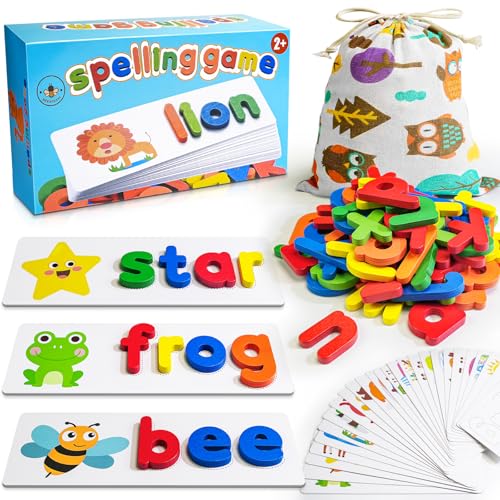
- 28 flash cards with 52 wooden letters
- Polished wood with no sharp corners
- Includes storage bag and gift box
Best For: Early alphabet matching and word practice
Writing Practice Learning Tablet
Mr. Pencil Scribble Write and Read

- Traces uppercase and lowercase letters
- Includes numbers, counting, spelling, and drawing
- Customizable with a child’s name
Best For: Guided handwriting and early reading practice
Magnetic Fishing Learning Game
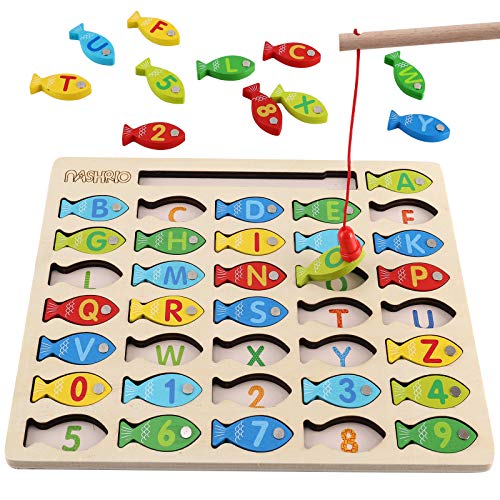
- Letters, numbers, and colors in one game
- Supports fine motor and hand-eye coordination
- Wood construction with smooth edges
Best For: Active preschool learning through fishing play
Interactive Preschool Activity Book

- Covers letters, numbers, shapes, and phonics
- Six touch pages plus six marker pages
- Includes erasable pen for repeat practice
Best For: Broad school-readiness practice in book form
Letter Match Learning Game
Matching Letter Game for Preschoolers
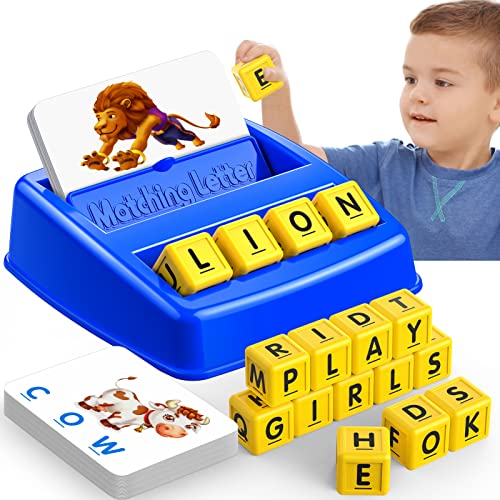
- Builds letter recognition, spelling, and early vocabulary.
- Includes 30 picture cards and 12 letter cubes.
- Encourages parent-child interaction and turn-taking.
Best For: Families wanting a simple early literacy game for shared play.
See & Spell Word Builder

- Includes 28 flash cards and 52 wooden blocks.
- Teaches spelling, sight words, and letter recognition.
- Comes with a storage bag for easy travel and cleanup.
Best For: Kids practicing simple CVC words and early reading skills.
Brainometry Puzzle Challenge

- Develops logic, critical thinking, and spatial skills.
- Includes 10 double-sided challenge cards.
- Portable, screen-free solo puzzle with 34 pieces.
Best For: Kids who like pattern puzzles and hands-on STEM play.
Word-Building Learning Game

- 28 flash cards and 52 wooden blocks
- Practices sight words, spelling, and matching
- Portable canvas bag for easy storage
Best For: Early reading and word-building practice for preschoolers
Hands-On Counting Toy

- Wooden finger board plus 13 number blocks
- Teaches counting, addition, and subtraction within 10
- Basswood build with non-toxic water-based paint
Best For: Hands-on early math practice for preschool and kindergarten kids
Alphabet Puzzle Set
3-Pack ABC Number Shape Boards

- Three wooden boards for letters, numbers, and shapes
- Self-correcting matching design supports independent play
- Smooth wood with non-toxic dyes
Best For: Puzzle-loving preschoolers practicing letters, numbers, and shapes
Alphabet Match Wooden Learning Set – ABC Letter Puzzle Cards
If you want preschool learning toys for 5 year olds that focus on letters in a simple, hands-on way, this wooden matching set is a practical pick. Kids place the wooden letters on top of the flash cards to practice ABC recognition, word-building, and early language skills without a complicated setup.
Best For: Preschoolers who are starting letter recognition, matching, and basic word learning.
Pros:
- 28 flash cards and 52 wooden letters support repeated alphabet matching practice.
- Wood pieces are carefully polished with no sharp corners.
- Includes a storage bag and gift box for easier cleanup and gifting.
- Builds hand-eye coordination, motor skills, and problem solving along with language skills.
Cons:
- Focuses mainly on letters and matching rather than broader subject variety.
- Best suited to guided play for children who are still learning the alphabet.
This is a straightforward educational toy for families who want a tactile, low-tech way to reinforce early literacy. It keeps the learning task clear and manageable, which is useful for preschool attention spans.
Writing Practice Learning Tablet – Mr. Pencil Scribble Write and Read
For preschool learning toys for 5 year olds that combine tracing, reading, and number practice, this LeapFrog tablet gives kids step-by-step guidance. Mr. Pencil helps children trace letters and numbers, then adds simple animation and sound-it-out support to keep practice engaging.
Best For: Kids who need help with letter writing, number tracing, and early reading practice.
Pros:
- Teaches uppercase and lowercase letter writing step by step.
- Includes number tracing, counting, spelling, and drawing activities.
- Lets you customize practice with a child’s first, middle, and last name.
- Sound-it-out support adds an extra reading layer during play.
Cons:
- Requires 3 AA batteries for regular use.
- Single-player format may not suit group play.
This is a strong choice if your priority is school-readiness practice in a compact, guided format. It works especially well for children who benefit from visual tracing cues and repeated writing exercises.
Magnetic Fishing Learning Game – Alphabet and Number Catch Set
If you’re shopping for preschool learning toys for 5 year olds that turn alphabet and number practice into active play, this magnetic fishing game is a smart option. Children use the pole to catch numbered and lettered fish, making color recognition, fine motor practice, and early math or ABC learning feel like a game.
Best For: Preschoolers who learn best through active, hands-on fishing and matching play.
Pros:
- Combines letters, numbers, and colors in one interactive board game.
- Supports hand-eye coordination and fine motor skills through fishing play.
- Made from polished wood with smooth edges and eco-friendly water-based dye.
- Also encourages imagination and problem-solving during play.
Cons:
- Requires active supervision if younger children are using the pole and small fish pieces.
- Learning focus is limited to the included letters and numbers.
This toy is a good fit for children who need movement built into their learning routine. The fishing mechanic adds variety while still keeping the educational goal clear and age-appropriate.
Interactive Preschool Activity Book – Prep for School Learning Book
For parents comparing preschool learning toys for 5 year olds, this interactive activity book offers a broad mix of school-prep skills in one format. It covers counting, colors, shapes, the alphabet, phonics, writing, and matching with touch-sensitive pages, marker pages, and an erasable pen.
Best For: Preschoolers who need a varied, interactive school-readiness book.
Pros:
- Includes six touch-sensitive pages and six marker pages for replayable practice.
- Covers counting, colors, shapes, letters, words, phonics, and writing.
- Features activities like letter writing, number matching, tracing, and line drawing.
- Comes with an erasable pen so kids can repeat the exercises.
Cons:
- Requires 2 AA batteries for regular use.
- Some activities are more guided than open-ended.
This is one of the more well-rounded options if you want a single toy to reinforce several preschool skills. It’s especially useful for children who enjoy workbook-style learning with interactive feedback.
Letter Match Learning Game – Matching Letter Game for Preschoolers
If you want preschool learning toys for 5 year olds that mix letter practice with simple game play, this matching letter set keeps things hands-on. It focuses on letter recognition, spelling, word building, and early vocabulary while also encouraging memory, turn-taking, and parent-child interaction.
Best For: Families who want a simple, screen-free word game for early literacy practice and shared play.
Pros:
- Supports letter recognition, spelling, word building, and early vocabulary skills.
- Includes 30 picture cards and 12 letter cubes for matching practice.
- Designed for parent-child interaction and social play.
- No batteries required and easy to use as a manual learning game.
Cons:
- Only 12 letter cubes are included, and Q/V/X are not part of the set.
- Picture cards use 3- and 4-letter words, so the scope is fairly focused.
Overall, this is a practical early literacy toy for preschoolers who are ready to match letters and build simple words. It works well as a family activity and as a learning gift that keeps the emphasis on basic language skills.
See & Spell Word Builder – Wooden CVC Learning Set
For preschool learning toys for 5 year olds that focus on reading readiness, this wooden see-and-spell set gives kids a straightforward way to practice CVC words. It combines flash cards and blocks to support spelling, letter recognition, sight words, and fine motor development in a compact, travel-friendly format.
Best For: Preschoolers who are ready to practice simple spelling and sight words with a hands-on wooden set.
Pros:
- Includes 28 double-sided flash cards and 52 wooden blocks.
- Supports spelling, sight-reading vocabulary, letter recognition, and word association.
- Wooden pieces have smooth edges and environmentally friendly paint.
- Cute storage bag makes it easy to pack for travel or quick cleanup.
Cons:
- Focused mainly on CVC and sight-word practice rather than broader play styles.
- Best suited to a more structured learning activity than open-ended play.
This set stands out if you want a durable, preschool-friendly spelling toy that can travel easily. It keeps the learning goal clear and practical, making it a strong option for early literacy practice at home or on the go.
Brainometry Puzzle Challenge – STEM Pattern Matching Game
If you’re comparing preschool learning toys for 5 year olds that build thinking skills beyond letters and numbers, this STEM puzzle is a smart pick. It uses shape matching, pattern challenges, and tactile blocks to strengthen critical thinking, logic, spatial understanding, and fine motor skills in a screen-free format.
Best For: Kids who enjoy puzzle-style challenges and hands-on problem-solving.
Pros:
- Builds critical thinking, logic, spatial understanding, and fine motor skills.
- Includes 10 double-sided challenge cards with progressive difficulty.
- Portable storage box helps keep the 34 pieces organized.
- Screen-free solo play works well at home, in classrooms, or while traveling.
Cons:
- More of a logic puzzle than a traditional reading or spelling toy.
- Designed for one player, so it is less social than some learning games.
This is a solid choice when you want a brain game that keeps a 5-year-old engaged with patterns and problem-solving. It’s especially useful if you prefer a compact, durable toy that supports STEM-style learning without screens.
Word-Building Learning Game – CVC Sight Word Builder Set
If you want preschool learning toys for 5 year olds that support early reading, this CVC word builder set is a strong pick. It combines flash cards, wooden letter blocks, and matching scenes to help kids practice sight words, spelling, letter recognition, and memory through hands-on play.
Best For: Kids who are ready to start building sight words, matching letters, and practicing early reading skills with a play-based set.
Pros:
- Includes 28 double-sided flash cards, 52 wooden blocks, and a durable canvas bag.
- Supports sight-reading vocabulary, spelling, letter recognition, matching, and fine motor skills.
- Designed for multiple children, so it can work well for shared play and social learning.
- Compact and easy to store, making it useful for travel or on-the-go learning.
Cons:
- Focused mainly on CVC word building rather than broader preschool subjects.
- Requires adult guidance for younger children who are just starting to spell.
Overall, this is a practical choice if you want a simple, screen-free literacy toy that turns early word practice into a hands-on game. It is especially appealing for families looking to reinforce reading readiness at home or while traveling.
Hands-On Counting Toy – Preschool Math Manipulatives
For parents comparing preschool learning toys for 5 year olds, this Montessori-style math set is a straightforward way to practice counting and simple operations. The wooden finger board, number blocks, and flash cards are built for hands-on use, helping children visualize addition, subtraction, and basic number sense.
Best For: Preschoolers and kindergarten learners who need a tactile way to explore counting, early math, and number recognition.
Pros:
- Includes a wooden finger board, 13 colorful number blocks, 8 flash cards, and a holder.
- Designed to help children understand addition and subtraction within 10.
- Supports fine motor skills, cause-and-effect learning, and early math confidence.
- Made from natural basswood with non-toxic water-based paint.
Cons:
- Limited to foundational math concepts rather than a broad learning curriculum.
- Smaller piece count may feel simple for kids who already know basic numbers well.
This set makes sense if you want a focused, hands-on math toy instead of a general preschool activity kit. It is best for families who value visual counting tools and low-pressure math practice at home or in class.
Alphabet Puzzle Set – 3-Pack ABC Number Shape Boards
If you are shopping for preschool learning toys for 5 year olds, this wooden puzzle set offers a simple way to work on letters, numbers, and shapes. The matching boards use colorful pieces and self-correcting play to support memory, concentration, dexterity, and hand-eye coordination.
Best For: Kids who like puzzle-based learning and need practice matching letters, numbers, and shapes.
Pros:
- Includes a 3-pack with alphabet, number, and shape puzzle boards.
- Uses matching illustrations and shapes to help kids self-correct as they play.
- Made from high-quality wood with non-toxic dyes and smooth, splinter-free edges.
- Supports logic, memory, concentration, dexterity, and hand-eye coordination.
Cons:
- Best for tabletop play, so it is not as portable as smaller learning toys.
- Designed for one player, which may limit shared play value.
This is a solid choice if you want a durable, puzzle-style learning toy that keeps practice simple and visual. It works well for children who learn best by matching pieces and seeing the correct fit for themselves.
How We Picked the Best Preschool Learning Toys for 5 Year Olds
We looked for toys that balance engagement, learning value, and age-appropriate challenge. Strong picks should reinforce early literacy, numeracy, hand-eye coordination, and pattern recognition without relying on complicated setup or fragile parts.
We also favored toys with clear educational goals, durable construction, and replay value. For Preschool Learning Toys for 5 Year Olds, that usually means activities kids can revisit often as their skills improve.
Quick Comparison: What Each Type Helps with
Alphabet and word-building toys are best for letter recognition, phonics, and spelling readiness. Number and counting toys support one-to-one correspondence, sequencing, and early math. Matching, memory, and puzzle toys strengthen logic, visual discrimination, and concentration. Tracing and writing toys help with pencil control and pre-writing skills. STEM-style puzzles add spatial reasoning and problem-solving to the mix.
Key Buying Factors for Preschool Learning Toys for 5 Year Olds
Skill Match
Pick toys that fit your child’s current level. A 5-year-old may be ready for simple spelling, counting beyond ten, or multi-step puzzle play, but the best toy should still feel approachable.
Open-Ended Use
Toys that offer more than one way to play tend to last longer. Look for sets that support sorting, matching, building, tracing, or game-based learning instead of a single fixed activity.
Durability and Safety
Preschoolers can be rough on toys, so sturdy wood, thick cardboard, and well-finished pieces matter. Small parts should be age-appropriate and easy for adult supervision if younger siblings are nearby.
Learning Scope
The best Preschool Learning Toys for 5 Year Olds often blend several skills in one set. A good mix might include letters, numbers, colors, shapes, or motor-skill practice so the toy stays useful over time.
Who Should Buy Which Preschool Learning Toys for 5 Year Olds?
Choose alphabet and spelling toys if your child is working on letter recognition or early reading. Choose counting and math manipulatives if they like sorting, stacking, or number games. Choose tracing and writing tools if pencil control is the priority. Choose matching and STEM puzzles if your child enjoys challenge-based play and problem-solving.
If you want one versatile option, look for a toy that combines multiple early-learning skills and can be used independently as well as with a parent or teacher. That flexibility is often what makes a toy worth buying.