Choosing the right RAID enclosure can make a big difference in speed, redundancy, and how easily your storage scales over time. Whether you need a compact 2-bay unit or a higher-capacity 5-bay setup, the best options balance performance, cooling, and RAID flexibility.
Below, we’ve focused on raid enclosures that make sense for backups, shared project storage, and media-heavy workflows, with a practical eye on capacity, connectivity, and day-to-day ease of use.
Best 10 Raid Enclosures Picks for 2026
Fast 4-bay DAS

- 10Gbps USB 3.2 Gen2 connection
- Tool-free, hot-swappable drive bays
- Quiet cooling with sound-damping panels
Best For: Fast desktop storage without RAID complexity
Flexible RAID storage
ORICO 5 Bay RAID HDD Enclosure

- Eight RAID and utility modes
- Up to 110TB total capacity
- Built-in 150W power and silent cooling
Best For: Large-capacity storage with flexible RAID setups
Hardware RAID DAS
QNAP TR-004 4-Bay USB-C Enclosure
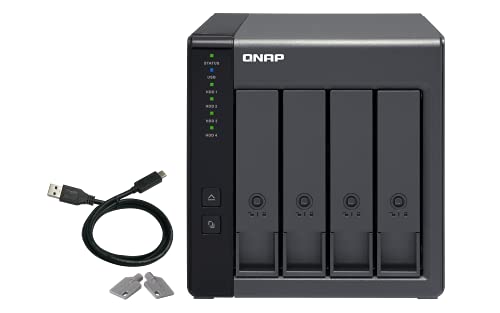
- Hardware RAID with RAID 0/1/5/JBOD
- USB-C direct-attached storage
- Lockable bays for added security
Best For: QNAP expansion and backup with hardware RAID
20Gbps RAID speed
ORICO 20Gbps 4 Bay RAID Enclosure

- 20Gbps USB 3.2 Gen 2x2 support
- RAID 0/1/5/10 plus JBOD and Normal
- Up to 104TB with active cooling
Best For: High-speed RAID storage for demanding workloads
Five-Bay Hardware RAID Expansion
TERRAMASTER D5-310 5-Bay Hardware RAID Enclosure
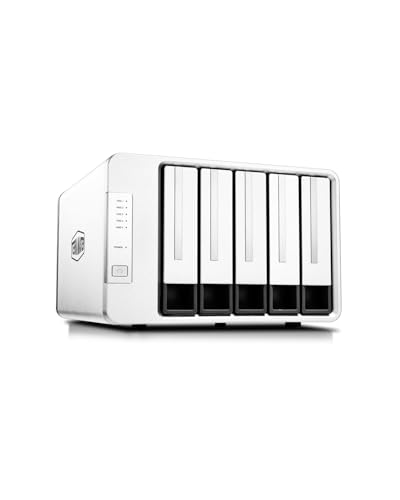
- Physical RAID knob with RAID 5/0/1/10 and Single modes
- Supports up to 120TB across five drive bays
- Compatible with Windows, macOS, and Linux without drivers
Best For: People who need a flexible five-bay hardware RAID enclosure for large desktop storage
Four-Bay Dual-Interface RAID Dock
CENMATE 4-Bay Aluminum RAID Enclosure

- Supports RAID 0/1/3/5/10, CLONE, LARGE, and NORMAL modes
- Handles 2.5-inch and 3.5-inch HDDs/SSDs up to 80TB
- Includes USB 3.0, eSATA, aluminum housing, and cooling fan
Best For: Users who want a four-bay RAID enclosure with flexible modes and USB/eSATA options
Two-Bay High-Speed RAID Option
TERRAMASTER D2-320 2-Bay RAID Enclosure

- USB 3.2 Gen 2 with up to 10Gbps transfer speeds
- Supports RAID 0, RAID 1, JBOD, and Single modes
- Tool-free trays and push-lock design for easy installs
Best For: Buyers who want a compact two-bay RAID enclosure with fast USB 3.2 Gen 2 speeds
Flexible 4-Bay RAID Expansion
ORICO 4-Bay 88TB Aluminum Storage

- 8 RAID modes for flexible setup
- Up to 88TB with 22TB drive support
- 150W PSU and 80mm cooling fan
Best For: users who need a configurable 4-bay RAID enclosure for backup and expanded storage
Dual 2-Bay RAID Setup
CENMATE 4-Bay Aluminum RAID Enclosure
- Supports 2.5-inch and 3.5-inch SATA drives
- 4 modes: RAID 0, RAID 1, Normal, JBOD
- USB 3.0 with up to 5Gbps transfer
Best For: buyers who want simple RAID modes and broad drive compatibility in a 4-drive enclosure
High-Capacity 5-Bay RAID Storage
Yottamaster 110TB RAID Enclosure

- Five bays with up to 110TB capacity
- RAID 0/1/3/5/10/JBOD/CLONE support
- Aluminum shell with 80mm smart fan
Best For: video workflows and high-capacity desktop storage builds
Fast 4-bay DAS – TERRAMASTER D4-320 10Gbps DAS
If you want raid enclosures for simple, high-speed direct storage rather than network sharing, the TerraMaster D4-320 is built around speed, ease of use, and quiet operation. It is a 4-bay DAS, not a NAS, and supports plug-and-play use over USB 3.2 Gen2 for fast everyday file work.
Best For: Users who need a fast, no-fuss 4-bay USB enclosure for backups, editing, and desktop storage.
Pros:
- USB 3.2 Gen2 supports up to 10Gbps, with up to 1,016 MB/s combined read/write in a 4-drive setup.
- Tool-free trays and push-lock design make drive installation and removal easy.
- Hot-swappable design adds convenience for drive changes without powering down.
- Quiet cooling setup with temperature-controlled fan and sound-damping materials.
Cons:
- No RAID function, so it is not suited to users looking for RAID management.
- Diskless enclosure means you must supply your own drives.
Overall, the D4-320 is a straightforward choice if your priority is fast, quiet, direct-attached storage with simple setup rather than RAID features. It makes the most sense for users who value plug-and-play convenience and multi-drive capacity.
Flexible RAID storage – ORICO 5 Bay RAID HDD Enclosure
For shoppers comparing raid enclosures, this ORICO 5-bay model stands out for its wide RAID mode support and large-capacity 3.5-inch drive compatibility. It is designed to centralize storage, improve data protection, and handle heavier backup or media workloads over USB 3.0.
Best For: Users who want flexible RAID options and a roomy 5-bay enclosure for large data sets.
Pros:
- Supports eight modes: RAID 0, 1, 3, 5, 10, JBOD, CLONE, and CLEAR.
- Fits 3.5-inch SATA drives up to 22TB each, with up to 110TB total capacity.
- 80mm silent fan and front/rear vents help maintain airflow and cooling.
- 150W built-in power supply supports multiple drives without a bulky adapter.
Cons:
- USB 3.0 tops out at 5Gbps, so it is slower than newer high-speed enclosures.
- Mode switching requires caution and a backup first because it can affect stored data.
This enclosure makes sense if you need RAID flexibility more than raw transfer speed. The combination of multiple RAID modes, high capacity, and built-in power makes it a practical desktop storage hub.
Hardware RAID DAS – QNAP TR-004 4-Bay USB-C Enclosure
QNAP TR-004 4 Bay USB Type-C Direct Attached Storage (DAS) with hardware RAID (Diskless)
Check Price On AmazonThe QNAP TR-004 is one of the more practical raid enclosures if you want hardware RAID in a compact USB-C DAS. It works with Windows, macOS, and Linux, and it can also be used to expand a QNAP NAS or serve as external storage for backup tasks.
Best For: QNAP users and multi-OS buyers who want a hardware RAID DAS for backup and expansion.
Pros:
- Hardware RAID supports RAID 0, 1, 5, JBOD, and individual disks.
- USB Type-C connectivity with a Type-C to Type-A cable included.
- Lockable drive bays add a layer of physical security.
- Can be used for NAS backup and QNAP capacity expansion.
Cons:
- Compatibility is limited with certain older QNAP NAS models.
- NAS applications cannot be installed on the TR-004 itself.
If you want a RAID-capable enclosure with straightforward DAS use and QNAP ecosystem support, the TR-004 is an easy shortlist candidate. Just make sure your NAS model is supported before planning an expansion setup.
20Gbps RAID speed – ORICO 20Gbps 4 Bay RAID Enclosure
If speed matters most in raid enclosures, this ORICO 4-bay model pushes into 20Gbps territory over USB 3.2 Gen 2×2 and uses the upgraded JMS591 chip for stronger SATA 3.0 performance. It is aimed at users handling large transfers, editing workloads, or professional data management where bandwidth and RAID flexibility both matter.
Best For: Power users who want fast USB 3.2 Gen 2×2 performance with flexible RAID options.
Pros:
- USB 3.2 Gen 2×2 supports up to 20Gbps, with USB4 able to reach full speed.
- Supports RAID 0, 1, 5, 10, JBOD, and Normal modes.
- Up to 104TB capacity with support for 26TB drives per bay.
- Built-in 150W power supply and cooling fan help with stable operation.
Cons:
- Thunderbolt connections are limited to about 10Gbps, not the full 20Gbps.
- Changing RAID modes can erase drives, so backups are essential.
This is a strong choice for users who need both speed and RAID flexibility in a compact 4-bay enclosure. Its biggest advantage is the combination of modern bandwidth, large capacity, and broad RAID support.
Five-Bay Hardware RAID Expansion – TERRAMASTER D5-310 5-Bay Hardware RAID Enclosure
If you want raid enclosures with true hardware control and room to grow, the TERRAMASTER D5-310 is built around a physical RAID knob and five drive bays. It supports RAID 5, 0, 1, 10, and Single modes, plus a hot spare feature for added protection in RAID 1, 5, or 10 setups. With USB 3.1 Gen 1 connectivity and broad Windows, macOS, and Linux compatibility, it suits mixed-platform storage needs without requiring extra drivers.
Best For: Users who want a five-bay hardware RAID enclosure for flexible desktop storage expansion and backup workflows.
Pros:
- Hardware RAID with a dedicated mode knob on the back
- Supports RAID 5, 0, 1, 10, Single, and hot spare configurations
- Works with Windows, macOS, and Linux without extra drivers
- Includes free Windows backup software and temperature-controlled fans
Cons:
- Diskless, so you’ll need to supply all drives separately
- Uses USB 3.1 Gen 1 rather than faster newer interfaces
- Larger five-bay footprint may be more than casual users need
Overall, the D5-310 is a practical choice if you value direct RAID control, high capacity, and OS flexibility in a single enclosure. Its tool-free bays and 120TB maximum capacity make it a strong fit for serious local storage expansion.
Four-Bay Dual-Interface RAID Dock – CENMATE 4-Bay Aluminum RAID Enclosure
For buyers comparing raid enclosures that prioritize capacity in a compact desktop format, the CENMATE 4-bay model offers a lot of flexibility. It supports 2.5-inch and 3.5-inch SATA HDDs and SSDs, up to 80TB total, and includes RAID 0, 1, 3, 5, 10, CLONE, LARGE, and NORMAL modes. The aluminum body and built-in cooling fan are designed to help keep drives stable during longer use, while USB 3.0 and eSATA give it multiple connection options.
Best For: Users who want a four-bay DAS enclosure with multiple RAID modes and both USB and eSATA connectivity.
Pros:
- Supports eight RAID modes, including RAID 0/1/3/5/10 and CLONE
- Works with 2.5-inch and 3.5-inch HDDs plus SSDs
- Up to 80TB capacity across four bays
- Aluminum build with a cooling fan and included USB/eSATA cables
Cons:
- Hot-swapping is not supported
- RAID mode changes require a reset process and can cause data loss
- Fan noise is noted at around 40–50 decibels
This is a good fit if you want broad RAID support and dual-interface connectivity without moving up to a larger enclosure. Just be aware that the mode-switching process is manual and best handled carefully.
Two-Bay High-Speed RAID Option – TERRAMASTER D2-320 2-Bay RAID Enclosure
If you’re shopping for raid enclosures with strong speed in a smaller footprint, the TERRAMASTER D2-320 is a straightforward 2-bay DAS. It uses USB 3.2 Gen 2 for up to 10Gbps transfer speeds and supports RAID 0, RAID 1, JBOD, and Single modes. The enclosure also works with 3.5-inch and 2.5-inch SATA HDDs or 2.5-inch SATA SSDs, making it a practical pick for backup, mirrored storage, or high-speed local working space.
Best For: People who want a compact two-bay hardware RAID enclosure with fast USB 3.2 Gen 2 performance.
Pros:
- USB 3.2 Gen 2 interface with up to 10Gbps transfer rates
- Supports RAID 0, RAID 1, JBOD, and Single modes
- Works with 3.5-inch, 2.5-inch HDDs, and 2.5-inch SSDs
- Tool-free trays and a push-lock design simplify drive installs
Cons:
- Diskless, so drives are not included
- Two-bay design limits total capacity compared with larger enclosures
- Plastic enclosure material may feel less premium than aluminum alternatives
The D2-320 makes sense if speed and simplicity matter more than maximum bay count. It’s especially appealing for users who want a mirrored backup setup or fast RAID 0 storage without adding a larger desktop unit.
Flexible 4-Bay RAID Expansion – ORICO 4-Bay 88TB Aluminum Storage
If you want a practical RAID enclosure for 3.5-inch SATA drives, this ORICO 4-bay model focuses on capacity, flexible array options, and steady cooling. It supports 8 RAID modes, so it can be adapted for backup, performance, or mirrored storage depending on your workflow.
Best For: Users who need a 4-bay RAID enclosure with multiple configuration options for backup and expanded external storage.
Pros:
- Supports 8 RAID modes, including RAID 0, 1, 3, 5, 10, JBOD, CLONE, and CLEAR
- Up to 88TB total capacity with support for 22TB single drives
- Built-in 150W power supply and 80mm silent cooling fan
- Trayless design with safety lock for faster drive handling and added security
Cons:
- Designed for 3.5-inch SATA HDDs only, not a mixed-size drive bay
- USB 3.0 speeds top out at up to 235 MB/s in the supplied notes
- Four-bay layout may be limiting if you expect room to expand further later
This is a strong fit if you want a hardware RAID enclosure with broad mode support and straightforward external storage expansion. The aluminum build, fan cooling, and integrated power supply make it well suited to longer-running desktop use.
Dual 2-Bay RAID Setup – CENMATE 4-Bay Aluminum RAID Enclosure
This CENMATE RAID enclosure is a compact way to build out external storage with two combined 2-bay units. It supports 2.5-inch and 3.5-inch SATA HDDs or SSDs, offers four RAID modes, and uses aluminum construction with active cooling to help keep drives running safely.
Best For: Buyers who want a 4-drive RAID enclosure with simple storage modes and broad drive compatibility.
Pros:
- Supports 2.5-inch and 3.5-inch SATA HDDs and SSDs
- Four modes available: RAID 0, RAID 1, Normal, and JBOD
- Max capacity up to 80TB, with 20TB per drive noted
- USB 3.0 with up to 5Gbps transfer and USB A/C cable support
Cons:
- RAID setup requires attention to the reset procedure noted by the seller
- Fan noise is listed around 40-50 decibels
- Mac OS has no RAID software support in the supplied notes
For users who mainly want a straightforward RAID enclosure rather than a feature-heavy workstation unit, this model covers the essentials well. Its mixed drive support and included USB A/C options make it flexible for everyday desktop storage.
High-Capacity 5-Bay RAID Storage – Yottamaster 110TB RAID Enclosure
The Yottamaster 5-bay RAID enclosure is built for users who need more drive room and more RAID choices in one external unit. It supports both 2.5-inch and 3.5-inch SATA HDDs or SSDs, reaches up to 110TB, and includes a temperature-controlled fan for sustained use.
Best For: Video workflows, office storage, and other users who need a higher-capacity RAID enclosure with five bays.
Pros:
- Five-bay design with support for up to 110TB total capacity
- RAID 0/1/3/5/10/JBOD/CLONE modes for flexible setups
- Supports 2.5-inch and 3.5-inch SATA HDDs and SSDs
- 80mm intelligent fan and aluminum shell for cooling
Cons:
- USB 3.1 transfer rate is listed at up to 5Gbps, not a faster interface class
- New drives may need formatting and partitioning before use
- The enclosure is aimed at desktop storage rather than portability
If capacity and RAID flexibility matter more than compact size, this Yottamaster enclosure is the strongest option in this group. It is especially appealing for users building a larger external storage pool for work files, backups, or media projects.
How We Picked These Raid Enclosures
We prioritized enclosure designs that offer a strong mix of RAID support, drive compatibility, thermal management, and connection options. The best Raid Enclosures should be easy to set up, stable under load, and appropriate for the number and size of drives you plan to use.
We also weighed real-world usefulness: whether the enclosure is suitable for backup redundancy, whether it supports both 2.5-inch and 3.5-inch drives where relevant, and whether the interface is modern enough for the speed you expect from your drives.
Quick Comparison: What Different Bay Counts Mean
2-bay models are best for simple mirrored backups or compact desks where space matters. 4-bay Raid Enclosures usually hit the sweet spot for many users, offering better capacity and more RAID flexibility without becoming too bulky. 5-bay units are the better choice when you want room to grow, larger media libraries, or a stronger balance between capacity and redundancy.
In general, more bays mean more expansion potential, but also more heat, more noise, and a greater need for thoughtful cooling and power delivery.
Key Buying Factors for Raid Enclosures
RAID Modes
Look for support for the RAID level you actually need. Mirror-based options are best for protection, while striping can improve performance but does not protect against drive failure. Flexible Raid Enclosures that support multiple modes are more versatile over time.
Connectivity and Throughput
USB 3.0 works for many backup tasks, but faster interfaces are better if you move large files often or use SSDs. The enclosure interface should not become the bottleneck for your drives.
Cooling and Build Quality
Aluminum construction, active fans, and decent ventilation help maintain drive health during long transfers. This matters more as bay count increases.
Drive Compatibility and Capacity
Check support for 2.5-inch and 3.5-inch SATA drives, plus any stated maximum capacity. If you plan to reuse older drives or mix form factors, compatibility is especially important.
Who Should Buy Which Raid Enclosures?
If you want a simple backup box for a laptop or desktop, a 2-bay RAID enclosure is usually enough. If you’re storing photo, video, or audio projects, a 4-bay model is often the most practical middle ground. If you need larger local storage for archives or a growing media library, a 5-bay option offers the most breathing room.
For buyers who value flexibility, the best approach is to choose an enclosure with more RAID options than you think you need today. That leaves room to adapt as your storage needs change.