Choosing the right calculator can make chemistry work faster, cleaner, and far less frustrating. From stoichiometry and molar mass to pH, gas laws, and equilibrium, the best models handle the math without getting in the way.
This roundup focuses on scientific calculators for chemistry that balance function, display clarity, exam compatibility, and value for students at different levels.
Best 10 Scientific Calculators for Chemistry Picks for 2026
Advanced STEM Pick
TI-36X Pro Scientific Calculator

- MultiView display shows multiple calculations at once
- MathPrint displays fractions and expressions neatly
- Includes degrees/radians and number format modes
Best For: High school and college chemistry, math, and science courses
Compact Budget Pick
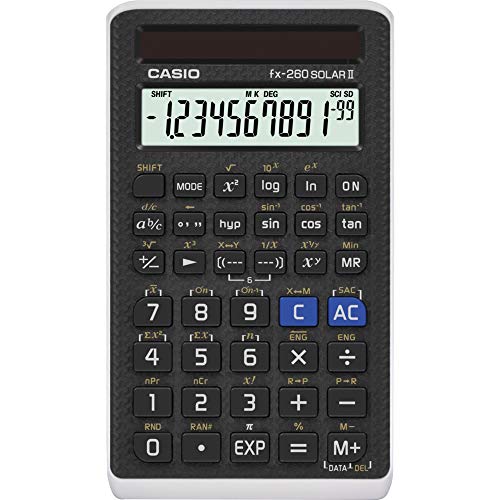
- Very compact and lightweight for school use
- Solar powered with battery backup
- Includes trig, fractions, permutations, and combinations
Best For: Students who want a portable calculator for algebra, trig, and introductory chemistry
Exam-Ready Midrange Pick
TI-34 MultiView Scientific Calculator

- Approved for SAT, ACT, and AP exams
- Four-line display helps compare calculations
- MathPrint and fraction tools support textbook-style entry
Best For: Middle school and high school students needing an exam-approved calculator
Feature-Rich Upgrade Pick

- Over 280 functions for broad use
- Natural textbook display improves readability
- 16-digit, 4-line LCD gives more working space
Best For: Students needing a high-function calculator for chemistry and advanced STEM courses
MultiView Clarity for School Science
TI-30XS MultiView Scientific Calculator

- Four-line display for side-by-side calculations
- Textbook-style math and fraction formatting
- Designed for chemistry, biology, and general science
Best For: High school chemistry students who want readable classwork support
Advanced ClassWiz for STEM Work
Casio FX-9910CW Scientific Calculator

- High-definition LCD for easier equation viewing
- Natural Textbook Display for smoother input and review
- Suited to engineering, science, and statistics coursework
Best For: Students who need chemistry support plus broader STEM coursework
Exam-Ready Basics for Science Class
TI-30XIIS Scientific Calculator

- Two-line display shows entry and result together
- Solar and battery powered for flexible use
- Approved for SAT, ACT, and AP exams
Best For: Students who want a simple, approved calculator for chemistry
Pink 2-Line Scientific Pick

- Two-line display shows entry and result together
- Logs, antilogs, and scientific/engineering notation modes
- Solar and battery powered with 1- and 2-variable stats
Best For: Chemistry students who want a clear, dependable scientific calculator
Basic Science Workhorse

- 10-digit one-line display for basic work
- Covers logs, roots, powers, factorials, and trig
- Includes fraction math, 1-variable stats, and a slide case
Best For: Students needing a simple, budget-friendly chemistry calculator
Raspberry Two-Line Choice
Texas Instruments TI-30XIIS Raspberry

- Two-line screen shows input and result together
- Logs, antilogs, and scientific/engineering notation
- Solar and battery powered with stats and angle modes
Best For: Chemistry students who want a colorful, dependable scientific calculator
Advanced STEM Pick – TI-36X Pro Scientific Calculator
Texas Instruments TI-36X Pro Engineering/Scientific Calculator | 9.7 Inch | Black.
Check Price On AmazonFor scientific calculators for chemistry, the TI-36X Pro is a strong choice if you want a classroom-ready model with advanced display tools. Its MultiView and MathPrint features make it easier to check equations, fractions, and symbols as they appear in textbooks, which is useful when working through chemistry problems that involve formulas and conversions.
Best For: High school and college students in chemistry, math, and science courses who want a non-graphing calculator with stronger formatting and multi-line viewing.
Pros:
- MultiView display shows multiple calculations at the same time
- MathPrint formats fractions and expressions like a textbook
- Supports degrees/radians, floating/fix, and number format modes
- Built for higher-level math and science subjects, including biology and calculus
Cons:
- Battery powered rather than solar
- More advanced than a basic school calculator, so it may take some setup time
If you need a dependable scientific calculator that handles more than basic arithmetic, this model offers a good balance of school-friendly design and advanced functionality. It is especially appealing for students who value clear equation entry and flexible display modes.
Compact Budget Pick – Casio fx-260 Solar II
If you want scientific calculators for chemistry in a simple, portable package, the Casio fx-260 Solar II is built for students who need a compact everyday option. It covers the core functions you’d expect for school math and science, including trig, fractions, permutations, and combinations, while keeping the footprint small for a backpack or desk.
Best For: Middle school and high school students taking general science, pre-algebra, algebra, trig, or introductory chemistry who want a lightweight calculator.
Pros:
- Compact and lightweight for easy portability
- Solar powered with battery backup for reliable use
- Supports trig, inverse trig, fractions, permutations, and combinations
- Large 10-digit display despite the small size
Cons:
- Less advanced than multi-line scientific calculators
- Fraction key is not included in the “NF” version
This is a practical pick if you value portability and straightforward function over advanced classroom features. It covers the basics well and is easy to carry, making it a sensible everyday calculator for students.
Exam-Ready Midrange Pick – TI-34 MultiView Scientific Calculator
For scientific calculators for chemistry, the TI-34 MultiView stands out as a practical middle-school-to-high-school option with tools that make problem-solving easier to follow. Its four-line MultiView display, MathPrint layout, and fraction features help you review equations and compare results while working through chemistry calculations and other science topics.
Best For: Students who want an exam-approved scientific calculator for middle school math and science, including chemistry fundamentals.
Pros:
- Approved for SAT, ACT, and AP exams
- Four-line MultiView display makes it easier to compare calculations
- MathPrint shows fractions and symbols in textbook form
- Includes a table feature and previous-entry review for pattern checking
Cons:
- Battery powered instead of solar
- Geared more toward intermediate users than advanced college-level work
This model is a strong fit when exam permission matters as much as functionality. It gives students helpful display and review tools without moving into graphing-calculator territory, which keeps it straightforward for class use.
Feature-Rich Upgrade Pick – Casio fx-115ES Plus 2nd Ed
When shopping for scientific calculators for chemistry, the Casio fx-115ES Plus 2nd Ed is the most feature-heavy option in this group. With more than 280 functions and a natural textbook display, it is designed for students who want a capable calculator for math, science, engineering, and statistics work.
Best For: Students who want a function-rich scientific calculator for chemistry, advanced math, and science classes.
Pros:
- More than 280 functions for broad problem-solving support
- Natural textbook display makes expressions easier to read
- 16-digit, 4-line LCD display provides more room for calculations
- Useful for math, science, engineering, and statistics
Cons:
- Battery powered rather than solar
- May be more calculator than needed for basic coursework
This is the best fit if you want maximum function coverage in a standard scientific calculator. It brings a more advanced display and a wide feature set, which makes it a flexible choice for students who expect their coursework to become more demanding.
MultiView Clarity for School Science – TI-30XS MultiView Scientific Calculator
If you want scientific calculators for chemistry that make it easier to check work and follow each step, the TI-30XS MultiView is a practical pick. Its four-line display helps you compare calculations on screen, while textbook-style formatting makes fractions, symbols, and expressions easier to read during lab prep and homework.
Best For: High school chemistry students who want a clear, easy-to-read calculator for general science and classwork.
Pros:
- Four-line MultiView display lets you view multiple calculations at once.
- Textbook-style display shows stacked fractions and math notation clearly.
- Scientific notation output uses superscripted exponents.
- Includes built-in support for chemistry, biology, and general science use.
Cons:
- Not positioned as a premium advanced model for engineering coursework.
- Battery-powered only, so there is no solar assist.
This is a strong everyday calculator for students who need readable, reliable tools without extra complexity. For chemistry classes, the combination of clear formatting and quick function access is the main draw.
Advanced ClassWiz for STEM Work – Casio FX-9910CW Scientific Calculator
Among scientific calculators for chemistry, the Casio FX-9910CW stands out if you want a more advanced screen and easier equation review. Its high-definition quadruple-graded LCD and Natural Textbook Display are meant to make input and checking more comfortable for science and statistics coursework.
Best For: Students handling chemistry plus broader engineering, science, and statistics coursework.
Pros:
- High-definition quadruple-graded LCD improves equation visibility.
- Natural Textbook Display makes input and review easier to follow.
- Built for advanced scientific, engineering, and statistics use.
Cons:
- No exam-approval information is provided in the supplied details.
- Battery-powered only, with no solar support listed.
This is the most feature-forward option in the group for users who want a clearer display while moving through more demanding STEM assignments. It fits chemistry students well, especially if they also need a calculator for related coursework.
Exam-Ready Basics for Science Class – TI-30XIIS Scientific Calculator
If you want one of the most straightforward scientific calculators for chemistry, the TI-30XIIS keeps the focus on the essentials. Its two-line display shows the entry and result together, and the calculator includes fraction features, conversions, and basic scientific and trigonometric functions for day-to-day schoolwork.
Best For: Students who need a simple, exam-approved calculator for chemistry and general high school math.
Pros:
- Two-line display shows both the entry and result at the same time.
- Includes fraction features, conversions, and basic scientific functions.
- Solar and battery power add flexibility for regular use.
- Approved for SAT, ACT, and AP exams.
Cons:
- More basic than the MultiView and ClassWiz options.
- Fewer advanced display features than the other models listed.
This is the most practical pick for students who mainly need a dependable, approved calculator rather than extra display features. It covers chemistry fundamentals well and should feel familiar for standard classroom and exam use.
Pink 2-Line Scientific Pick – Texas Instruments TI-30X IIS
If you want scientific calculators for chemistry that can keep up with classwork, this TI-30X IIS offers a practical mix of advanced functions and readability. The two-line display shows your entry and result at the same time, which makes it easier to check calculations while working through formulas, logs, and statistical problems.
Best For: Chemistry students who want a dependable, solar-and-battery scientific calculator with a clear two-line display.
Pros:
- Two-line display shows both the entered expression and the calculated result.
- Handles logs, antilogs, and scientific and engineering notation modes.
- Supports 1- and 2-variable statistical calculations plus degree, radian, and grad modes.
- Solar and battery powered for flexible everyday use.
Cons:
- Focuses on core scientific functions rather than graphing or advanced CAS features.
- Plastic enclosure keeps it lightweight, but not especially premium-feeling.
Overall, this is a straightforward scientific calculator that covers the essentials many chemistry classes actually use. Its two-line screen and broad scientific function set make it an easy fit for routine homework, labs, and exam prep.
Basic Science Workhorse – Texas Instruments TI-30Xa
For shoppers comparing scientific calculators for chemistry, the TI-30Xa is a no-frills option built for general math and science. It offers a 10-digit display and covers the core operations and conversions students commonly need for pre-algebra through general science.
Best For: Students who need an affordable, basic scientific calculator for chemistry fundamentals and general science.
Pros:
- Performs trigonometric functions, logarithms, roots, powers, reciprocals, and factorials.
- Adds, subtracts, multiplies, and divides fractions in traditional numerator/denominator format.
- Includes 1-variable statistics and common angle and coordinate conversions.
- Battery-powered design with a slide case included.
Cons:
- One-line display is less convenient than a two-line model for checking work.
- Best suited to basic and intermediate calculations rather than more advanced workflows.
This model makes sense if you want a simple calculator that handles the fundamentals without extra complexity. It is especially practical for students who mainly need reliable functions for routine chemistry and science assignments.
Raspberry Two-Line Choice – Texas Instruments TI-30XIIS Raspberry
If you are shopping for scientific calculators for chemistry and want the same core feature set with a different color, this Raspberry TI-30XIIS is a strong match. It keeps the two-line display, scientific and engineering notation modes, and broad statistical support that make it useful for everyday classroom problem solving.
Best For: Chemistry students who want a colorful two-line calculator with the same practical scientific functions.
Pros:
- Two-line display makes it easier to review entries and results.
- Supports logs, antilogs, and scientific and engineering notation modes.
- Handles 1- and 2-variable statistical calculations and three angle modes.
- Solar and battery powered for dependable use.
Cons:
- Feature set is focused on standard scientific tasks rather than advanced graphing.
- Functionally similar to the other TI-30XIIS model, so the main difference is color.
In practice, this is a solid everyday scientific calculator with the same useful chemistry-friendly layout and capabilities as the TI-30X IIS. The Raspberry color adds personality, but the real value is still the easy-to-read display and reliable function coverage.
How We Picked the Best Scientific Calculators for Chemistry
We focused on Scientific Calculators for Chemistry that offer the right mix of everyday usefulness and classroom practicality. Priority went to models with strong fraction handling, trig and logarithm functions, memory features, readable displays, and power options that reduce downtime. We also considered ease of use, since chemistry students often need quick input rather than advanced graphing features.
Quick Comparison
For most chemistry students, a two-line or multi-line scientific calculator is the sweet spot because it makes long expressions easier to check. Basic models suit early coursework, while advanced models with natural textbook-style displays or expanded function sets are better for college chemistry, engineering, and science majors. If you want simple reliability, choose a calculator with solar backup or long battery life.
Key Buying Factors for Scientific Calculators for Chemistry
Display and Input Style
A clear display matters more than many buyers expect. MultiView or natural display layouts help you verify fractions, exponents, and parentheses before you solve, which is especially useful in chemistry calculations.
Core Functions
Look for percent, fraction, exponent, scientific notation, logarithm, and trigonometric functions. These cover most chemistry needs, including concentration problems, thermodynamics, and rate equations. A good scientific calculator should also handle constants and memory entries efficiently.
Exam and Course Fit
Some classes and standardized tests limit calculator types. Before you buy, confirm that the model is allowed for your course or exam. Many students do well with a non-graphing scientific calculator that has advanced functions but stays within classroom rules.
Power and Portability
Solar-plus-battery designs are convenient for long study sessions, while battery-only units can be perfectly fine if you value simplicity. Compact calculators are easier to carry between lab, lecture, and study sessions.
Who Should Buy Which Scientific Calculators for Chemistry?
High school chemistry students usually need a straightforward calculator with fractions, trig, and a readable display. College students taking general chemistry, organic chemistry, or physics often benefit from a more advanced model with multiple lines and broader function support. If you want the easiest path for frequent chemistry work, choose a calculator that emphasizes visibility and quick checking over extra features you may never use.
Budget buyers can stick with a basic scientific calculator and still cover most classwork. If you want the best long-term value, pick one of the more capable Scientific Calculators for Chemistry that can carry you from introductory math through advanced science courses.