Choosing among scientific calculators for high school can feel confusing, especially when every model promises the right mix of features, ease of use, and test-ready performance. The best choice depends on your classes, school rules, and how much you want to spend.
Below, you’ll find a focused roundup of 10 solid options for algebra, geometry, chemistry, physics, and beyond, with a practical buying guide to help you narrow the field fast.
Best 10 Scientific Calculators for High School Picks for 2026
Classroom-Ready Fundamentals
TI-30XIIS Scientific Calculator

- Two-line display for entry and result
- Fraction, conversion, and trig functions
- SAT, ACT, and AP exam approved
Best For: High school students needing a simple, approved scientific calculator
Exam-Focused Value
SC-216 Non-Graphing Calculator

- 240 functions with trig and statistics
- 2-line display with 12-digit HD screen
- Non-programmable and compact with cover
Best For: Students who want a broad-function non-graphing calculator for school and SAT prep
Trusted Color Option
TI-30XIIS Raspberry Calculator

- Two-line display for clear calculations
- Logs, antilogs, and statistics support
- Solar and battery powered
Best For: Students who prefer the TI-30XIIS in a Raspberry colorway
Note-Taking Calculator Combo
IPepul Calculator with Notepad
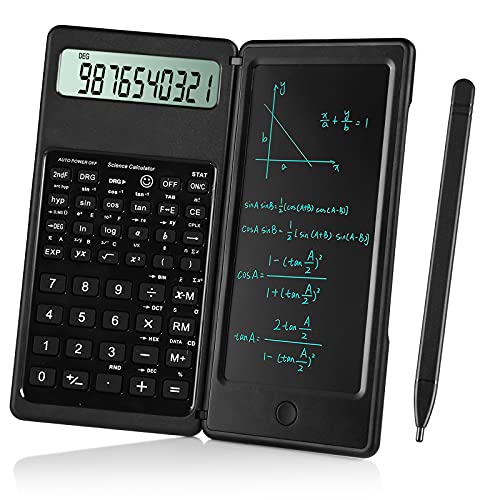
- Calculator and notepad in one device
- 10-digit LCD screen with blue matt display
- Lightweight 120g portable design
Best For: Students who want to take notes while doing quick calculations
MultiView Classroom Choice
TI-34 MultiView Scientific Calculator

- Four-line MultiView display for multi-step work
- MathPrint and advanced fraction capabilities
- SAT, ACT, and AP exam approved
Best For: High school algebra and geometry students who want clear, exam-approved formatting
Portable Solar Pick
Casio fx-260 Solar II Scientific Calculator
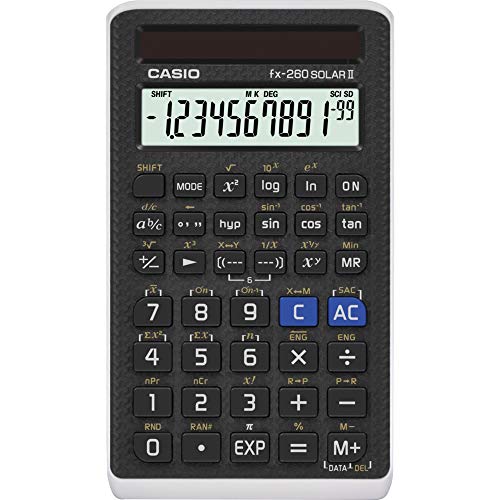
- Compact, lightweight body with 10-digit display
- Solar power with battery backup
- Trig, fractions, and other core high school functions
Best For: Students who want a portable calculator for algebra, geometry, and trig
Advanced STEM Workhorse
TI-36X Pro Scientific Calculator

- MultiView display for side-by-side calculations
- MathPrint for textbook-style expressions and fractions
- Covers algebra, trig, stats, calculus, and science
Best For: Students in advanced high school math and science classes
Compact Note-Taking Pick
ROATEE 82MS Scientific Calculator with Notepad

- 240 functions for math, stats, and scientific work
- Built-in writing tablet helps capture steps while solving
- Foldable body with solar and battery power
Best For: Students who want notes and calculations in one device
Top Display Clarity Choice
Texas Instruments TI-30XS MultiView

- Four-line display helps compare calculations on screen
- Textbook-style fractions and expressions are easy to read
- Good fit for algebra, geometry, stats, and science
Best For: Students who want a clear, easy-to-read classroom calculator
Simple Everyday Pick

- 10-digit one-line display for basic school use
- Covers fractions, trig, logs, roots, powers, and stats
- Includes a slide case and battery power
Best For: Students who want a simple, dependable calculator
Classroom-Ready Fundamentals – TI-30XIIS Scientific Calculator
If you want scientific calculators for high school that cover the core math and science topics without getting overly complicated, the TI-30XIIS is a straightforward pick. It offers a two-line display, fraction features, conversions, and basic scientific and trigonometric functions, making it easy to follow both the setup and the answer.
Best For: High school students who need a reliable, non-graphing calculator for everyday math, science, and exam use.
Pros:
- Two-line display shows the entry and result at the same time
- Includes fraction features, conversions, and basic scientific/trig functions
- Solar and battery powered for flexible classroom use
- Approved for SAT, ACT, and AP exams
Cons:
- Focused on fundamentals rather than advanced programmable features
- Not a graphing calculator
For students who need a dependable school calculator, this model keeps things practical and exam-friendly. It is a strong fit if you want a familiar Texas Instruments option that handles the essentials well.
Exam-Focused Value – SC-216 Non-Graphing Calculator
This scientific calculator for high school is built around a large set of practical functions without adding programming or graphing complexity. The SC-216 includes 240 functions, a 2-line display, 12-digit HD screen, and support for trigonometry, statistics, and multiple angle modes.
Best For: Students who want a compact non-programmable calculator with broad function coverage for school and exams.
Pros:
- 240 functions with trig, statistics, and engineering modes
- 2-line display and 12-digit HD screen improve readability
- Fraction key and non-programmable design suit school use
- Compact build with hard cover protection
Cons:
- Battery-powered with 2 AAA batteries required
- Warranty is limited to 6 months
The SC-216 is a practical choice if you want a feature-rich scientific calculator that stays exam-friendly. It looks especially useful for students who need one device for algebra, geometry, stats, and basic advanced math.
Trusted Color Option – TI-30XIIS Raspberry Calculator
Among scientific calculators for high school, this TI-30XIIS version keeps the same classroom-ready feature set in a different color. It includes a two-line display, logs and antilogs, one- and two-variable statistics, and three angle modes for routine math and science work.
Best For: Students who want the familiar TI-30XIIS layout in a compact Raspberry finish.
Pros:
- Two-line display shows entry and result together
- Handles one- and two-variable statistics
- Includes logs, antilogs, and three angle modes
- Solar and battery powered with a 1-year limited warranty
Cons:
- Function set is focused on core scientific needs
- Not designed as a graphing or programmable calculator
If you like the TI-30XIIS format but want a different look, this Raspberry model is an easy swap. It offers the same practical balance of readability, exam-friendly features, and everyday science support.
Note-Taking Calculator Combo – IPepul Calculator with Notepad
If you want scientific calculators for high school that do more than just compute, this IPepul model combines a calculator and notepad in one. The design lets students write while calculating, with a large 10-digit LCD screen and a lightweight body that is easy to carry.
Best For: Students who like to jot notes alongside quick calculations during class or homework.
Pros:
- Built-in notepad lets you write while calculating
- 10-digit LCD screen with clear blue matt display
- Lightweight and portable at 120g
- Battery cover designed for easy replacement
Cons:
- More specialized than a standard scientific calculator
- Details focus on note-taking convenience rather than advanced math features
This is a useful pick for students who value organization and quick note capture. It is less about traditional scientific depth and more about combining everyday calculation with a handy writing surface.
MultiView Classroom Choice – TI-34 MultiView Scientific Calculator
If you’re comparing scientific calculators for high school, the TI-34 MultiView is a practical pick for students who want a clean, textbook-style display and solid fraction tools. Its four-line MultiView screen makes it easier to check work, compare steps, and follow algebra and geometry problems without feeling cramped.
Best For: High school students taking Pre-Algebra, Algebra 1 and 2, or Geometry who want an exam-approved scientific calculator with an easy-to-read display.
Pros:
- Four-line MultiView display helps show multiple calculations at once.
- MathPrint displays expressions, symbols, and stacked fractions in textbook format.
- Includes fraction features, previous-entry review, and a table function for exploring values.
- Approved for SAT, ACT, and AP exams.
Cons:
- Battery powered, so you will need to replace the included battery eventually.
- More feature-rich than a basic calculator, which may be more than some students need.
This model stands out if display clarity and fraction handling matter most. For students who need a dependable high school scientific calculator with a classroom-friendly interface, it covers the core coursework well.
Portable Solar Pick – Casio fx-260 Solar II Scientific Calculator
For buyers focused on scientific calculators for high school, the Casio fx-260 Solar II is a compact option that balances portability with the functions students typically need. It offers a 10-digit display, solar power with battery backup, and support for trigonometry, fractions, and other common high school math tasks.
Best For: Students who want a lightweight, easy-to-carry scientific calculator for algebra, geometry, trigonometry, or general math classes.
Pros:
- Compact and lightweight design fits easily in a backpack or pencil case.
- 10-digit display handles hundreds of math functions.
- Supports trig, inverse trig, permutations, combinations, factorials, and fractions.
- Solar Plus power includes battery backup for more reliable use.
Cons:
- Smaller form factor may feel less comfortable for students who prefer a larger calculator.
- Fraction key is not included on the NF version.
This is a strong no-fuss choice if you want something simple, portable, and dependable. It is especially appealing for students who need a calculator that can travel easily between classes without adding bulk.
Advanced STEM Workhorse – TI-36X Pro Scientific Calculator
Texas Instruments TI-36X Pro Engineering/Scientific Calculator | 9.7 Inch | Black.
Check Price On AmazonIf you need scientific calculators for high school that can stretch into advanced math, the TI-36X Pro is built for more demanding coursework. Its MultiView display and MathPrint formatting make it easier to track complex expressions, while the broader function set suits students moving into statistics, calculus, and science classes.
Best For: High school students taking advanced math and science courses who need a calculator suitable for algebra, trig, statistics, and beyond.
Pros:
- MultiView display shows multiple calculations at the same time.
- MathPrint presents fractions and symbols in textbook-like form.
- Supports high school through college subjects including algebra, geometry, trigonometry, statistics, calculus, and biology.
- Can convert fractions, decimals, and pi into alternate representations.
Cons:
- May be more calculator than students need for basic algebra courses.
- Battery powered, so it is not as maintenance-free as solar models.
This is the most capable option in the group for students pushing into higher-level math and science. It makes the most sense if you want one calculator that can support multiple years of coursework.
Compact Note-Taking Pick – ROATEE 82MS Scientific Calculator with Notepad
If you want scientific calculators for high school that do more than compute, this ROATEE model stands out for combining a 240-function scientific calculator with a built-in notepad. The multiview display helps you compare two calculations at once, while the foldable, anti-drop body and dual solar/battery power make it practical for daily school use.
Best For: Students who like to work through problems while jotting notes directly on the calculator.
Pros:
- 240 functions for general math, statistics, regression, and scientific computation
- Built-in LCD writing tablet with stylus for note-taking during calculations
- Multiview screen shows two calculations at once
- Foldable, anti-drop design with solar plus coin battery power
Cons:
- Writing area and erase button only work after unlocking the lock key
- Bulkier concept than a basic calculator due to the notepad feature
Overall, this is a smart pick for students who want a calculator and scratchpad in one device. It is less minimal than a standard scientific calculator, but the added note-taking convenience and portability make it appealing for busy high school workloads.
Top Display Clarity Choice – Texas Instruments TI-30XS MultiView
Among scientific calculators for high school, the TI-30XS MultiView is built for students who need a clear, textbook-style display and an easy way to compare multiple values. Its four-line MultiView screen, stacked fractions, and table-of-values function make it especially useful for math and science classes where seeing the work on screen matters.
Best For: High school students in algebra, geometry, statistics, and introductory science courses.
Pros:
- Four-line MultiView display lets you view multiple calculations at once
- Shows math expressions and stacked fractions in textbook format
- Can explore (x,y) tables of values automatically or by entering x values
- Useful for general math, algebra 1 and 2, geometry, statistics, biology, and chemistry
Cons:
- Battery-powered only, with no solar option mentioned
- More feature-rich than a basic calculator, so it may take some getting used to
This is a strong all-around school calculator when readability and classroom versatility matter most. If you want a dependable TI model with a display that makes multi-step work easier to follow, this is one of the safest choices.
Simple Everyday Pick – Texas Instruments TI-30Xa
If you prefer a straightforward option in scientific calculators for high school, the TI-30Xa keeps things simple with a one-line display and the core functions students use most. It handles fractions, trigonometry, logarithms, roots, powers, reciprocals, and basic statistics, making it a practical choice for everyday math and science work.
Best For: Students who want a basic, reliable scientific calculator without extra complexity.
Pros:
- 10-digit display for general math and science work
- Handles fractions, trigonometry, logarithms, roots, powers, reciprocals, and factorials
- Includes 1-variable statistics with mean and standard deviation
- Comes with a slide case and battery-powered operation
Cons:
- One-line display is less advanced than multi-line models
- No multi-view or graph/table features listed
For students who need a dependable calculator for standard coursework, this model gets the job done without extra features. It is the most basic option here, but that simplicity can be an advantage if you want something easy to learn and use quickly.
How We Picked These Scientific Calculators for High School
We focused on models that make sense for everyday high school math and science: clear displays, reliable core functions, and layouts students can learn quickly. We also prioritized calculators that fit common classroom and exam needs, from basic one-line units to multi-line options with stronger fraction and statistics tools.
Durability, battery or solar support, and overall usability mattered too. For Scientific Calculators for High School, a calculator should be easy to read, easy to operate under time pressure, and versatile enough to last through multiple course levels.
Quick Comparison
If you want the simplest route, basic two-line models are usually the safest pick for general math and science. MultiView and four-line calculators are better for students who want to see expressions, fractions, and results more clearly. Advanced users taking higher-level math or science may benefit from a more capable model with extra functions, while budget-conscious shoppers can still find dependable entry-level options.
Key Buying Factors for Scientific Calculators for High School
Display Style
A two-line or multi-line display can make a big difference when checking fractions, equations, and complicated expressions. If your student often works with nested calculations, a clearer display reduces mistakes.
Function Set
Look for the functions that match the curriculum: fractions, trig, statistics, exponents, powers, roots, and logs are the most common needs. More advanced classes may require additional scientific or engineering features.
Test and Classroom Rules
Some schools and standardized tests limit calculator types. Before buying, confirm whether graphing is allowed or whether a non-programmable scientific model is preferred.
Power and Portability
Solar-plus-battery models are convenient for students who use their calculator all day. If reliability matters most, a battery-powered option with a simple layout can also be a smart choice.
Ease of Learning
For Scientific Calculators for High School, usability matters as much as raw function count. A calculator that is intuitive to navigate is often better than one with features a student never uses.
Who Should Buy Which Scientific Calculators for High School?
Buy a basic model if your student needs a straightforward calculator for algebra, geometry, and general science. Choose a mid-range multi-line calculator if they want better visibility and more comfort with fractions and advanced problem-solving. Opt for a higher-end scientific calculator if they are taking advanced math, physics, or engineering-focused coursework and need broader functionality.
If you want the best value, match the calculator to the class requirements first, then choose the clearest display and most comfortable button layout within that category. That approach usually leads to the most useful long-term choice.