Looking for STEM engineering kits for teenagers that are challenging, fun, and genuinely educational? The best options do more than keep teens busy—they teach design thinking, troubleshooting, and real-world engineering basics.
Below, we focus on kits that offer strong build value, age-appropriate complexity, and clear learning outcomes for beginners and more advanced young builders alike.
Best 10 Stem Engineering Kits for Teenagers Picks for 2026
App-Controlled Robot Starter
ELEGOO UNO R3 Smart Robot Car Kit V4

- 24 module parts for robotics learning
- Control by app, tablet, or IR remote
- HD instructions and included codes
Best For: Teens learning robotics, coding, and electronics assembly
Snap-Together Circuits Kit

- 100+ circuit projects in one kit
- No soldering or tools needed
- Color-coded parts with full-color manual
Best For: Teens starting with electrical engineering basics
Structural Build Lab
Thames & Kosmos Bridges & Skyscrapers

- Build 20 structural engineering models
- Teaches force, load, compression, tension
- Includes 285+ pieces and illustrated manual
Best For: Teens interested in bridges, buildings, and structural science
Hydraulic Robot Arm Project

- Water-powered arm with no batteries
- Six axes and 270-degree rotation
- Detailed step-by-step STEM build
Best For: Teens who enjoy hydraulics and mechanical engineering
Mechanical Motion Starter

- 20 buildable mechanical models
- 22 supplemental experiments included
- Covers force, motion, gears, and energy
Best For: Teens starting out with mechanical engineering
Robotic Hand Builder

- Screen-free mechanical build
- Engineered wood construction
- Lifetime replacement parts included
Best For: Teens who like a single, hands-on robotics-style project
Coaster Physics Lab
Roller Coaster Engineering Kit
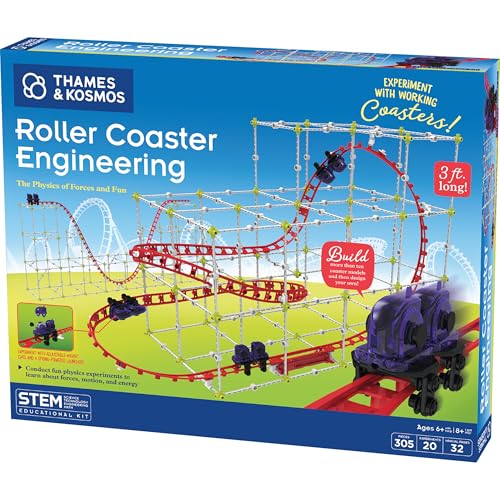
- Working roller coaster models
- Physics lessons on force and motion
- Reusable plastic parts with challenge builds
Best For: Teens who enjoy physics-focused building challenges
Robotics Build
Mechanical Hand STEM Project Kit

- Motors, PCB boards, and wires included
- No soldering required
- Wood build with a challenging assembly
Best For: Teens interested in robotics and hands-on engineering
Architecture Kit
Structural Engineering Model Kit

- Builds 20+ structural models
- 44-page full-color manual included
- Compatible with other Thames & Kosmos kits
Best For: Teens interested in architecture and structural engineering
Solar Robotics
12-in-1 Renewable Energy Robot Kit

- 12 buildable models with 190 pieces
- Runs on sunlight or strong artificial light
- Clear instructions for easier assembly
Best For: Teens who like robotics and renewable energy
App-Controlled Robot Starter – ELEGOO UNO R3 Smart Robot Car Kit V4
If you’re looking for stem engineering kits for teenagers that blend coding, robotics, and hands-on assembly, this ELEGOO smart robot car is a strong pick. It includes multiple modules, such as line tracing, obstacle avoidance, and infrared remote control, so teens can build, code, and test behavior in a practical way.
Best For: Teens who want an introduction to robotics, electronics assembly, and app-based control.
Pros:
- Includes 24 module parts for a broad robotics learning experience.
- Supports control by phone or tablet on Android and iOS, plus IR remote use.
- Comes with HD instructions and included programs/codes for assembly and learning.
- Designed to reduce assembly errors with modified XH2.54 ports.
Cons:
- Requires basic electronic knowledge, so it may not suit absolute beginners alone.
- Assembly and coding are more involved than a simple toy build.
This is a practical starter kit for teens who want a real build-and-code project rather than a quick novelty. The mix of control modes and guided instructions makes it especially useful for learning by doing.
Snap-Together Circuits Kit – Snap Circuits Jr. SC-100
For stem engineering kits for teenagers that focus on circuit basics without soldering, this Snap Circuits set is a very approachable option. Teens can snap together color-coded parts to complete 100+ projects and learn the fundamentals of electrical engineering through quick, hands-on builds.
Best For: Teens who want an easy, tool-free introduction to circuitry and electrical engineering.
Pros:
- Offers 100+ projects for repeated hands-on learning.
- No soldering or extra tools are required.
- Color-coded, numbered pieces make setup straightforward.
- Includes a full-color manual and snap board to guide builds.
Cons:
- Uses batteries, which are required but not the focus of the kit.
- Part count is relatively small compared with larger advanced sets.
This kit is a good fit if you want a low-friction way to get a teen interested in circuits. It prioritizes accessibility and fast wins, which makes it easy to keep momentum going.
Structural Build Lab – Thames & Kosmos Bridges & Skyscrapers
If your goal is stem engineering kits for teenagers that teach how structures actually work, this Thames & Kosmos set is a strong educational choice. It lets teens build 20 different models while learning about force, load, compression, tension, and related engineering concepts.
Best For: Teens who want a hands-on structural engineering kit with real concept-building value.
Pros:
- Builds 20 models focused on structural engineering concepts.
- Teaches force, load, compression, and tension through guided experiments.
- Includes over 285 interchangeable building pieces.
- Comes with a 36-page illustrated experiment manual and assembly guide.
Cons:
- Skill level is listed as intermediate, so it may be challenging for younger or newer builders.
- It is more about engineering principles than fast-paced play.
This set stands out for teens who enjoy building with a purpose and want to understand why structures hold together. It offers a more academic, model-based approach than gadget-style kits.
Hydraulic Robot Arm Project – Teach Tech Hydrobot Arm Kit
Among stem engineering kits for teenagers, this hydraulic robot arm stands out because it uses water power instead of batteries. Teens build a working robotic arm with six axes and then use levers to control movement, making it a solid mechanical engineering project.
Best For: Teens who like mechanical engineering builds and want a hands-on hydraulics project.
Pros:
- Powered by water, so no batteries are required.
- Includes six axes and can rotate up to 270 degrees.
- Can move, rotate, and grab objects with the gripper or suction components.
- Designed as an in-depth STEM build with detailed step-by-step instructions.
Cons:
- It is not a pre-assembled toy and requires multiple hours of build time.
- May be best for teens comfortable with a more involved assembly process.
This kit is a good match for teens who want a serious build rather than a simple science activity. The hydraulic control system gives it a clear engineering angle and makes the finished model feel rewarding to operate.
Mechanical Motion Starter – Machines & Vehicles STEM Kit
If you’re shopping for stem engineering kits for teenagers, this Thames & Kosmos set is a strong intro to mechanical systems. It lets builders assemble 20 models and try 22 supplemental experiments while learning the basics of force, motion, gears, gravity, and energy transfer in a hands-on way.
Best For: Teens who want an introductory mechanical engineering kit with lots of build-and-learn variety.
Pros:
- Builds 20 mechanical models plus 22 extra experiments.
- Covers core concepts like simple machines, momentum, gears, and energy.
- Reusable plastic parts can be reconfigured into different models.
- 80-page full-color manual gives step-by-step assembly guidance.
Cons:
- Best suited to beginners rather than advanced builders.
- Focuses on mechanical engineering more than electronics or coding.
This kit works well as a broad, practical introduction to engineering concepts because it combines clear instructions with a large number of builds. It should appeal most to teens who like hands-on projects and want to see how motion and simple machines work in real-world machines and vehicles.
Robotic Hand Builder – DIY Mechanical Hand STEM Toy
For stem engineering kits for teenagers that feel more like an interactive challenge than a basic toy, this Smartivity mechanical hand stands out. The build is screen-free, uses engineered wood, and is designed to help kids explore the science behind motion and anatomy through a hands-on DIY project.
Best For: Teens who enjoy a creative, screen-free build with a mechanical or robotics theme.
Pros:
- Step-by-step manual supports an engaging DIY build.
- Made from engineered wood for a durable feel.
- Includes lifetime replacement parts for ongoing use.
- Focuses on creativity, confidence, and STEM learning.
Cons:
- More of a single-project build than a multi-model kit.
- Less broad in science coverage than larger engineering sets.
This is a good pick if you want a focused hands-on project that feels different from typical STEM toys. Its strength is the combination of a mechanical build, clear instructions, and a polished design that encourages longer play after assembly.
Coaster Physics Lab – Roller Coaster Engineering Kit
If you want stem engineering kits for teenagers that emphasize experimentation, this roller coaster set is a smart choice. It lets builders design and assemble working coaster models while exploring force, motion, energy, velocity, and other physics concepts through guided challenges.
Best For: Teens who like building challenge-based models and learning physics through experimentation.
Pros:
- Build and test working roller coaster models.
- Includes challenges for coasters of different shapes and sizes.
- Durable, reusable plastic pieces make repeated rebuilding easy.
- 32-page full-color manual explains assembly and science concepts.
Cons:
- More focused on physics than general engineering breadth.
- Requires interest in iterative building and troubleshooting.
This kit is a strong fit for teens who learn best by testing ideas and seeing immediate results. The mix of guided builds and open-ended challenges makes it especially useful for understanding how coaster design connects to real physics.
Robotics Build – Mechanical Hand STEM Project Kit
If you’re comparing stem engineering kits for teenagers, this robot arm build is a strong pick for hands-on learners who want more than a simple snap-together toy. It mixes woodworking-style assembly with motors, wiring, and a microcontroller board, so teens get a practical intro to circuits and mechanical movement while building something they can actually operate.
Best For: Teens who like robotics, mechanical builds, and a challenging first electronics project.
Pros:
- Includes motors, PCB microcontroller boards, and wires for a true robotics-and-circuits experience.
- No soldering required, which keeps assembly more approachable for beginners.
- Wood pieces and precise instructions create a more challenging, satisfying build.
- Connects science learning with physics, engineering, and problem-solving skills.
Cons:
- Requires 6 AA batteries, and they are not included.
- May be demanding for younger builders who want a quick project.
This kit makes sense if you want a STEM project that feels substantial and teaches real engineering concepts through play. It’s especially appealing for teens who enjoy building, troubleshooting, and seeing a mechanical arm come to life.
Architecture Kit – Structural Engineering Model Kit
For stem engineering kits for teenagers that focus on design rather than electronics, this architectural set is a smart choice. It lets builders model trusses, arches, domes, and real-world structures, giving teens a clear look at how structural engineering and architectural planning work in practice.
Best For: Teens who want to explore architecture, structural design, and model building.
Pros:
- Builds over 20 models of structural elements and buildings.
- Includes a 44-page full-color manual to guide the builds.
- Flexible pieces mimic steel frames for realistic structural concepts.
- Compatible with other Thames & Kosmos engineering and physics kits.
Cons:
- Focused more on structures than on mechanical or electronic action.
- Requires patient, guided building rather than fast-play assembly.
This is a strong pick for teens who like understanding how buildings stand up and how design choices affect structure. It offers a more academic-style STEM experience, but one that still feels creative and hands-on.
Solar Robotics – 12-in-1 Renewable Energy Robot Kit
This solar robot kit is a practical option if you want stem engineering kits for teenagers that combine building with renewable-energy play. With 12 possible models and 190 pieces, it gives teens a clear progression from simpler builds to more advanced ones while teaching how solar power can drive movement.
Best For: Teens who enjoy robot builds, renewable energy, and multi-model kits.
Pros:
- 12-in-1 design offers multiple builds, including robots and cars.
- Powered by the sun, with indoor play possible using a strong artificial light source.
- Large solar panel helps capture more sunlight for better power output.
- Clear step-by-step instructions support independent or family assembly.
Cons:
- Performance depends on sunlight or a sufficiently strong light source.
- ABS plastic construction may feel less substantial than wood or metal-style kits.
Overall, this kit is a good fit for teens who like variety and want a project that ties engineering to renewable energy. The multiple build options make it easier to keep the challenge fresh as skills improve.
How We Picked These Stem Engineering Kits for Teenagers
We focused on kits that give teenagers a hands-on engineering experience, not just a quick assembly project. Priority went to options with meaningful build variety, strong educational value, clear instructions, and the right balance of challenge and accessibility. We also looked for kits that support independent problem-solving, since that is where the learning payoff is strongest.
Quick Comparison: What Each Kit Type Does Best
Not every kit teaches the same skills. Robotics kits are best for coding, sensors, and logic. Structural kits emphasize load, balance, and design. Mechanical kits help teens understand motion, gears, and force. Hydraulic and robotic arm kits are ideal for learning about leverage and control. Solar-powered builds are a smart pick for teens who want renewable-energy basics.
Key Buying Factors for Stem Engineering Kits for Teenagers
Difficulty Level
Choose a kit that matches the teen’s current experience. Beginners usually do better with guided builds and fewer parts, while experienced builders may prefer multi-model kits or open-ended designs that require more experimentation.
Learning Depth
The best Stem Engineering Kits for Teenagers explain why a design works, not just how to assemble it. Look for kits that cover physics concepts such as force, torque, balance, motion, electricity, or hydraulics in a clear way.
Build Time and Replay Value
A good kit should offer more than one short session. Multi-model kits and rebuildable projects tend to deliver better long-term value because teens can test ideas, rebuild, and improve their designs.
Tools, Parts, and Support
Check whether batteries, tools, or extra components are required. Clear manuals, online instructions, and well-labeled parts make a big difference, especially for teens who want to work mostly on their own.
Who Should Buy Which Stem Engineering Kits for Teenagers?
If your teen likes coding and robotics, choose a programmable robot or smart car kit. If they enjoy architecture or design, structural engineering sets are the better fit. For teens who like hands-on mechanical systems, gear-based and motion-focused kits are usually the most satisfying. If the goal is a gift that feels exciting but still educational, look for a kit with multiple builds, visible movement, and a strong “wow” factor.
In short, the best Stem Engineering Kits for Teenagers are the ones that match the builder’s interests while still stretching their skills. When the topic is fun, teens are far more likely to finish the project, experiment with it, and actually learn from the process.