Choosing the right thermal imaging camera for hunting can make a major difference in how quickly you detect heat signatures and identify animals in low light or total darkness.
Below, we’ve narrowed the field to 10 standout options, with a focus on image clarity, refresh rate, detection range, durability, and overall hunting value.
Best 10 Thermal Imaging Camera for Hunting Picks for 2026
Fast-Target Thermal Scope

- 2.5x base magnification with wide field of view
- Up to 11.5 hours on dual rechargeable batteries
- Shot-activated recording with audio
Best For: Close- to mid-range hunters tracking fast-moving game
Touchscreen Thermal Imager
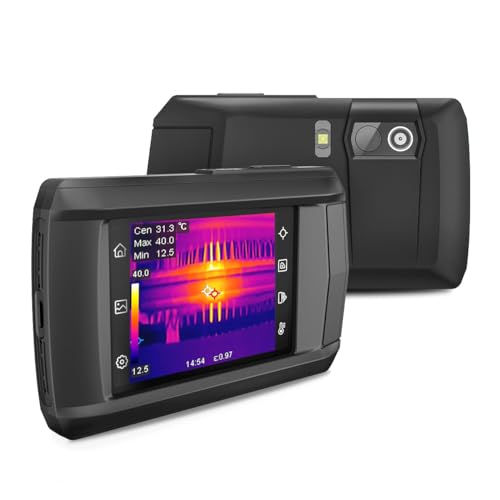
- 3.5-inch touchscreen with phone-style controls
- Thermal, Visual, Fusion, PIP, and Blending modes
- Live Super Resolution upscales to 240x240
Best For: Inspection and general heat-detection tasks
Hands-On Thermal Monocular
AGM Taipan V2 Thermal Monocular

- Sub-35mK detector for clear heat detail
- 1.5x to 12x digital zoom and wide FOV
- Built-in recording with 16GB storage
Best For: Portable scanning and spotting in the field
Field-Ready Thermal Inspector
Thermal Master Thor002 Inspector

- 256x192 native resolution upscaled to 512x384
- 3.5-inch IPS screen with 25 Hz imaging
- Up to 10.5 hours runtime with PC analysis
Best For: Inspection, diagnostics, and thermal reporting
Field Scanning Pick
TOPDON TS004 13mm 50Hz Night Vision

- 256x192 thermal resolution with 50Hz refresh
- Up to 11 hours of battery life
- IP67 waterproof with 2-meter drop resistance
Best For: Hunters wanting a rugged, app-connected thermal monocular
Compact Utility Pick

- 240x240 enhanced thermal clarity with TISR
- 15-hour battery life with auto shut-off
- Pocket-size body with IP54 and drop resistance
Best For: Users who want a compact thermal camera for mixed-use scanning
Display-First Pick
CVLIFE 256x192 Thermal Monocular 15mm

- 256x192 sensor with 15mm lens and 50Hz refresh
- 1024x768 display with 4x electronic zoom
- WiFi, recording, and hot spot tracking
Best For: Hunters who want a feature-rich handheld thermal monocular
Budget-Friendly Thermal Monocular

- 256x192 sensor with 25Hz refresh
- IP65-rated with replaceable batteries
- WiFi app support and six palettes
Best For: Hunters wanting a simple, portable thermal monocular for basic night spotting
Long-Range Value Pick
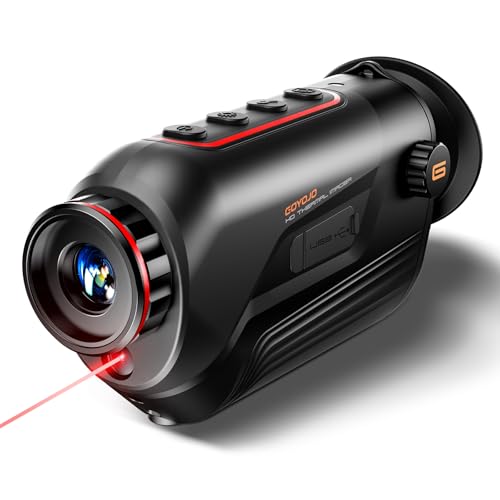
- 15mm lens for longer-range detection
- 50Hz refresh with 4X zoom
- WiFi app support and 16GB storage
Best For: Hunters who want a handheld thermal monocular geared toward longer-range scanning
Fast-Target Thermal Scope – AGM Rattler V2 Hunting Scope
If you want a thermal imaging camera for hunting that prioritizes fast acquisition, the AGM Global Vision Rattler V2 is built for close- to mid-range work. Its 2.5x base magnification, wide field of view, and 8x digital zoom help you stay on moving game in thick cover, while the stadiametric rangefinder and multiple reticle options support quicker shot setup.
Best For: Hunters scanning hogs, predators, or other fast-moving targets in brush and mixed terrain.
Pros:
- 2.5x base magnification with a wide field of view for fast scanning
- Up to 11.5 hours of runtime with two rechargeable batteries included
- Shot-activated recording with onboard audio for hands-free capture
- IP67 waterproofing and recoil-resistant build for harsh field conditions
Cons:
- Best suited to close- and mid-range use rather than long-distance spotting
- Thermal scope format is less compact than a handheld monocular
The Rattler V2 is a strong fit if your hunting style demands quick target tracking and dependable field endurance. It blends practical optics, recording features, and tough weather protection into a hunting-focused package.
Touchscreen Thermal Imager – HP96 Scene Detection Imager
The HP96 is a thermal imaging camera for hunting only in the broad sense of needing to identify heat, but its supplied features are clearly aimed at inspection work rather than game spotting. Its 3.5-inch touchscreen, scene recognition, dual-camera modes, and live super resolution make it a practical tool for checking temperature differences and recording results in the field.
Best For: Users who need a compact thermal imager for inspection, troubleshooting, and general heat detection.
Pros:
- 3.5-inch touchscreen with simple swipe-and-tap controls
- Multiple imaging modes including Thermal, Visual, Fusion, PIP, and Blending
- Live Super Resolution boosts viewing from 96×96 to 240×240
- Built-in storage plus video/audio recording support
Cons:
- Feature set is centered on inspection tasks, not hunting-specific optics
- Supplied notes do not list field-ready mounting or rifle use
For buyers comparing thermal gear, the HP96 stands out more as an inspection imager than a hunting optic. It offers solid usability, temperature-point tracking, and flexible display modes for general thermal work.
Hands-On Thermal Monocular – AGM Taipan V2 Thermal Monocular
If you want a thermal imaging camera for hunting that is easy to carry and quick to use, the AGM Global Vision Taipan V2 is a practical handheld choice. Its sub-35mK detector, 1.5x to 12x digital zoom, and wide field of view make it well suited for scanning terrain, spotting heat signatures, and following movement without carrying a larger scope.
Best For: Hunters who prefer a lightweight handheld monocular for scanning fields, trails, and dark terrain.
Pros:
- Sub-35mK thermal detector for clear heat-signature detail
- 1.5x to 12x digital zoom with wide field of view
- Up to 7 hours of battery life with replaceable rechargeable battery
- Built-in recording, 16GB storage, Wi-Fi, and app compatibility
Cons:
- Handheld design is less ideal than a riflescope for aiming
- Single-battery runtime is shorter than some larger field units
The Taipan V2 is a smart pick when portability matters more than mounted shooting. It combines useful hunting-friendly features like recording, hot tracking, and app control with a rugged IP67 build.
Field-Ready Thermal Inspector – Thermal Master Thor002 Inspector
The Thermal Master Thor002 is a thermal imaging camera for hunting only if your needs are closer to broad thermal detection than true hunting optics, but its feature set is clearly built for inspection work. With a 3.5-inch display, 256×192 native resolution upscaled to 512×384, and multiple imaging modes, it provides detailed temperature viewing for practical on-site diagnostics.
Best For: Buyers who want a rugged thermal camera for inspections, diagnostics, and documentation.
Pros:
- 256×192 native resolution upscaled to 512×384 with X³ super resolution
- 3.5-inch IPS display and 25 Hz frame rate for smooth viewing
- Wide temperature range from -4°F to 1022°F
- Up to 10.5 hours of runtime with 32GB storage and PC analysis support
Cons:
- Designed for inspection and troubleshooting rather than hunting use
- Fixed-focus thermal camera is less adaptable than some field optics
For shoppers comparing thermal tools, the Thor002 offers strong measurement and reporting features in a rugged package. It is better matched to electrical, HVAC, and industrial work than to a hunting rifle or spotting setup.
Field Scanning Pick – TOPDON TS004 13mm 50Hz Night Vision
If you want a thermal imaging camera for hunting that balances image clarity with all-day portability, the TOPDON TS004 is built for field use. Its 256×192 thermal resolution, 50Hz refresh rate, and 13mm lens help deliver smooth viewing and useful detail when scanning wildlife, while the wireless app connection makes it easier to monitor, capture images, and record video on the go.
Best For: Hunters and outdoors users who want a compact thermal monocular with long battery life and app-based viewing.
Pros:
- 256×192 thermal resolution with a 50Hz refresh rate for smooth viewing
- 13mm lens with detection up to 410 meters and clearer detail within 100 yards
- Up to 11 hours of battery life for extended sessions
- IP67 waterproof rating and 2-meter drop resistance
Cons:
- Resolution is solid, but not as high as some premium thermal optics
- Designed as a monocular, so it is more of a scanning tool than a full imaging scope
The TS004 stands out if you need a rugged thermal monocular that is easy to carry and reliable in changing outdoor conditions. Its strength is practical field performance: good battery life, wireless convenience, and enough detection range to support hunting and wildlife observation.
Compact Utility Pick – TOPDON TC004 Mini 240×240
The TOPDON TC004 Mini is a compact thermal imaging camera for users who want portability and long runtime more than a dedicated hunting optic. It starts with 128×128 thermal imaging and uses TISR to enhance detail to 240×240, while the 25Hz refresh rate, wide field of view, and automatic temperature alerts make it a practical tool for close-range checking and general thermal use.
Best For: Buyers who want a small, durable thermal camera for versatile everyday use and occasional outdoor checks.
Pros:
- Enhanced 240×240 TISR output from a 128×128 thermal base
- 15-hour runtime with automatic shut-off options
- Pocket-friendly design that is lightweight and easy to hold
- IP54 protection and 2-meter drop resistance
Cons:
- More optimized for inspections than hunting-specific scanning
- 25Hz refresh rate is lower than faster 50Hz hunting-focused models
The TC004 Mini makes sense if you want a highly portable thermal camera that is easy to carry and simple to use for a range of tasks. It is not the most hunting-focused option here, but its long battery life and durable build give it real utility for field and home use.
Display-First Pick – CVLIFE 256×192 Thermal Monocular 15mm
For hunters looking for a thermal imaging camera for hunting with a clearer display and useful tracking features, the CVLIFE 256×192 Thermal Monocular is built around observation. It combines a 256×192 sensor, 15mm lens, 50Hz refresh rate, and a 1024×768 display to provide smooth thermal viewing, while WiFi connectivity, photo and video recording, and hot spot tracking add practical field convenience.
Best For: Hunters and campers who want a handheld thermal monocular with a sharp display and multiple viewing modes.
Pros:
- 256×192 sensor with a 15mm lens and 50Hz refresh rate
- 1024×768 display with 4x electronic zoom for clearer viewing
- Six color palettes plus picture-in-picture and hot spot tracking
- WiFi, app connectivity, and built-in 16GB memory for recording
Cons:
- 8-hour runtime is shorter than some longer-lasting competitors
- Best suited to handheld scanning rather than scope-style mounting
The CVLIFE model is a strong fit if you value a sharper screen and feature set that makes scanning and reviewing easier. Its smooth refresh rate, recording tools, and rugged IP65 build make it a versatile choice for hunting and outdoor use.
Smartphone-Connected Thermal Pick – TNV30i 512×384 Super-Resolution
If you want a thermal imaging camera for hunting that pairs with your phone, the TNV30i is built for fast setup and detailed scanning. It uses a 512×384 Super-Resolution thermal image, 50Hz refresh, and a 20mK thermal sensitivity rating to help you pick out heat signatures in the field. The adjustable 10–15 mm focus and up to 1600-yard detection distance make it a strong fit for hunters who want portable long-range capability.
Best For: Hunters who want a phone-connected thermal monocular with higher-resolution imaging and long-range detection.
Pros:
- 512×384 Super-Resolution and NETD < 20 mK for detailed thermal contrast
- 50Hz thermal video helps keep moving targets looking smooth and real-time
- 10–15 mm adjustable focus and F0.9 lens support both scanning and target ID
- Works with USB-C iPhone, iPad, and Android models using the T-Recon app
Cons:
- Requires compatible USB-C mobile devices, so it is not universal
- Manual focus adds an extra step when changing distances
Overall, the TNV30i stands out for hunters who value sharper image quality and app-based convenience. Its higher sensitivity and super-resolution processing give it an edge when you want more detail from a compact thermal tool.
Budget-Friendly Thermal Monocular – GOYOJO G210 256×192
The GOYOJO G210 is a practical thermal imaging camera for hunting if you want a compact monocular with simple controls and app connectivity. Its 256×192 sensor, 10mm lens, and 25Hz refresh rate are aimed at everyday night scanning, while the six color palettes help you adapt the display to different field conditions. With IP65 protection and replaceable batteries, it is built for outdoor use in less-than-ideal weather.
Best For: Hunters and outdoor users who want an affordable, beginner-friendly thermal monocular for general nighttime spotting.
Pros:
- 256×192 thermal sensor with 12µm detector for basic heat detection
- Six color palettes and 4X zoom for flexible viewing
- Replaceable battery design with over 6 hours of runtime
- IP65 waterproof rating for rain, dust, and rough conditions
Cons:
- 25Hz refresh is slower than higher-end hunting models
- Fixed-focus design limits manual image tuning
The G210 makes sense when you want a compact thermal monocular without a steep learning curve. It is more about dependable basic detection and portability than advanced image refinement.
Long-Range Value Pick – GOYOJO G215 15mm 50Hz
If your priority is a thermal imaging camera for hunting with a bit more reach, the GOYOJO G215 is tuned for longer-range detection. It combines a 256×192 sensor with a 15mm infrared lens, 50Hz refresh, and 4X zoom to help you scan and identify targets more comfortably at distance. Like the G210, it also includes WiFi app support, 16GB storage, and IP65 weather resistance for field use.
Best For: Hunters who want a handheld thermal monocular with a longer 15mm lens and smoother 50Hz imaging.
Pros:
- 15mm lens is optimized for longer-range thermal detection
- 50Hz refresh supports smoother viewing of moving scenes
- 4X zoom and 16GB storage add useful field flexibility
- IP65 rating and over 6 hours of battery life support outdoor use
Cons:
- Resolution remains 256×192, so it is not a high-detail unit
- Manual focus means you will need to adjust for sharpness yourself
The G215 is a sensible step up if you prefer the G210 style but want a lens better suited to distance work. It balances portability, app connectivity, and longer-range thermal viewing in a straightforward package.
How We Picked the Best Thermal Imaging Camera for Hunting
We prioritized Thermal Imaging Camera for Hunting models that balance detection performance, usability, and field reliability. Key factors included sensor resolution, frame rate, lens size, display quality, battery life, mounting or handheld versatility, and how well each unit fits real hunting conditions.
We also looked for practical features hunters actually use, such as multiple color palettes, Wi-Fi/app support, image capture, and controls that remain usable with gloves in the field.
Quick Comparison
Scope-style units are best for rifle-mounted use and longer-range observation, while monoculars are more flexible for scanning, spotting, and moving between setups. Compact handheld thermal cameras are useful if you want a broader utility tool, but they usually trade away some hunting-specific ergonomics.
In general, higher-resolution sensors and faster refresh rates produce a cleaner, more natural viewing experience. A larger lens can improve detection at distance, while higher screen resolution can make target recognition easier once an animal is spotted.
Key Buying Factors for Thermal Imaging Camera for Hunting
Sensor Resolution and Image Detail
Higher sensor resolution helps reveal shape, movement, and separation between animals and background clutter. For hunting, this can matter as much as raw detection distance because it improves confidence when identifying targets.
Frame Rate and Responsiveness
A 50Hz thermal device usually feels smoother when tracking moving animals or scanning across terrain. Lower frame rates can still work, but they may look less fluid during fast panning.
Lens Size and Detection Range
Longer focal-length lenses generally support better distance detection, while shorter lenses give a wider field of view for scanning brush, woods, and close cover. Choose based on your terrain and typical shot opportunities.
Display, Controls, and Field Use
A sharp display, intuitive menu layout, and glove-friendly controls can matter a lot in the dark. If you hunt in cold or wet conditions, check for rugged construction, weather resistance, and battery options that match long sits.
Recording and Connectivity
Photo and video capture, app connectivity, and USB-C charging can be useful extras. They are not essential for every hunter, but they add convenience for review, sharing, and everyday carry.
Who Should Buy Which Thermal Imaging Camera for Hunting?
If you want a dedicated optic for mounting on a rifle, a thermal scope is the best fit. If you need flexibility for scanning fields, checking treelines, or moving between firearms, a monocular is usually the smarter choice. If you want a lower-cost tool that can also help with property inspection or general night observation, a compact handheld thermal camera may offer the best overall value.
For most buyers, the best Thermal Imaging Camera for Hunting is the one that matches your distance needs, preferred carrying style, and budget—without paying for features you won’t use in the field.