Choosing the right enclosure can make backup storage faster, safer, and easier to manage. The best RAID enclosures for backups give you the flexibility to balance speed, redundancy, and expandability.
Below, we focus on practical buying factors that matter most for dependable backup use, from bay count and drive support to connection type and RAID mode options.
Best 10 Raid Enclosures for Backups Picks for 2026
Compact RAID Backup Hub
TERRAMASTER D2-320 USB RAID Enclosure 2-Bay

- RAID 1 mirroring for backup redundancy
- USB 3.2 Gen 2 up to 10Gbps
- Tool-free dual-bay design with fan
Best For: Two-drive mirrored backups with fast direct-attached storage
High-Capacity Archive RAID
Yottamaster 5 Bay RAID Hard Drive Enclosure
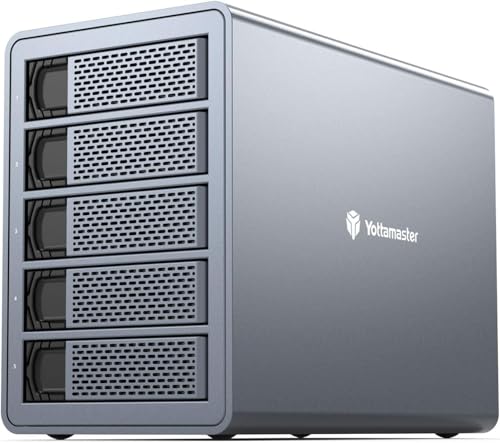
- Up to 120TB across five drive bays
- RAID 0/1/5/10, JBOD, CLONE, and Normal
- Aluminum build with built-in 80mm fan
Best For: Large backup archives that need multiple RAID options
Dual-Bay Backup Splitter
MAIWO Dual Bay RAID Enclosure for SATA HDD

- RAID 1, RAID 0, JBOD, and Normal modes
- USB 3.1 Gen 2 with UASP support
- Metal build with adjustable cooling fan
Best For: Simple two-drive backup setups with mirrored storage
Fast SSD Backup Duplicator
Dual Bay Raid SSD Enclosure with Clone Mode

- RAID 1 plus Clone mode for SSD backups
- 20Gbps transfer speed for large files
- Tool-free aluminum design with dual bays
Best For: NVMe backup and disk cloning workflows
5-Bay Flexible Backup Hub
UGREEN 5-Bay USB-C DAS Enclosure

- 8 RAID and storage modes for different backup workflows
- Supports five 2.5/3.5-inch SATA drives up to 160TB
- USB-C 5Gbps with smart cooling and drive-status LEDs
Best For: Users who want a 5-bay enclosure with wide RAID flexibility
Mid-Size RAID Workhorse
MAIWO 4 Bay HDD RAID Enclosure

- Multiple RAID modes, including RAID 0, 1, 3, 5, and 1/10
- Up to 96TB across four 3.5-inch SATA drives
- Two cooling fans and included USB-A/C and C/C cables
Best For: Users wanting a 4-bay enclosure for backups and media storage
Compact Mirror Backup Pick

- RAID 0, RAID 1, JBOD/Large, and PM modes
- USB 3.1 Gen 2 Type-C with 10Gbps transfer speed
- Supports 2.5-inch and 3.5-inch SATA HDDs/SSDs
Best For: Buyers who want a compact mirrored backup enclosure
Heavy-Duty 4-Bay Pick
MAIWO 4-Bay USB-C RAID Enclosure

- 4-bay design with up to 96TB capacity
- 7 RAID modes including RAID 1/10 and JBOD
- Dual fans, aluminum body, and 78W power supply
Best For: High-capacity DAS backups with flexible RAID setups
Budget 2-Bay Backup Choice

- Two-bay enclosure with RAID 1 for redundancy
- USB 3.0 with claimed 5Gbps transfer speed
- Aluminum body plus built-in cooling fan
Best For: Compact mirrored backups and simple DAS storage
Feature-Rich 4-Bay Option
CENMATE 4-Bay Aluminum RAID Enclosure

- 4 bays with up to 80TB capacity
- 8 RAID modes plus USB and eSATA
- Dual fans and aluminum housing for cooling
Best For: Flexible backup storage with USB/eSATA connectivity
Compact RAID Backup Hub – TERRAMASTER D2-320 USB RAID Enclosure 2-Bay
If you’re shopping for raid enclosures for backups, the TerraMaster D2-320 is a compact two-bay DAS built around flexible hardware RAID and fast USB 3.2 Gen 2 connectivity. It supports RAID 1 for mirrored data protection, along with RAID 0, JBOD, and Single modes, so it can serve both backup-focused and speed-focused workflows.
Best For: Users who want a simple two-drive backup enclosure with RAID 1 mirroring and fast USB-C transfer speeds.
Pros:
- Supports RAID 1 mirroring for automatic backup redundancy.
- USB 3.2 Gen 2 interface offers up to 10Gbps transfer speed.
- Works with 3.5-inch and 2.5-inch SATA HDDs plus 2.5-inch SATA SSDs.
- Tool-free tray design with a push-lock mechanism for easier drive swaps.
Cons:
- Only two bays, so total capacity is limited versus larger enclosures.
- Rated as a DAS, not a NAS, so it is meant for direct attachment.
The D2-320 is a practical pick when mirrored backups matter more than maximum bay count. Its cooling fan, tool-free trays, and RAID 1 support make it a straightforward storage box for everyday backup duties.
High-Capacity Archive RAID – Yottamaster 5 Bay RAID Hard Drive Enclosure
For buyers comparing raid enclosures for backups, the Yottamaster FS5RU3 stands out for its five-bay design and broad RAID support. It handles 2.5-inch and 3.5-inch SATA HDDs and SSDs, making it a strong fit for large local archives, media libraries, and backup sets that need more room than a small two-bay unit can offer.
Best For: Users who need a large-capacity five-bay enclosure for backup archives and flexible RAID setups.
Pros:
- Supports up to 120TB total capacity with five 24TB drives.
- Offers RAID 0/1/5/10, JBOD, CLONE, and Normal modes.
- Aluminum enclosure and 80mm fan help with heat dissipation.
- Compatible with both 2.5-inch and 3.5-inch SATA HDDs and SSDs.
Cons:
- USB 3.0 tops out at 5Gbps, which is slower than newer 10Gbps options.
- Larger five-bay footprint may be more than casual backup users need.
This enclosure makes sense when backup volume and RAID flexibility are the main priorities. It combines broad mode support with strong capacity, so it can serve as a central storage box for long-term data protection.
Dual-Bay Backup Splitter – MAIWO Dual Bay RAID Enclosure for SATA HDD
The MAIWO dual-bay enclosure is a good fit if you want raid enclosures for backups without moving up to a larger chassis. It supports RAID 1 for mirrored storage, RAID 0 for speed, JBOD for larger combined space, and Normal mode for separate drives, while the built-in fan and metal shell are aimed at stable everyday use.
Best For: Backup users who want a two-drive enclosure with RAID 1 and a straightforward metal design.
Pros:
- Four modes: RAID 0, RAID 1, JBOD, and Normal.
- USB 3.1 Gen 2 with ASM1352R chip and UASP support.
- Adjustable cooling fan and aluminum alloy construction.
- Supports up to 48TB total capacity with 24TB per drive.
Cons:
- Designed for 3.5-inch SATA HDDs; 2.5-inch drives need a bracket.
- Maximum real-world speed for mechanical drives is limited by the drives themselves.
This is a practical two-bay option when you want mirrored backups or a simple RAID setup in a compact enclosure. It focuses on reliable expansion and cooling rather than extra features.
Fast SSD Backup Duplicator – Dual Bay Raid SSD Enclosure with Clone Mode
If your backup workflow is centered on NVMe drives, this dual-bay M.2 2280 enclosure brings RAID 1 and clone features into a compact SSD design. It supports RAID 0, RAID 1, JBOD, and Clone mode, so it can be used for redundancy, performance, or direct disk duplication depending on the job.
Best For: Users who want a fast dual NVMe enclosure for backups, cloning, and mirrored SSD storage.
Pros:
- Supports RAID 1 for mirrored SSD backups.
- Clone mode enables direct disk duplication without a computer workflow.
- 20Gbps transfer speed suits large file backups and data-heavy tasks.
- Tool-free design and aluminum body improve convenience and heat dissipation.
Cons:
- Built for M.2 2280 NVMe SSDs, not standard 2.5-inch SATA drives.
- Maximum memory storage capacity is listed at 16TB, which may be limiting for some users.
This enclosure is best when backup speed and cloning matter as much as redundancy. The combination of RAID 1, Clone mode, and high transfer bandwidth makes it a strong SSD-first backup tool.
5-Bay Flexible Backup Hub – UGREEN 5-Bay USB-C DAS Enclosure
If you’re comparing raid enclosures for backups, this UGREEN 5-bay DAS stands out for users who want multiple RAID choices in one box. It supports independent drive access, mirroring, parity-based protection, and clone/Large modes, so it can fit everything from backup rotation to capacity expansion.
Best For: People who want a 5-bay USB-C enclosure with broad RAID flexibility and room to grow.
Pros:
- 8 storage modes, including RAID 0, 1, 3, 5, 10, Large, Clone, and PM
- Up to 160TB total capacity with support for five 2.5/3.5-inch SATA drives
- USB-C connection with 5Gbps transfer speed and compatibility with Windows, macOS, and Linux
- Smart cooling, drive-status LEDs, and automatic fan control based on temperature
Cons:
- Changing RAID modes requires reformatting, so backups are essential first
- It works with NAS devices for transfer, but the drives cannot be added to a NAS pool
- Largest footprint and power needs of the three options here
This is the most flexible option in the group if your priority is backup versatility rather than just basic mirrored storage. The tradeoff is that its broader feature set also means a more careful setup process.
Mid-Size RAID Workhorse – MAIWO 4 Bay HDD RAID Enclosure
For buyers shopping raid enclosures for backups, this MAIWO 4-bay model aims at a practical middle ground: enough bays for a serious local backup set, but not as large as a 5-bay unit. It offers several RAID choices, 5Gbps USB-C connectivity, and a cooling design built for sustained drive use.
Best For: Users who want a 4-bay backup enclosure with multiple RAID options and active cooling.
Pros:
- Supports Normal, RAID 0, RAID 1, RAID 3, RAID 5, RAID 1/10, Clone, and Large (JBOD)
- Up to 96TB capacity with support for four 24TB 3.5-inch SATA drives
- Two built-in cooling fans help manage temperatures during heavy use
- USB A-C and C-C cables are included for easier setup
Cons:
- Designed for 3.5-inch SATA drives, so it is not a universal mixed-drive solution
- RAID mode changes still require careful data backup beforehand
- Five-bay users needing more expansion will outgrow it faster
This is a solid pick if you want a straightforward backup enclosure with more capacity than a dual-bay unit but less bulk than a five-bay system. Its cooling and RAID range make it well suited to everyday storage and backup duties.
Compact Mirror Backup Pick – MAIWO Dual Bay RAID Enclosure
If you want raid enclosures for backups without jumping to a larger chassis, this MAIWO dual-bay unit keeps things simple and practical. It supports RAID 1 for mirrored safety, RAID 0 for speed, plus JBOD and PM modes, making it a flexible choice for smaller backup jobs and everyday storage.
Best For: Buyers who want a compact 2-bay RAID enclosure for mirrored backups or lightweight storage expansion.
Pros:
- Supports RAID 0, RAID 1, JBOD/Large, and PM modes
- USB 3.1 Gen 2 Type-C interface with up to 10Gbps transfer speed
- Compatible with 2.5-inch and 3.5-inch SATA HDDs and SSDs
- Aluminum body plus cooling fan for better heat management
Cons:
- 2.5-inch drives need an additional 2.5-to-3.5 mounting bracket
- Maximum total capacity is 48TB, so it is smaller than 4- or 5-bay options
- You should initialize, format, and back up data before switching RAID modes
This is the easiest fit if your backup plan centers on a mirrored two-drive setup. It gives you the key RAID basics, good connectivity, and a compact footprint without adding unnecessary complexity.
Heavy-Duty 4-Bay Pick – MAIWO 4-Bay USB-C RAID Enclosure
If you want raid enclosures for backups with lots of flexibility, this MAIWO 4-bay model is built for mixed-drive storage and multiple RAID setups. It supports 2.5-inch and 3.5-inch SATA HDDs/SSDs, offers up to 96TB capacity, and includes USB-C connectivity with a claimed 5Gbps transfer rate.
Best For: Users who want a high-capacity 4-bay DAS enclosure for configurable backup storage and drive mirroring options.
Pros:
- Supports 7 RAID modes, including RAID 0, 1/10, 3, 5, clone, and JBOD/Large.
- Dual cooling fans and an aluminum-alloy body help with heat management.
- Includes USB A-C and C-C cables, plus a 78W external power supply.
- Works with Windows, Linux, and Mac OS, and supports 4K HDMI output.
Cons:
- DAS only, so it is not a NAS solution.
- Backups and RAID setup require careful mode selection to avoid data loss.
- Large-capacity design may be more enclosure than some home users need.
Overall, this is a strong pick if you need a flexible multi-bay enclosure for backup-oriented RAID configurations and want room to grow. Its cooling and included accessories make it practical for heavier storage use.
Budget 2-Bay Backup Choice – MAIWO Dual Bay RAID Enclosure
For raid enclosures for backups on a smaller scale, this MAIWO dual-bay unit keeps the feature set focused and practical. It supports 2.5-inch and 3.5-inch SATA drives, offers RAID 0, RAID 1, JBOD/Large, and Normal/PM modes, and uses USB 3.0 with a claimed 5Gbps rate.
Best For: Buyers who want a compact 2-bay enclosure for mirrored backup storage or simple expandable DAS use.
Pros:
- RAID 1 is available for redundant backup-oriented storage.
- Full aluminum body, ABS bracket, and built-in cooling fan aid heat dissipation.
- Supports Windows, Mac OS, and Linux.
- Comes with a power adapter, cable, and setup tools.
Cons:
- Only two drive bays, so total capacity is more limited than 4-bay models.
- Using 2.5-inch drives may require an additional mounting bracket.
- Drive mode changes require careful setup, and the notes advise backing up data first.
This enclosure makes sense if you need a straightforward, smaller backup box instead of a larger RAID system. It balances redundancy, speed, and portability without adding unnecessary complexity.
Feature-Rich 4-Bay Option – CENMATE 4-Bay Aluminum RAID Enclosure
If you are comparing raid enclosures for backups and want multiple connection options, this CENMATE 4-bay unit is worth a look. It supports 2.5-inch and 3.5-inch SATA HDDs/SSDs, offers up to 80TB capacity, and includes USB A/C 3.0 plus eSATA connectivity.
Best For: Users who want a 4-bay backup enclosure with USB and eSATA options and several RAID modes.
Pros:
- Supports 8 RAID modes, including RAID 0, 1, 3, 5, 10, clone, large, and normal.
- Aluminum construction with two fans helps improve cooling.
- Includes USB A/C 3.0 and eSATA cables for flexible connectivity.
- Rated for up to 80TB total capacity.
Cons:
- Fan noise is noted at roughly 40-50 dB, which may bother sensitive users.
- Hot-swapping is not supported.
- eSATA access depends on the computer supporting RAID functionality.
As a backup-focused DAS enclosure, this model stands out for its broad RAID support and connection choices. It is best suited to users who can work within its setup requirements and want a versatile 4-bay chassis.
How We Picked These Raid Enclosures for Backups
We prioritized enclosures that fit real-world backup workflows: stable connectivity, sensible RAID mode support, broad drive compatibility, adequate cooling, and capacities that work for large photo libraries, media archives, and business data. We also considered whether the enclosure supports both HDDs and SSDs, since backup needs vary from low-cost bulk storage to faster working copies.
Quick Comparison: What Matters Most
If you want the simplest setup, a 2-bay unit is often enough for mirrored backups. If you need more total capacity, 4-bay and 5-bay models make more sense. For speed, look for USB-C or higher-bandwidth connections; for compatibility, confirm support for your drive size, whether 2.5-inch, 3.5-inch, or NVMe. RAID 1 is best for redundancy, while RAID 0 is for speed only and does not protect against drive failure.
Key Buying Factors for Raid Enclosures for Backups
RAID Mode Support
For backup use, RAID 1 is the most common choice because it mirrors data across drives. JBOD can also be useful if you prefer separate volumes or want to manage backups manually. RAID 0 should be treated as a performance option, not a safety feature.
Drive Type and Capacity
Make sure the enclosure matches your drives: 2.5-inch SSDs, 3.5-inch HDDs, or NVMe M.2 drives. Capacity limits matter if you plan to store years of backups or multiple workstation archives. Larger bay count often means better long-term flexibility.
Cooling and Build Quality
Backup drives may run for long periods during syncs and restores, so active cooling is a major advantage. Aluminum housings and built-in fans help maintain drive health and reduce throttling during heavy use.
Connection Speed and Port Options
USB-C is the most convenient modern option, but speed depends on the exact standard. Faster interfaces help with large initial backups and restore jobs. If you need broader compatibility, models with USB-A, USB-C, or eSATA can simplify deployment across older and newer systems.
Who Should Buy Which Raid Enclosures for Backups?
Choose a 2-bay enclosure if you want a compact, cost-conscious mirrored backup system for a desktop or home office. Choose a 4-bay enclosure if you need more room for growing media libraries or multiple backup sets. Choose a 5-bay enclosure if you expect to scale storage over time and want fewer upgrade cycles. If your backup strategy relies on SSD speed or cloned project volumes, an NVMe dual-bay enclosure may be the better fit. For most users comparing Raid Enclosures for Backups, the best choice is the one that matches your redundancy goals, drive type, and future capacity needs.