Compound microscopes with cameras make it easier to view, capture, and share detailed images of prepared slides. The right model depends on more than magnification: camera quality, optics, stage control, and software compatibility all affect the experience.
We compared 10 student, hobbyist, and laboratory-oriented options to help you choose a microscope that matches your specimens, workflow, and budget.
Best 10 Compound Microscopes with Cameras Picks for 2026
Best Value Camera Microscope
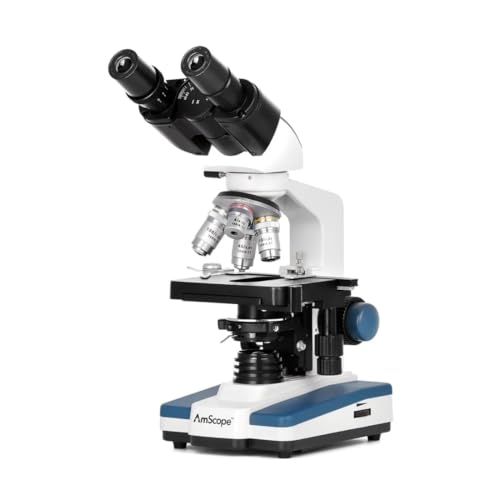
- 40X–2500X magnification
- 5MP USB camera and software
- Binocular LED design with 3D stage
Best For: Students, educators, and basic laboratory imaging
Collaborative Viewing Pick
PalliPartners Trinocular Microscope

- 40X–2000X magnification
- Trinocular camera-ready design
- Dual LED and stable double-layer stage
Best For: Classrooms, home learning, and shared specimen viewing
Portable Digital Option
AmScope Cordless Monocular 1.3MP

- Battery-powered cordless operation
- 1.3MP USB camera
- 40X–1000X with dual LED lighting
Best For: Portable basic observations and computer display
High-Magnification Lab Pick

- Advertised 40X–5000X range
- Trinocular electronic-eyepiece design
- Mechanical stage and extensive accessory kit
Best For: Advanced learning, teaching, and laboratory-style inspection
Best for Easy Setup
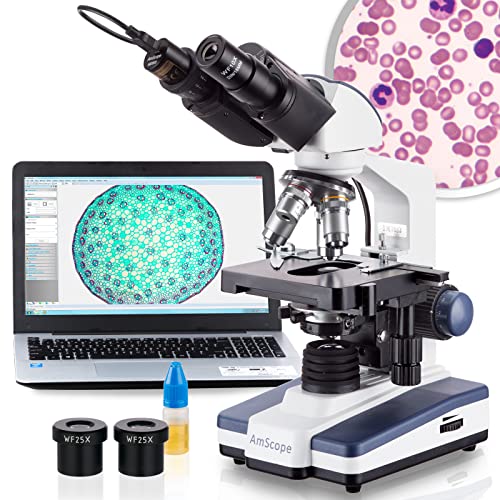
- 40X-2500X binocular magnification
- Includes 1.0MP USB camera
- Bright LED illumination
Best For: Students, educators, and budget-conscious microscope users
Best Laboratory-Style Setup
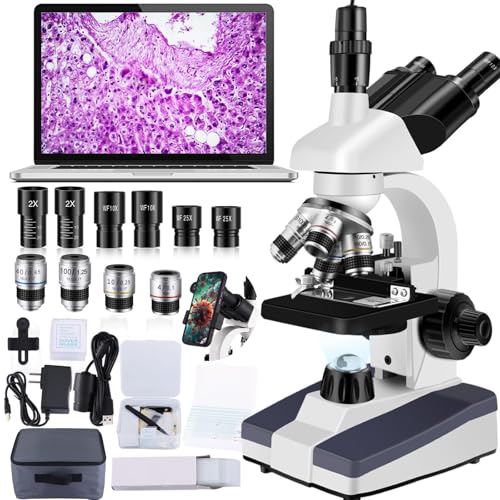
- Trinocular design with HD USB camera
- Dual mechanical stage and coaxial focus
- Includes extensive lab accessory kit
Best For: Adult learners, school labs, and biological inspection
Best Student Bundle

- 2.0MP camera plus phone adapter
- 40X-2500X binocular viewing
- Includes 100 slides and 100 cover slips
Best For: Students, classrooms, hobbyists, and immediate home setup
Best All-in-One Lab Kit
Woehrsh Trinocular Microscope with HD USB Camera

- 40X–5000X stated magnification range
- Trinocular viewing with digital eyepiece
- Extensive slides and lab-tool bundle
Best For: Adults, students, and hobbyists wanting a versatile microscope kit
Best for Digital Documentation

- Included 5.0MP camera for photos and video
- Windows/Mac software with measurement tools
- Six stated magnification levels to 2500X
Best For: Users documenting, measuring, or sharing microscope observations
Best Research-Style Bundle
SWIFT SW350T with 2MP USB Camera

- USB camera with Windows/Mac analysis software
- Research-style optics and 40X–2500X range
- 200-piece slides and cover-slips bundle
Best For: Labs, clinics, students, and advanced hobbyists
Best Value Camera Microscope – AmScope B120 Series 5MP
For buyers comparing compound microscopes with cameras, the AmScope B120 Series offers a broad 40X–2500X range, binocular viewing, and a 5MP USB camera. Its LED illumination and included imaging software make it a practical option for student work, teaching, and basic lab documentation.
Best For: Students, educators, and professionals who want high magnification plus computer-based image capture.
Pros:
- Wide 40X–2500X magnification range
- 5MP USB camera with professional software
- Bright, daylight-balanced LED illumination
- Includes a 3D stage and five-year manufacturer warranty
Cons:
- Corded electric operation limits portability
- Its feature set may be more than casual users need
The B120 is a strong all-around choice when image capture and high magnification matter. It combines useful digital tools with a binocular design suited to longer observation sessions.
Collaborative Viewing Pick – PalliPartners Trinocular Microscope
Among compound microscopes with cameras, the PalliPartners trinocular model stands out for shared viewing and digital documentation. It provides 40X–2000X magnification, dual LED illumination, a stable double-layer stage, and separate coarse and fine focus controls.
Best For: Home science learning, classroom demonstrations, and basic biological observation where a camera connection is useful.
Pros:
- Trinocular head supports eyepiece viewing while connecting a camera
- 40X–2000X adjustable magnification
- Top and bottom LED illumination for varied specimens
- Double-layer stage helps hold slides securely
Cons:
- Camera capability is noted, but a camera is not clearly listed as included
- One-year warranty is shorter than some competing options
This is a sensible choice for users who prioritize group observation and expandability. Its trinocular layout is particularly useful when lessons or demonstrations require simultaneous viewing and imaging.
Portable Digital Option – AmScope Cordless Monocular 1.3MP
If portability is a priority when shopping for compound microscopes with cameras, the cordless AmScope M158C-2L-E1 is a compact alternative. It combines a 1.3MP USB camera with 40X–1000X magnification, upper and lower LED illumination, and battery-powered operation.
Best For: Users who need a straightforward digital microscope for basic observations, computer display, and flexible placement.
Pros:
- Cordless, battery-powered design improves portability
- Built-in 1.3MP camera supports computer or projector display
- 4X, 10X, and 40X achromatic objectives
- Upper and lower LED lighting with rheostat control
Cons:
- Lower 1.3MP camera resolution than several higher-spec options
- Monocular head may be less comfortable for extended viewing
- Maximum magnification is 1000X
The M158C-2L-E1 favors convenience over maximum resolution or magnification. Choose it when battery operation and simple USB imaging are more important than advanced laboratory features.
High-Magnification Lab Pick – Woehrsh Trinocular Microscope
For demanding buyers seeking compound microscopes with cameras, this Woehrsh trinocular model offers an advertised 40X–5000X range, achromatic objectives, a dual mechanical stage, and an electronic eyepiece. Its extensive accessory kit also supports immediate classroom or specimen work.
Best For: Adult users, teaching environments, pet-care inspection, and laboratory-style biological observation requiring extensive magnification options.
Pros:
- Advertised magnification range reaches 5000X
- Trinocular design includes an electronic eyepiece for imaging
- Dual coaxial coarse and fine focusing with mechanical stage
- Large laboratory gift pack includes slides, specimens, tools, and holders
Cons:
- The extensive controls and accessories may be excessive for beginners
- Corded operation reduces portability
- Product details list 240V power, so buyers should verify compatibility
This model targets users who want a feature-rich setup rather than a minimalist student microscope. Its high advertised range and included supplies make it attractive for advanced learning, provided the power requirements suit the intended location.
Best for Easy Setup – AmScope B120C-E1
The AmScope B120C-E1 is a practical choice for shoppers seeking compound microscopes with cameras for classroom work, lab observation, or home study. Its binocular design covers 40X to 2500X, while the LED illumination and included 1.0MP USB camera support computer-based image capture and analysis.
Best For: Students, educators, and budget-conscious users who want a versatile binocular microscope with Windows camera software.
Pros:
- Broad 40X-2500X magnification range for educational and laboratory applications.
- Includes a 1.0MP USB camera and professional microscopy software for Windows.
- LED fly-eye illumination provides bright, daylight-balanced lighting.
- Five-year manufacturer warranty is included.
Cons:
- The included camera has lower resolution than some newer microscope-camera bundles.
- Camera compatibility is centered on a personal computer and Windows software.
Choose this model when dependable core microscopy features and included digital connectivity matter more than premium imaging resolution. It offers a well-rounded entry point for shared classroom or home laboratory use.
Best Laboratory-Style Setup – Woehrsh Trinocular Microscope
For buyers comparing compound microscopes with cameras for more advanced observation, this Woehrsh trinocular model emphasizes expandability and a laboratory-oriented setup. It combines a dual mechanical stage, LED lighting, coaxial coarse and fine focusing, and an HD USB camera with a stated 40X-5000X range.
Best For: Adults, school laboratories, biological experiments, veterinary inspection, and users who want a trinocular viewing and imaging configuration.
Pros:
- Trinocular head supports simultaneous viewing and camera-based observation.
- Includes an HD USB camera and wide-angle WF10X and WF25X eyepieces.
- Dual mechanical stage and coaxial coarse/fine focusing suit hands-on lab work.
- Large accessory kit includes slides, coverslips, Petri dishes, tools, and a phone holder.
Cons:
- One-year warranty is shorter than some competing models in this selection.
- The supplied specifications contain inconsistent magnification references, so buyers should verify the exact optical configuration.
- Its more extensive setup may be unnecessary for casual viewing.
This is the most feature-focused option here for users who value a trinocular format, mechanical controls, and included preparation supplies. Verify the final magnification and camera details before purchase if precise imaging specifications are important.
Best Student Bundle – SWIFT SW380B
The SWIFT SW380B is a strong all-in-one option for shoppers seeking compound microscopes with cameras and ready-to-use specimen supplies. It offers 40X-2500X viewing, a 2.0MP computer camera, smartphone adapter, LED lighting, and a large slide-and-cover-slip bundle for classroom or home use.
Best For: High school and university students, clinicians, hobbyists, and families who want to begin viewing and documenting specimens immediately.
Pros:
- 2.0MP camera connects to a computer for capturing and sharing observations.
- Camera software includes stitching, extended depth of field, and measurement features.
- Phone adapter supports quick image capture with a compatible smartphone.
- Bundle includes 100 blank slides and 100 glass cover slips.
Cons:
- The supplied details vary between a 2.0MP camera description and a 1.3MP built-in-media listing.
- Smartphone adapter fit is specified for eyepieces with a 28 mm outer diameter.
- Its 40X-2500X range may be more than casual users need.
This bundle stands out for practical digital sharing and generous specimen-preparation supplies. It is especially appealing for students or families who want a microscope kit that can support both computer imaging and smartphone photography.
Best All-in-One Lab Kit – Woehrsh Trinocular Microscope with HD USB Camera
If you want compound microscopes with cameras for biological experiments, education, or veterinary work, this Woehrsh trinocular model offers broad magnification, adjustable viewing, and a substantial starter accessory kit. Its 40X–5000X range is paired with a digital eyepiece and multiple eyepiece options.
Best For: Adults, students, and hobbyists who want a versatile compound microscope with imaging capability and included slide-preparation accessories.
Pros:
- Wide 40X–5000X stated magnification range with WF10X and WF25X eyepieces.
- Trinocular design includes a high-resolution digital eyepiece and a phone mount.
- Dual mechanical stage, coaxial coarse/fine focusing, adjustable diopter, and rotating tube support flexible use.
- Large accessory bundle includes slides, cover slips, tools, a petri dish, pipette, and test tubes.
Cons:
- The supplied details do not specify the camera’s megapixel rating or included imaging software.
- The listed maximum magnification varies between the title and product details.
This is a feature-rich choice when included accessories and flexible observation matter more than a clearly documented camera workflow. Verify the digital eyepiece specifications before buying if image capture is your primary goal.
Best for Digital Documentation – SWIFT SW350T with 5MP Camera
Among compound microscopes with cameras, the SWIFT SW350T stands out for its 5.0MP camera and software support for Windows and Mac. It combines six stated magnification levels with a trinocular head, mechanical stage, and transmitted LED illumination.
Best For: Clinicians, students, and hobbyists who need to capture, edit, measure, or share microscope images from a computer.
Pros:
- Included 5.0MP camera supports photo and video capture.
- Software offers stitching, Extended Depth of Field, and measurement features.
- Four achromatic objectives provide six stated magnification levels from 40X to 2500X.
- Rotatable Siedentopf head, adjustable LED brightness, Abbe condenser, and double-layer mechanical stage support shared viewing.
Cons:
- Camera software compatibility is listed for specific Windows and Mac versions rather than all operating systems.
- The package includes only five prepared and five blank slides, fewer than some larger kits.
- The supplied specifications list a 240-volt rating, so buyers should confirm electrical compatibility.
With its higher-resolution included camera and analysis-oriented software, this model is especially practical for recording observations and preparing reports. It is a strong fit when computer-based imaging is central to your workflow.
Best Research-Style Bundle – SWIFT SW350T with 2MP USB Camera
This SWIFT SW350T is one of the compound microscopes with cameras aimed at structured lab, education, and clinical work. It pairs a 2.0MP USB camera with image-analysis software, research-style achromatic optics, a mechanical stage, and a 200-piece slide and cover-slip bundle.
Best For: University students, laboratories, clinics, and advanced hobbyists who want a stable microscope with digital documentation and extensive basic supplies.
Pros:
- 2.0MP USB camera supports photo and video capture while viewing through the eyepieces.
- Windows and Mac software includes stitching, EDF, and measurement functions.
- Four achromatic objectives and 10X/25X eyepieces support the stated 40X–2500X range.
- Solid-metal construction, coaxial mechanical stage, Abbe condenser, and 200-piece accessory bundle suit repeated lab use.
Cons:
- The camera resolution is lower than the 5.0MP version listed in the other SW350T package.
- The supplied title says 1.3MP while the product notes describe an upgraded 2.0MP camera.
- At 4.7 kg, it is less convenient to move frequently than a lighter microscope.
This model makes sense for buyers prioritizing mechanical stability, analysis software, and included slide supplies. Confirm the current camera specification before ordering because the supplied listing information is inconsistent.
How We Picked These Compound Microscopes with Cameras
We focused on models that combine compound optical systems with integrated or included digital cameras. Our comparison considered stated magnification ranges, binocular or trinocular viewing, camera resolution, mechanical-stage design, illumination, included accessories, and intended use. Because specifications can vary by listing, verify the current camera, software, and accessory package before ordering.
We also separated practical differences that are easy to overlook. A high maximum magnification does not automatically produce more detail, while a stable stage and good illumination can improve results at everyday powers. Trinocular designs may be especially useful when you want to observe through the eyepieces while recording through the camera.
Quick Comparison
| Best For | What to Prioritize | Common Configuration |
|---|---|---|
| Students and beginners | Simple controls, durable construction, included accessories | Binocular or monocular head with USB camera |
| Teaching and demonstrations | Comfortable viewing and easy image sharing | Binocular or trinocular head with digital camera |
| Routine lab work | Mechanical stage, stable optics, reliable illumination | Trinocular head and higher-resolution camera |
| Advanced imaging | Camera software, sensor performance, upgrade flexibility | Trinocular microscope with dedicated camera port |
Key Buying Factors for Compound Microscopes with Cameras
Magnification and Optical Quality
Most listed models cover roughly 40x to 2500x, while some advertise up to 5000x. In practice, useful resolution is determined by objective quality, numerical aperture, condenser alignment, and specimen preparation. Look for a conventional objective set and oil-immersion support if you expect to work at the highest useful powers.
Camera Resolution and Connectivity
A 1.3MP camera can work for basic documentation, while 2MP or 5MP models generally provide more room for cropping and classroom display. Check whether the camera connects by USB, which operating systems are supported, and whether capture software is included. Compatibility matters as much as the advertised pixel count.
Head Design, Stage, and Lighting
Binocular microscopes are comfortable for direct observation. Trinocular models add a camera path and can make simultaneous viewing and recording easier. A dual mechanical stage offers finer, repeatable specimen positioning than simple slide clips. LED illumination is typically cool, efficient, and suitable for extended sessions; adjustable intensity and condenser controls are valuable for contrast.
Included Accessories and Long-Term Value
Slide kits, dust covers, adapters, and software can make a starter package more convenient, but they should not outweigh optical performance. Confirm the warranty, replacement-camera options, objective compatibility, and availability of technical support before choosing a model for school or laboratory use.
Who Should Buy Which Compound Microscopes with Cameras?
Students and first-time users: Choose a straightforward binocular or monocular model with LED lighting, a manageable camera interface, and useful included accessories. Ease of setup is more important than an extreme magnification claim.
Teachers and home educators: A binocular or trinocular microscope with a USB camera is a strong fit for demonstrations, remote lessons, and group viewing. Prioritize reliable software and a stable mechanical stage.
Hobbyists and serious learners: Consider a trinocular design with a 2MP or 5MP camera if you plan to document specimens regularly or edit images. A broad objective range and precise stage controls can support more demanding projects.
Laboratory users: Focus on optical consistency, condenser performance, mechanical construction, camera compatibility, and serviceability rather than headline magnification alone. Confirm that the included camera and software meet your documentation requirements before purchase.